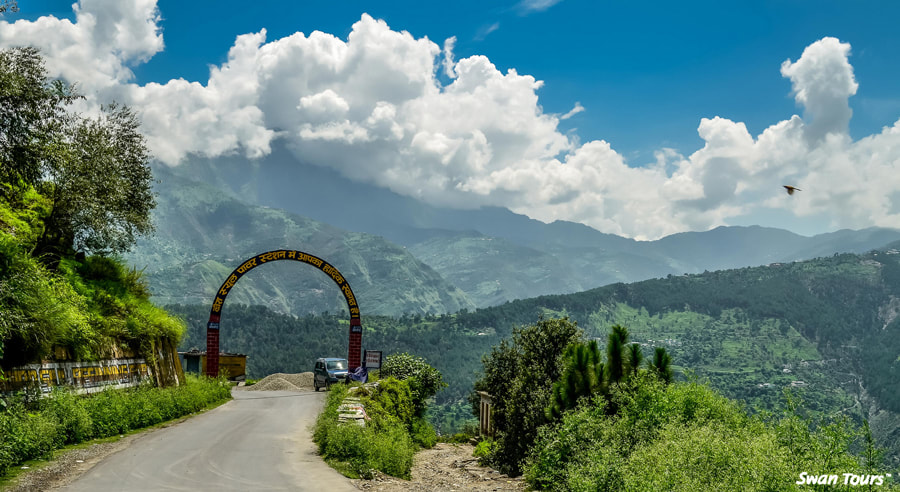
Salooni is located in Chamba district of Himachal Pradesh. It is one of those rare hill towns that most tourism brochures have forgotten; which makes Saloni an offbeat destination.
Saloni appeared in my research on offbeat Himachal destinations, and the name alone stopped me. Ask locals about its origin and you’ll hear two stories: it’s either from ‘Sailani’- the Hindi word for traveler or from ‘saloni’, meaning captivating. Either way the town is beautiful.
Salooni (at 1828 meters) is perched atop a strategic ridge which extends into Bhaderwah Sub Division of Jammu and Kashmir. It gets snowed from December to March; but even more beautiful during the summers with its meadows and scenic landscape.
Additionally; the town is nestled between two magnificent mountain ranges. The Pir Panjal Range to the north and the Dhauladhar Range to the south, creating a natural amphitheatre. This ridge forms a natural watershed. The Siul tributary of the Ravi River originates here which carves its way through Bhandal and Killar valleys, flowing downstream.
🔵 Good to know: NHPC’s first hydroelectric project in India was the Baira Siul Power Station in Chamba district, Himachal Pradesh. Commissioned in 1982, it is a 180 MW run-of-river project built on the Baira and Siul tributaries near Surgani, marking the start of NHPC’s hydropower journey.
Places to see in & around Salooni
Chamera Lake view
If you are traveling from Dalhousie towards Salooni, you’ll cross Chamera Lake, formed by the Chamera Dam. In the past, boating at Taleru Boating Point was quite popular. Check locally for current availability before visiting.
Local Village Walks & Crafts
Bathri Village (7 km from Salooni): Watch master craftsmen create Chamba Rumals (embroidered handkerchiefs) and traditional leather Chappals (footwear).
My blog on Chamba Rumal: Art of Indian Storytelling in Embroidery helps you learn more about this exquisite Indian Art.
Kandhwara Village: Discover 200-year-old deodar homes that were built using the kath-kuni technique (interlocking wood without nails). This style of building homes showcases Himachal’s earthquake-resistant architecture that still stand strong.
Bhalei Mata Temple (29 km before Salooni)
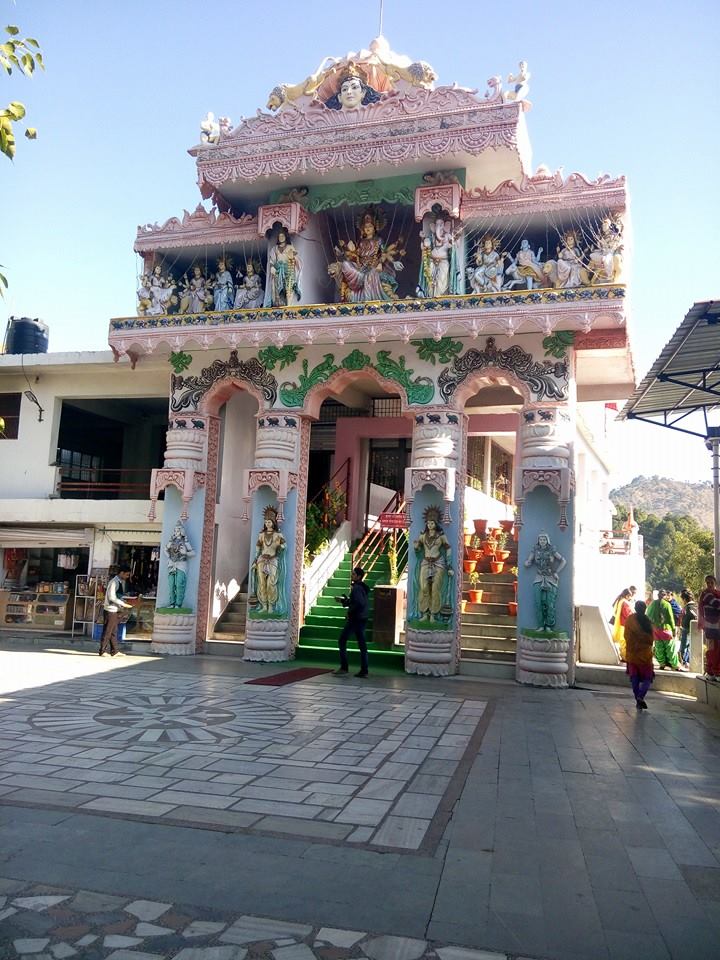
The Bhalei Mata temple is an ancient temple dedicated to Maa Kali and is also referred to as the Bhadra Kali temple.
Located 40 km from Chamba and 35 km from Dalhousie, the temple is located in the village of Bhalei, and offers spiritual charm and panoramic hill views.
Devi Kothi Temple (12 km)
Built in the 18th century by Raja Umed Singh, this temple is a masterpiece of Pahari architecture. Its intricate wood carvings depict celestial dancers, mythological battles, and divine legends. The craftsmanship is astonishing given the remoteness and era of construction.
The temple’s exterior facade showcases an intricate tapestry of wooden carvings that narrate ancient epics and local legends. Each panel represents months, perhaps years, of painstaking artistry and depicts celestial dancers, mythological battles, and divine manifestations with remarkable precision. I am amazed by this kind of architecture. It is astounding to know about the remoteness of the location. The limitations of tools available during that period also add to its marvel.
*Please Note: In recent times, the temple’s structure has been damaged due to some illegal construction and local authorities along with INTACH, India are ensuring no firther damages are caused.
Lamu Temple
(8 km from Devi Kothi and 15 km from Salooni if going directly)
Dedicated to Lakshna Devi (Durga), this temple is small but historically significant to local tribal communities. The temple features silver masks used in ceremonial dances, traditional Pahari wall paintings, and a natural spring (reputed for its healing properties).
🔵 Make sure to take frequent stops as the route between the two temples offer sweeping valley views worth photographing.
Gamgul Siahbehi Wildlife Sanctuary (20 km)
The Gamgul Siahbehi Wildlife Sanctuary is one of India’s high-altitude wildlife sanctuaries, famous for Musk Deer, Barking Deer, and Snow Leopards!
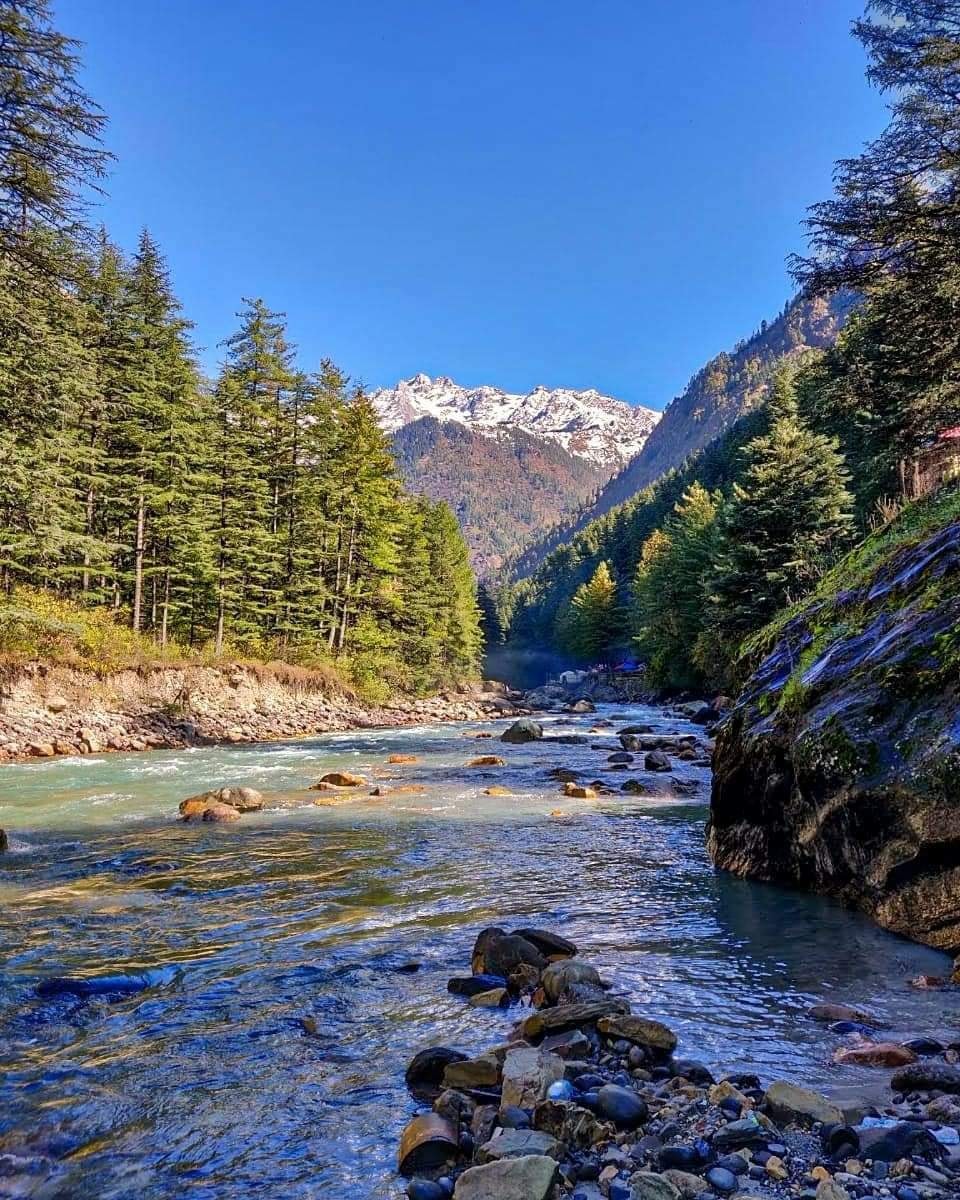
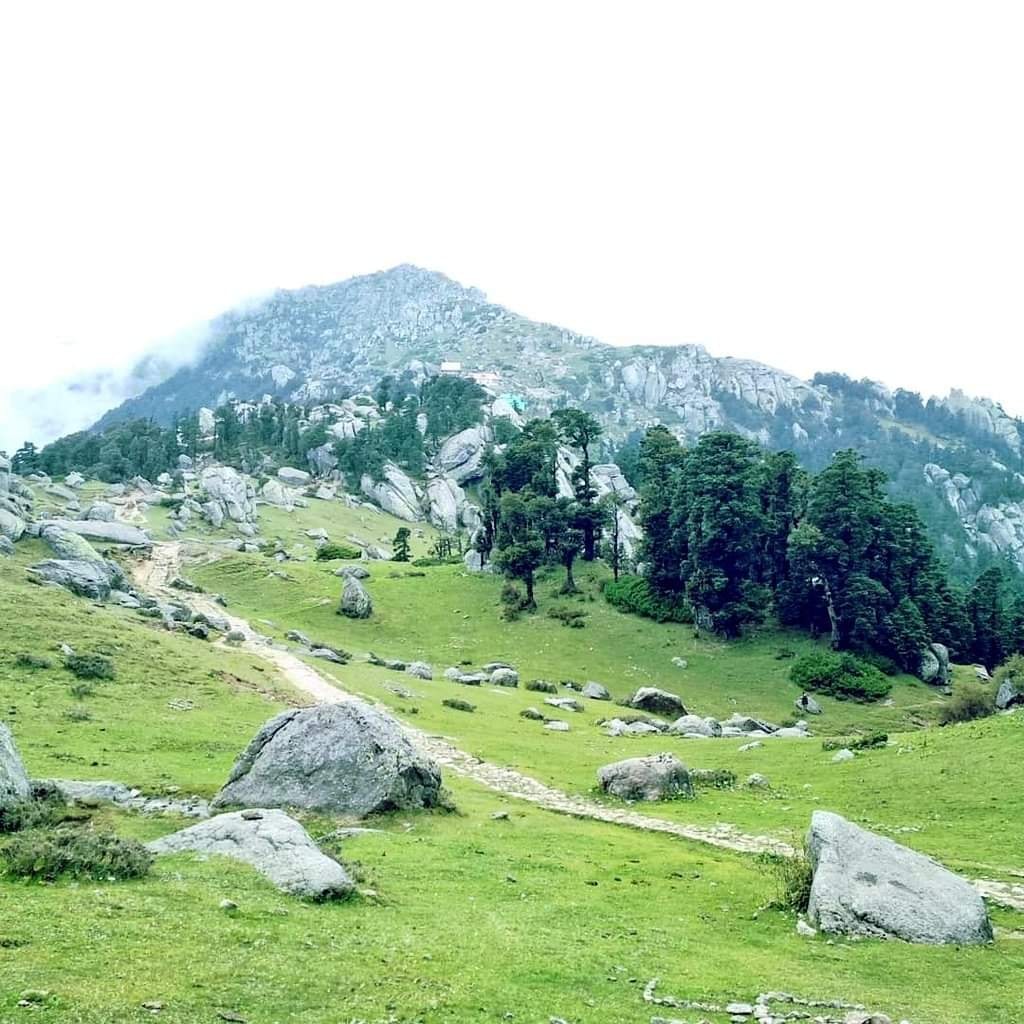
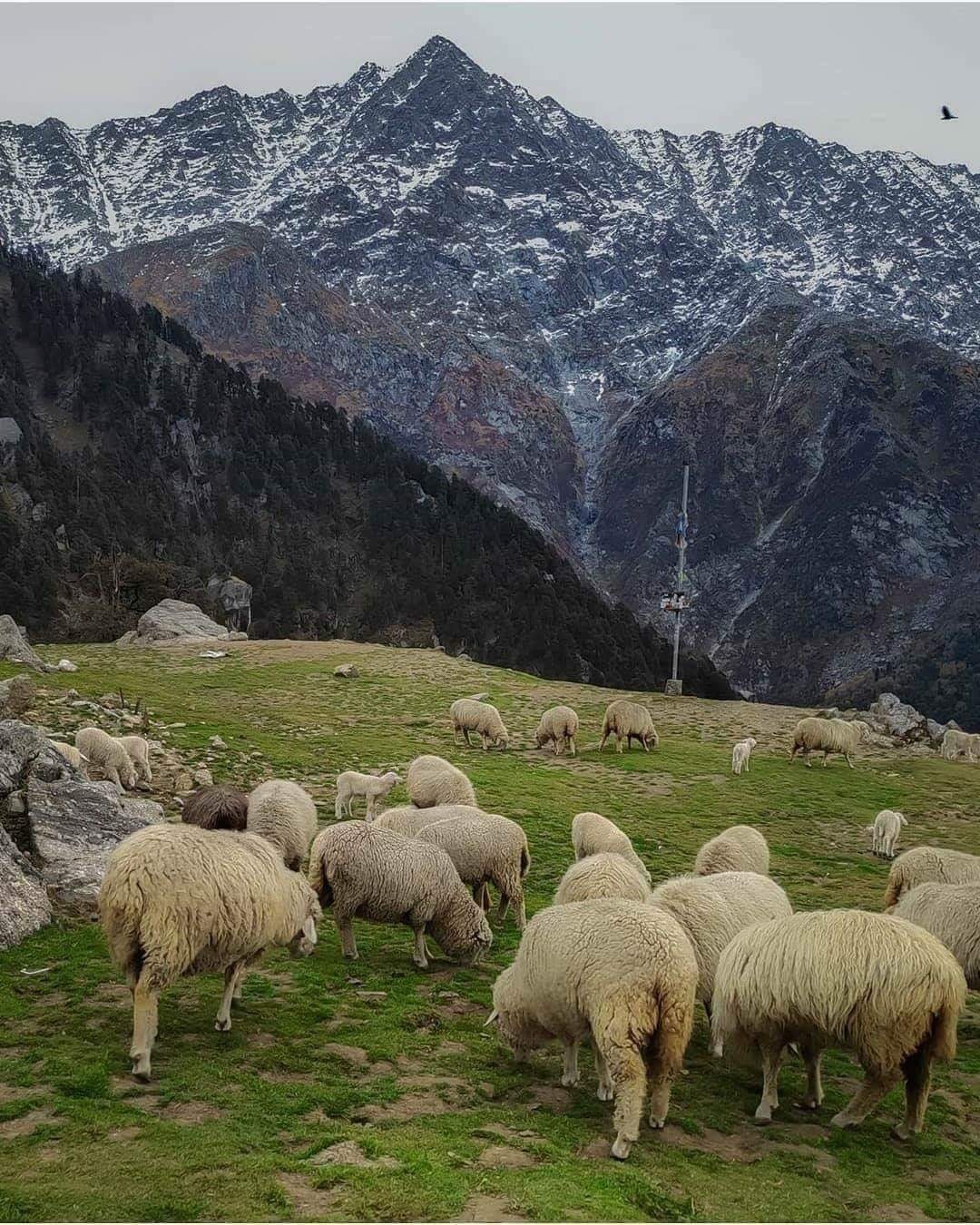
Spread across 70 Sq. metres, its northern boundary adjoins the Doda district of Jammu and Kashmir and the place is revered for being home to the rare ‘Kashmir Stag’ (Cervus elaphus hanglu). Being part of the Bhandal Valley, the sanctuary attracts many photographers and wildlife enthusiasts. The vegetation is interspersed with deodar forests, coniferous forests and alpine pastures.
Padri Pass (45 km from Salooni)
At an elevation of 3,300 meters (10,800 feet), the Padri pass offers breathtaking panoramic views of the Dhauladhar and Pir Panjal ranges, alpine meadows, and wildflowers. From here, Bhaderwah in Jammu & Kashmir is just 40 km.
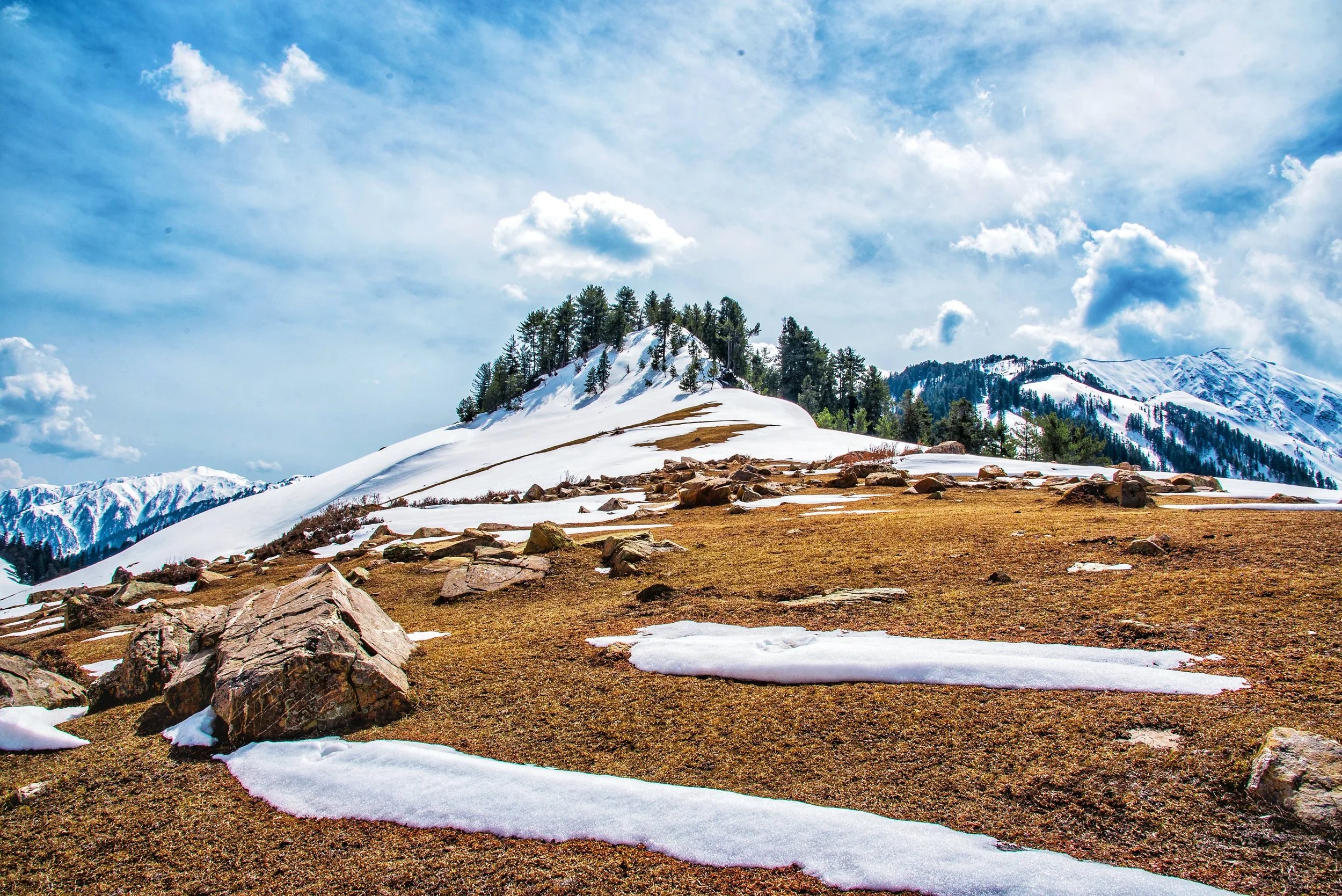
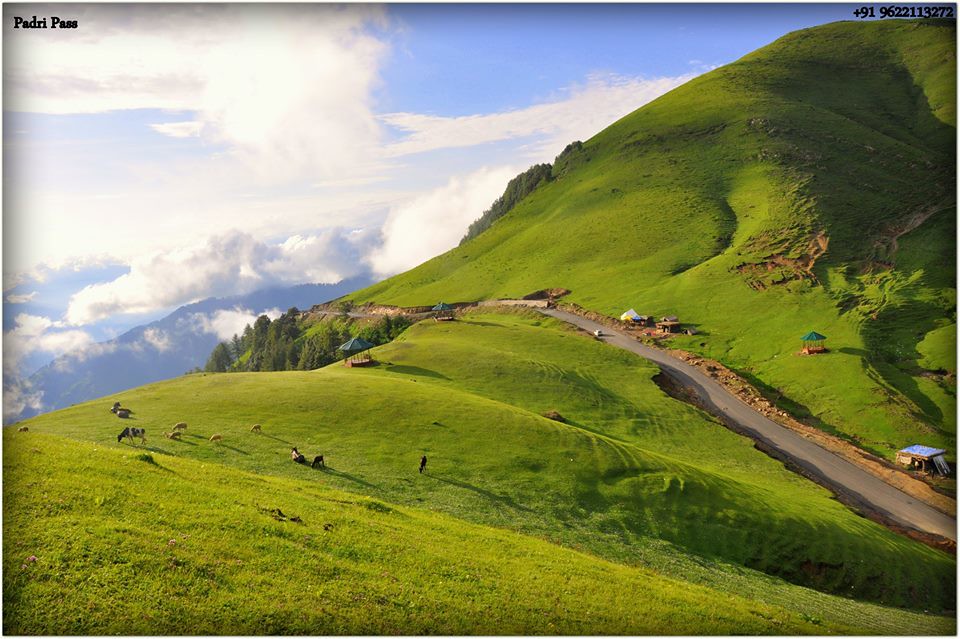
As you travel through diverse ecological zones, the change beginning with dense deodar forests gradually gives way to alpine meadows carpeted with wildflowers during summers and expansive grasslands, locally known as ‘margs’, transform into a photographer’s paradise against snow-capped peaks in winters.
Bhandal Valley (22 km)
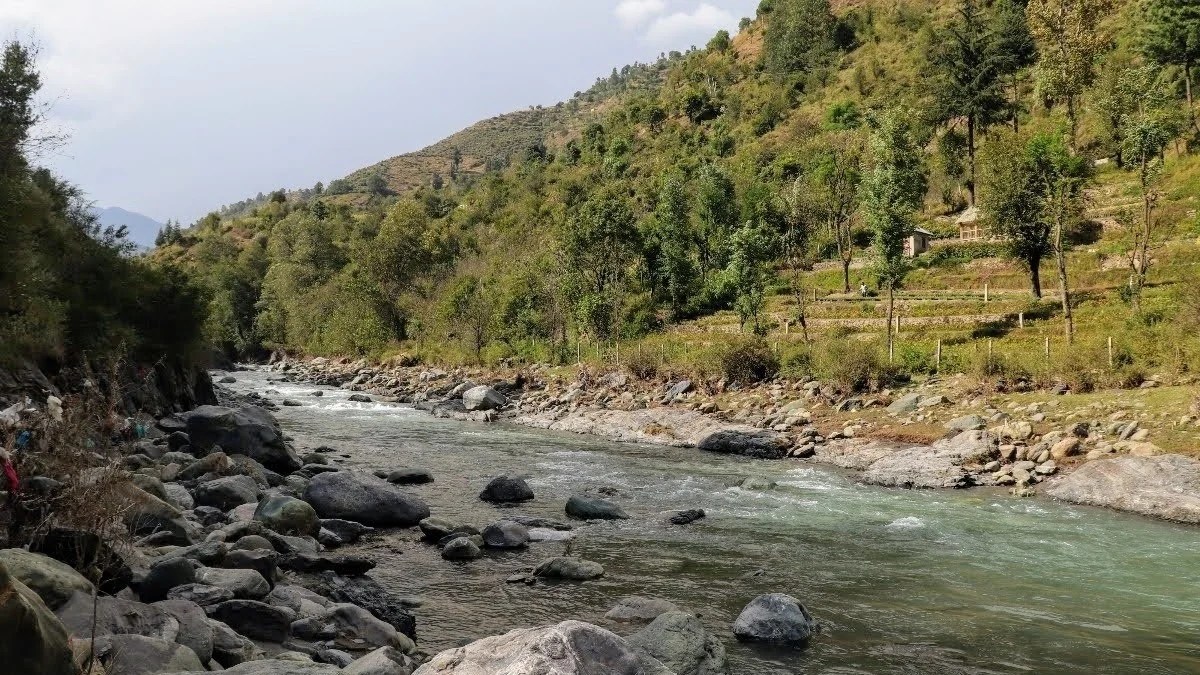
The Bhandal Valley offers panoramic views and abundant wildlife & flora. It is also the base for an important trek route that joins Chamba to the Kishtwar region of Jammu and Kashmir (over the Dagni Dhar). This trek takes one along the beautiful River Ravi, Pukhri via Siyul Stream and onwards to Prithvi Jor Ridge with the highest point on the track being the Padri Gali at 3,049 m.
Recommended Blog
Recommended Blog:
- Arya Akasha shares interesting details on the beautiful frescoes and art paintings of the Devi Kothi temple. Do check it out.
- Joyclubsunil shares some beautiful images from the temple and surrounding hills.
- Shubham from Travelshoebum.com shares his travel experience.
Explore Trekking in & around Saloni
Anjani Mata Lake
- Distance: 15 km from Salooni (by jeep to trailhead)
- Trail: Alpine meadows with scenic elevation gain. It Features a small temple, annual fair in June and a serene lake perimeter walk (1 hour).
Jhamwar Valley
This is a vast alpine meadow surrounded by snow-covered peaks.
- Distance: 14 km round trip from Salooni (7–8 hours)
- Wildlife: Himalayan Monal, barking deer, and various birds
Mini Lake & Gaun Di Muth
- Distance: 8 km round trip from trailhead (35 km from Salooni)
- Highlights: Glacially formed lake, alpine meadows and a sacred lake – Gaun Di Muth.
If local rituals are being performed at Gaun Di Muth, observe respectfully from a distance and ask permission before photographing people engaged in traditional practices. Also avoid disturbing any prayer flags or offerings around the lakes.
Chanju Valley Trek
- Distance: 18 km round trip
- For experienced trekkers seeking remote Himalayan immersion
- Experience: Stone villages with traditional lifestyles, largely untouched by modern tourism
Accommodation: Options to stay at Salooni are limited to basic guesthouses and homestays. Some families offer homestays with home-cooked meals so book in advance for authentic travel experience.
Local Cuisine: Don’t miss local specialties like madra (chickpeas in yogurt gravy), chana dal, sidku (stuffed bread), and babru (black gram fritters). Most homestays offer home-cooked meals, while a few dhabas in the market serve simple but delicious food.
At Salooni, travellers can still experience the authentic rhythm of mountain life, forge genuine connections with locals, and discover landscapes that feel personally revealed rather than mass-consumed. In a rapidly changing world, Salooni’s time moves according to nature’s clock rather than tourist itineraries.
Looking to book a trek?
Check out our Trekking & Camping Guide for India that shares our recommendation for booking your trekking and camping experiences across India.
Location & Distance Guide to Salooni
Chamba: 56 km
Pathankot to Chamba: 120 km and it is also the nearest railway station
Dharamshala: 200 km
Dalhousie: 235 km
Delhi: 450 km
Delhi to Chamba: 627.5 km via NH 44
Note: If you plan to visit during winter months, check road conditions in advance as heavy snowfall can temporarily close access routes. For summer visits, the annual Minjar Fair in neighbouring Chamba (July-August) makes for an excellent cultural addition to your itinerary.
Unlike the busy hill stations of Shimla or Manali, where tourist chatter rarely fades, Salooni once felt wrapped in quieter rhythms, the soft rustle of deodar trees and the distant chime of cowbells from grazing herds.
What lingers in my memory even more is its fragrance: a gentle blend of pine resin, wildflowers, and woodsmoke curling out of village homes. Years may have passed and places do evolve, yet one can only hope Salooni has held on to the simplicity and stillness that made it so special.
If you’ve been to Saloni or have it on your travel list, please share your experience below. Did I miss a hidden trail, a local eatery, or a cultural detail worth knowing? Your contributions make this guide better for everyone.
Share your experience at gotraveldiscover@gmail.com or tag us on Instagram @gotraveltrek.india with your photos and tips.
Discover more from GoTravelTrek
Subscribe to get the latest posts sent to your email.

osm
LikeLike
Thanks..
LikeLike