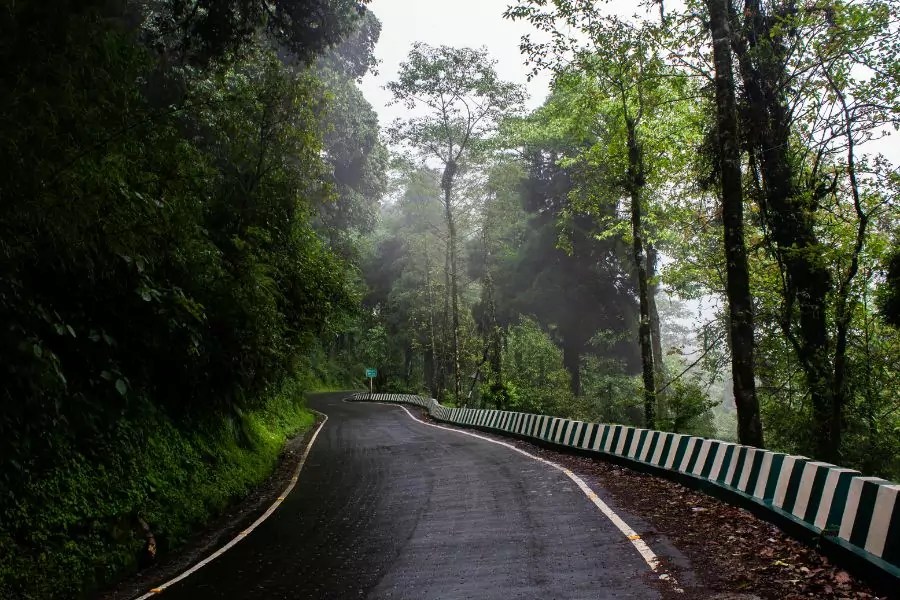
Offering great views of verdant valleys and lush green forests, Lepchajagat is ideal for walks, trekking, slow travel, and so much more.
Lepchajagat is situated at an altitude of 6,956 ft and is en route from Mirik (30 km) towards Darjeeling (8 km). It belonged to the Lepcha Tribe until the British brought it into the limelight, and is today a reserved forest area under the West Bengal Forest Development Corporation (WBFDC).
While Mirik is famous for its tea gardens, Lepchajagat offers stunning trekking routes and picnic spots. With plenty of waterfalls and hilly terrain, Lepchajagat offers magnificent views of Kanchenjunga and mist-laden mountains, making it a perfect monsoon destination to relax and unwind.
Places to see in & around Lepchajagat
Balsan Valley
To get a clearer view of Kanchenjunga, you can move to the Balsan Valley, which is 2.5 km away from the Lepchajagat Guest House. A kilometre-long trek route will take you to Hawa Ghar, which commands an even clearer view of the queen.
Himalayan Mountaineering Institute (HIM India)
You may also visit the nearby Himalayan Mountaineering Institute and P.N. Zoological Park. You can get to watch the Himalayan Tahr, Blue Sheep, Himalayan Monal, Grey Peacock Pheasant, Himalayan Salamander, Blood Pheasant, Satyr Tragopan, Snow leopards, Red pandas and Gorals (mountain goat) among other wildlife and birds. The zoo is internationally famous for its red panda and snow leopard conservation breeding programs.
Lepchajagat is a paradise for nature lovers, photographers and trekking addicts. Due to its thick forested zones, there have also been several sightings of leopards, civet cats and wild bears, even during the daytime.
Mirik Lake
It is also known as Sumendu Lake and is around 24 km from Lepchajagat along a scenic drive. The lake is 1.25 km long, and dense conifer forest offers a serene place to enjoy a picnic. Do try to visit one of the many tea estates and Cardamom plantations. Stop by the Tingling View Point for amazing views of the tea gardens!
Sukiapokhari
Sukiapokhari is also known as Sukeypokhar is 4 km away and was once famous for its lake and the Himalayan Salamander, a highly endangered species of the reptile family that could be seen around the lake. Now there’s no lake, but you may visit the Shiva Temple and the park. People offer amazing views of the hills.
Old Ghoom or Ghum Monastery (10 km)
Built in 1850, the Yiga Choeling Monastery of Ghoom is one of the oldest Tibetan Buddhist Monasteries in the Darjeeling area and is often referred to as the old monastery. It was built by a monk and a famous astrologer, Lama Sherab Gyatso and belongs to the Gelukpa or the Yellow Hat sect. The monastery houses a huge collection of Buddhist manuscripts, including a 108-volume Kangyur – The Tibetan Buddhist Gospel. Darjeeling town is just 7 km from here. Next, watch the sunset or sunrise from the Tiger Hills (Senchal Road).
Samten Choling Monastery
The key attraction here is the 15-foot-tall figure of Buddha, which is referred to as the Maitreya Buddha or the Gyalwa Shamp, which means the Buddha of the future or the Coming Buddha. One can also enjoy some amazing views of the hills from here. Entry is free, but there are charges for photography.
Lamahatta
Lamahatta is 22 km from Lepchajagat and is quite a scenic drive. You can spend some time at Lamahatta Roadside Garden, Tinchuley village, Mahakal Temple, Everest Museum, and Japanese Peace Pagoda. For treks, you can take an 8 km trek to Takdah or to Gari Danda, which has an old fort. Do try some Nepalese delicacies such as Momo, Thupka, and Set Roti, served at most local food spots.
Batasia Loop (Hill Cart Road) & Gurkha War Memorial, Darjeeling
This is the famous spot where the Darjeeling Himalayan Railways (Toy Train) makes a wonderful 360-degree loop (hence the name Batasia Loop) around the Gurkha War Memorial (built in 1988 to honour the brave Gurkha soldiers martyred post-Indian Independence wars). Spend some time in the garden. A 30-foot high cenotaph with the “Roll of Honour” of the martyrs written on it is guarded by a 9-foot bronze statue of a Gurkha soldier at the backdrop of the mighty Mt. Kanchenjunga.
Pashupati Nagar Market
This is a Nepalese town on the Indo-Nepal border just 17 km from Lepchajagat. Indians can visit the local market for shopping after getting a permit and switching over to the local cab or taxi, as no Indian tourist vehicles are allowed beyond the post. An ID and permit are required.
www.Booking.com and www.Expedia.com offer a range of homestays and hotels located in and around Lepchajagat and can be booked according to your budget.
Explore more near Lepchajagat
Kurseong (32 km)
Kurseong is known as the land of white orchids and a dreamy destination to visit.
Kurseong is also famous for its paranormal activities seen and felt, especially at Dow Hill, and attracts a lot of interest among tourists all over the world. In fact, people also believe that ‘Kurseong’ came from the word ‘Curse’, hence it is still the land that’s cursed.
Read about the mystery of a headless child of Dow Hill here. Many locals have heard movements & clear footsteps coming in the corridors of Victoria Boys School, and that too during the December-March vacation when the school is closed! In fact, the entire place has an eerie feeling to it!
Kalimpong (53 km)
Kalimpong is a picturesque hill station nestled between the Delo & the Durpindara Mountains. The word Kalimpong means “Ridge where we play” and ‘black spur’ in the local tribal language. Kalimpong is famous for providing India with a variety of flowers and petals in all seasons.
And yes, while you are in Kalimpong, don’t forget to buy the rich & delicious chocolate milk lollipops, and some Churrpi, a tangy and chewy cheese made from Yak’s milk from the famous Lark’s Provision store.
What to See: Dr Graham’s Home, Durpindara Viewpoint, Flowers Nurseries, Kali Temple, Kalimpong Art & Crafts Centre. You may also visit Pedong (25 km from Kalimpong via Algarah). Pedong is the trade centre of the historical Silk Route, the Bhutanese Pedong Monastery (from 1837) and Bhutanese Fort Damsung (just a 2 km trek).
Manebhanjan, Base camp for Sandakphu
‘Manebhanjan’ translates as ‘the junction of Stupas’ in the Nepali language and is 11 km from Lepchajagat and 26 km from Darjeeling, and is the base camp for the Sandakphu Trek.
Manebhanjan offers mesmerising views of Mount Kanchenjunga and the Singalila Range. The place is also known for using old Land Rovers as public taxis!
At an altitude of 3636 meters (11930 feet), Sandakphu is one of India’s best trekking trails and offers majestic views of four of the world’s highest peaks – Everest, Kanchenjunga, Makalu, and Lhotse; all covering a total length of 360 km, leaving you stunned. You can visit https://indiahikes.com/sandakphu-phalut for details on the Sandakphu Trek.
Singalila National Park
The Singalila National Park, which is home to the unique Red Panda, is located near Sandakphu, and tourists can embark on an interesting wildlife safari through the park.
You can also visit Chitreye and Lamaydhura villages located nearby.
Location & Distance Guide to Lepchajagat
By Road: Self-drive to Siliguri-Kalimpong-Kurseong-Lepchajagat.
I’ll suggest the Mirik-Ghoom route as it’s more picturesque and the roads are better!
Nearest Airport: Bagdogra (115 km)
Railway Station: New Jalpaiguri (80 Kms)
Best time to visit Lepchajagat: September- March
Discover more from GoTravelTrek
Subscribe to get the latest posts sent to your email.
