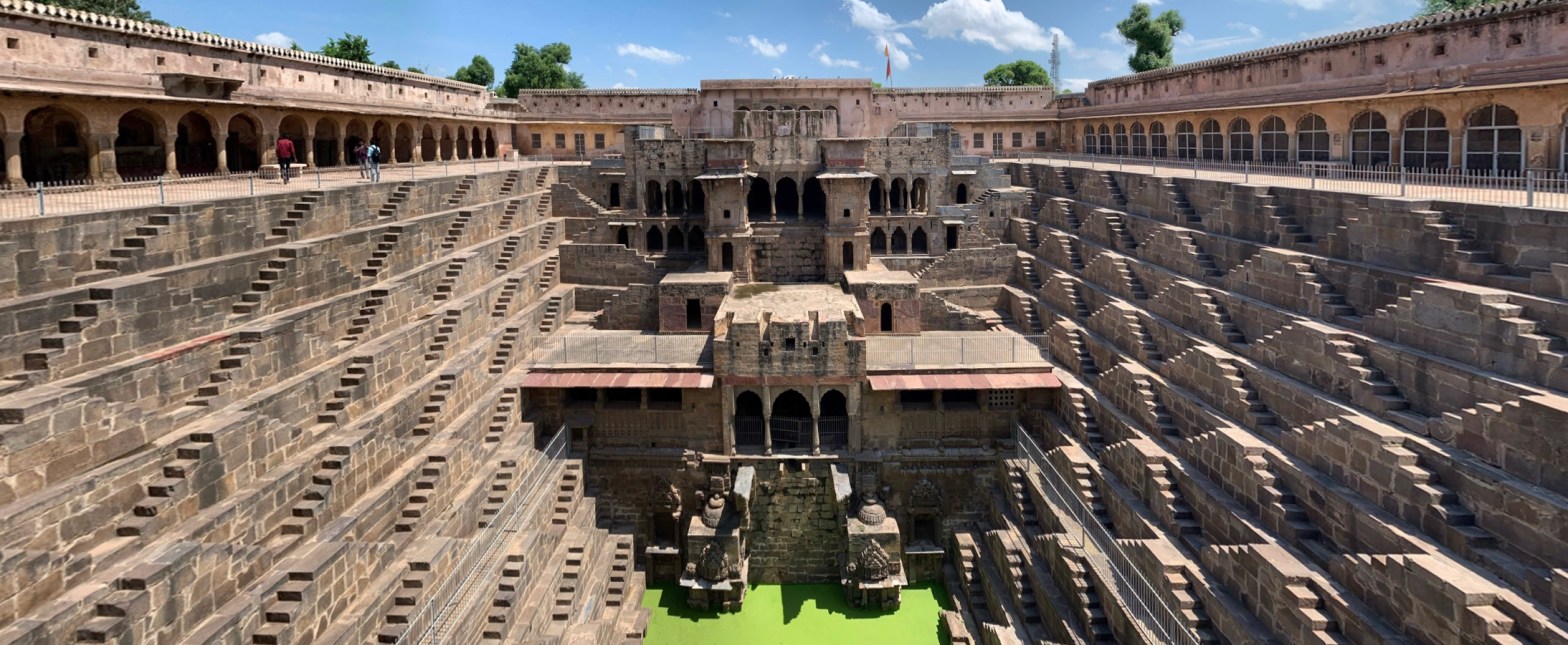
Nestled just 95 km from Jaipur and 230 km from New Delhi, Abhaneri is a small village in the Dausa District of Rajasthan. It boasts a treasure trove of historical and architectural wonders, and its star attractions are the magnificent Chand Baori stepwell and the Harshat Mata Temple.
Marvel at the Chand Baori
Chand Baori is an ancient stepwell and an architectural masterpiece that dates back over a thousand years. Its intricate maze of 3,500 steps will transport you to a bygone era, and with each step you take, you will feel the whispers of the past, making it a truly immersive experience.

Commissioned by King Chand of the Nikumbha Dynasty in the 8th century, it comprises an astonishing 3,500 narrow steps that span 13 stories and plunge almost 30 meters into the earth. This makes Chand Baori one of the largest and deepest stepwells in India. Beyond its practical purpose of storing rainwater, Chand Baori also served as an entertainment hub for royals, complete with restrooms and a pavilion. Even today, the temperature in the well remains refreshingly cooler than its surroundings. Its geometric complexity has attracted filmmakers, featuring in movies like ‘The Fall,’ ‘The Dark Knight Rises,’ and ‘Paheli.’
Harshat Mata Temple: A Shrine of Joy
Nestled near Chand Baori, the Harshat Mata Temple pays homage to the goddess of Joy. Its ornate carvings may evoke thoughts of the Khajuraho Temple. Constructed during the 7th and 8th centuries, it endured destruction and damage at the hands of Mahmud Ghazni. However, the temple’s remarkable resilience shines through, as it has been painstakingly reconstructed by villagers after enduring repeated assaults by invaders. Numerous pillars, columns, and statues, once scattered in disarray, can now be found gracing the temple courtyard and the corridors of the structure.

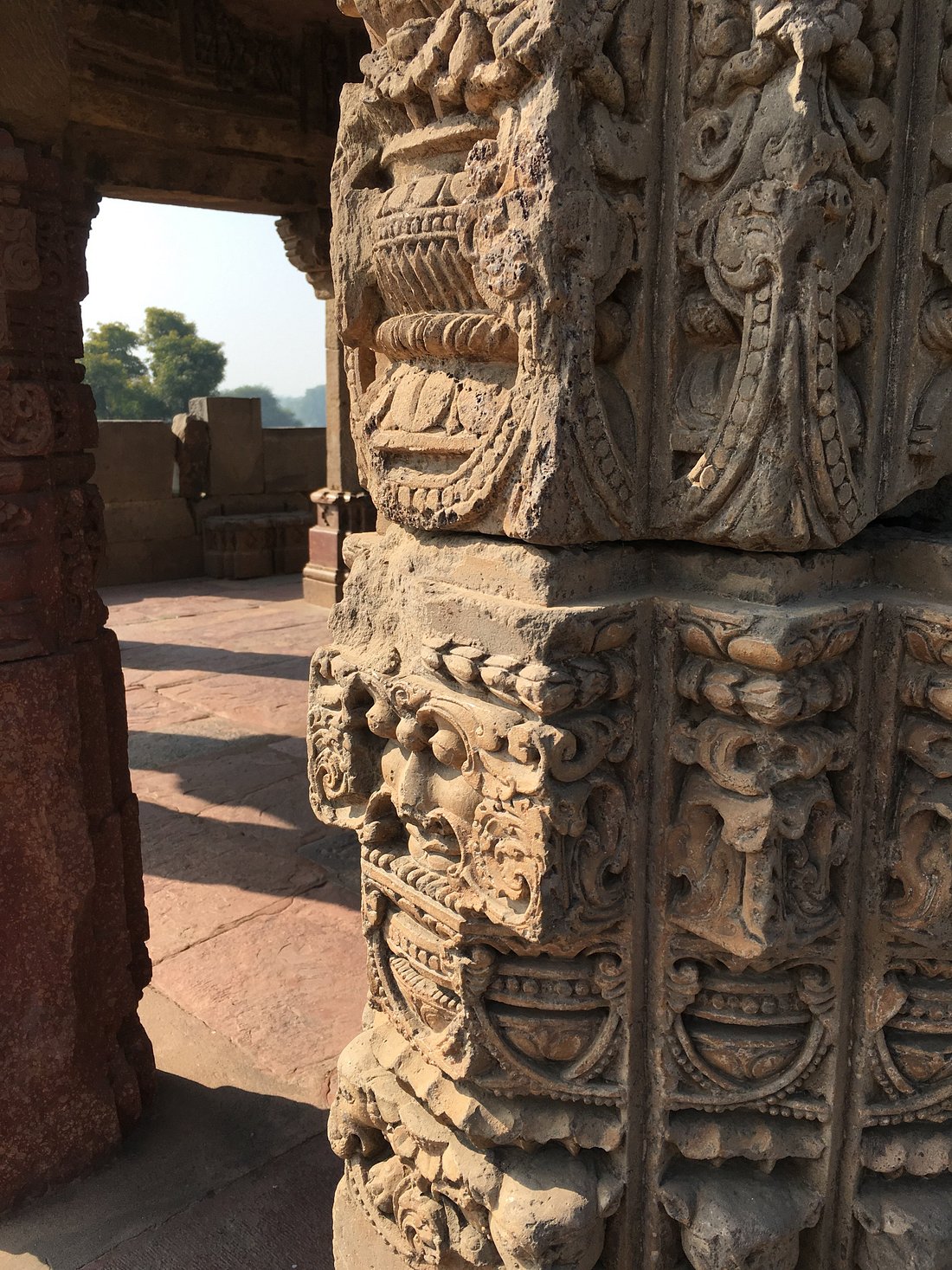
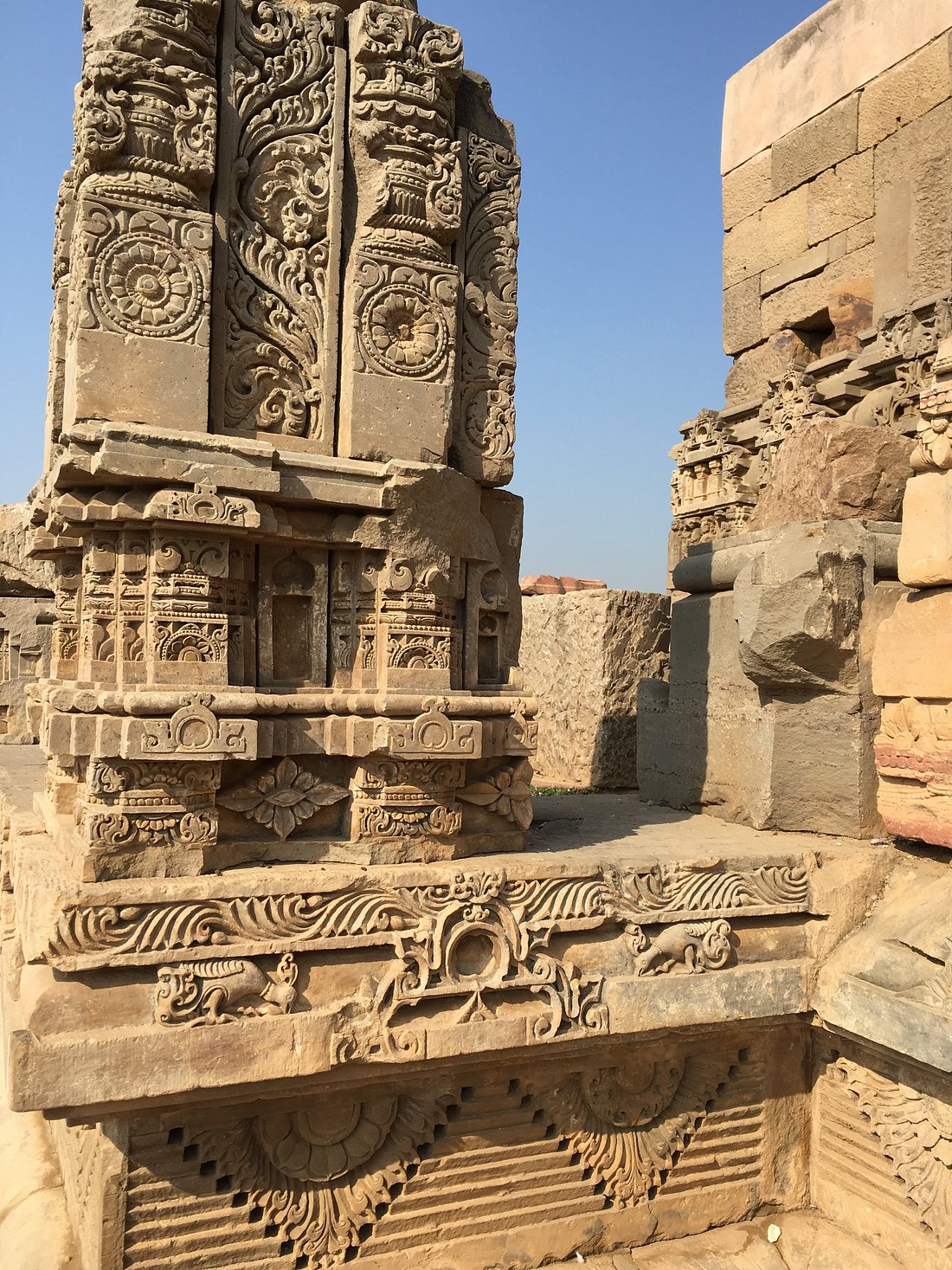
During its glorious heyday, the temple boasted a towering Nagara architectural-style ‘Shikhar’ that seemed to touch the skies. However, in the aftermath of its reconstruction, the temple now showcases a striking dome-like structure. This transformation reflects the enduring spirit of the temple and its ability to adapt and endure through the passage of time, reminding visitors of its rich history and timeless significance.
Collecting Moments is an interesting blog written by Ajay Singh that shares a fascinating history and pictures of this temple and other places located nearby.
Abhaneri: Beyond the Sights
Abhaneri is not just about its architectural wonders. The village also holds historical significance as the birthplace of freedom fighters like Tikaram Paliwal and Ram Karan Joshi. While there are limited budget stay options in Abhaneri, nearby places like Jaipur or Sariska offer a wider range of accommodations.
Explore more nearby
Bird Watchers Delight (49 km from Abhaneri)
The Mansarovar & Mangalsar Lakes are part of the Sariska Tiger Reserve and are home to many migratory and domestic birds. To name a few, one can see the Spotbill Duck, Grey Heron, River Tern, Bar-headed Geese, Yellow-footed Green Pigeon, Long Tail Shrike, Little Ring Plover, Lesser Flameback Woodpecker, Great Egret, Ruddyshel Duck, Eurasian Ryeneck, Sarus Cranes, Ibis, Green Shank and many more.
Neelkanth Mahadev Temple
The temple is dedicated to Lord Shiva and is situated on Devgiri hill near Dausa. You need to take 365 steps (one for each day of the year!) to visit the temple. The temple’s origins trace back to the 6th-9th centuries CE, built by Maharajadhiraj Parmeshwara Mathanadeva, a feudatory of the mighty Gurjar Pratihar Empire. What makes this temple architecturally unique is its civil architectural style, which distinguishes it from the typical ornate designs found across Rajasthan’s temple landscape.
https://collectingmoments.in/off-the-beaten-track-dausa-and-abaneri shares interesting insights into the temple and the town of Dausa and surrounds.
Dausa, also known as Devnagari (City of Gods), is home to the revered Panch Mahadev temples. The Neelkanth temple sits within a remarkable complex of over 80 beautifully carved temples dating back to the 6th century, making it one of Rajasthan’s most significant but lesser-known archaeological treasures.
Mehandipur Balaji (33 km from Abhaneri)
The temple is located in Tehsil Sikrai of Rajasthan and is dedicated to Lord Hanuman and is known for its spiritual and healing powers. It’s named ‘Balaji’ as the place depicts the childhood of Hanumanji. (Bal in Hindi means Child).

The temple has three deities who are mainly worshipped – Lord Hanuman (also known as Balaji), Pret Raj and Bhairav. All these deities are believed to be related to ghosts and spirits. Definitely not the place for the faint-hearted, as the temple’s atmosphere and rituals can be intense due to the nature of spiritual healing practices performed there.
Bhangarh (63 km from Abhaneri)
This ‘Ghost Town’ is shrouded in mystery and intrigue. Read more about it at https://gotraveltrek.com/2015/11/18/bhangarh-mystical-or-haunted.
Beejak ki Pahadi, Bairat
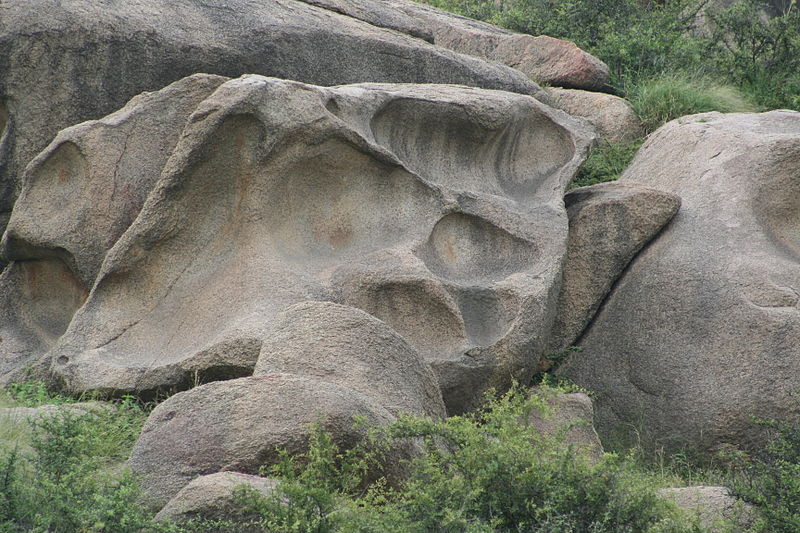
Bairat’s history stretches back to the time of the Mahabharata, when it was known as “Viratnagar.” Founded by King Virata, it served as the capital of the ancient Matsya kingdom, one of the sixteen Mahajanapadas (great kingdoms) that flourished from c. 1400-350 BCE. It was King Virata who had unknowingly sheltered the Pandavas during their final year of exile, with each assuming a disguised role in his court.
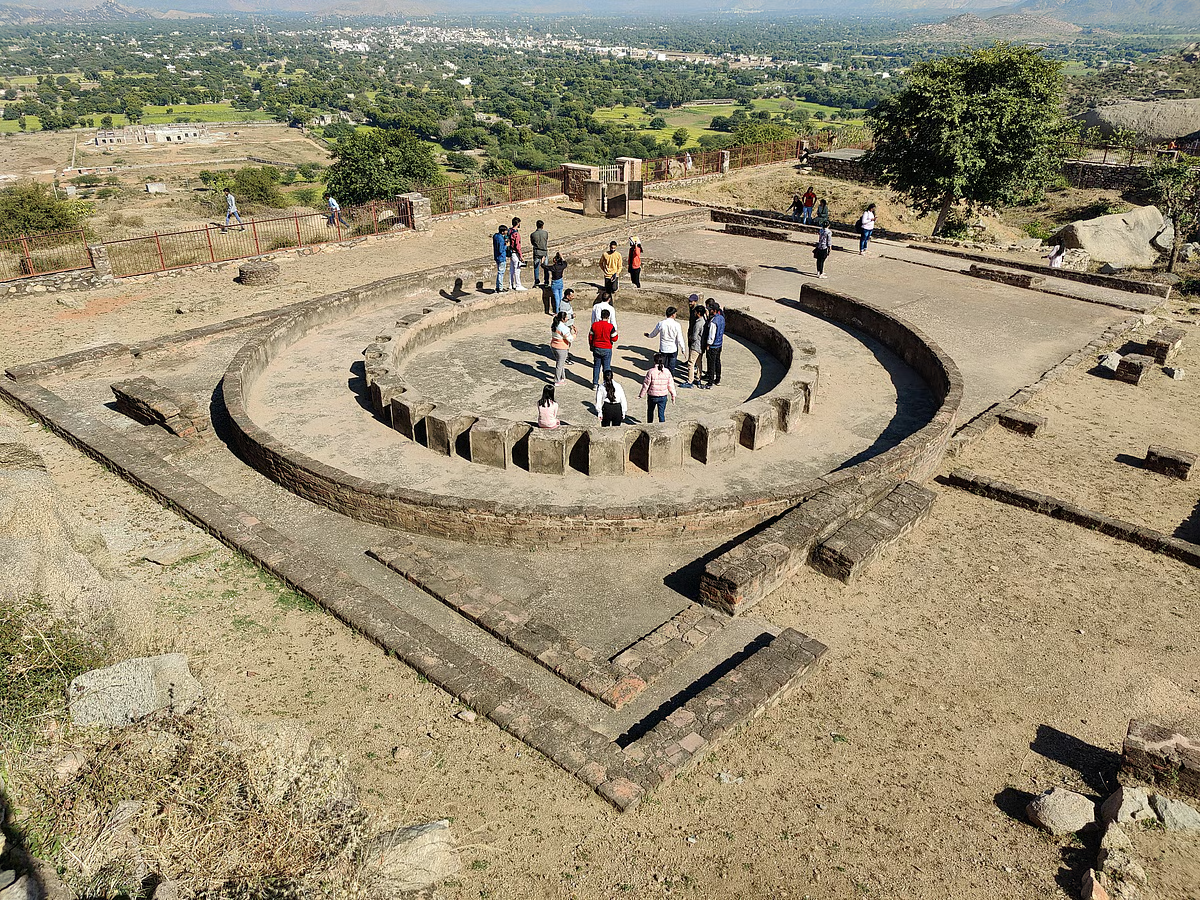
Images: CC Outlook
The Beejak ki Pahadi represents one of India’s most important early Buddhist archaeological sites, featuring:
– Oldest free-standing Buddhist temple in India (3rd century BCE/Circa 250 BCE)
– Two original Ashoka inscriptions from the Mauryan period
– Complete monastic complex with individual monks’ cells
– Unique circular temple architecture with a central stupa
– Connection to the Mahabharata as the place where the Pandavas spent their exile
– Capital of the ancient Matsya kingdom, one of the 16 Mahajanapadas
The site is locally called “Bijak-ki-Pahari and is significant for understanding early Buddhist architecture and the spread of Buddhism during Emperor Ashoka’s reign, making it a crucial archaeological and historical site in Rajasthan.
Abhaneri to Beejak Ki Pahari – 110.9 km via NH 148
Gurgaon to Beejak Ki Pahari – 165 km, 4 hours
Bairat – 52 km north of Jaipur
Bairat to Alwar – 61 km
Beejak ki Pahari to Abhaneri – 120 km, 3 hours
Abhaneri to Ajmer – 250 km, 4 hours
Bhandarej (10 km from Dausa and 65 km from Jaipur)
Bhandarej is a less-explored destination known for ancient sculptures, decorative latticework, and the Bhadrawati Palace (previously the fort) and Bhandarej Baori (step-well) constructed during the 11th century.
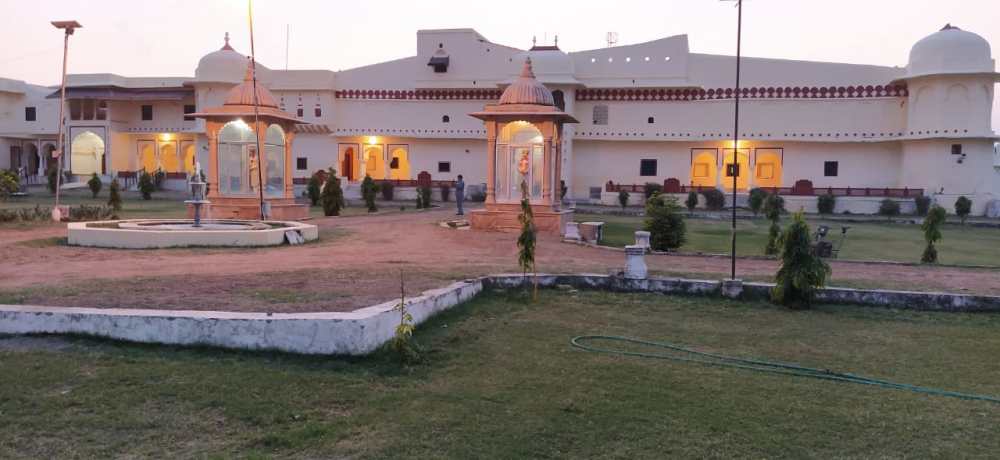
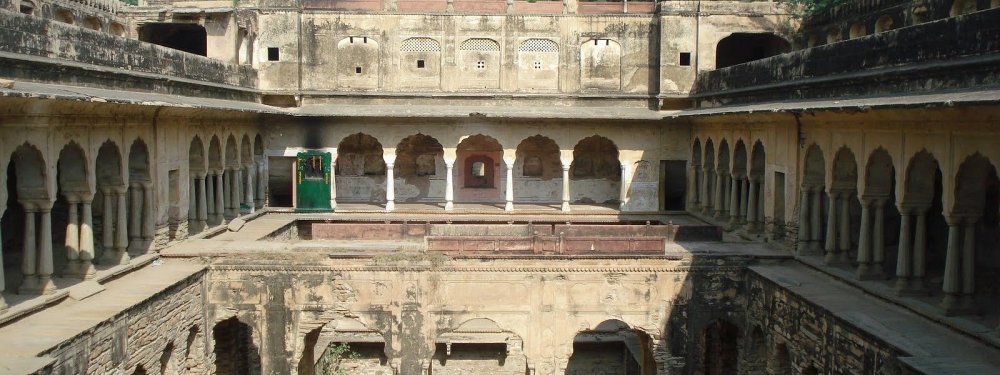
In the times of the Mahabharata, Bhandarej was called Bhadrawati. Bhandarej is also known for carpet-making. The newly constructed Delhi-Mumbai expressway exit at Bhandarej – Dausa is just 3 Km from Bhadrawati Palace.
Kesroli
85 km from Abhaneri, it’s known for its 14th-century fort, part of the Neemrana Property.
Alwar
82 km from Abhaneri, Alwar offers historical forts and palaces, including Bala Qilla.
Shekhawati – Mandawa, Nawalgarh
Famous for its painted havelis, it’s a haven for art and history enthusiasts. Take a journey through time and read more about this region on https://gotraveltrek.com/2015/07/16/a-journey-through-time-exploring-basar-mandawa-and-nawalgarh
What to Eat
Don’t miss trying local delicacies like Kaddi-Kachoori, Gatte ki sabzi, and tea served in traditional Kullads (mud pots), along with the delectable Dal Batti Churma.
Stay Options
- Umaid Lake Palace, Dausa: Located 34 km from Abhaneri, this palace offers an organic retreat with farmland that produces fresh organic produce. Immerse yourself in local cuisine and activities like cycle polo, village walks, and bird watching.
- Abhaneri Village Safari Camp: Offering traditional luxury tents and cottages, this camp provides a rustic environment for a serene experience. Enjoy village life and cultural programs.
Location & Distance Guide
New Delhi to Abhaneri: 230 km via NH248A and RJ SH 25
Gurgaon to Abhaneri: 202 km via Alwar-Bhiwadi Road and RJ SH 25
Jaipur to Abhaneri: 95 km via NH11 on the Jaipur-Agra highway
Best Time to Visit: October to March
Nearest Airport: Jaipur & New Delhi Nearest Railway Station: Dausa
All Images CC Wikipedia & Tripadvisor
Discover more from GoTravelTrek
Subscribe to get the latest posts sent to your email.

2 thoughts on “Chand Baori, Abhaneri – Rajasthan”