I have a deep fascination for ancient history, and Chandraketugarh, as a historical excavation site, captured my attention while I was searching for a unique destination in or around Kolkata. It makes for a perfect day trip, especially after the rains and during winter when the city of Kolkata comes alive with vibrant energy! Additionally, it’s also close to my in-laws’ place at Barasat.
A bit of History & Background
In 1907, Berachampa became the focus of extensive archaeological excavation. The mounds at Chandraketugarh were first identified by a local doctor, Taraknath Ghosh in around 1905-1906. It was at his insistence that the then Superintendent of the Eastern Circle of the ASI, A.H. Longhurst, paid a visit to the site. Longhurst did not think highly of its archaeological potential, notwithstanding the initial findings of bricks and pottery. Rakhaldas Bandyopadhyay also explored the surface in 1909. It was only in 1922-23 that K.N. Dikshit, Superintendent of the Eastern Circle of the ASI, wrote a report on Chandraketugarh for the first time. Thereafter, archaeologist and author, Kalidas Dutt, inspired D.P. Ghosh, K.K. Ganguly and K.G. Goswami to take cognisance of the site. It was because of their insistence that the site was explored and excavated by the Ashutosh Museum of Indian Art, University of Calcutta, from 1955 to 1967 on a small scale. After several decades, in the year 2000, a plan for an extensive area excavation of the site had been mooted by the ASI, and work had commenced under the direction of Bimal Banerjee, before being mysteriously discontinued after a few months.
Here’s a research report you might to interested in reading if you are a history enthusiast like me.
& Tushar Srivastava – St. Stephen’s College, Delhi – July, 2019Download
Over a decade later, West Bengal Tourism revived interest, reinitiating excavations and successfully resurrecting the lost civilisation of Chandraketugarh. The site, covering 3 sq km, encompasses villages including Deulia, Berachampa, Shinger Ati, Hadipur, Shanpukur, and Jhikra. The town lies near the Vidyadhari/Bidyadhari River, once a tributary of the mighty Bhagirathi River.
Chandraketugarh thrived between the 4th and 12th centuries AD (Mauryan Era to Late Pala Rule). The ruins of fort walls attest to its status as a fortified township. Despite its current state of ruin, history enthusiasts will find the place captivating, immersing themselves in the remnants of a once-thriving city.
Bengal’s historical affinity for terracotta art persists, with regions like Purulia, Bankura, Birbhum, Paschim Medinipur, and Bardhaman serving as hubs for globally traded terracotta crafts. Chandraketugarh’s excavated terracotta artifacts, including children’s toys, figures of gods and goddesses, narrative plaques, and more, are noteworthy. Particularly intriguing are depictions of sexual scenes (Mithuna) and amorous couples (Dampati).
Elaborately adorned female figures, with delicate earrings, pendants, hairpins, headdresses, and other accessories, hint at the exceptional craftsmanship prevalent in the area.
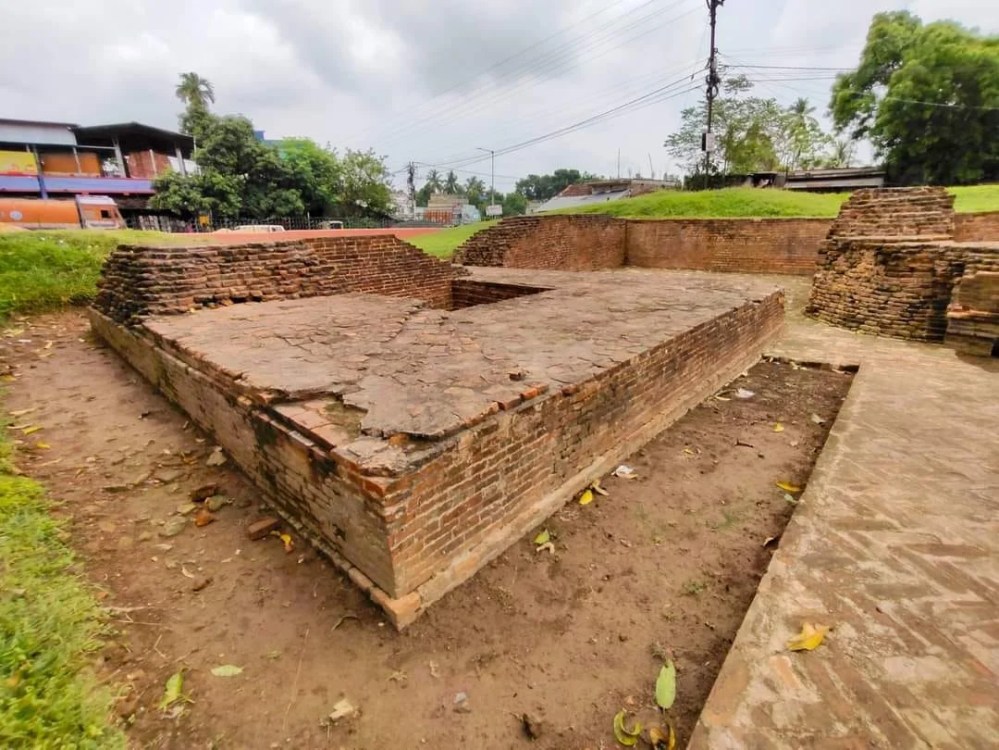
Khana Mihirer Dhibi, a significant temple structure, greets visitors upon entering the site. Surrounding it, unexcavated fort walls extend into dense jungles, shrouded in mystery.
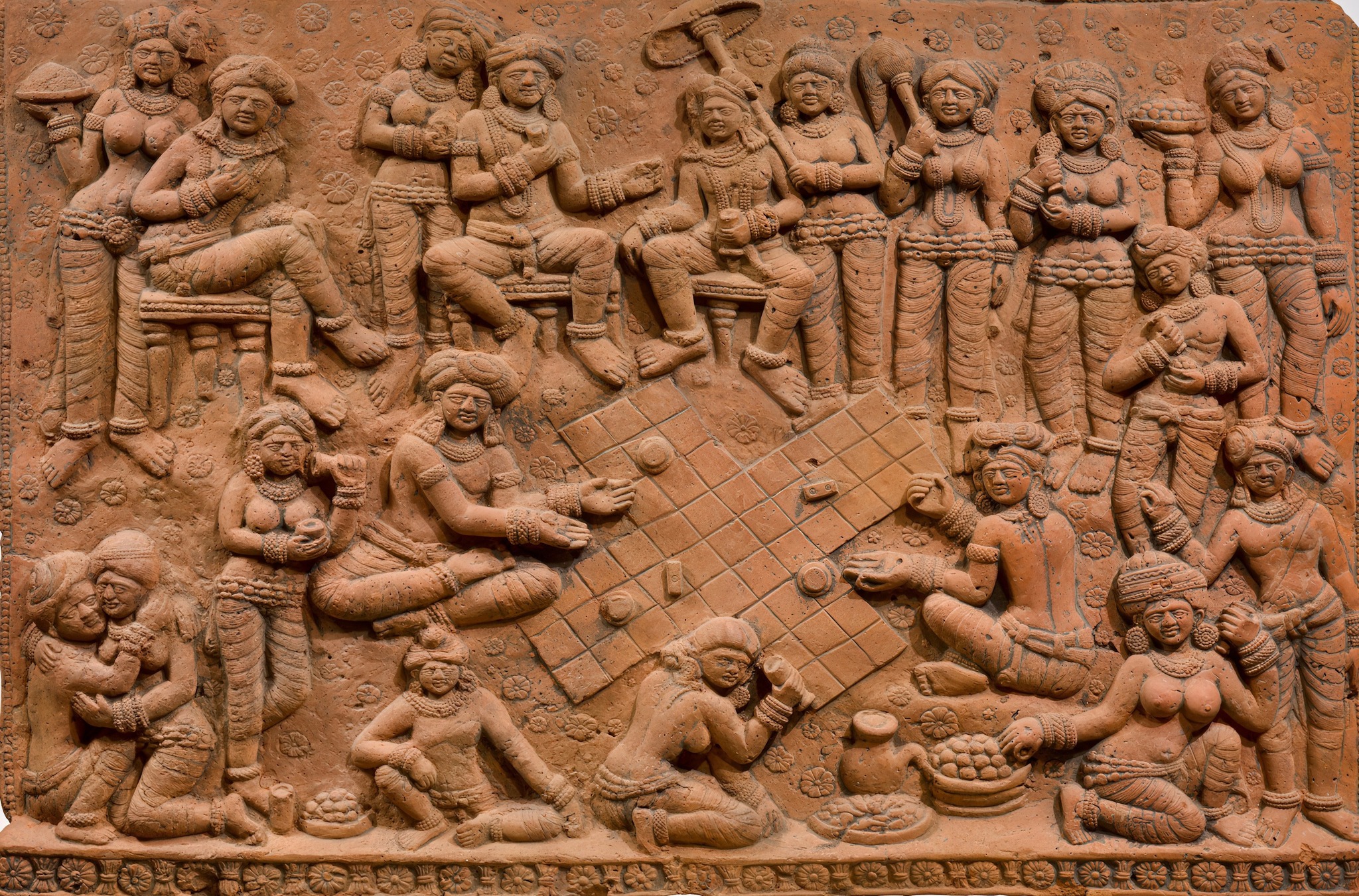
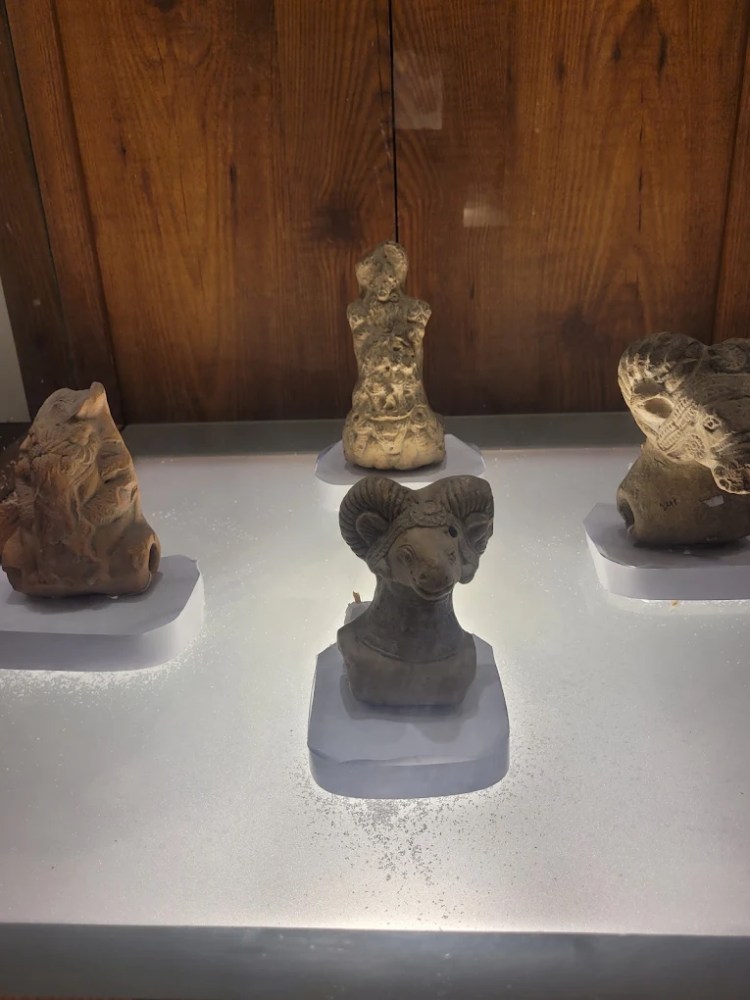
Chandraketugarh Sangrahalaya (Museum), curated by Mr Dilip Mait, houses a rich collection of artifacts, statues, terracotta idols, coins, and ship seals, suggesting the site’s importance as a port. Massive tumblers, possibly used by royalty, provide a glimpse into ancient daily life.
Interestingly, Claudius Ptolemy’s Geographia, Plutarch’s writings, and an anonymous Greek sailor’s Periplus of the Erythraean Sea allude to the prosperity of a port named Gange in southwest Bengal. This likely corresponds to the port town of Chandraketugarh, adding another layer of historical significance to the site.

You might find this interesting: https://www.peepultree.world/livehistoryindia/story/monuments/chandraketugarh-an-enigma-in-bengal
Location & Distance Guide
Address: Berachampa, West Bengal 743424, India
From Barasat: 23 kms (45 min) via Taki Rd
From Kolkata: 50 kms via Kolkata-Barasat-Basirhat Road (2 hrs drive)
Image copyright – Official Website, and as referred under captions
Discover more from GoTravelTrek
Subscribe to get the latest posts sent to your email.
