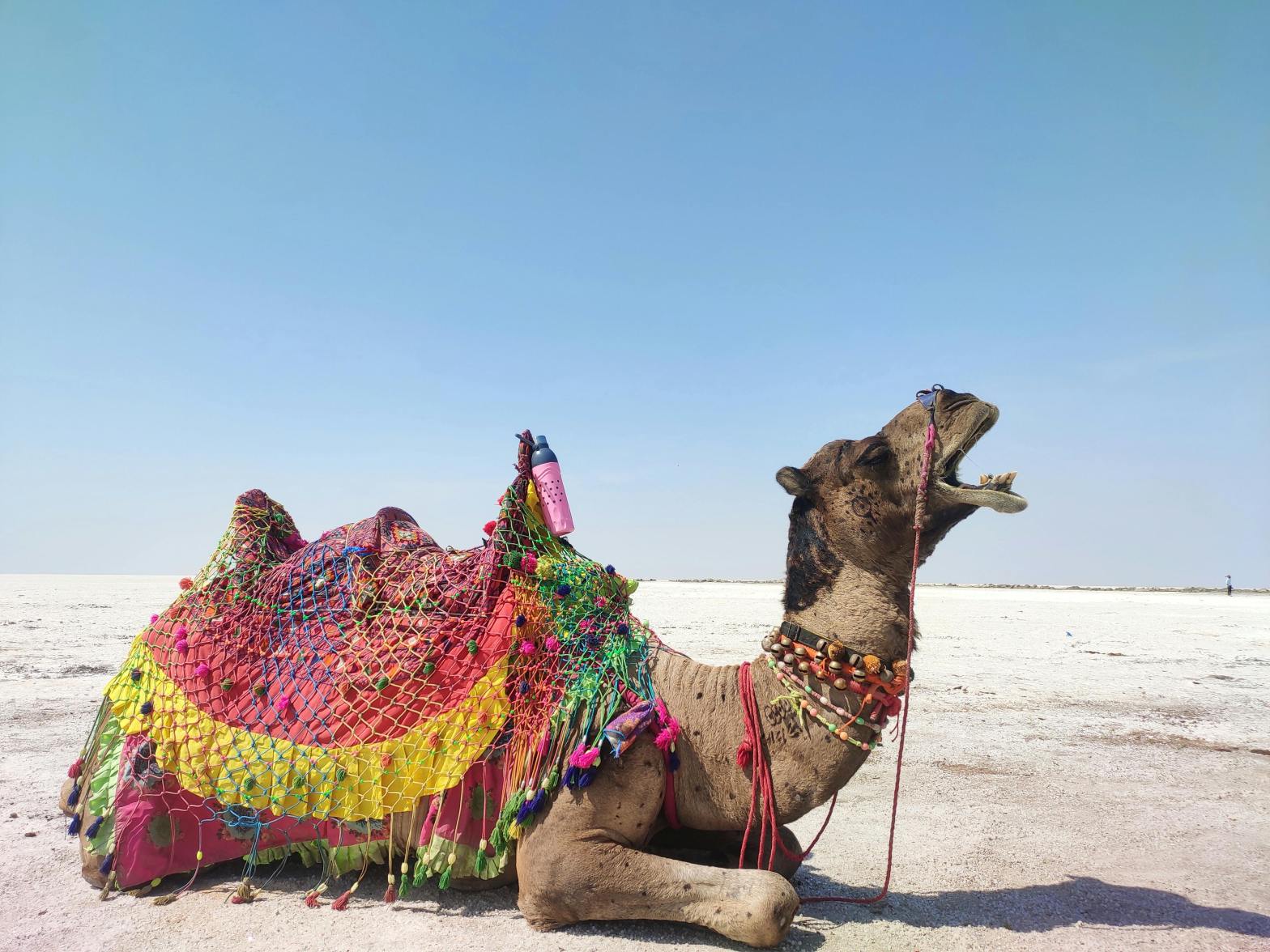
The Rann of Kutch is one of the world’s largest salt deserts, covering over 10,000 square kilometres across the India-Pakistan border. During monsoons, this desert transforms into a marshy wetland, but from October to March, it reveals an endless white expanse that stretches like a frozen ocean.
The word “Rann” means desert in Hindi, but this isn’t your typical sandy desert. Here, layers of salt create a mirror-like surface that reflects the sky so perfectly that boundaries between earth and heaven seem to dissolve.
2026 Rann Utsav’s official date: 23rd October 2025 to 4th March.
Please visit the Official Site for more details on tariffs and other information related to the Rann Utsav.
Rann Utsav: Gujarat’s Desert Carnival
Rann Utsav is a three-month-long festival celebrated every year at the edge of the white Rann (desert) in Bhuj, Gujarat, India. From November to February, the Gujarat government transforms the edge of the Great Rann into a magical cultural festival bringing together the region’s arts, crafts, music, dance, and cuisine in one spectacular showcase.
Dhordo is a traditional Kutch Village and uses Mud huts. A visit to Gulbeg’s House (the village headman) is a must-visit for its beautiful kutcha bunga (a hut decorated with mirrors and paintwork on the inside). Interestingly, every Kutch Community has a distinct style of decorating its houses, and each is distinct.
At Dhordo, a ‘tent city’ is created and becomes a hub of art, music, dance, and craft.
Here’s what you can expect:
- Performances under the stars: Watch Kalbelia dancers move like serpents, listen to traditional Kutchi ballads under starlit skies, and witness the hypnotic rhythms of Sufi music. The Kutch music is influenced by Sufi & Folk songs and uses instruments like Bhorrindo, Manjira, Morchay, Jodia Pava & Rava.
- Craft showcases: Over 100 artisans from across Kutch demonstrate their skills through mirror work, block printing, pottery, weaving, and the famous Kutchi embroidery. Here’s where you get to witness living traditions passed down through generations
- Adventure activities: From camel safaris and ATV rides to hot-air ballooning and paramotoring, there’s no shortage of ways to explore the salt desert.
Accommodation at Rann Utsav:
- Tent City: Government-run accommodation with various categories from economy to premium
- Royal Kutch Safari: Luxury desert camps with all modern amenities
- Cultural programmes: Included with accommodation, featuring renowned artists and performers
Pro Tips for Rann Utsav:
- Book accommodation well in advance, as the festival attracts over 2 million visitors
- Visit on weekdays for fewer crowds and better photo opportunities
- Carry warm clothing, as desert nights can get surprisingly cold
- The full moon nights are most magical, but also the most crowded
The Rann of Kutch is the only large flooded grassland zone in the whole Indo-Malayan region of the planet. The fact that the area has a desert on one side and the sea on the other provides a variety of ecosystems, including mangroves and desert vegetation.
Beyond the Festival: Offbeat Rann Experiences
1. Village Homestays: Living the Kutchi Dream
Skip the tourist crowds and stay with local families in villages around the Rann. Places like Ludiya, Hodka, and Dhaneti offer authentic homestays where you’ll sleep in traditional bhungas (circular mud houses), eat meals cooked on wood fires, and learn directly from master craftspeople.
Hodka Village: This model eco-tourism village offers stays in beautifully decorated bhungas. Wake up to peacock calls, help with daily chores, and learn traditional crafts from elderly women who’ve spent lifetimes perfecting their art.
Your host family doesn’t just provide accommodation but shares stories, teaches you to cook local dishes, and often treats you like a long-lost relative. It’s India’s incredible hospitality at its most authentic.
2. Full Moon Desert Camping
While Rann Utsav gets the publicity, camping in the desert during full moon nights outside the festival period offers an entirely different experience. The moonlight on the salt crystals creates a luminescent landscape that seems almost supernatural.
Best spots for wild camping:
- Little Rann of Kutch: Less crowded, equally beautiful
- Kutch Desert Wildlife Sanctuary: Combine wildlife spotting with desert camping
- Near Khavda: Traditional salt farming area with incredible sunrise/sunset views
3. Salt Farming with the Agariyas
Do you know that the Agariya community has been harvesting salt from the Rann for over 600 years! Visiting during salt-making season (October to June) offers insights into this incredible traditional livelihood that seems both ancient and timeless.
Watch families create geometric salt pans, channel seawater, and harvest crystalline salt by hand. It’s backbreaking work performed with grace and inherited wisdom.
Many Agariya families welcome visitors, sharing their stories of resilience, their deep connection to the land, and their concerns about modernisation threatening their traditional way of life.
Places to See in & Around Bhuj
This historic city, rebuilt after the devastating 2001 earthquake, combines architectural heritage with vibrant living culture. Here are the must-visit attractions in and near Bhuj:
Aina Mahal:
The Aina Mahal may look like just another palace, but as you step inside, it is a world of mirrors.
The palace was built in 1752 during the reign of Lakhpatji of the Jadeja dynasty and was designed by Ramsinh Malam, who trained in Europe as an artisan for over 17 years.
Most of the palace was destroyed during the 2001 earthquake, but some parts have now been restored for the public. The Aina Mahal’s most visited rooms include Fuvanra Mahal (an entertainment room full of musical instruments, which were played by the musicians for the king) and Hira Mahal (State Bedroom of the King that holds a huge bed standing on pure gold bed posts!)
Prag Mahal: (2.5 km from Bhuj Railway Station)


Standing beside Aina Mahal, Prag Mahal represents a fascinating blend of European architectural ambition and Indian craftsmanship. Commissioned by Rao Pragmalji II in 1865 and designed by Colonel Henry Saint Wilkins, this Italian Gothic palace took 14 years to complete, finally finished in 1879 during the reign of Khengarji III at a staggering cost of 3.1 million rupees.
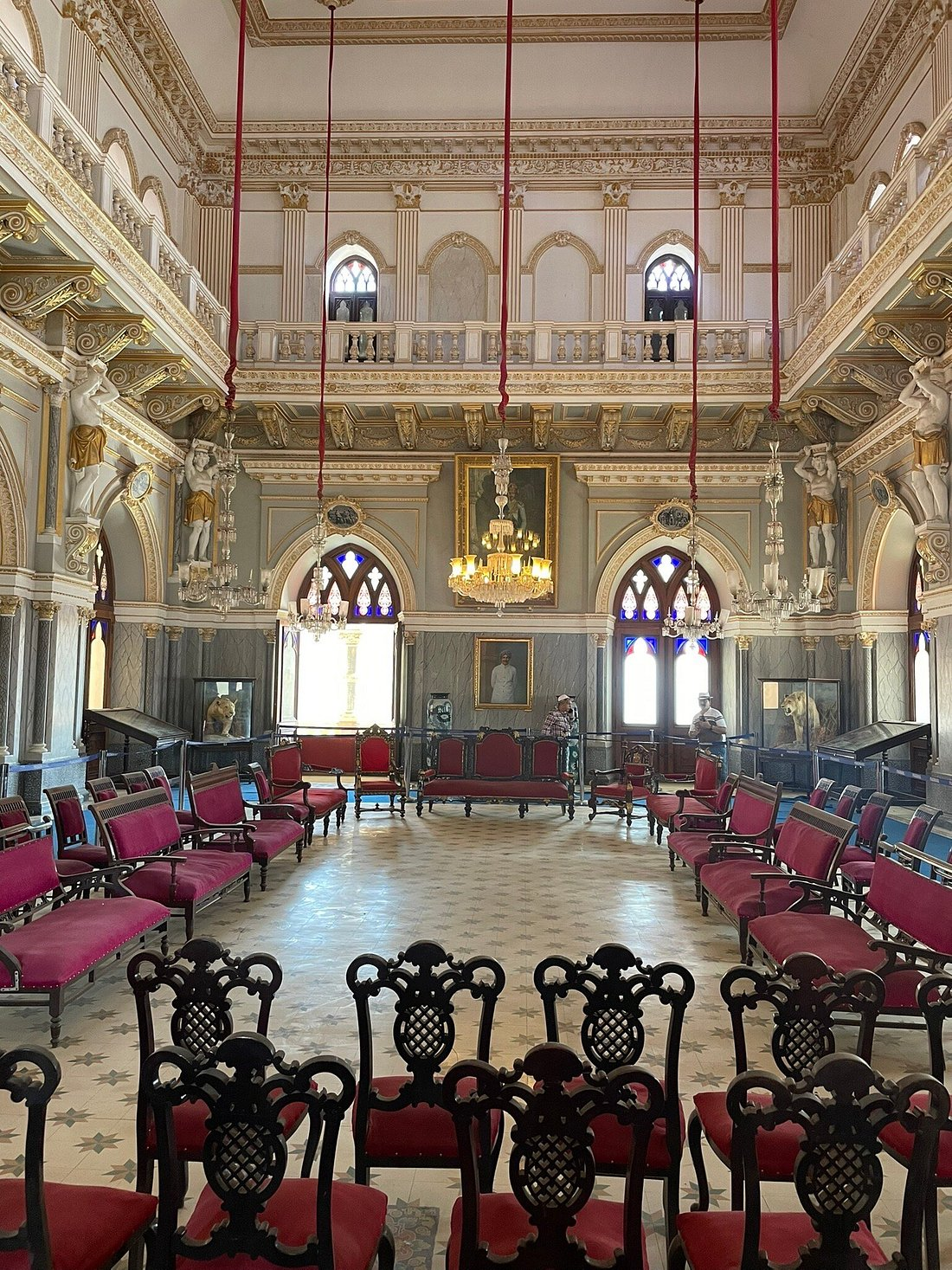
The palace uses Italian marble combined with sandstone quarried from Rajasthan’s deserts and has Gothic-style windows and Corinthian pillars, which seem almost out of place in Gujarat’s landscape, yet perfectly suited to royal grandeur. The palace walls feature intricate stone carvings that reward close inspection, whilst delicate jaali (lattice) work on the jharokhas (overhanging enclosed balconies) demonstrates the skill of local craftsmen working within a European architectural framework.
The main hall presents preserved animal skins mounted in lifelike poses, a Victorian-era practice that offers insights into royal hunting traditions and 19th-century taxidermy. The Durbar Hall creates a more elegant atmosphere with glittering chandeliers and classical statues that once witnessed royal gatherings and state ceremonies.
Prag Mahal’s crown jewel is its clock tower, which is also the second-tallest in India. Earlier, one could climb to the top, but I am unsure about the policy now.
Hidden gem: Within the palace grounds is a small Hindu temple adorned with beautifully carved stonework, often overlooked by visitors but worth seeking out for its craftsmanship.
Sri Swami Narayan Temple (4 km from Bhuj Railway Station)

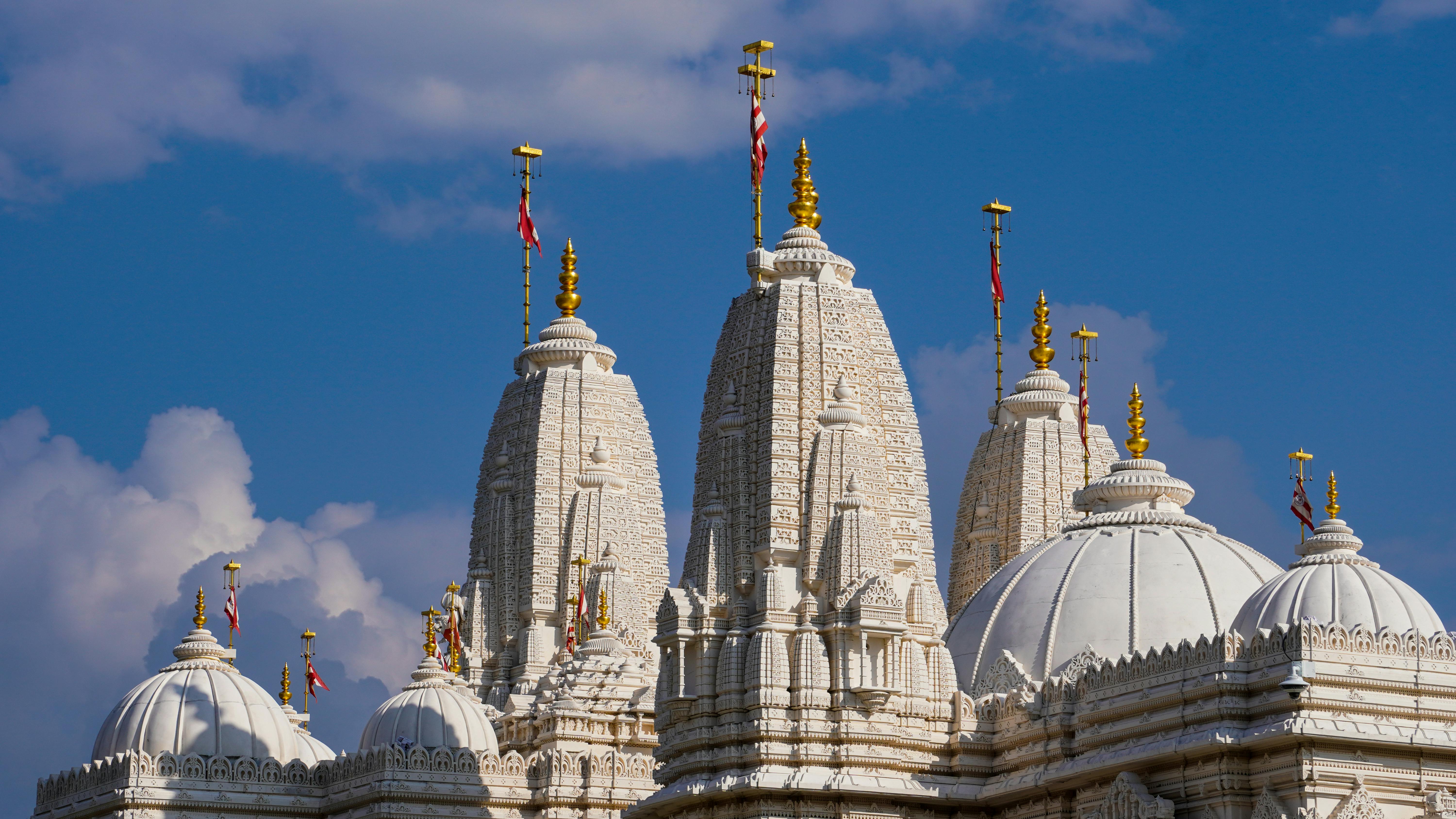
Managed by Nar Narayan Dev Gadi of the Swaminarayan Sampraday, a sect of Hinduism, the Swaminarayan Temple of Bhuj was built in 1822 by Swaminarayan.
Located near the Kutch Museum overlooking Hamirsar Lake, the Swaminarayan Temple commands attention with its gleaming white presence. This architectural masterpiece spans 5 acres and showcases some of the finest marble craftsmanship in Gujarat. The shimmering structure has 7 shikharas, a central dome, 25 smaller domes, and 258 carved pillars (no two pillars are identical) made of pure marble. Look up, and the ceilings reveal even more intricate work, including lotus blooms, celestial beings, and decorative borders that frame each dome.
The sanctum sanctorum houses the idols of Nar Narayan and Swaminarayan. Beyond the main shrine, the temple complex houses additional deities, including Radha Krishna, Ghanshyam, and Sukh Shaiya, each installed in their own dedicated spaces.
Visit the official website https://www.swaminarayan.faith for timings and other details.
Bhartiya Sanskriti Darshan Museum
This private museum, run by the Kala Raksha Trust, focuses on traditional arts and crafts. It’s smaller than the Kutch Museum but offers deeper insights into specific art forms and the artisans who create them.
Kutch is a haven for handicrafts like Kutchi embroidery, hand block printing (Ajrakh prints, Batik prints and Rogan painting), wood carving (Harijan people living in Dumaro and Ludia are master craftsmen of wood carving and Meghwal embroidery), Seashells are used to make toys and decorative items, and iron bells with copper coatings are quite unique and are made at Nirona and Zura.
Kutch Museum
India’s oldest museum houses an incredible collection of Kutchi artifacts – ancient coins, manuscripts, textiles, and tribal art. The museum’s tribal section is particularly fascinating, showcasing the great diversity of Kutch’s communities.
Cenotaphs of the Bhuj Royal family (4.5 km from Bhuj Railway Station)
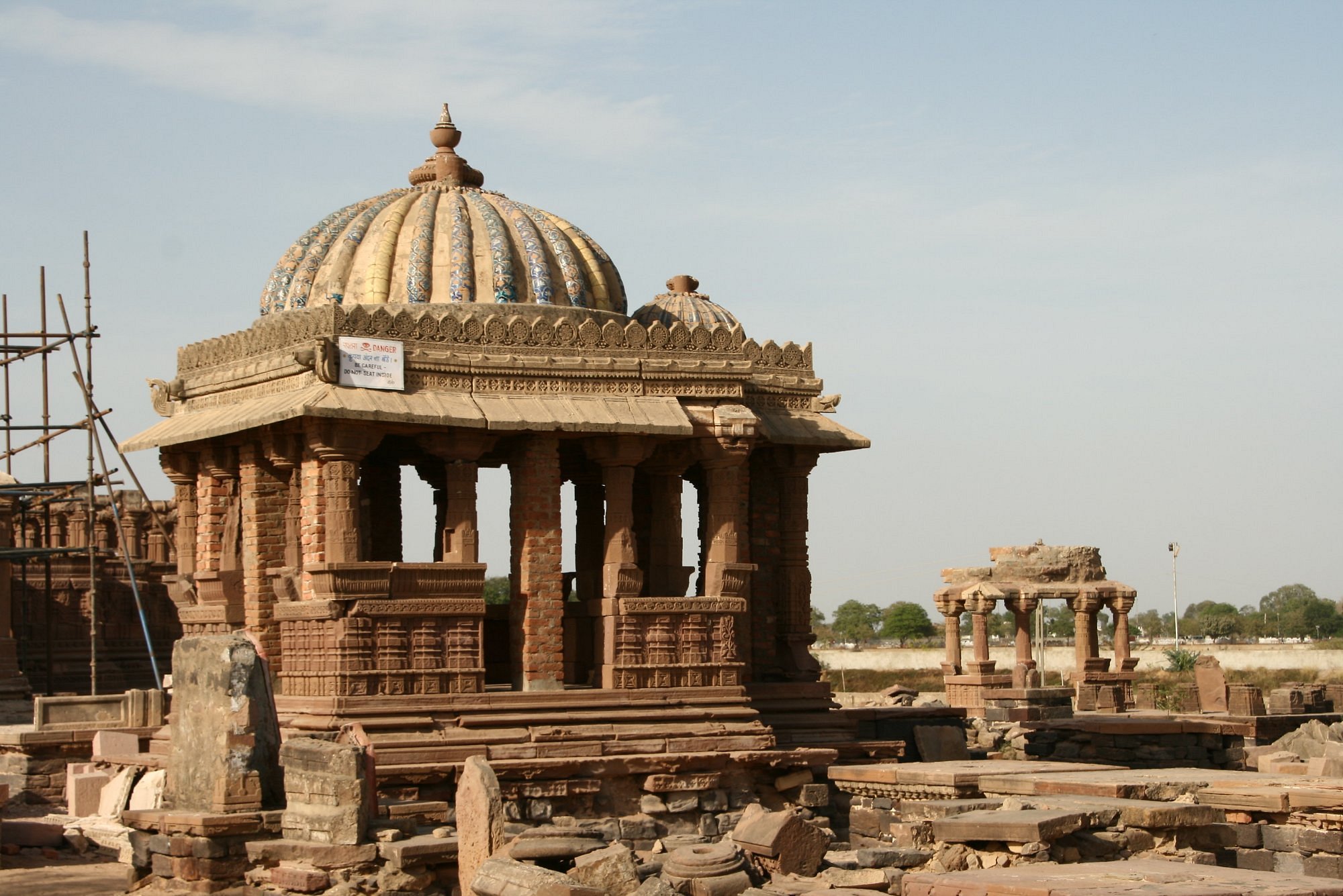
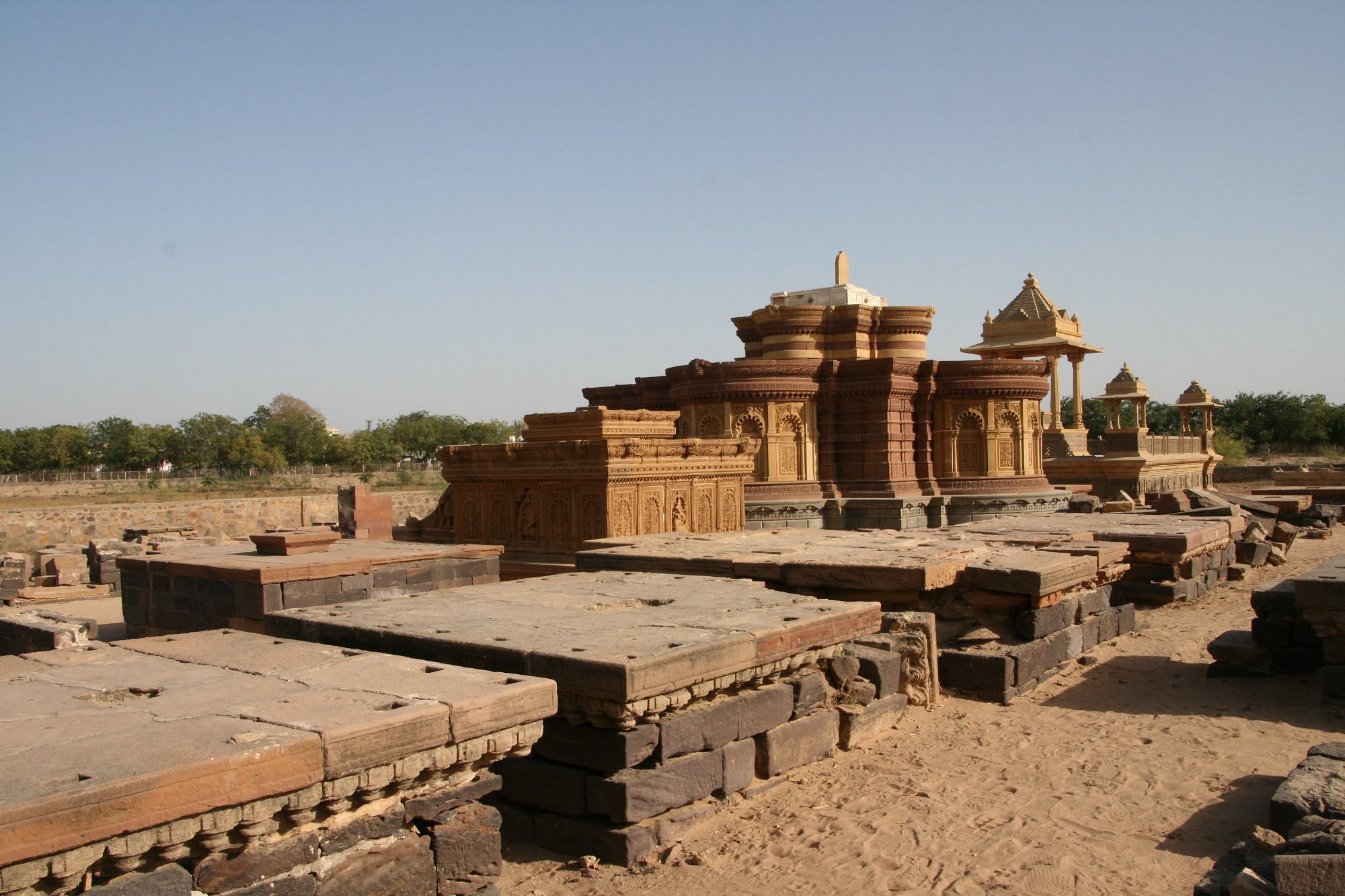
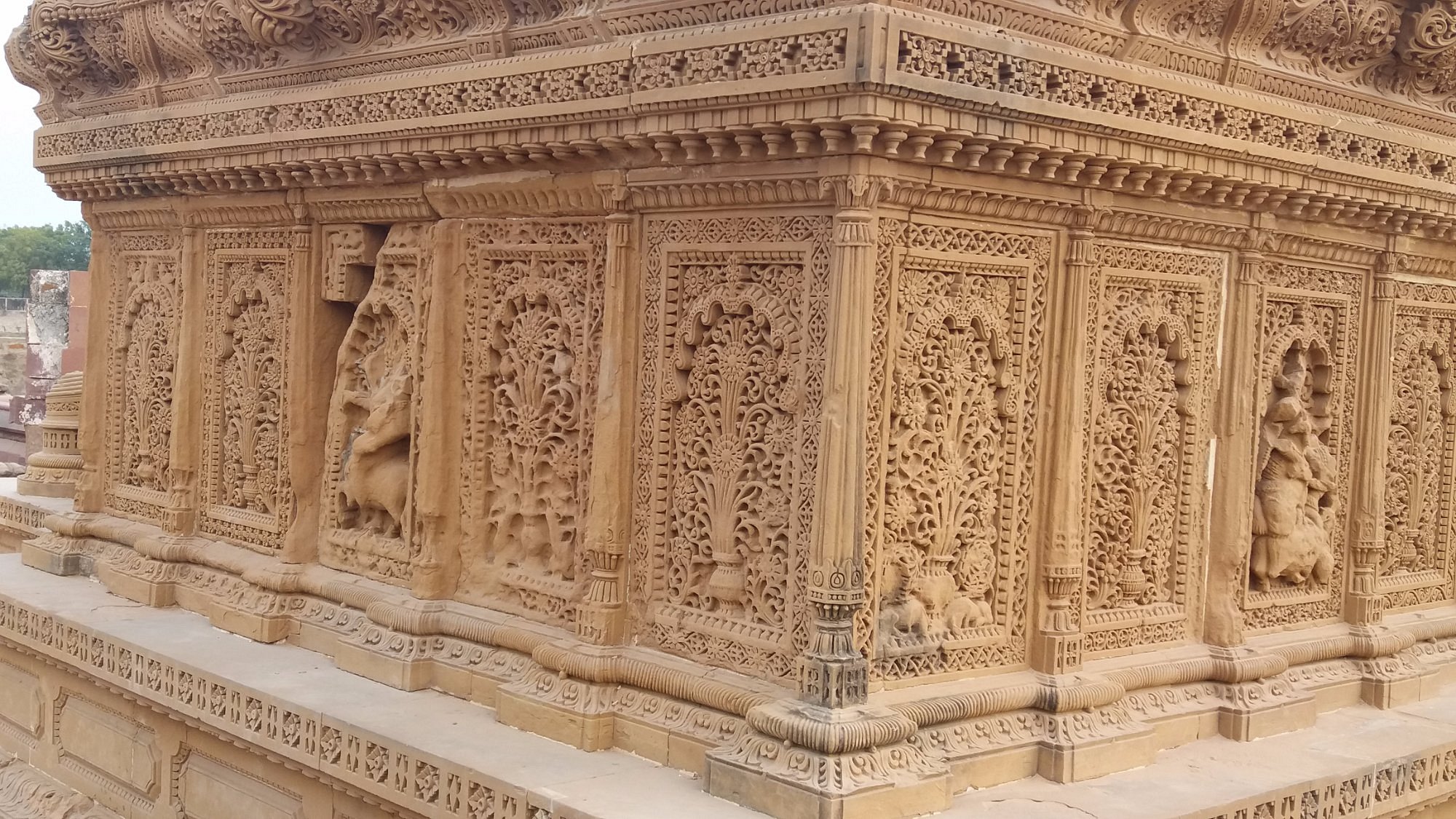
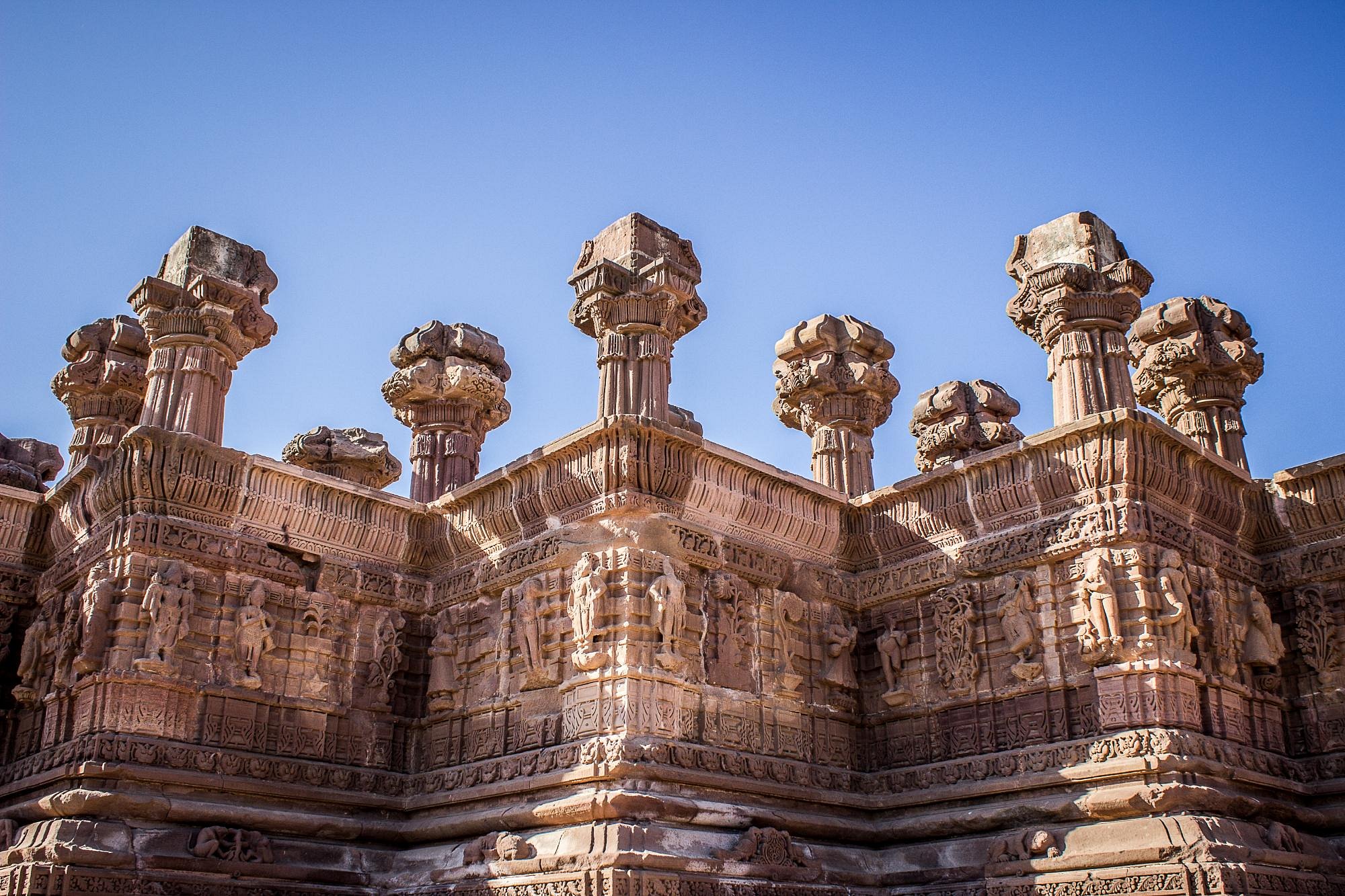
Dedicated to the lives of warrior Rajput rulers of the Kutch. The Chhatris in Bhuj were constructed in the 18th century by Jadeja ruler Rao Lakhpatji. The cenotaph of ruler Rao Lakhpatji, said to have been built in 1770, is undoubtedly the largest complex. The depictions in stone suggest that 15 of his consorts gave up their lives at his funeral pyre.
Despite the extensive damage that occurred during the 2001 earthquake, the site (varying size and state of preservation) is still well worth a visit.
Rudra Mata Mandir
The temple is more than 400 years old and is 14 km from Bhuj on the banks of the River Khari. The presiding deities here are the Maharajas of Kutch, the Jadeja family.
Travel Beyond: Landscapes & Excursions
Wildlife Adventure:
Winter is the best time to visit the Indian Wild Ass Sanctuary, Kutch Desert Wildlife Sanctuary, Kutch Bustard Sanctuary, and many other protected areas in the Kutch region.
Karo Dungar (Black Hill)
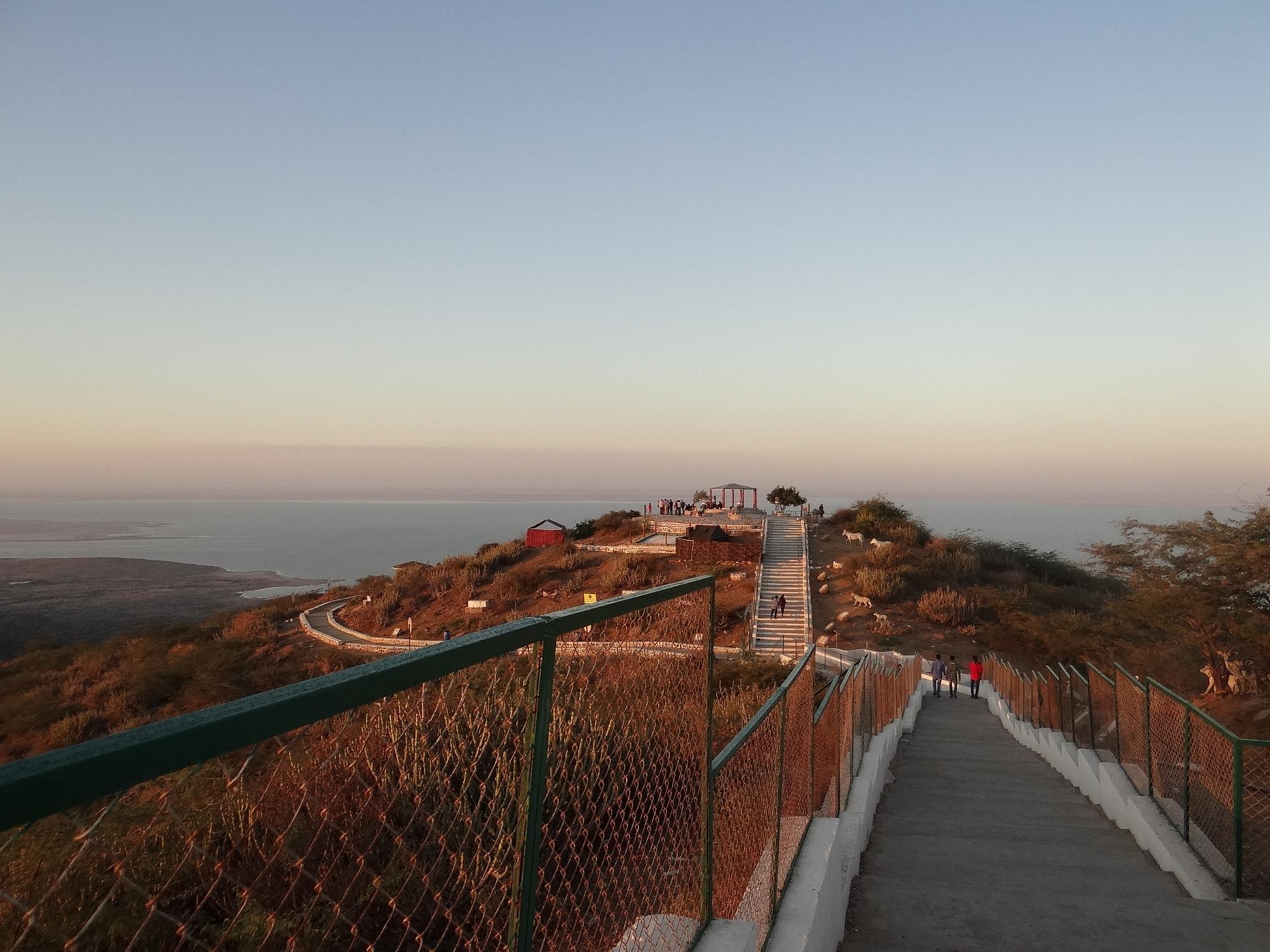
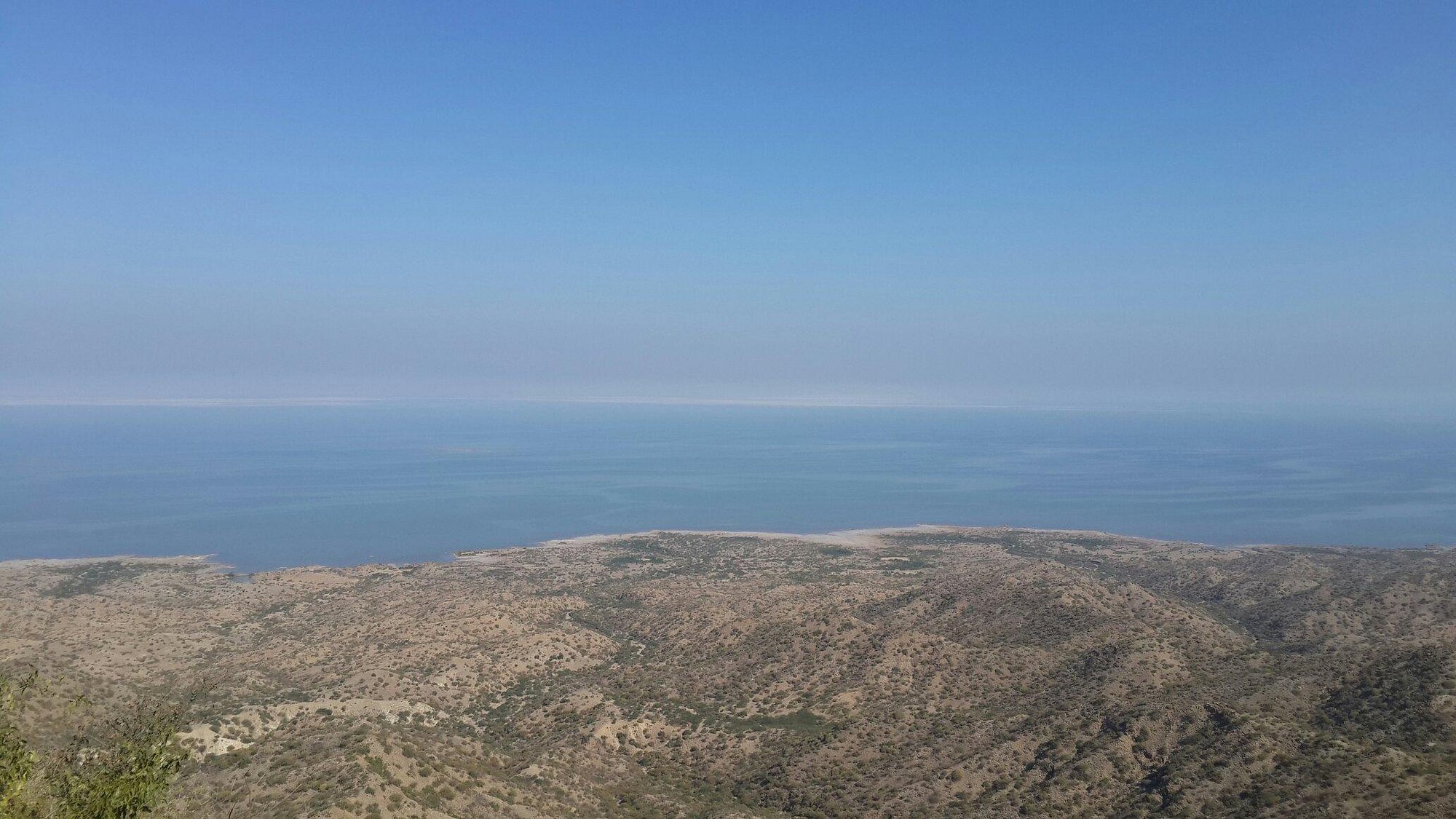
Karo Dungar is the highest point in Kutch and offers a gorgeous view of the ravines and dunes. Visit the Dattatreya Temple situated at the top of the hill. The temple priest here has been feeding the wild Jackals, and you too can watch them eat, from a distance.
The views from the top of the hill here are mesmerising.
Indo-Pak Border
While prior permission is required from the Border Security Force to visit the Indo-Pak border at Kutch, the tourism department, which conducts the Rann Utsav, offers a tour to tourists who have booked it as part of a package. This tour is restricted to Indians only. The trip is combined with a visit to Kala Dungar, as it is located nearby.
Tourists can view the International border pillar and see Pakistani rangers from a distance of just 2-5 feet from the border fence. This day tour is also a key selling point of the Rann Utsav package.
Vijay Vilas Palace & Mandvi Beach (60 km from Bhuj)
Mandvi was built in 1929 by Rao Vijayrajji as the summer retreat of the Kutch Royals, who now reside at the Vijay Vilas Palace, after the 2001 floods damaged their official residence at Prag Mahal.

The palace is nestled in 450 acres of lush greenery, with 2 kilometres of private beach at the beautiful Mandvi beach, which is lined with windmills, making it a delight to walk.
Mandvi also boasts of a 400-year-old shipbuilding industry, and even today, ships are painstakingly built for national & internal use. Read more on my blog on Bhuj & Mandvi.
Culture & Handicrafts of Kutch
Bhujodi Village (8 km from Bhuj): Bhujodi is a 500-year-old village and is a major centre for textile handicrafts and home to more than 200 artisans.
At Vande Mataram Memorial (spread over 12 acres of land), witness the journey of Indian Independence in 4-D technology, which is also India’s first 4-D Memorial. Visit https://vmm.ashapura.com for more details.
Jura & Nirona (40 km): meet master craftsmen Elias Lohar or Haji Vali Mohammad to learn about the skill-intensive process of tuning the famous copper bells of Jura
Nirona is popular for ‘Rogan’ paintings. The ‘Rogan‘ is a unique painting technique that uses castor oil paint to create raised patterns on fabric. The Khatri family has been the sole practitioners of this art for generations. The process is mesmerising – paint flows like liquid silk, creating patterns that seem to have a life of their own. Visit Abdul Gafur Khatri, who belongs to the last remaining family of Rogan artisians, & watch him use a metal stick and some castor oil-based colours to create vivid compositions. Observe Sugar Saya or Mala Khamisa in Vadavas as they transform wood with bright lacquer colours.
Ajrakhpur: This village was established by master craftsmen who migrated from Sindh during Partition and is popular for its Ajrakh printing. Ajrakh is a complex resist-dyeing technique that creates geometric patterns in indigo and red. Watching Ajrakh printing involves 16 different steps, each requiring precision and patience. From preparing the cloth with camel dung and oil to the final washing in the river, it’s a testament to human creativity and persistence.
Bhirandiyara: The tie-and-dye technique of Bandhani reaches its pinnacle in this village. Women create incredibly intricate patterns by tying thousands of tiny knots in fabric before dyeing. Watch elderly women whose fingers move faster than you can follow, creating patterns that will become wedding saris and festive wear. Their skill, developed over decades, transforms simple cloth into heirloom textiles.
Kavda village: This village is known for its intricate paintings created over terracotta pottery.
Sumrasar: This village specialises in traditional leather crafts – shoes, bags, and decorative items that combine functionality with artistic excellence.
The geometric patterns and vibrant colours used in Sumrasar leather work are unlike anything found elsewhere in India. Each piece tells a story of desert life and nomadic heritage.
Gandhi Nu Gam & Mausana: Embroidery traditions, especially Rabari style with mirrors.
Kavda Village: Terracotta painting traditions.
Kukma Village (16 km from Bhuj): The Kukma village is among the main weaving centres. You can visit KHAMIR, which was founded in 2005 as a joint initiative of Kachchh Nav Nirman Abhiyan and the Nehru Foundation for Development. KHAMIR works towards the sustainable development of Kutch Handicrafts, promotes local crafts, preserves traditional art, craft, culture and community of Kutch.
However, with the changing trends in fashion, the weaving has been affected, and traditional arts like Kharad weaving (done on collapsible, nomadic looms) and Mushroo weaving have almost become extinct. This has given way to modern designs implemented on mill-made cloth.
Out of the 16 different types of embroidery done in the Kutch region, the Rabari embroidery is the most famous. This uses chain stitches and an inlay of countless mirrors and gets its name from the Rabari Community, the nomadic tribe of cattle raisers who hail from Rajasthan (who migrated 400 years ago to Kutch). Rabari also means ‘Rahabari’, the one who lives outside or ‘goes out of the path’. Mausana Village can be visited to see the myriad weaving and embroidery of the Rabari people. Another interesting thing to note is that the elderly Rabari women are clad in long black head-shaped caps and a distinctive neck piece and long brass earrings. (Learn more about the Rabari community HERE.
Markets to Explore
Shroff Bazaar: Silver jewellery and traditional Kutchi ornaments, Vaniya Bazaar: Textiles, especially the famous Kutchi mirror work and embroidery and Station Road for modern shopping and mixed crafts.
Must-Try Dishes:
Besides the filling Gujarati thali, try the local snacks such as dabeli, bhaji pavs and meetha meva (at Bhirandiyara). Most even start off the day with jalebi and kachori. Then there are puri shak, kadak, Bhakarwadi, Undhia, Muthia, Gathia and khaman dhokla.
Staple food is Rotlas (rotis made with bajra, millet), which is paired with a spicy dish, generous amounts of homemade butter and a huge glass of buttermilk.
Kutchi Dabeli: Soft buns filled with spiced potatoes, chutneys, pomegranate seeds, and sev (fried gram flour noodles). Each dabeli vendor has a secret spice mix that creates the unique flavours. Recommended: Street food at Shroff Bazaar
Khichdi Variations: Forget the simple khichdi you know. Kutchi khichdi comes in dozens of varieties, each loaded with vegetables, lentils, spices, and ghee that transforms humble rice into a feast.
Kutchi Thali: A complete meal showcasing regional specialties – dry vegetables (shaak), buttermilk-based kadhi, various breads, pickles, and sweets. The thali changes with seasons and the availability of ingredients. Recommended place: Hotel Prince and Noorani Restaurant
Gulab Pak: A dense, sweet confection made with milk, sugar, and rose water. It’s the perfect end to a spicy meal and travels well – essential for desert life.
Location & Distance Guide to Rann of Kutch
From Ahmedabad: 350km via Bhuj (7-8 hours by road)
From Mumbai: 650km via Ahmedabad (12-14 hours by road or 1.5-hour flight to Bhuj) From Delhi: 1,200km (20+ hours by road or 2-hour flight to Bhuj)
The closest town is Bhuj (80 km from the Great Rann), which serves as your base camp. From Bhuj, the desert is accessible via:
- Dhordo: Main entry point during Rann Utsav
- Khavda: For a more authentic, less crowded experience
- White Rann: The most photogenic stretch of pure white salt
Travel tip: The last 30 km to the Rann involves driving on rough desert roads. A sturdy vehicle is essential, and I would recommend hiring a local driver, as they are familiar with these routes and can provide the best experience.
It’s time to travel to India’s White Desert and experience the salt crystals shimmering like diamonds, as well as the ancient crafts that tell stories of resilience.
Have you experienced the magic of Kutch? Share your stories, discoveries, and best things to do in the comments.
Discover more from GoTravelTrek
Subscribe to get the latest posts sent to your email.

Very Good coverage with brilliant supporting photographs
LikeLike