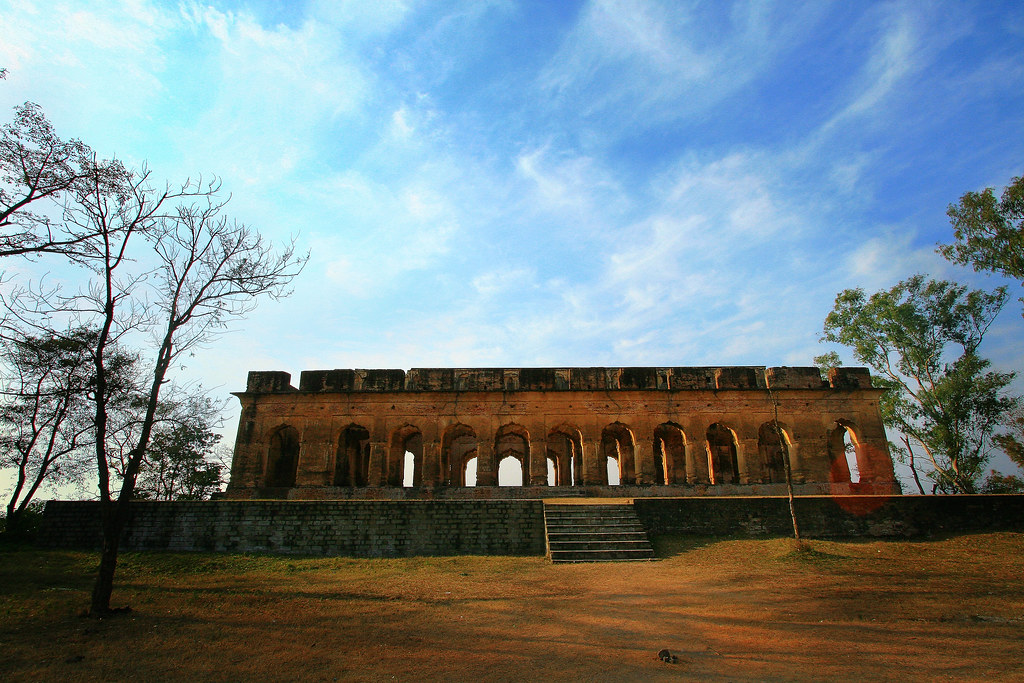
Located on the lower Himalayan foothills and on the bank of River Beas, Sujanpur Tihra (also known as Sujanpur Tira) and Nadaun are both destinations where royal ruins meet riverside walks, temples sit beside local markets, and sunsets unfold without crowds.
Places to See in & around Sujanpur Tihra
Sujanpur Fort
Sujanpur Tihra was once the capital of Katoch Dynasty and today has quite a few remarkable historical sights for an offbeat traveler. Today it carries echoes of its regal past in crumbling forts, temple frescoes, and open courtyards.
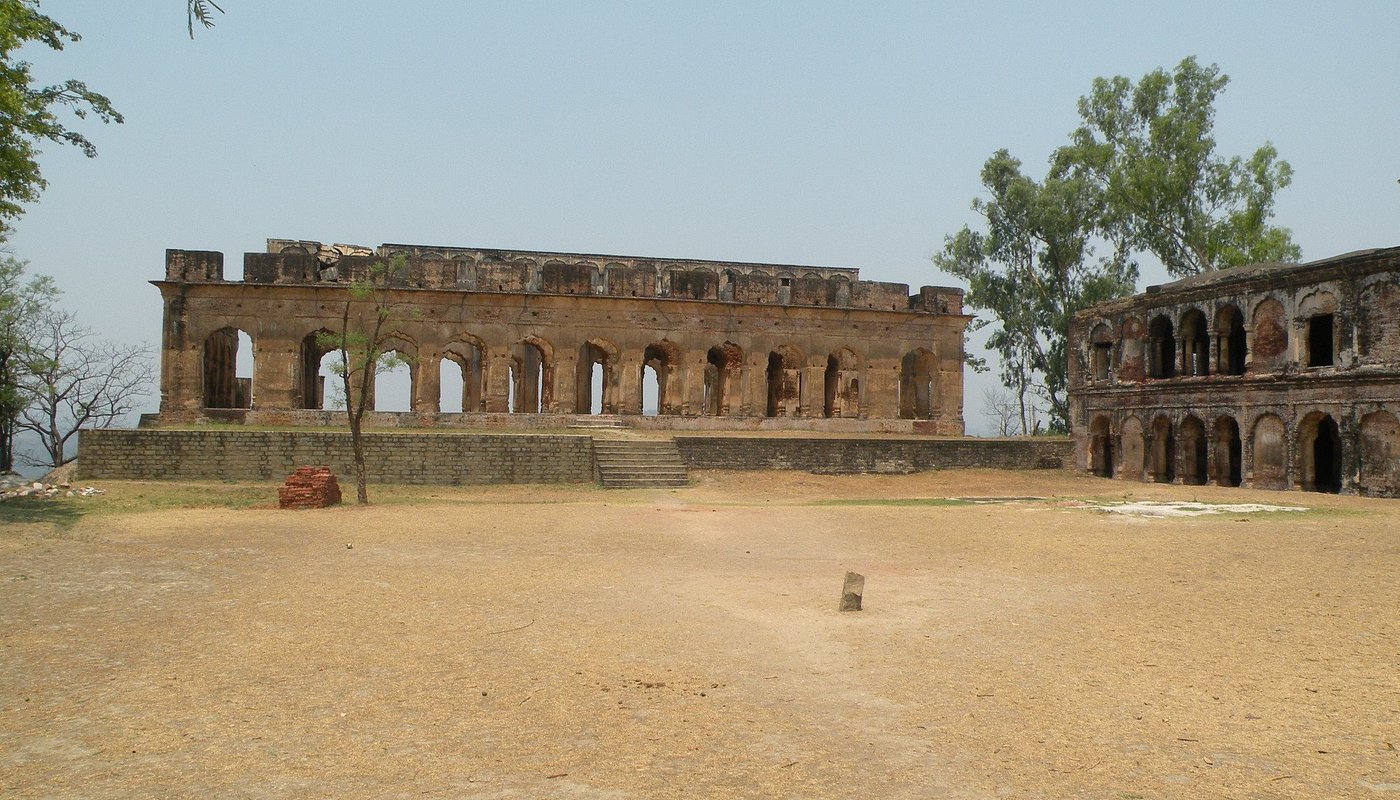
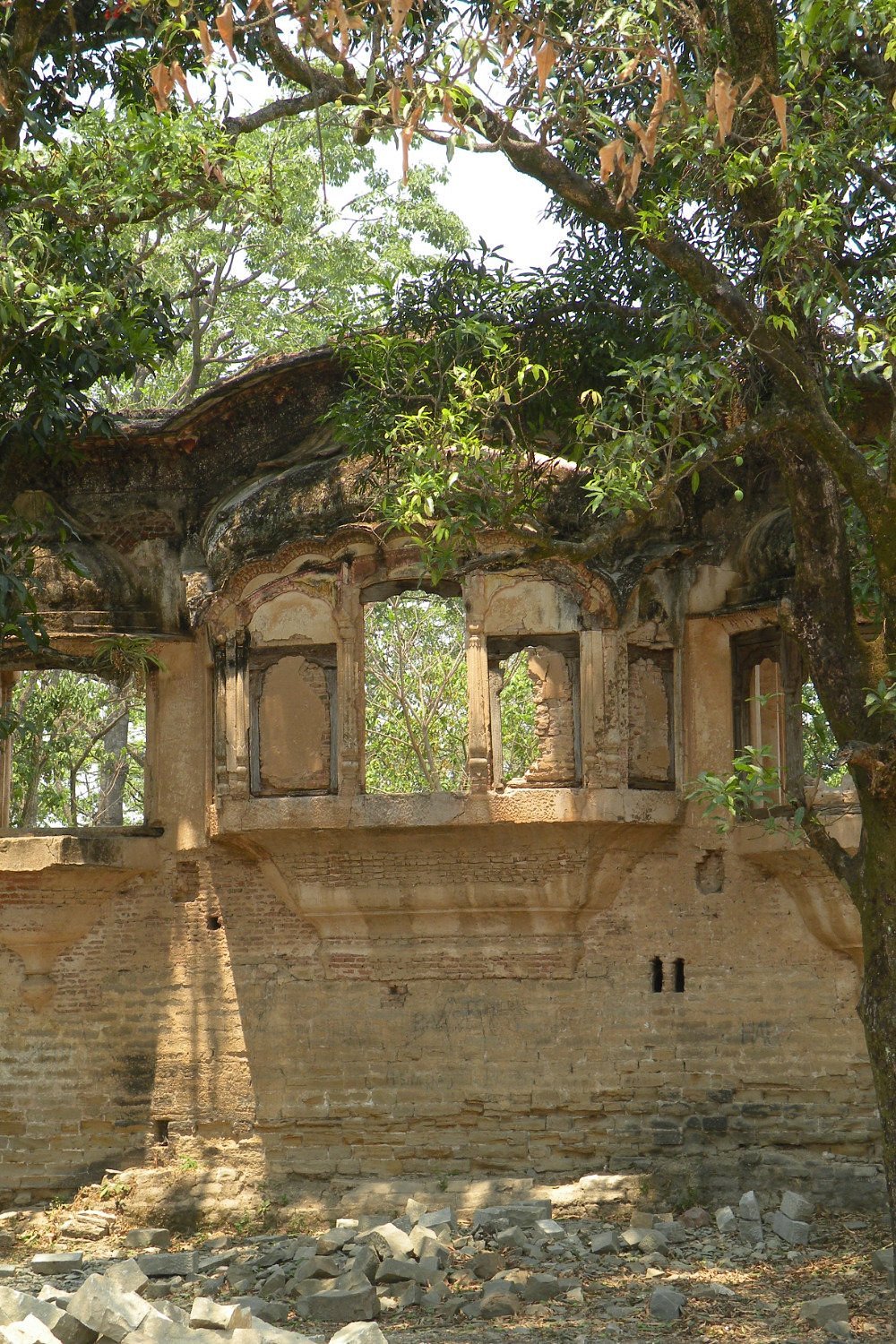
The Sujanpur Fort was build as a military fort in the year 1750 by Raja Abhaya Chand of Kangra and was until the early 19th Century inhabited as the residence of Raja Sanasar Chand, a renowned patron for Kangra School of Miniature Paintings. It got severely damaged during the 1905 earthquake and today only a few ruins remain.
During its time, the Sujanpur Fort was considered on the most beautiful forts in the Himalayan Region.
Today one can view the impressive Baradari which was where the daily court was held. It offers stunning views of the surrounding hills, green valley and overlooks the ‘Chuagan’, a huge green ground/field which is now part of the Sainik School at Sujanpur (founded on 02 Nov 1978). Its lovely to wander through arched gateways and stone corridors while soaking in wide views of the Beas valley
There are 2 temples located within the fort premises both reflecting regional architecture- Murli-Manohar Temple and Gauri-Shankar Temple. Both temples were constructed during the 18th – early 19th Century.
There is an annual fair held during the festival of Holi where the entire region comes alive and the fun continues for 2 weeks. There are even some events & performances by the who’s who from the Bollywood.
Narbadeshwar Temple
Known for its faded murals inspired by epic tales, the Nardadeshwar Temple is dedicated to Lord Shiva and is situated on the banks of River Beas.
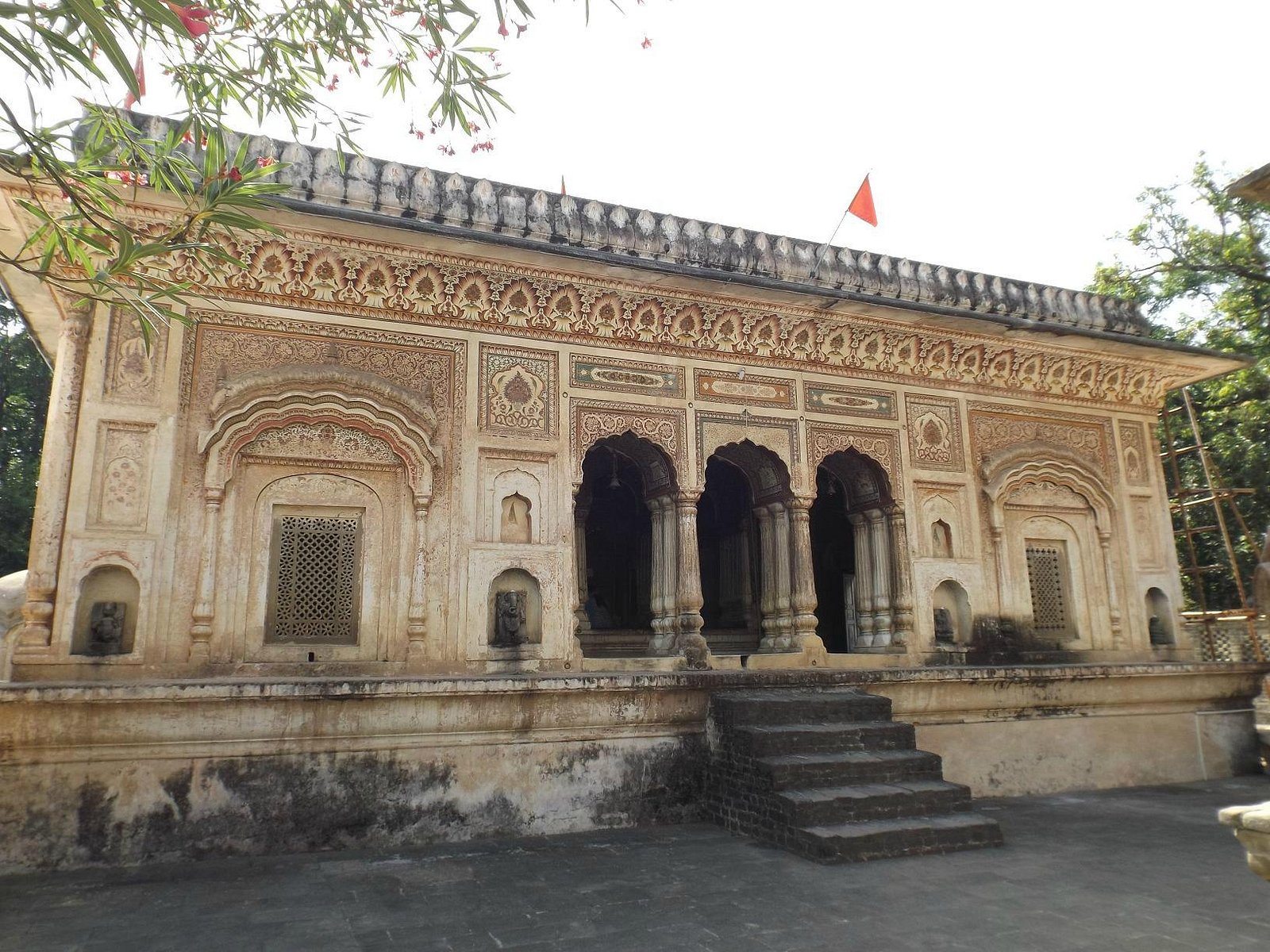
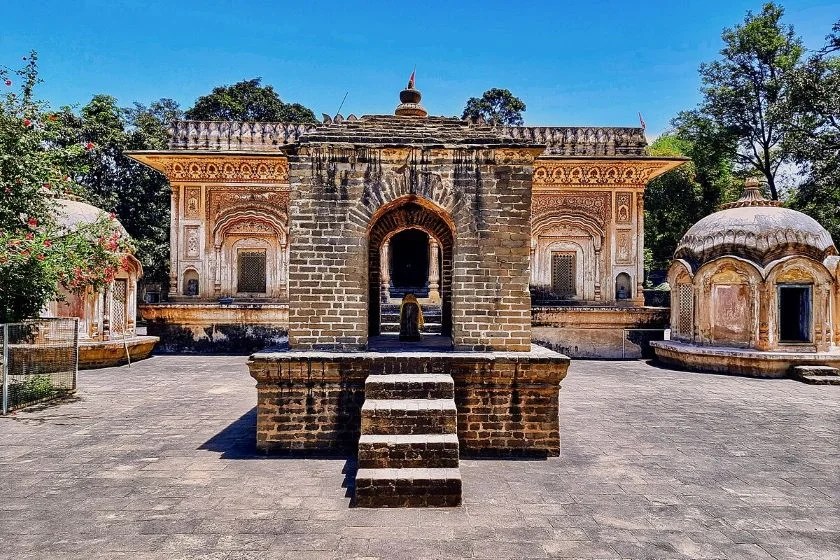
It was constructed in 1802 by Maharani Prasanni Devi, wife of Sansar Chand and is one of the most visited places at Sujanpur. The temple walls have details from the Ramayana & Mahabharata times with beautiful frescoes and exquisite mural work along with Kangra paintings. The Archaeological Survey of India is now making efforts to rework of damages and conserving this rich heritage for futures to come.
While time has mellowed their colours, sections of wall paintings remain inside and around the sanctum. These depict Scenes from the Ramayana and Mahabharata, Divine processions and Shiva in various forms.
Such artwork connects Narbadeshwar to the larger Kangra school of painting, a historic style known for delicate lines and expressive faces.
Interestingly the temple still stands intact even after the massive earthquake that rocked the entire region.
Places to See In & Around Nadaun
Nadaun is 28 kms from Sujanpur Tihra and was once home to the Katoch rulers after they lost Kangra Fort to invading armies.
Nadaun is also known as Amtar-Nadaun fort and was the headquarters of the Nadaun Jagir that also served as the court of Maharaja Sansar Chand of Kangra, during summers. The place is now popular for the Amtar Cricket Ground and few exciting trekking trails.
There are a few ruins worth visiting including the fort, Peer Saheb (grave of a saint who had mystical powers), Gurdwara Dasvin Patshahi (the place where Guru Gobind Singh, the 10th Guru of Sikhs, stayed for eight days after defeating the Mughals in a battle), Bil-Kaleshwar (an ancient Shiva Temple) and few more damaged buildings sharing a past well lived.
Bil-Kaleshwara Temple
The Bil-Kaleshwar Mahadev Temple is located near the river confluence (River Beas and Kunah Kund) and is a 400 year old ancient temple dedicated to Lord Shiva.
As legends go, the Bil-Kaleshwara Temple was constructed by the Pandava’s during their exile period. The work itself was carried with the help of Lord Vishvakarma, during the nighttime so as to stay hidden from the world. However, it is said that the temple could not be finished as someone from the village nearby has some inkling on Pandava’s existence here and so they had no option but to leave the area. Later the Katoch Dynasty completed the temple and since then it is an important pilgrimage site of the region.
Deothsidh
Deothsidh means the ‘light of truth’ and refers to a sacred temple shrine of Baba Balaknath, a deified ascetic of ancient times.
This temple shrine is located in a natural cave atop a hill and was once the abode of Baba Balak Nath. He was believed to be a re-incarnation of Lord Kartikeya, son of Lord Shiva & Goddess Parvati.
Deotsidh is located at village Chakmoh which is 56 kms from Hamirpur and 64 Kms from Sujanpur Tihra. Devotees take the Deotsidh Forest Trail (2.5 to 3.5 km) which offers a serene walking route that loops around the Baba Balak Nath Cave Temple.
For more details on its history please visit www.bababalaknathdeothsidh.com.
Ghanotla Forest Trails
Short forest walks near Bari village introduce you to birds, butterflies, and local flora. These trails aren’t marked but locals are happy to guide.
Naalu Waterfall
Located within the Ghanotla forest belt, near Bari Village, the waterfall is small but worth a visit especially during the monsoon.
Kalanjari Devi Temple (6 km from Hamirpur town)
This is a temple more than 200 years old and is dedicated to Maa Kalanjari, a form of Goddess Durga.
Local folklore suggests that once when the idol was removed, the carriers lost their eyesight, which was restored only after returning the idol, indicating the Goddess’s desire to remain in that location.
The temple becomes particularly vibrant during Asharh (June-July) during which a grand fair is also held.
Trekking Options
While this isn’t a hardcore trekking zone, there are rewarding walks:
- Sujanpur Fort → Chaugan → Temple Circuit Walk (2–3 hrs)
- Nadaun Riverside Path → Bilkaleshwar Temple
- Village-to-village strolls around Amroh and Jalari belts
- Maidi to Nadaun Trek (5 Day Trek): This trek offers you as chance to get to stay with the villagers and provides an exciting opportunity to learn more about their culture, traditions etc. For more details please connect with Atal Bihari Vajpayee Institute of Mountaineering and Allied Sports, Manali (Kullu).
Must-try food dishes:
Food here reflects simple Himachali comfort with Punjabi influence. Most meals are best enjoyed at small dhabas or local eateries rather than fancy restaurants.
- Siddu – steamed wheat bread, often stuffed
- Chana Madra – creamy yogurt-based curry
- Rajma Chawal – locally grown kidney beans
- Chha Gosht – slow-cooked spiced lamb
- Babru – Himachali version of stuffed kachori
- Seasonal river fish
Don’t miss local sweets during festivals, stop for fresh chai at roadside stalls and shop for local homemade pickles and chutneys.
Explore More Nearby
This region rewards photographers who wake early, walk slowly, and stay late. Instead of dramatic alpine peaks, you’ll find soft Himalayan foothills, river reflections, heritage textures, and everyday village life; kind of frames that feel intimate and timeless.
You can easily extend your journey to cover these places that are located near Sujanpur Tihra and Nadaun:
- Amroh Village (12 km from Sujanpur) – Amroh offers a glimpse into traditional Himachali village life. Narrow lanes wind through stone houses and terraced fields.
- Jalari Area (15 km from Nadaun) – Jalari is a cluster of hamlets and farmland stretching along gentle hills. It’s perfect for travelers who enjoy wandering without an agenda. Seasonal crops, grazing cattle, and forest edges create peaceful walking routes.
- Hamirpur Town – Visit for local shopping, cafés, and a glimpse into everyday urban Himachal life. Explore Gandhi Chowk market and try street snacks and local sweets.
- Dehra Gopipur (24 km from Nadaun) – Known for its relaxed riverside ambience and traditional Himachali townscape, Dehra is the gateway to Kangra Valley. It is also the base for excursions to Pong Dam wetlands, Masroor Rock Cut Temples, and Jwalamukhi Temple.
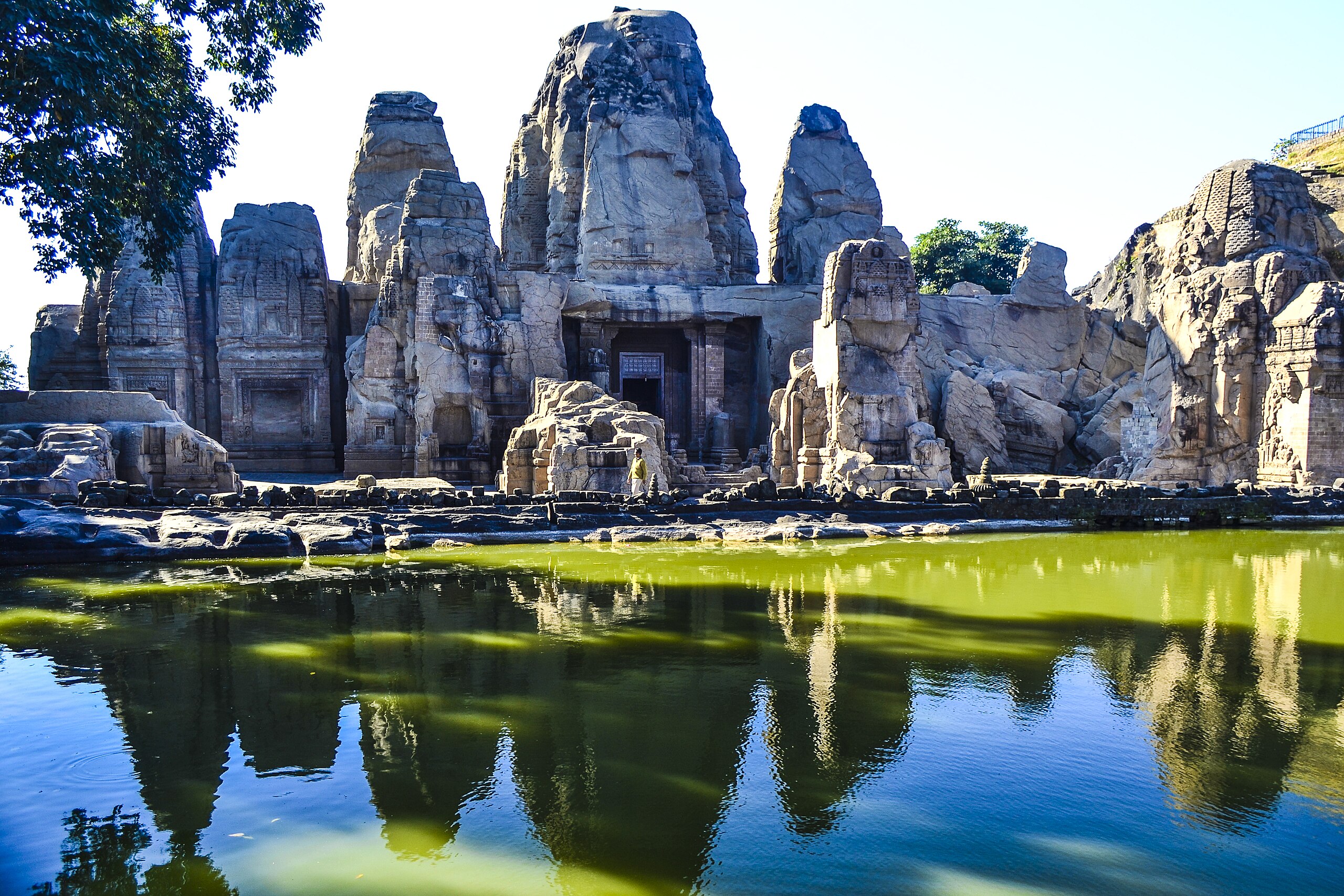
- Masroor Rock Cut Temples – A unique group of monolithic temples carved from a single rock, dating from around the 6th–8th century CE. Their classical style and hilltop setting offer striking photography and architectural insight.
- Jawalamukhi Temple (60 km) – one of the Shakti Peeth. Unlike most temples, its sanctum does not house an idol — instead, devotees worship eternal flames that emerge from fissures in rock, believed to be the goddess’s living presence.
- Kangra Fort – For a deeper historical exploration, you can visit the Kangra Fort which is just outside Kangra town. Kangra Fort stands as one of the oldest and most significant forts in the Indian Himalayas. Its strategic location overlooking the Banganga River and surrounding valley made it a formidable stronghold for centuries.
- Pong Dam Wetlands – is also known as Maharana Pratap Sagar and is a vast reservoir and Ramsar-designated wetland that draws attention from nature lovers, birders, and photographers alikeexcellent for birdwatching (seasonal). The ecosystem supports 220 bird species from 54 families, alongside a range of waterfowl and water birds.
Location & Distance Guide to Sujanpur Tihra
Sujanpur Tihra to Nadaun: 28 km
Sujanpur Tihra to Hamirpur: 24 Kms from
Nadaun to Hamirpur: 28 km
Palampur: 35 Kms
Jawalaji Sjaktipeeth: 40 Kms
Pathankot: 170 Kms
Dharamshala: 120 Kms
Nearest railhead: Una
Nearest airport: Kangra (Gaggal)
Best Time to Visit
- March–June: Pleasant weather, ideal for walking and sightseeing
- September–November: Clear skies, lush landscapes post-monsoon
- Winter: Quiet and peaceful, though evenings get cold
- Monsoon: Beautiful greenery but travel may slow
*Feature Image – Sujanpur Tihra by Neeraj Sharma @Flickr
Discover more from GoTravelTrek
Subscribe to get the latest posts sent to your email.
