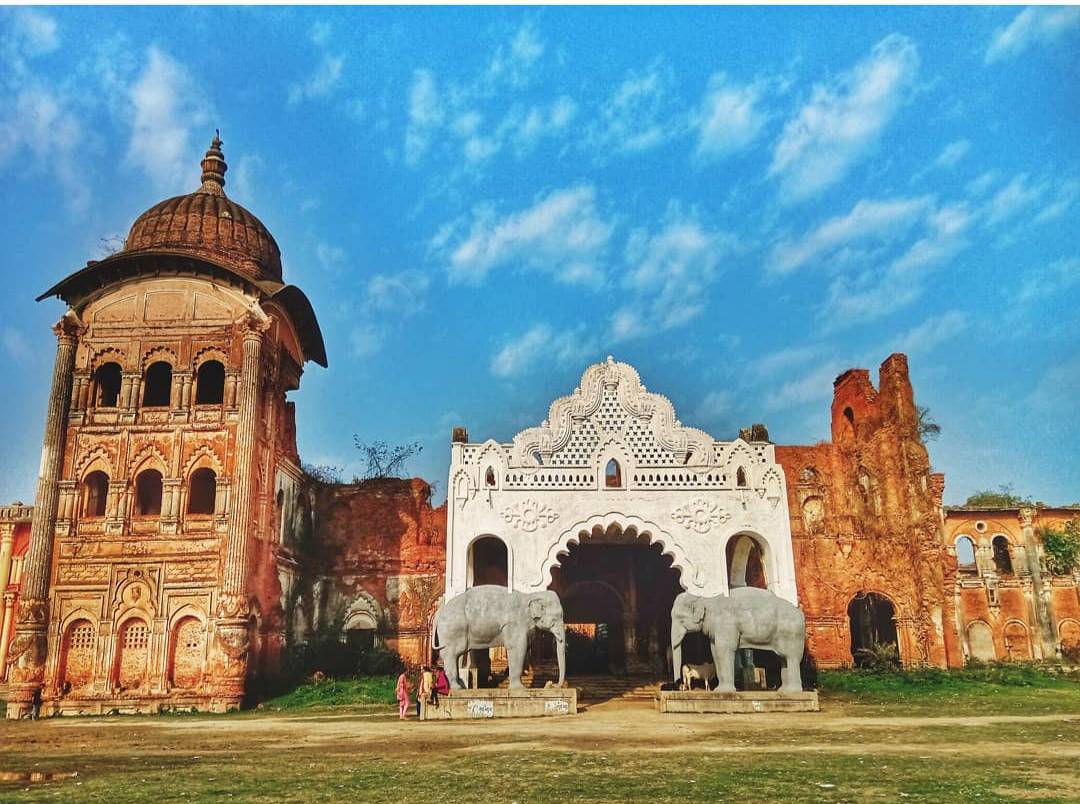
Nestled amidst the serene landscapes of Bihar’s Mithila region, lies the rustic rural block of Rajnagar, just 15 km northeast of the vibrant town centre of Madhubani. Away from the hustle and bustle of city life, Rajnagar beckons travellers with its idyllic charm and cultural riches.
Rajnagar offers a rare opportunity to understand the lifestyle and vision of the powerful Darbhanga Raj family, one of the richest and most influential zamindari estates in India during British rule. Walking through these ruins is like reading a book where every chapter is written in stone, carving, and silence.
You’re not just visiting a place but witnessing what happens when human ambition meets natural disaster, when royal dreams crumble, when communities continue to worship in temples that have no roofs, when art survives even when palaces don’t.
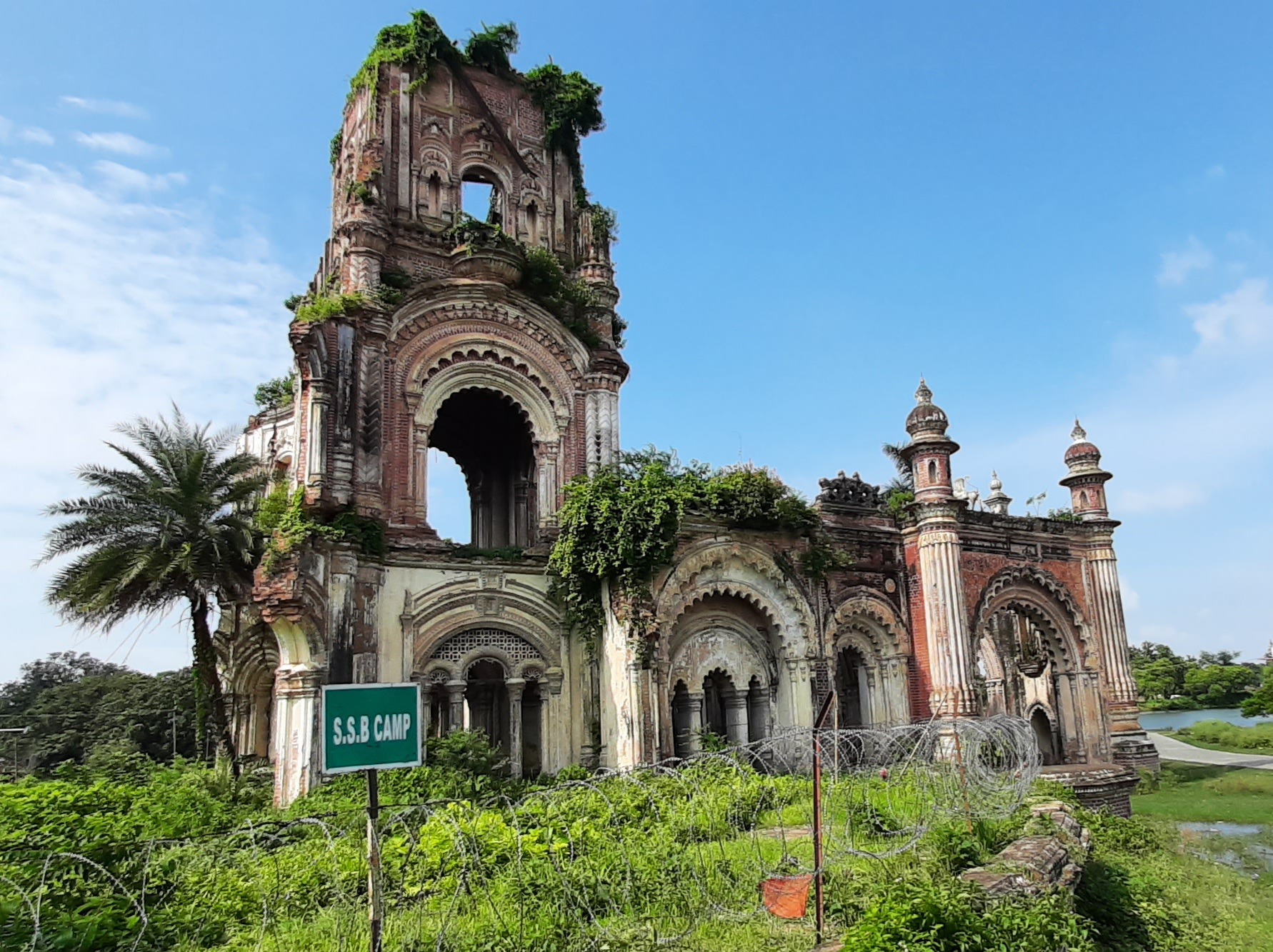
Insider Tip: Allow at least 3-4 hours to wander through the sprawling complex.
Explore Rajnagar
The Navlakha Palace Complex
Spanning 1,500 acres, the complex includes 11 temples dedicated to gods and goddesses and several palaces. What sets this apart from other heritage sites is its raw, untouched quality. There are no ticket counters, no guided tours, no souvenir shops. Just you, the ruins, and centuries of stories.
Architectural Marvel: Up to 22 layers of carving were used in construction, more than the Taj Mahal’s maximum of 15 layers. Giant elephant sculptures at the entrance, along with intricate multi-layered details in the carvings, are easily visible yet critical in the masonry history of India.
The Oldest Madhubani Painting
Here’s something art lovers cannot miss: the décor in the palace’s KohbarGhar (bridal chamber) features the oldest existing wall painting of Madhubani style, created in 1919 for the Maharaja’s daughter’s wedding. While the painting tradition has existed for over a millennium, formal recordings only began in the 1940s, making this a rare surviving piece.
The Kali Temple: Mithila’s Tajmahal
The Rajnagar Kali Mandir is made of white marble and elephant ivory, and is often referred to as the Taj Mahal of the Mithila region. Though damaged by the earthquake, the temple still functions during festivals and offers a glimpse into the religious devotion of the Darbhanga Maharajas.
Village Walks
Rajnagar is surrounded by approximately 60 villages with a population of 2.5 lakhs, with most households relying on agriculture. Walking through nearby villages offers glimpses of rural Mithila life.
The Magic of Madhubani Art
Rajnagar sits at the heart of Madhubani, the birthplace of world-famous Madhubani paintings. While you’re here:
Visit Madhubani Town (7 km away)
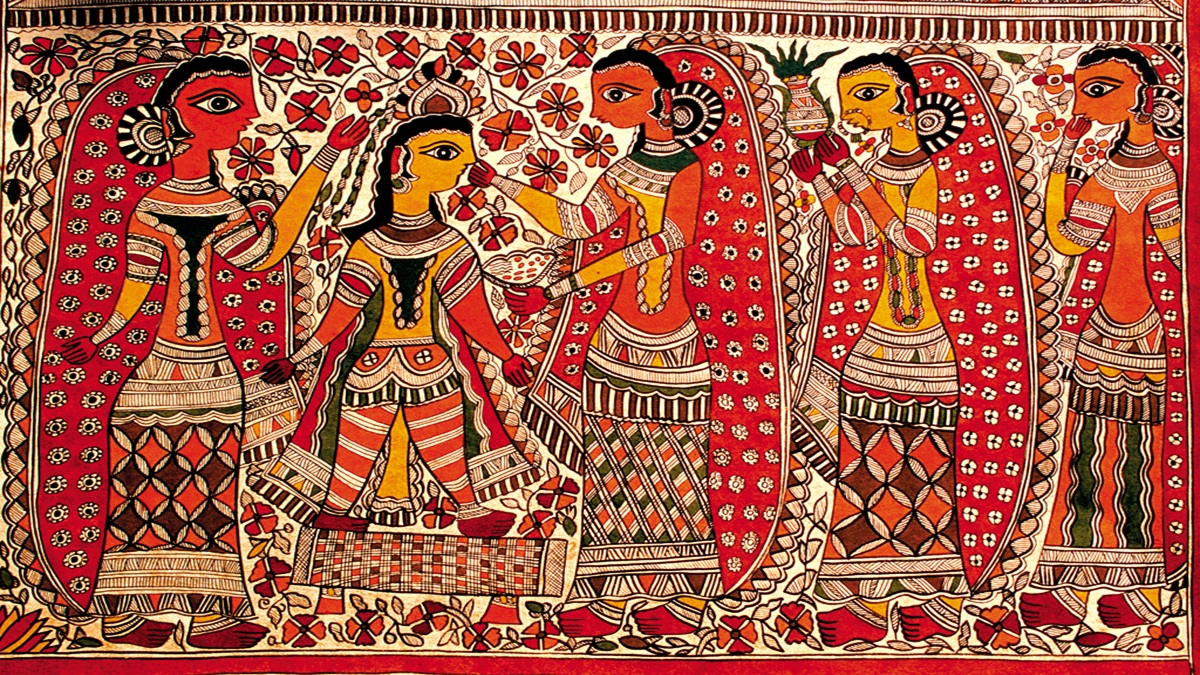
Madhubani art is characterised by eye-catching geometrical patterns, created using fingers, twigs, brushes, and natural dyes like ochre and lampblack. The paintings traditionally depict ritual content for occasions such as birth, marriage, and festivals such as Durga Puja and Holi.
As tourists and art enthusiasts flock to witness this traditional art form, the villages come alive with beautifully painted houses and canvases. The Madhubani artists (some of them being celebrated celebrities) offer a glimpse into their creative world and the stories they depict through their artwork.
Ranti Village: Jitwarpur, Ranti and Rasidpur are the three most notable cities associated with the tradition and evolution of Madhubani art.
Mithila Haat: A cultural centre showcasing and selling authentic artwork.
Local artist cooperatives where you can watch painters at work.
Ram Janaki Temple
The temple in Madhubani is renowned for its painted walls of scenes from the Ramayana, hand-painted by local Madhubani painters. Every pillar and wall depicts chapters from the epic.
Explore More nearby/Day trip options
Darbhanga (35 km)
While Rajnagar represents dreams halted by disaster, Darbhanga city shows what survived.
Darbhanga Fort: Though much of the fort has fallen into disrepair, its grandeur remains intact. Also known as Ram Bagh Fort, this sprawling 85-acre complex built by Maharaja Kameshwar Singh in the early 20th century once served as the residence of the Darbhanga royal family. The fort’s red brick walls stretch 1 km in length and 500 meters wide, creating an imposing structure that dominates the landscape.
The architecture blends Mughal and Rajput styles, with intricate carvings, sculptures, large courtyards, gardens, and water bodies that adorn the complex. Inside the fort, you’ll find the palace, Ganga Mandir, a beautiful temple dedicated to the river goddess Ganga, and Singheshwar Sthan, a shrine dedicated to Lord Shiva.
Shyama Mai Temple: The Temple Built on a Funeral Pyre
The temple complex is located on the grounds of Lalit Narayan Mithila University, and includes six temples built around a central pond said to be filled with water from seven rivers. Wide expanses of lush greenery and multiple temple structures create a soulful atmosphere filled with positive energy.
This extraordinary temple was constructed in 1933 on the site of the funeral pyre of Maharaja Rameshwar Singh at the cremation ghat. Built by his son, Maharaja Kameshwar Singh, the temple stands as a testament to the king’s devotion to his father.
Also known as Rameshwari Shyama Mai Mandir, the temple features a large four-armed black marble idol of Goddess Kali, with historians suggesting the statue was brought from Paris. Mother Kali is worshipped here with both Vedic and Tantric methods.
Sitamarhi (50 km) – birthplace of Mata Sita
If you’re moved by mythology and the Ramayana, Sitamarhi offers one of the most profound pilgrimage experiences in Bihar.
Punaura Dham: The Birthplace of Goddess Sita
Punaura Dham, located in Punaura village, is about 5 km southwest of Sitamarhi city, and is revered as the birthplace of Mata Sita, the consort of Lord Rama.
The Legend: According to Valmiki’s Ramayana, a severe 12-year famine in Mithila. King Janaka performed a great Yajna, and as part of this ritual, he and Queen Sunaina had to plough barren land outside the ashram of sage Pundarik. When King Janaka was ploughing the field, an earthen pot emerged from the ground containing infant Sita. This spot is believed to be Punaura Dham.
Other Sites in Sitamarhi:
- Janaki Kund: A pond originally built by King Janaka, said to have been used to bathe baby Sita. Devotees take holy dips or sprinkle water on themselves.
- Haleshwar Sthan Temple: A temple housing Lord Shiva as Haleshwarnath, established by King Janaka himself.
- Janaki Mandir: Located 2 km from Punaura Dham in Sitamarhi’s marketplace, where a ritual was performed on the seventh day after Sita’s birth.
The Mega Redevelopment: In 2025, the Government of Bihar announced a ₹882.87 crore plan to redevelop Punaura Dham, which will include the construction of a grand Sita Mata temple and a pilgrim corridor similar to Ram Janmabhoomi. The new temple will be designed by the same team of architects who created the Ram Mandir in Ayodhya.
Kapileshwar Temple (9 km from Madhubani)
On the highway connecting Madhubani to Darbhanga lies Kapileshwar Sthan, one of the most revered Shiva temples in the Mithila region.
A Shiva Linga was placed at this temple by the sage Kapila. The temple finds its roots in the Treta Yuga of Ramayana, when Sage Kapil came here to pay homage to his father, Sage Kardam. He sensed the presence of a self-evolved Shiva lingam, successfully detected it, worshipped it, and named it Kapileshwaranath.
According to local beliefs, when Raja Janak of Mithila was ploughing the field, a Shivling emerged from the ground, and Kapileshwar Sthan was established to honour this discovery.
The Temple Complex: The temple has a large boundary, with the main Lord Shiva temple situated in the centre. Within the boundary are other temples, including Parvati Temple, the Hanuman temples, and many historical sculptures. A large pond was dug outside the temple with the help of the Raj Darbhanga, from where devotees take water for Jalabhishek. The west directional Goddess Parvathi temple was built by the Darbhanga Maharaja in 1937.
Muzaffarpur (80 km)
If you’re visiting between May and June, a detour to Muzaffarpur is absolutely essential for a completely different kind of sensory experience.
Muzaffarpur’s Litchi Garden is one of the largest litchi gardens in the world, covering over 200 acres with more than 50,000 litchi trees. The district of Muzaffarpur produces a combined 3 lakh tonnes of litchi every year.
The most sought-after destinations among tourists are the Mushahari, Jhapaha, and Bochaha Gardens.
Beyond Litchis: While in Muzaffarpur, explore:
- Jubba Sahni Park
- Ramchandra Shahi Museum
- Garib Sthan Mandir and Baba Garibnath Temple
- Khudiram Bose Memorial (for history buffs)
Local cuisine: Try Kadhi Bari, Ghugni, Litti Chokha, and traditional Bihari thalis.
Recommended Blogs
- Gargi Manish shares a beautiful blog on Rajnagar.
- An interesting blog shared by PeepulTree World shares more on the History of Rajnagar.
Location & Distance Guide to Rajnagar

National Highways Reachable for Rajnagar: NH27 and NH527A
Patna and Rajnagar: 190 km
From Madhubani: 11 KM near
From Jhanjharpur: 21 KM near
From Darbhanga: 40 KM near
From Samastipur: 79 KM near
From Sitamarhi: 79 KM near
From Muzaffarpur: 92 KM near
By Train:
- Darbhanga Junction (35 km) is a major station with broad gauge connectivity
- Rajnagar Railway Station lies on the Darbhanga–Jaynagar route
- Madhubani Junction (7 km) is the main railway hub, well-connected to Patna, Muzaffarpur, and Delhi
By Air:
- Darbhanga Airport (40 km away) offers direct flights to Delhi, Mumbai, Bangalore, and Kolkata
- Patna Airport (180 km) has better connectivity but requires a 5-6 hour road journey
- Bagdogra Airport: 243 KM near
- Gaya Airport: 246 KM near
- Gorakhpur Airport: 305 KM near
Best Time to Visit
October to March: Pleasant weather with temperatures between 6°C to 25°C—perfect for exploring ruins.
Monsoon (July-September): The landscape transforms into lush greenery, though road conditions can be uneven during the monsoon.
Avoid: Summer months (April-June) when temperatures soar to 42°C.
Feature Image by Google
Discover more from GoTravelTrek
Subscribe to get the latest posts sent to your email.
