
Jaipur is famous for its vibrant, architectural buildings and one of the most visited cities in Rajasthan, India. Being part of the Golden Triangle Circuit, Jaipur offers stunning palaces, forts, and one trip is undoubtedly not enough.
Here are some offbeat or less travelled places in Jaipur that may not have been known by many or written on your travel itinerary, but are worth visiting.
Chulgiri Jain Temple: (20 km from Jaipur)
Constructed in 1953 by Jain Acharya Shri Desh Bhushan Ji Maharaj, the temple is situated on the Aravalli Hills and is also referred to as ‘Choti Kashi’ and has plenty of temples (more than 30) scattered across the hill.
You need to walk 1000 steps to reach the temple, and that is quite an adventure. You will welcome the serene and calm tranquillity of the place and will want to spend a few hours here.
Galtaji Temple: (10 km from Jaipur)
Located within the vicinity of Galwar Bagh in Khania Balaji, the Galta Temple is also known as Galtaji or the Monkey Temple. Built by Diwan Rao Kriparam, a courtier of Sawai Jai Singh II, around the 16th Century, the temples are located amidst a stone cliff, creating a magical sight.

One place many Legends
People believe that many yogis and sadhus have lived and meditated here, and the region was a hot spot for Ramanandi Hindus and Naga Sadhus. Locals also refer to it as ‘Uttar Totadri’ – a name that reflects the same name given to Ramananda School of Hinduism, located in Tamil Nadu. Some even believe that Galta Ji is named after Rishi Galav, who did penance here 60,000 years ago and was pleased with his devotion. The gods blessed the place with an eternal source of water, probably as sacred as the River Ganga!
It was once a water reservoir that provided water for the Jaipur region, sourcing natural spring water from its seven pools. The Galta Kund is considered the most sacred among others as it never goes dry even in the harsh summer season. Look out for some stunning frescoes and paintings depicting Indian Mythology, Rulers, and animals.
The three temples here are the Shri Gyan Gopal Ji Temple (dedicated to Lord Krishna), Shri Sitaram Ji Temple (dedicated to Lord Rama & Sita) and one dedicated to Lord Ganesha (The Elephant God).
People tend to be surprised to see the number of monkeys roaming around. While it sounds thrilling, please be cautious and refrain from feeding the monkeys. Many try to touch the monkeys and take photographs, but that’s also unsafe, as they can become aggressive and attack. Remain calm and move around. Once you settle down, watch the monkeys hang around the temple, playing and dangling around the walls. The monkeys are so famous that National Geographic has featured them in a documentary called ‘Rebel-Monkeys’. Watch it!
Fees: No Entrance Fees; however, you may offer a donation for the temple’s upkeep. Best time to visit: Galta Ji is open from sunrise to sunset.
Insider Tip: For most panoramic views, visit at dusk. If you have time, walk up to the Sun Temple, located just above the ridge behind the Galta Temple.
Panna Meena Ka Kund
Built to provide water to the people of Amer, the sub-city of Jaipur, the Panna Meena Ka Kund is an ancient step-well located near the Amer Palace. It may not be the most visited site on Jaipur Sightseeing tours, and that itself makes me recommend it as a must-visit on your trip to Jaipur.
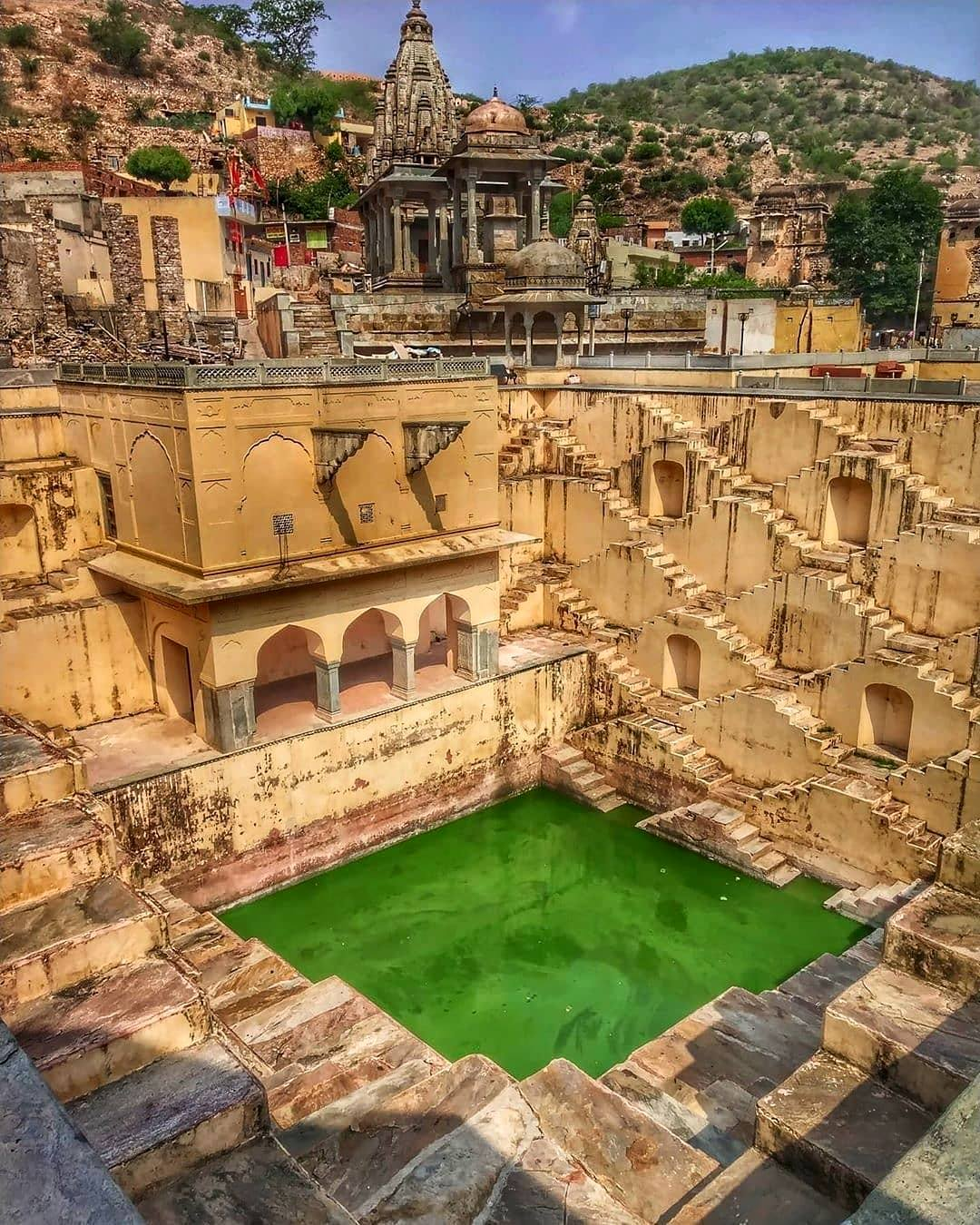
The tessellating diamond-patterned stairs here are stunning and are a delight for photographers. Again, words cannot explain the effect this small yet gorgeous place has to offer, so spend some time here.
How to Reach: Take a short walk from the Amer Palace. The step-wells are near Anokhi Museum (Jaipur-Amer road) (a walk of 1 km or so).
Jagat Shiromani Temple, Amer
The name Jagat Shiromani means ‘Head Jewel of Lord Vishnu’, and the temple is locally known as the Meera Bai Temple. Dedicated to Krishna’s devotee, Meera Bai, the Jagat Shiromani Temple was constructed between 1599 and 1608 AD in memory of Maharajah Sawai Man Singh I ‘s eldest son Jagat Singh by his mother Rani Kanakwati.
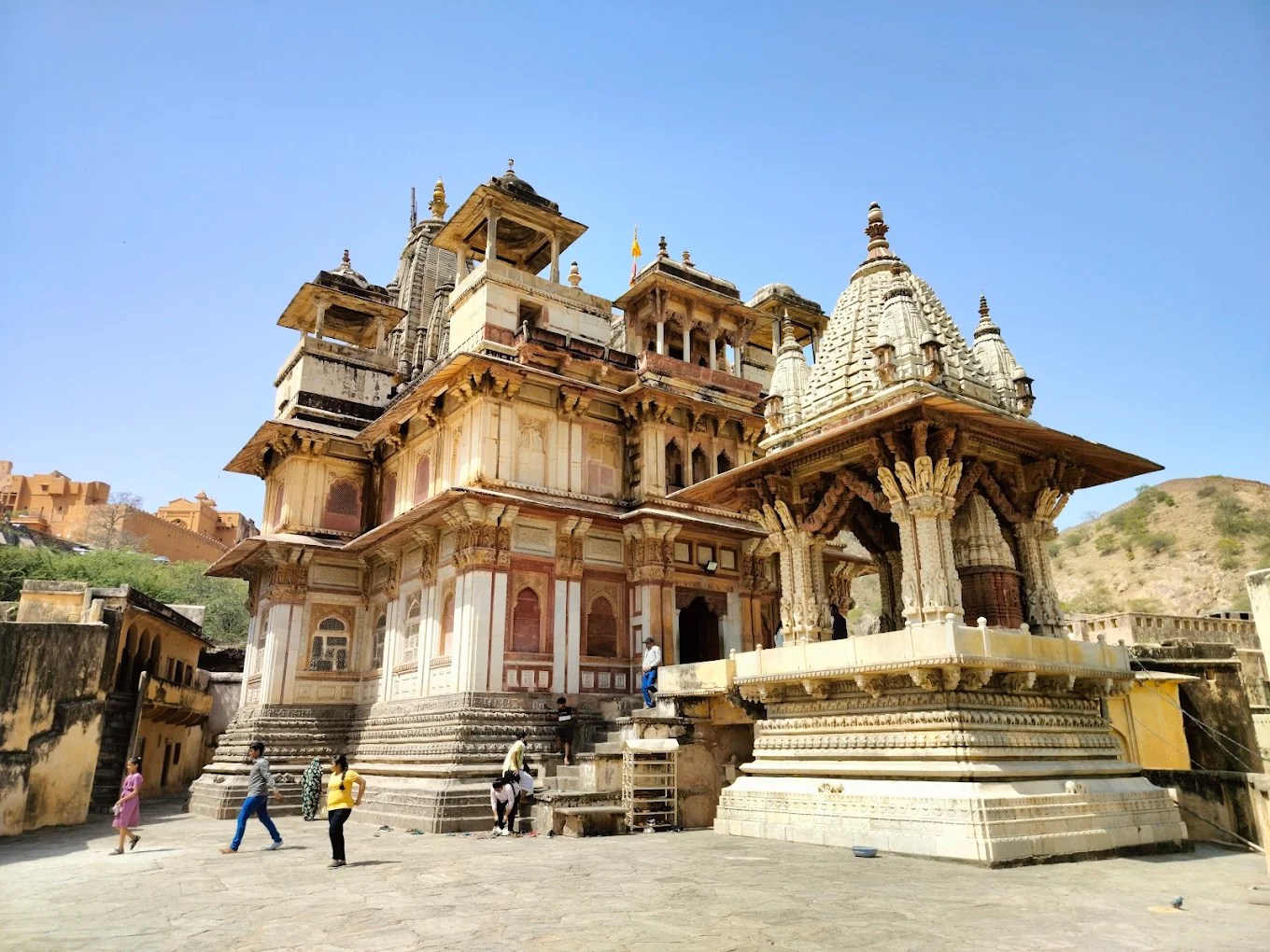
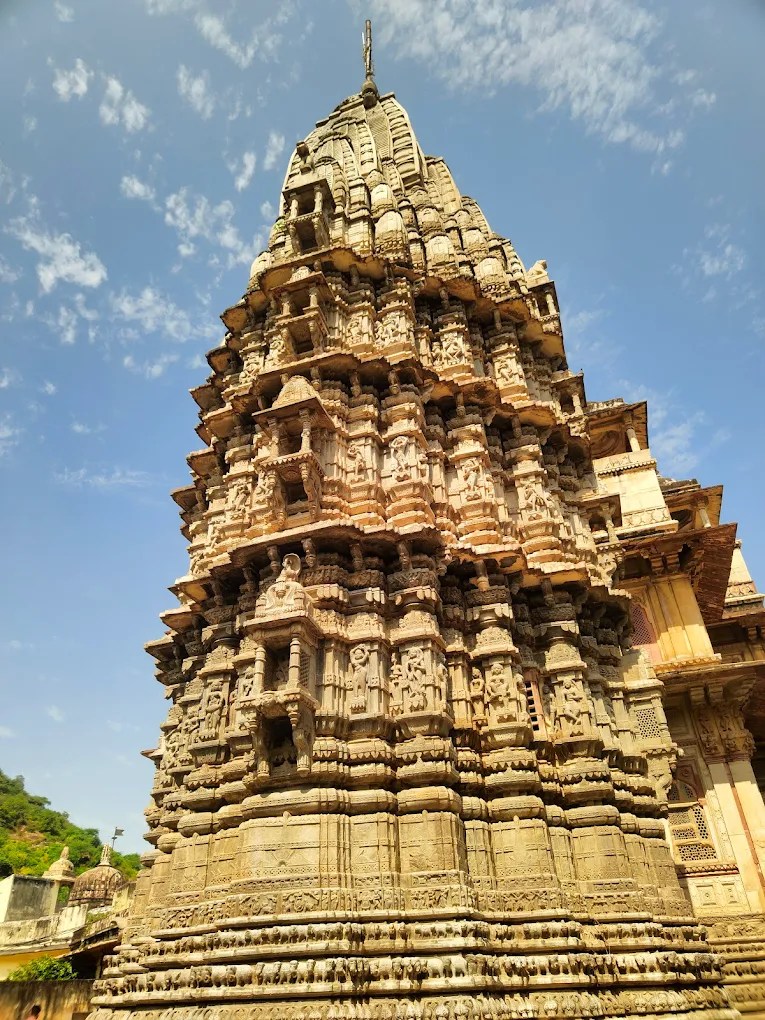
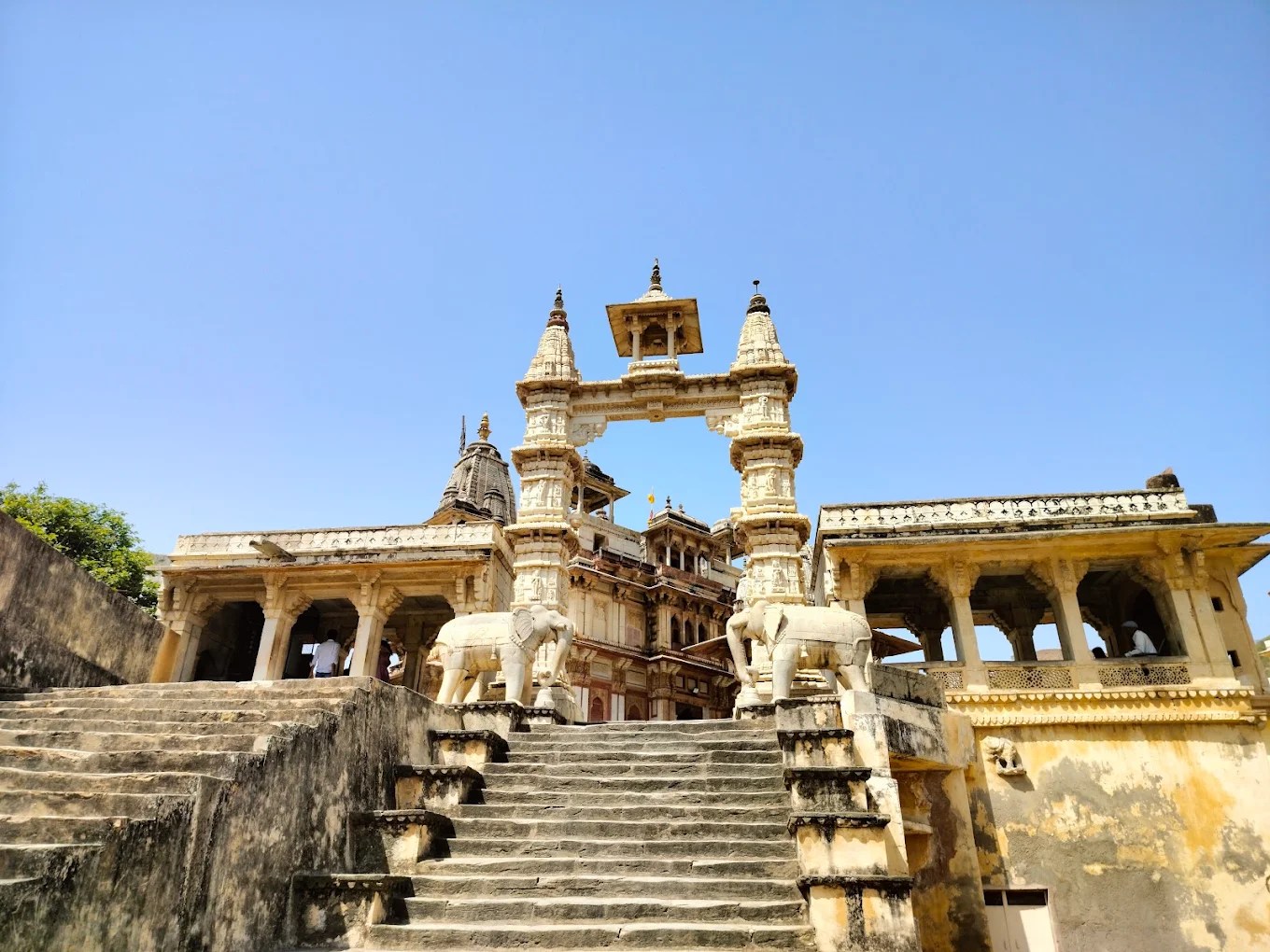
Images of Jagat Shiromani Temple, Amer – Image CC Wikipedia
Located at the foothills of Amer Fort, the temple has beautiful frescoes, ornate carvings, gates & archways, and Torans, all made of marble. It’s a blend of Jain, Hindu, Mughal, and South Indian architectural, making the temple stunning.
The Royal Cenotaphs at Gaitore Ki Chhatriyan
This is the royal crematorium grounds of the Kachwaha and Rajput Clans from the 18th Century. Check out these stunning pics Copyright @David Bjorgen
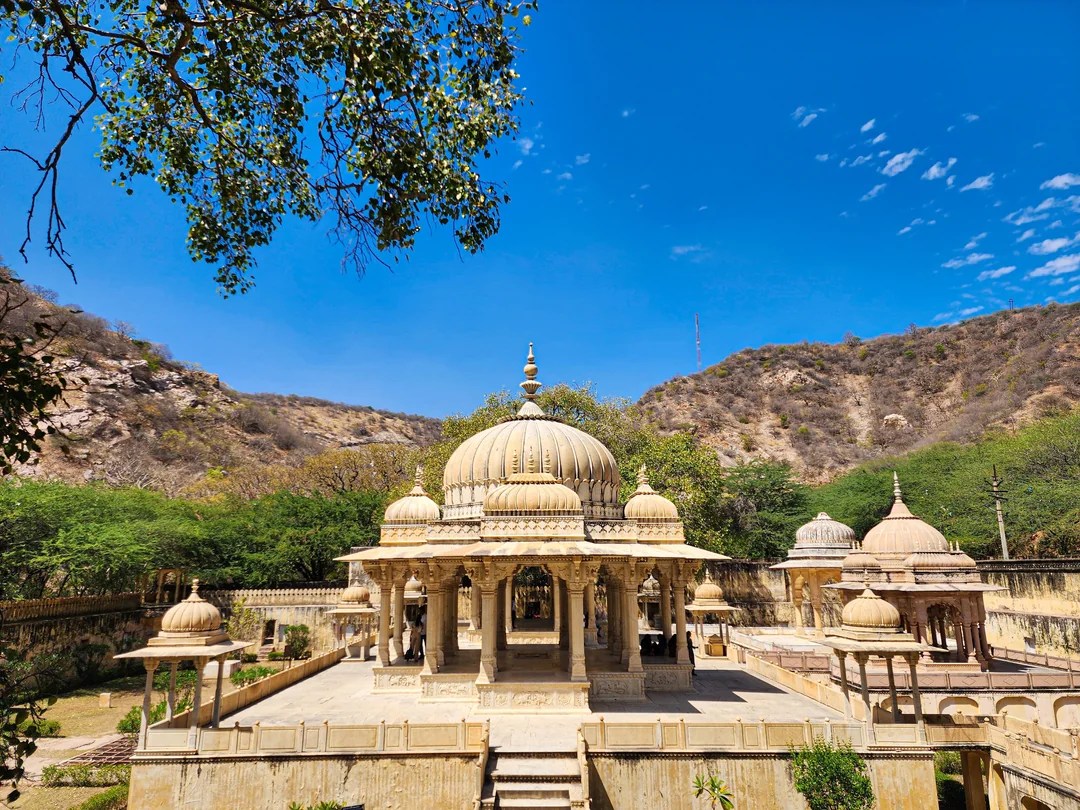

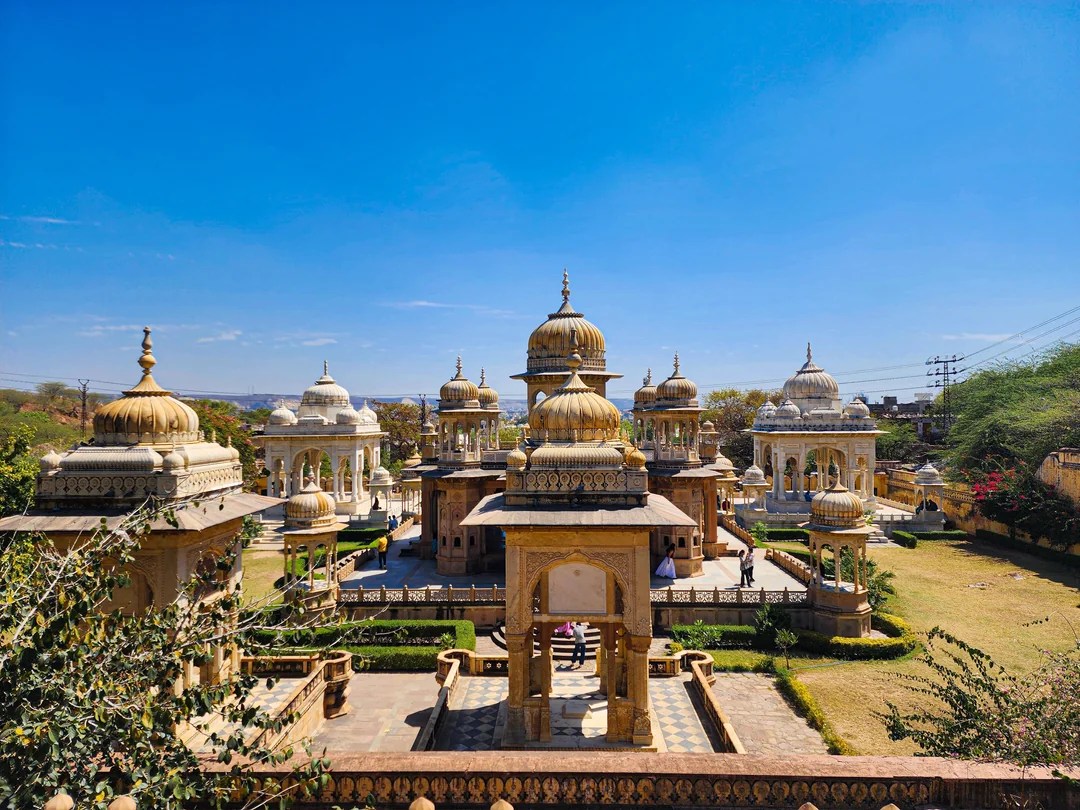
Both Images of Royal Cenotaphs CC Reddit
As with all royal cenotaphs in this region, the Gaitore Ki Chhatriyan are crafted from marble and have a distinct umbrella-shaped dome with stunning, intricate work. Each one of them is beautiful and speaks volumes about Indian Architecture.
Note: Take a moment to appreciate the serene and quiet atmosphere and respect the sanctity of the place.
Nahargarh Fort
Constructed in 1734, the Nahargarh Fort stands high towards the North of Jaipur and offers stunning views of the entire city. Nahargarh Fort, along with the other two forts, Amer Fort and Jaigarh Fort, offered a strong defence for Jaipur city.
Once the abode of tigers, the palace was named after Nahar Singh Bhomia, a Rathore Prince, whose spirit obstructed the palace’s construction and requested a temple to be built on the site.
On my visit many years back, I remember the Indo-European architecture reflected in most of its structures in and around. Including the Diwan-e-Aam, there are also temples and Madhavendra Bhawan, a two-storey building built for the king and his 12 wives.
The Intricate Screen Porches of Hawa Mahal
Rising 50 feet, with its 953 majestically placed lattice screen porch, Hawa Mahal, or the Palace of Wind, is an icon and is perhaps Jaipur’s most photographed site. Overlooking the city lanes, Hawa Mahal is a gem crafted from naturally occurring pink and red sandstone, for which Jaipur is famous.
The window porches are constructed and designed in such an excellent manner that they look like an enormous screen for the onlookers. Hawa Mahal was built in 1799 during the reign of Maharaja Sawai Pratap Singh and was designed by Lal Chand Ustad to provide a cool retreat for the women of the Jaipur Raj Gharana. Using Hindu Rajput and Islamic architecture, the Hawa Mahal was designed as women’s quarters where they could observe the activities of the city streets without being noticed by the public. The balconies, arched roofs and hanging cornices are all constructed in a way that the entire area is always cooled by the breeze. For the best views and pictures, visit one of the cafés located on the opposite side!
Did you know that the five-storey architecture of Hawa Mahal represents Krishna’s crown?
It was such because the Kachhwaha Rajput ruler, Sarai Pratap Singh, was devoted to Lord Krishna.
Venture inside and explore the three main rooms, namely Vichitra Mandir, Prakash Mandir, and Hawa Mandir. While the Prakash Mandir is an open terrace, the Vichitra Mandir was dedicated to Lord Krishna. Strangely, there are no steps to the upper floors but only ramps, which were used for the palkis (the palanquin of the royal ladies). There’s even a Ratan Mandir on the second floor featuring beautiful stained glass work!
Opening Hours: 09:30 am – 5:00 pm
Fees: Indians: 50 Foreigners: 200
Jawahar Circle, Garden, and Patrika Gate
Jawahar Circle has recently gained attention thanks to its popularity on Instagram. With bright-colored archways and corridors, it is magnificent in every way. Just look at it!
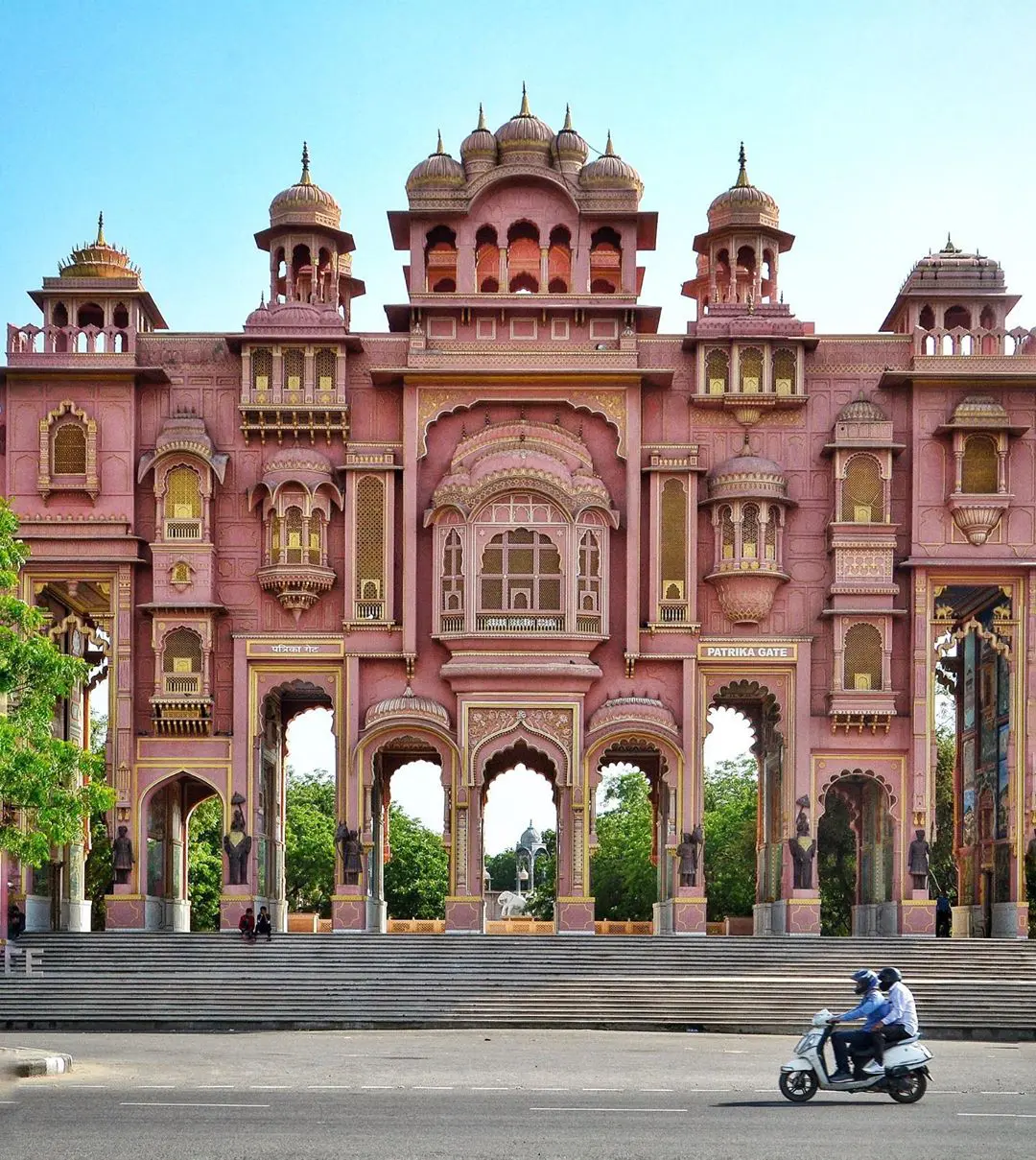
Often referred to as “the most colourful door in India”, Patrika Gate greets both passing cars and passersby from Jawahar Circle in Jaipur.
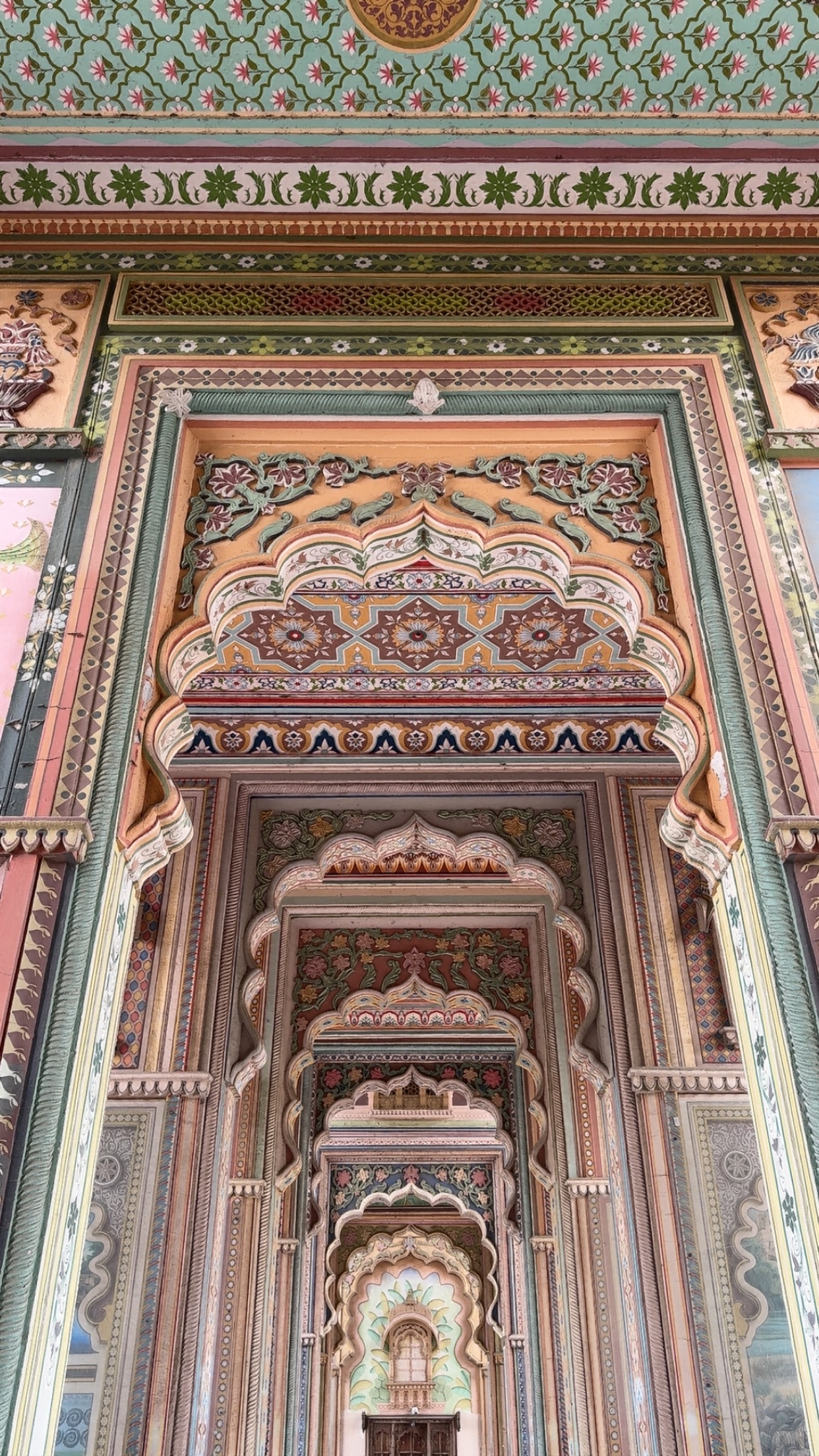
Built in 2016, the Gate features a colourful cacophony of hues depicting the history of Jaipur, India’s famed Pink City. Do keep some added time, as you will need to wait a while to get a picture, as people flock to this place for that one pic!
Albert Hall
Located within the Ram Niwas Garden, the foundation for Albert Hall was initiated in 1876, during the visit of the Prince of Wales, Albert Edward, to Jaipur.
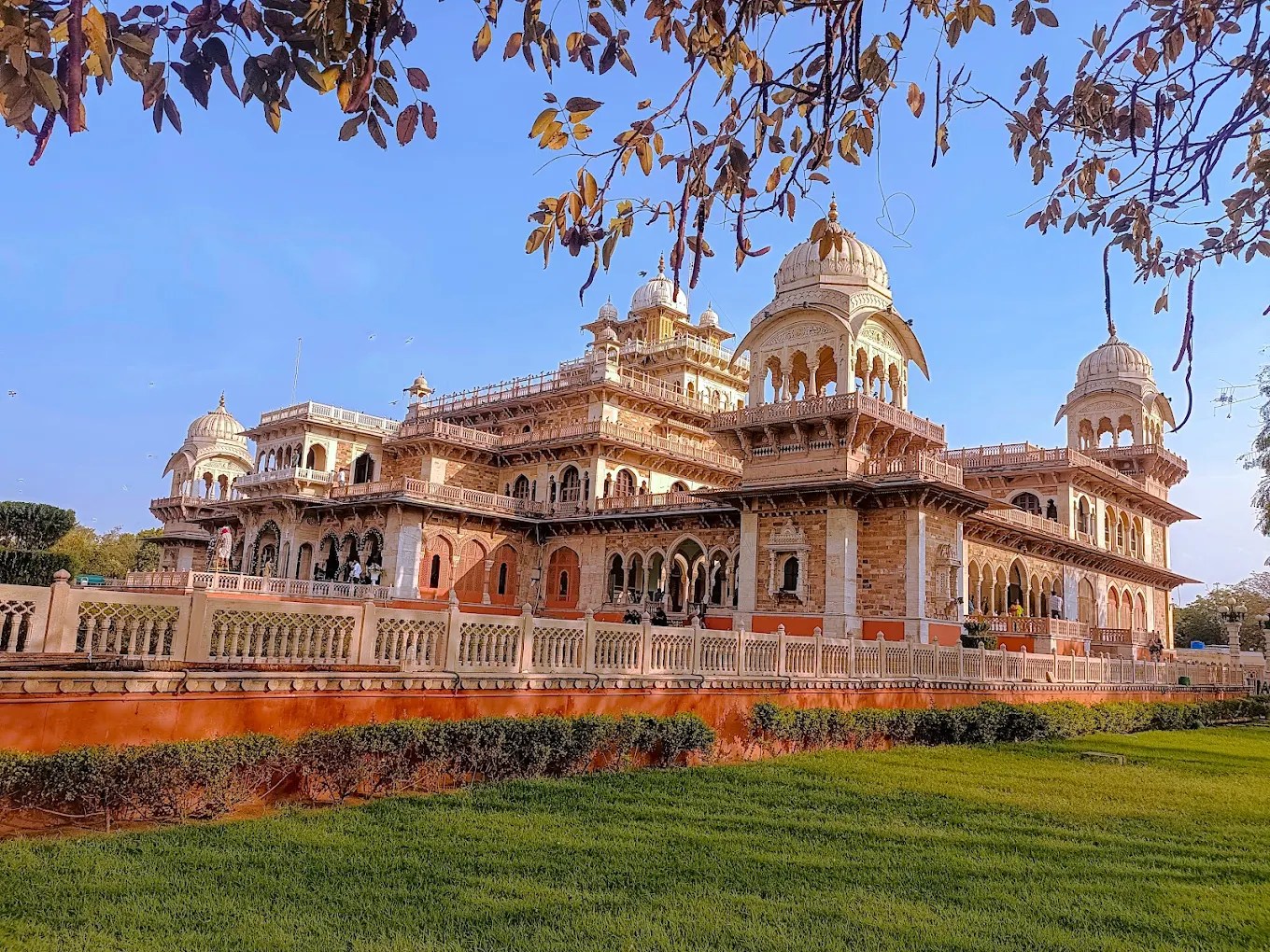
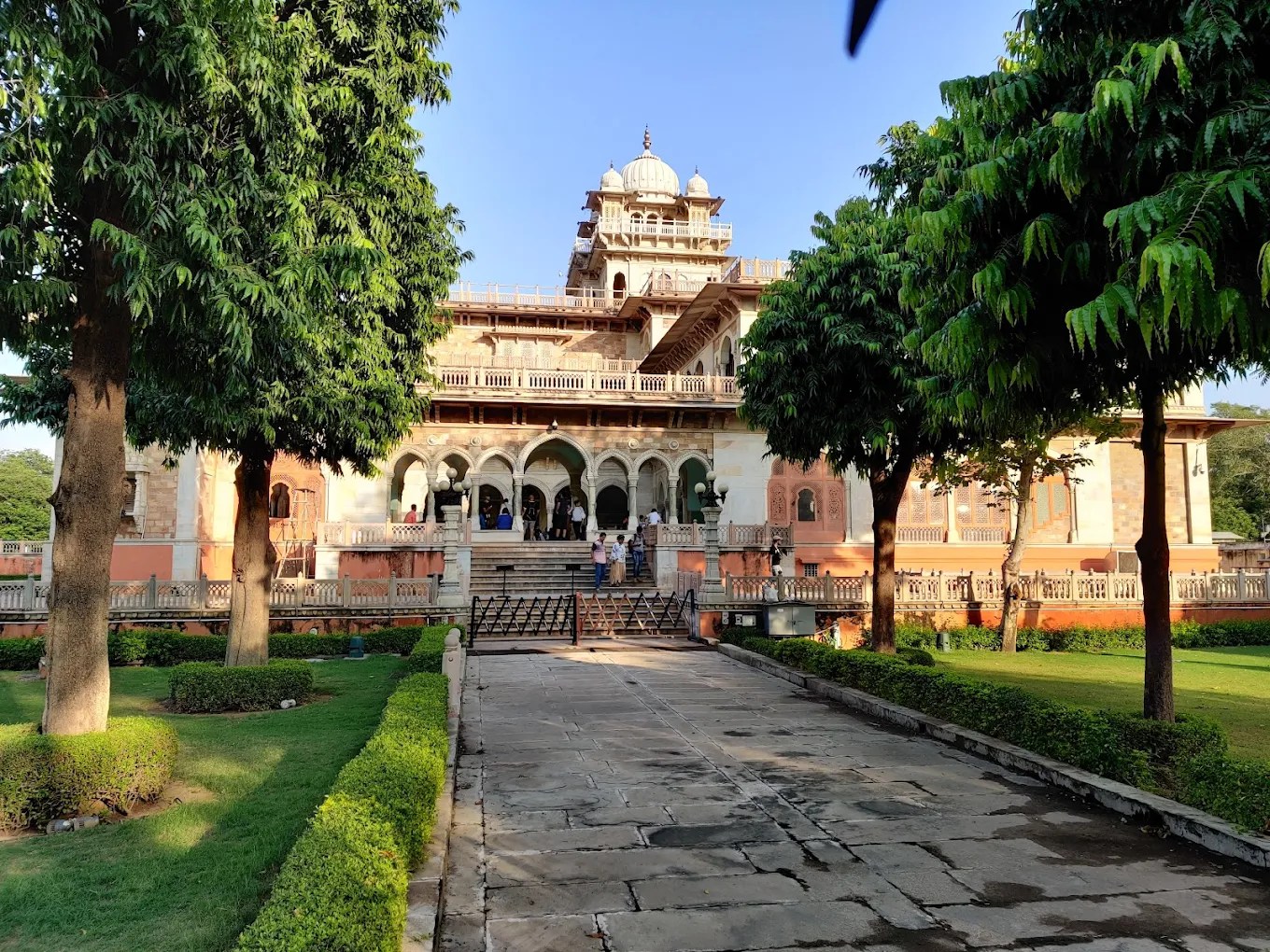
It was designed to be a concert hall and resembles the architecture of the Victoria and Albert Museum, London, and is a fine example of Indo-Saracenic architecture in India. Albert Hall today is a State Museum that houses 16 art galleries and has a rich collection of artifacts, including paintings, carpets, ivory, stone, metal sculptures, and works in crystal!
Shopping tip
Shop for handicrafts, Gemstones, and colourful fabrics at Johari Bazaar or Gandhi Market. It’s ideal to pick decorative items, colourful textiles, gemstones, and unique souvenirs.
Explore more around
Experience the Amazing Chand Baoli:
Located at Abhaneri (approximately 95 km from Jaipur), Chand Baoli is one of the most impressive stepwells in India. It’s an amazing structure with 3500 steps and 13 stories deep. You have to visit Chand Baoli to believe it!
Read more about this fascinating place in my blog on Chand Baoli & Abhaneri.
Feature Image of Galtaji Temple CC https://en.wikipedia.org
Other Images – Wikipedia
Discover more from GoTravelTrek
Subscribe to get the latest posts sent to your email.

loved your blog showing some unknown places!!!!
LikeLike
Marvelous work!. The blog is brilliantly written and provides all necessary information I really like this awesome post. Thanks for sharing this useful post.
Cab Service in India!
Taxi Service in india!
LikeLike
Thank you for the appreciation.
LikeLike
Nice Post and Knowledgeable information about Jaipur
LikeLiked by 1 person