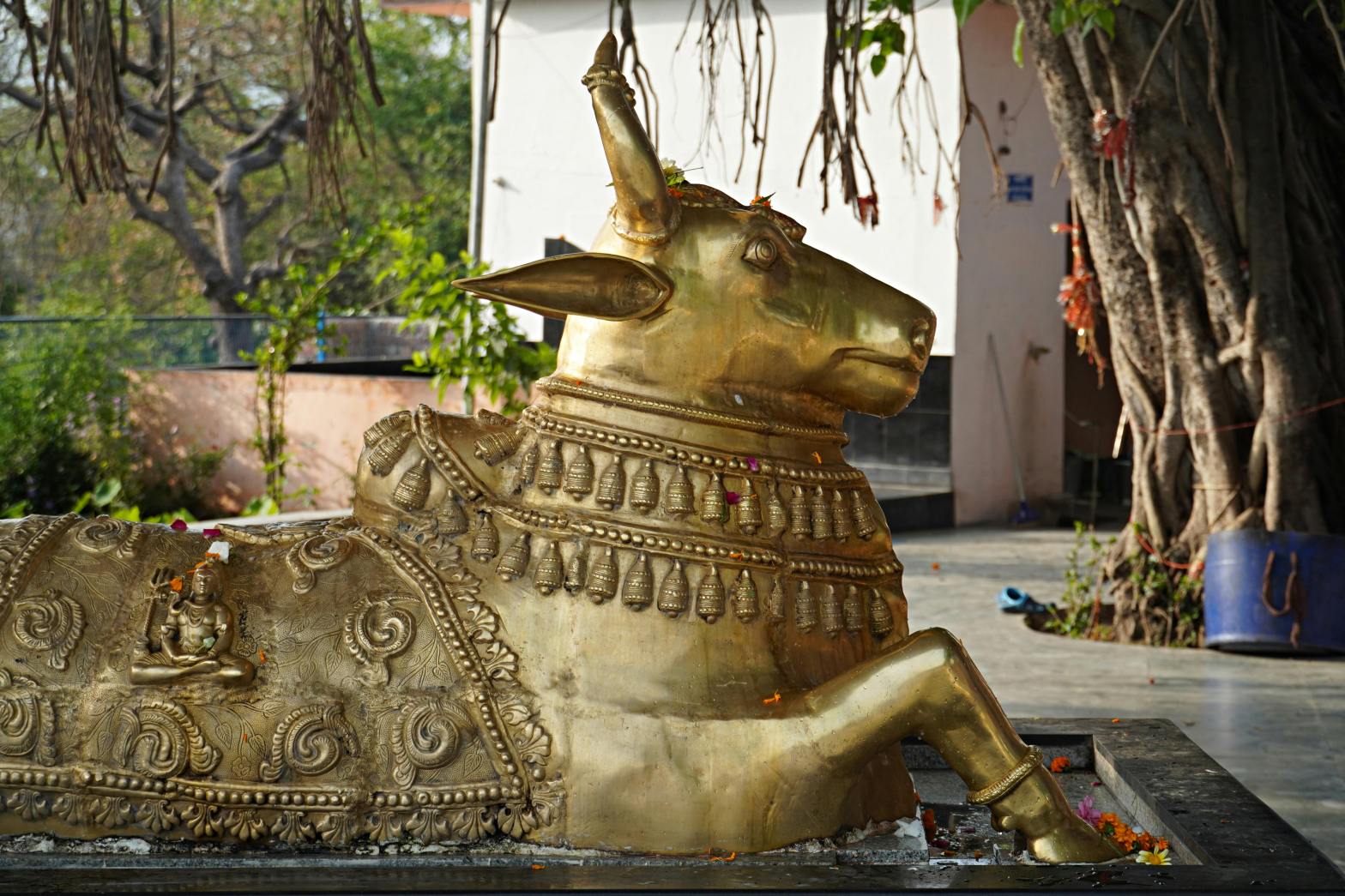
Panch Kedar refers to a group of five sacred Hindu temples dedicated to Lord Shiva and is located in the Garhwal region of the Indian state of Uttarakhand. The term “Panch Kedar” translates to “Five Kedars,” with each temple associated with different body parts of Lord Shiva, as per Hindu mythology.
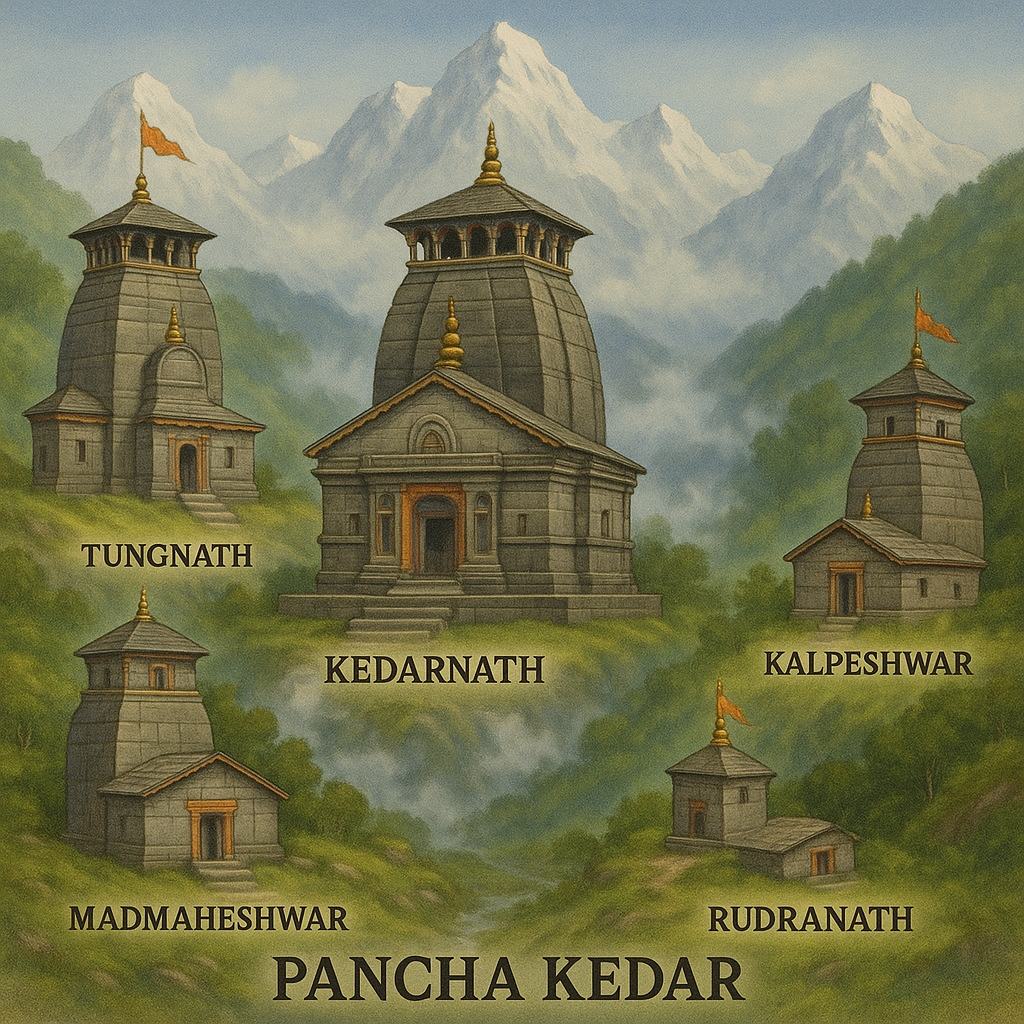
During the winter season, when the temples become inaccessible due to heavy snowfall, the sanctified symbolic idol of Shiva from Kedarnath and Madhyamaheshwar is reverently worshipped at the Omkareshwar temple in Ukhimath. Similarly, the representational idol of Tunganath is venerated at Makkumath and the symbolic image of Rudranath is brought to Gopeshwar.
Out of the sacred Panch Kedar temples, Kalpeshwar stands as an exception, remaining open and accessible throughout the year!
History of Panch Kedar
One of the most renowned legends surrounding Panch Kedar is deeply intertwined with the heroic saga of the Pandavas from the Hindu epic, Mahabharata. After emerging victorious in the epic Kurukshetra war against their cousins, the Kauravas, the Pandavas found themselves burdened with remorse for the sins committed during the conflict, including fratricide and the killing of Brahmins. To seek redemption and absolution for their actions, the noble Pandavas decided to relinquish the throne of their kingdom. Entrusting the kingdom’s rule to their kin, they embarked on a sacred quest to find Lord Shiva, the ultimate divine being, and seek his divine blessings.
Their journey led them on an arduous pilgrimage through the rugged terrains and majestic landscapes of the Garhwal region in present-day Uttarakhand, India. They sought the holy presence of Lord Shiva, the supreme deity, and embarked on a spiritual odyssey to cleanse their souls of the burdens of war.
Unable to locate Lord Shiva in Varanasi, the Pandavas ventured deeper into the sacred Garhwal Himalayas in search of the divine deity. Among the Pandava brothers, it was Bhima who embarked on a determined quest to find Lord Shiva. Upon reaching Guptakashi, known as “hidden Kashi” due to Shiva’s concealment there, Bhima’s eyes fell upon a grazing bull, which he instantly recognized as Shiva himself.
Not wasting a moment, Bhima took action and firmly grasped the bull by its tail and hind legs. However, to his astonishment, the divine bull swiftly vanished into the earth, only to reappear in multiple parts across different locations. The hump of the bull manifested in Kedarnath, the arms appeared in Tungnath, the divine face revealed itself at Rudranath, while the nabhi (navel) and stomach emerged in Madhyamaheshwar. Finally, the bull’s hair took form in Kalpeshwar. Additionally, it is believed that Shiva’s throat fell on the Kedarkantha mountain during this celestial event.
Overwhelmed with awe and reverence at witnessing Shiva’s miraculous reappearance in five distinct forms, the Pandavas felt a profound sense of gratitude. In honor of this divine revelation, the Pandavas decided to build temples at each of these five sacred places, allowing devotees to venerate and worship Shiva in his diverse manifestations. By venerating Lord Shiva in his different forms at the Panch Kedar temples, the Pandavas attained freedom from their sins, forging a divine connection that would be cherished through generations.
Fascinating connection between the Panch Kedar Yatra and the Gorakhnath Sampradaya of Nepal
The connection between the Panch Kedar Yatra and the Gorakhnath Sampradaya of Nepal adds a fascinating dimension to the pilgrimage’s historical and religious significance. The Gorakhnath Sampradaya is a prominent sect in Nepal, known for its unique pilgrim traditions, and it is believed that they have played a role in shaping the Panch Kedar Yatra. According to historical accounts, the culmination of the Panch Kedar Yatra is said to have taken place at the revered Pashupatinath Temple in Nepal, rather than at Kedarnath where the hump of Lord Shiva is venerated. This has led to speculation that the roots of the pilgrimage might be tied to the practices and beliefs of the Gorakhnath Sampradaya.
Pashupatinath Temple, located in Kathmandu, Nepal, is one of the most sacred and significant temples for Hindus, especially followers of Lord Shiva. The temple is dedicated to Lord Pashupatinath, an aspect of Shiva, and it is believed to be the place where Shiva’s head is worshipped. This aligns with the fact that the Pashupatinath Temple is considered the final destination of the Panch Kedar Yatra, symbolizing the completion of the pilgrimage and the attainment of divine blessings.
Further supporting the connection, it is noted that the emblem used on the dome of Kedarnath Temple is the same as the one displayed on the dome of Pashupatinath Temple. This shared emblem suggests a strong historical and cultural link between the two temples and could signify the influence of the Gorakhnath Sampradaya in the architectural and religious aspects of both sites.


Kedarnath Temple
Kedarnath is the most famous and significant among the Panch Kedar temples. Situated at an altitude of around 3,583 meters (11,755 feet), it is nestled amidst the stunning snow-capped peaks of the Garhwal Himalayas. Dedicated to Lord Kedarnath, Kedarnath is also one of the twelve manifestations of Lord Shiva.
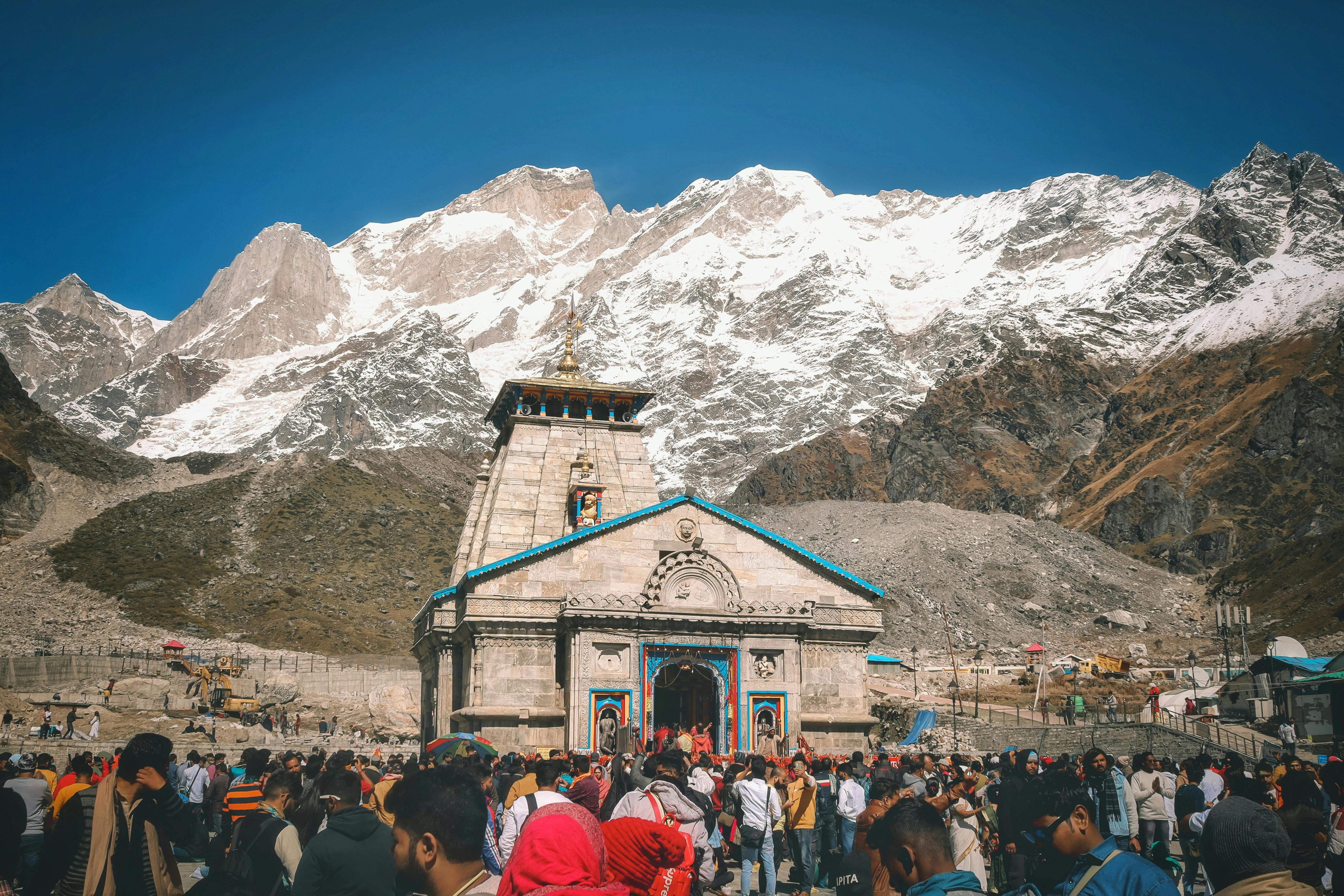
Kedarnath ranges drain into the Mandakini River, which emerges from the steady edge of the Churabre glacier and forms the picturesque Mandakini valley. The Dudhganga, Madhuganga, Swargaduari and Saraswathi are the streams that flow in the valley behind the Kedarnath temple. Also located near the temple are four sacred ponds: Retah, Udak, Rudra and Rishi.
Gaurikund is the base camp for Kedarnath. From there, you can either trek or hire local transport services. Guptkashi to Gaurikund to Kedarnath – 30 km drive + 16 km trek to Kedarnath
Stops en route:
– Rambara: Midway point with basic facilities
– Linchauli: Small settlement with tea stalls
Kedarnath Temple Experience:
– Main Temple: One of 12 Jyotirlingas
– Bhairav Temple: Must visit for complete darshan
– Gandhi Sarovar: Sacred lake (3 km from temple)
– Vasuki Tal: Glacial lake near Kedarnath (day trek)
– Chorabari Tal (Gandhi Sarovar): Source of the Mandakini River
Offbeat Experience:
– Triyuginarayan Temple: Eternal flame temple (22 km from Guptkashi)
– Ukhimath: Winter seat of Kedarnath (if time permits)
Tungnath Temple
Tungnath Temple is the highest Shiva temple in the world, situated at an altitude of about 3,680 meters (12,073 feet). The temple is dedicated to Lord Tungnath (Arms of Lord Shiva are worshipped here), and the trek to the temple passes through lush meadows and rhododendron forests, providing a blissful communion with nature.

Tunganath has an impressive backdrop of the peaks of Panchulli, Nanda Devi, Dunagiri, Kedarnath and Bandar Poonch.
Guptkashi to Chopta: 45 km (2 hours). Chopta serves as a base camp for Tungnath and is ideal for stay options.
Chopta to Tungnath to Chandrashila (altitude of 4130 metres (13550 feet) to Chopta: 4 km trek to Tungnath + 1.5 km to Chandrashila

Offbeat Experiences:
– Deoria Tal: Mirror lake trek (2.5 km from Sari village)
– Kartik Swami Temple: 360-degree Himalayan views (day trip option)
Places to Stay nearby: Magpie Eco-resort, Chopta, Snow Pod, The Meadows and Shivalik Guest House
Rudranath Temple
The Rudranath Temple is dedicated to Lord Shiva’s “Mukh” (face form) and is located at an altitude of approximately 3,600 meters (11,811 feet). Accessible through a challenging trek, the temple is perched amidst alpine meadows and offers breathtaking views of the Nanda Devi and Trishul peaks. The Vaitarani stream flows near Rudranath.
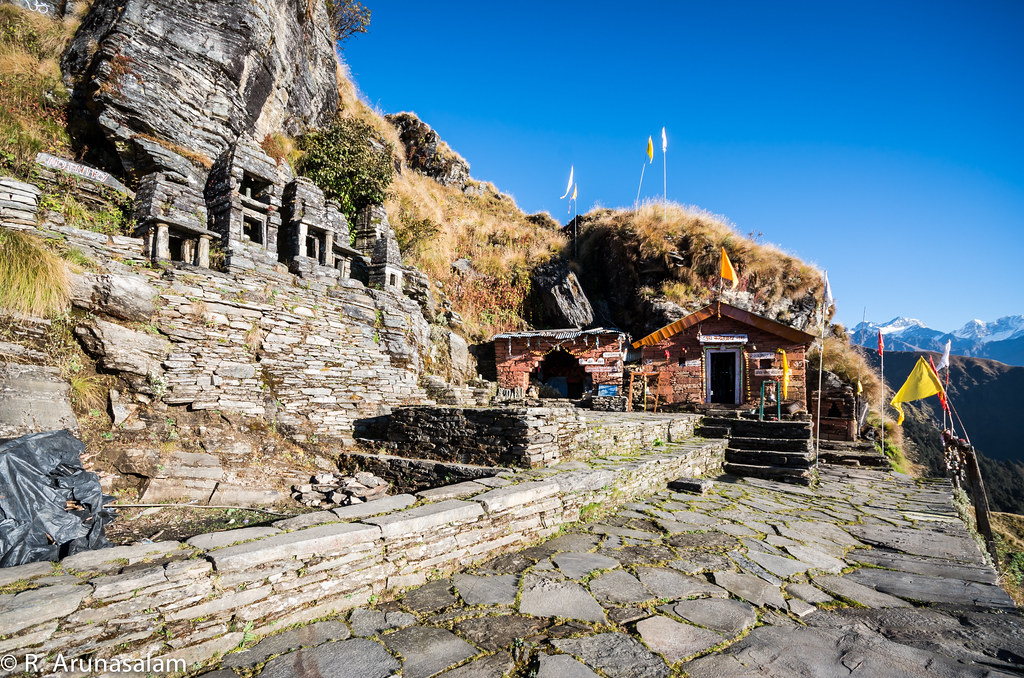
By road: Helang is the nearest town to Rudranath. From Helang, you can continue the journey by trekking to reach Rudranath.
Chopta to Kalgot (for Rudranath): 40 km drive to Kalgot and then Kalgot to Rudranath: 20 km trek. The trek to Rudranath is also the steepest and challenging of all the Panch Kedar treks.
En Route Wonders:
– Narad Kund: Sacred pond near the temple
– Panar Bugyal: Vast alpine meadows
– Pitradhar: Sacred site for ancestral prayers
– Panch Ganga: Five-stream confluence near Rudranath
Offbeat Village Experience:
– Local Homestays: Experience Garhwali culture
– Panar Bugyal: Alpine meadow en route
Local Cuisine: Try Garhwali dal, chainsoo, and jhangora kheer
Madhyamaheshwar Temple
The Madhyamaheshwar Temple is located at an altitude of approximately 3,497 meters (11,473 feet). It is dedicated to Lord Shiva in his “Nabhi” (navel) and Stomach form. The temple is surrounded by breathtaking natural beauty and is accessible through a trek that offers panoramic views of the Himalayan peaks.
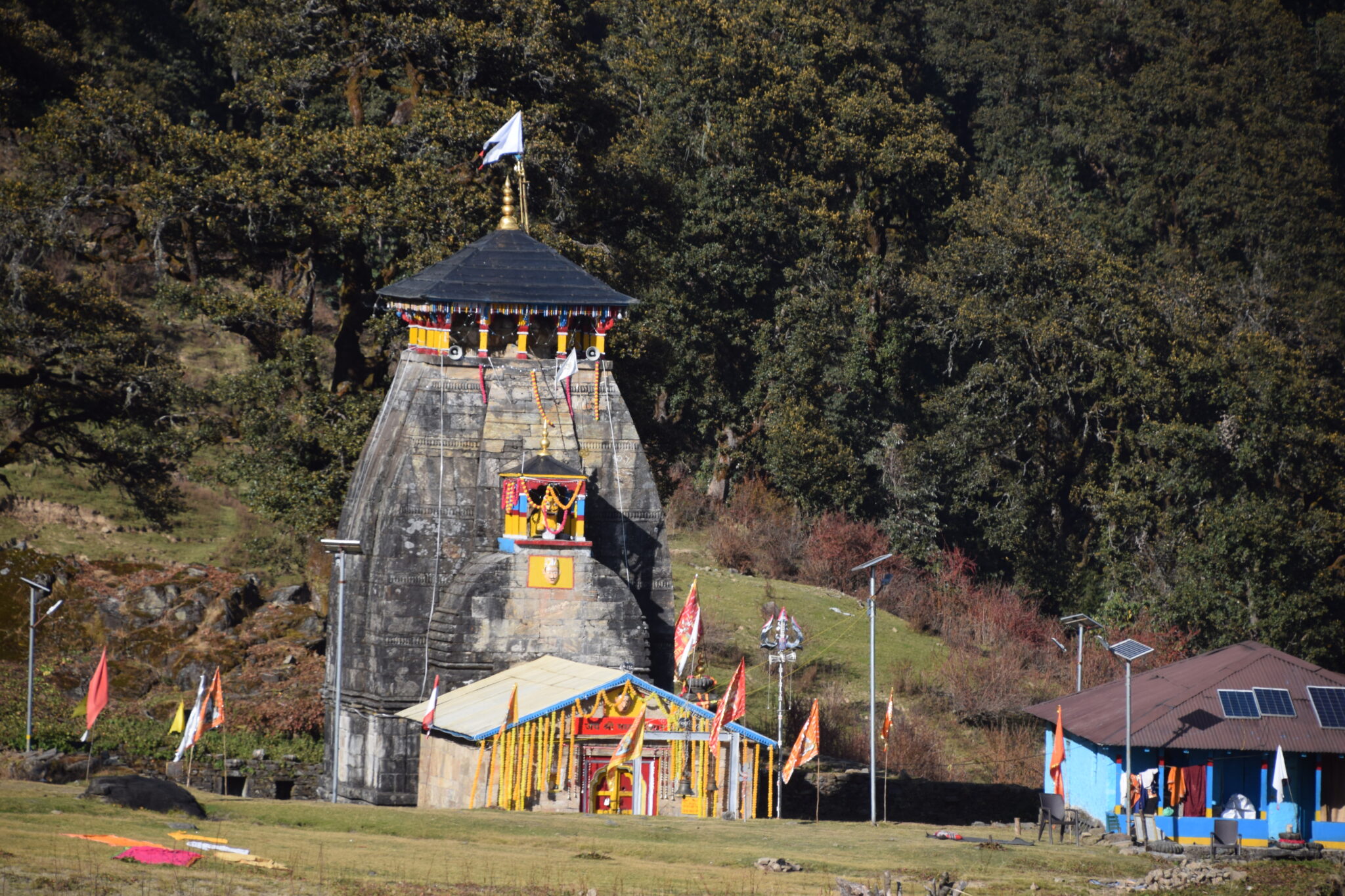
Kalgot to Mandal (for Madhyamaheshwar): 25 km drive
Offbeat Stop: Kanchula Korak Musk Deer Sanctuary: Wildlife spotting opportunity
Mandal to Madhyamaheshwar: 18 km trek
Sacred Sites:
– Anusuya Devi Temple: Near Mandal, dedicated to Sage Atri’s wife
– Gaundhar Camping Ground: Traditional stopping point
– Chaukhamba Base: Spectacular mountain views
Kalpeshwar Temple
The Kalpeshwar Temple is unique among the Panch Kedar temples as it is dedicated to Lord Shiva’s ‘Jata’ (Hair). Located at an altitude of about 2,134 meters (7,001 feet), it is the easiest to reach among the five. The temple is situated in a serene cave, providing a deeply meditative and spiritual ambience.
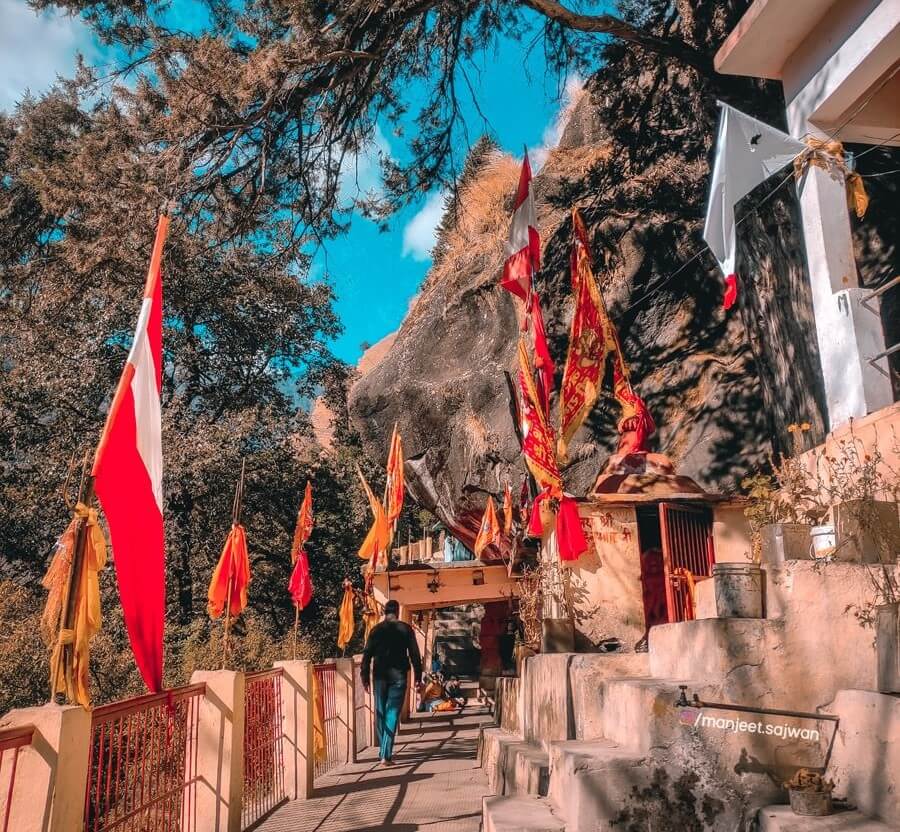
Kalp Ganga River, a tributary of the Alaknanda, flows through the valley.
By road: Motorable roads connect Sagar village to Helang, and then jeeps can be taken to Urgam, followed by a short trek to Kalpeshwar.
Mandal to Helang/Joshimath (for Kalpeshwar): 120 km (5-6 hours drive) Helang to Kalpeshwar: 12 km trek
Scenic Drive: Coming from Helang, you will pass through Gopeshwar, stop to admire the views of Nanda Devi peak.
Offbeat Detours:
– Tapovan: Hot springs near Joshimath
– Auli: Skiing destination (if time permits)
Kalpeshwar stands as the most accessible among the five sacred Panch Kedar shrines, offering pilgrims the unique blessing of remaining open throughout the year when other high-altitude temples close due to harsh winters. As you offer your final prayers at this cave temple where Lord Shiva’s sacred locks are worshipped, take a moment to reflect on the extraordinary spiritual journey you’ve completed.
Explore More at Kalpeshwar
Urgam – a picturesque village located just 2 kms from the Kalpeshwar Temple. This scenic hamlet tucked at an elevation of about 2100 mts is surrounded by snow-clad peaks of the Garhwal Himalayas and enveloped in dense forests, farmlands, and apple orchards. More details on Urgam can be found HERE
Rishikesh to Guptkashi: 210 km (7-8 hours)
Route Highlights:
– Drive via Devprayag (Confluence of Alaknanda & Bhagirathi)
– Stop at Rudraprayag (Confluence of Alaknanda & Mandakini)
Offbeat Gems:
– Kalimath: Temple dedicated to Goddess Kali (45 min detour)
– Augustmuni: Ancient temple with hot springs
Best Time:
May-June: Pre-monsoon season, clear views
September-October: Post-monsoon, pleasant weather
Avoid: July-August (monsoon), December-April (heavy snow)
Difficulty Levels:
Kalpeshwar: Easy (12 km)
Kedarnath: Moderate (16 km)
Tungnath: Easy (4 km)
Rudranath: Very Difficult (20 km)
Madhyamaheshwar: Moderate-Difficult (18 km)
Permits & Registrations:
- Register at the respective temple committees
- Carry valid ID proofs
- A medical fitness certificate is recommended
Discover more from GoTravelTrek
Subscribe to get the latest posts sent to your email.

One thought on “Panch Kedar”