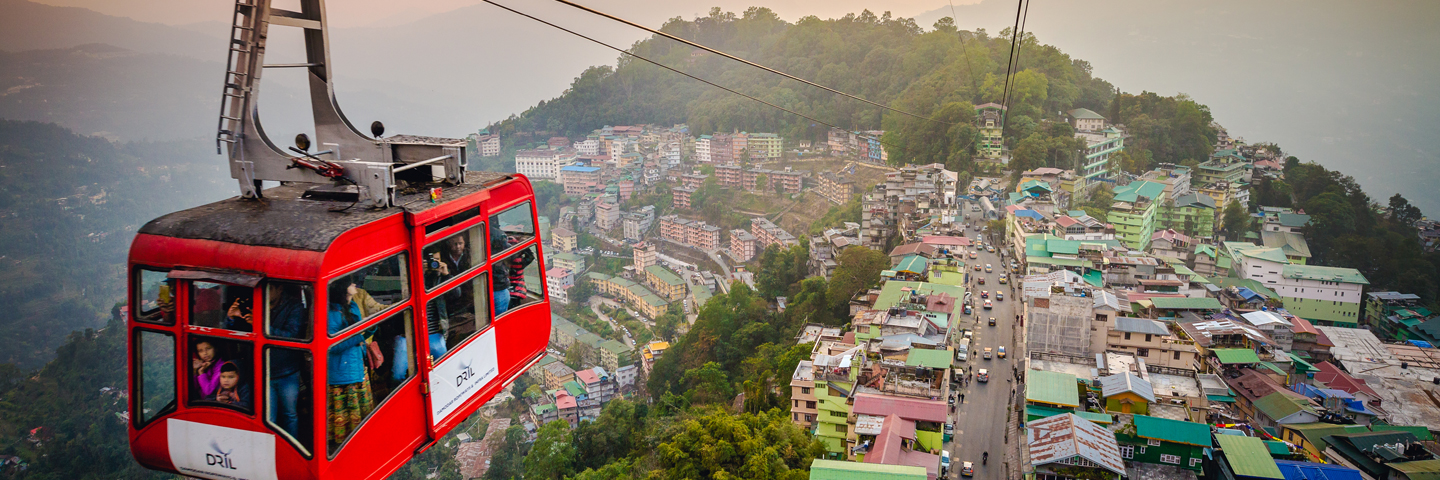
Perched at 5,410 feet, Gangtok seamlessly blends traditional Buddhist culture with modern mountain town energy. Gangtok offers a balance of comfort and spirituality and is one of India’s cleanest hill stations, with eco-conscious practices deeply rooted in daily life.
Must-Visit Attractions in Gangtok
MG Marg – The Heartbeat of Gangtok
A pedestrian-only boulevard lined with cafés, souvenir shops, and bookstores. Perfect for an evening stroll, hot momos, and people-watching.
Visit Baker’s Café for authentic Sikkimese pastries and Taste of Tibet for genuine Tibetan cuisine. Try local delicacies like Sel Roti & Phagshapa, Shaphaley (deep-fried meat pie) and Churpi Soup (made with hardened yak cheese) and Butter Tea.
For shopping for Authentic thangkas, Lepcha weaves, and wooden masks, I’ll highly recommend the Directorate of Handicrafts & Handloom.
Enchey Monastery (3 km from Gangtok)
This 200-year-old monastery offers intimate spirituality without the crowd. Built on a site blessed by Tantric master Lama Druptob Karpo, it belongs to the Nyingma order. You can read more at https://en.wikipedia.org/wiki/Enchey_Monastery.
Visit during the Chaam dance festivals (usually in January) when masked dances depict Buddhist teachings.
Tashi Viewpoint
Perfect place to capture stunning sunrise and sunset views of Kanchenjunga and the surrounding peaks. On clear mornings, the panorama is surreal.
Hanuman Tok & Ganesh Tok: Stunning Viewpoints
Hilltop temples with unmatched views of Gangtok and snow peaks. Locals say wishes made here rarely go unanswered.
Banjhakari Falls and Park
The 40 ft waterfall looks stunning, and a park built around with ridges and bridges, makes it a favourite for a quick stop or a refreshing shower.
Do Drul Chorten & Namgyal Institute of Tibetology
This important stupa, surrounded by 108 prayer wheels, houses precious Buddhist manuscripts and relics. The adjacent research institute preserves Tibetan Buddhist culture and offers insights into Buddhist philosophy.
Rumtek Monastery: Spiritual Magnificence (24 km from Gangtok)
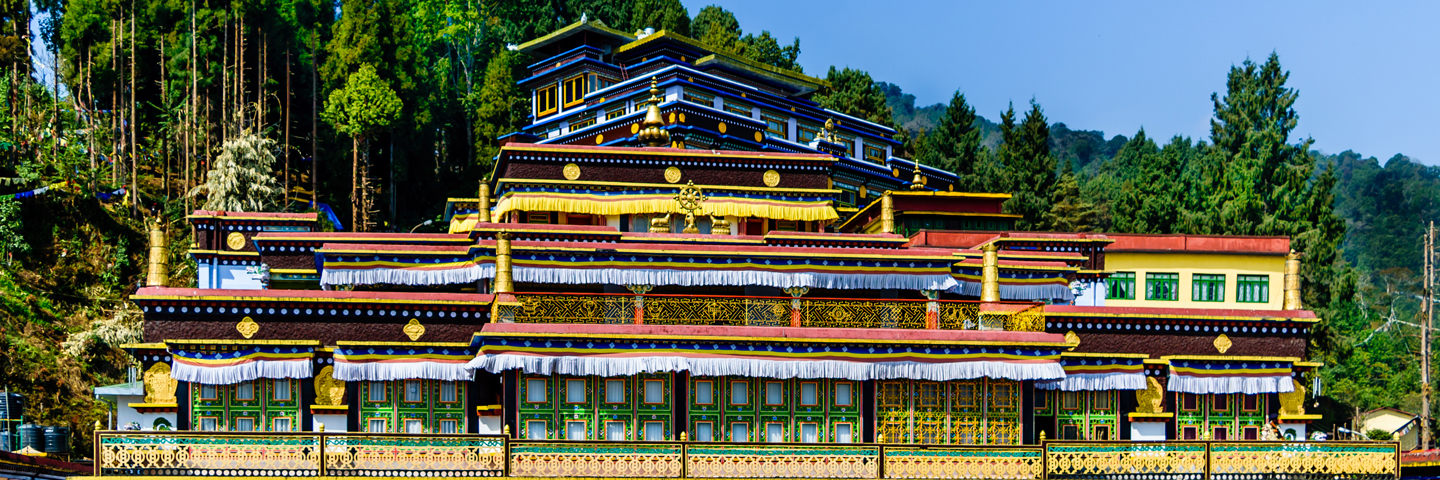
One of Buddhism’s most significant seats outside Tibet, Rumtek Monastery was built in the 1960s, and is the main seat of the Black Hat or the Karma Kagyu, a sect within the Nyingma school of Buddhism that originated around the 12th century in Tibet.
The monastery complex showcases stunning architecture, precious relics, and its golden stupa and intricate murals make it a must-visit for those seeking spirituality.
Tsomgo Lake: Himalayan Jewel (40 km from Gangtok)
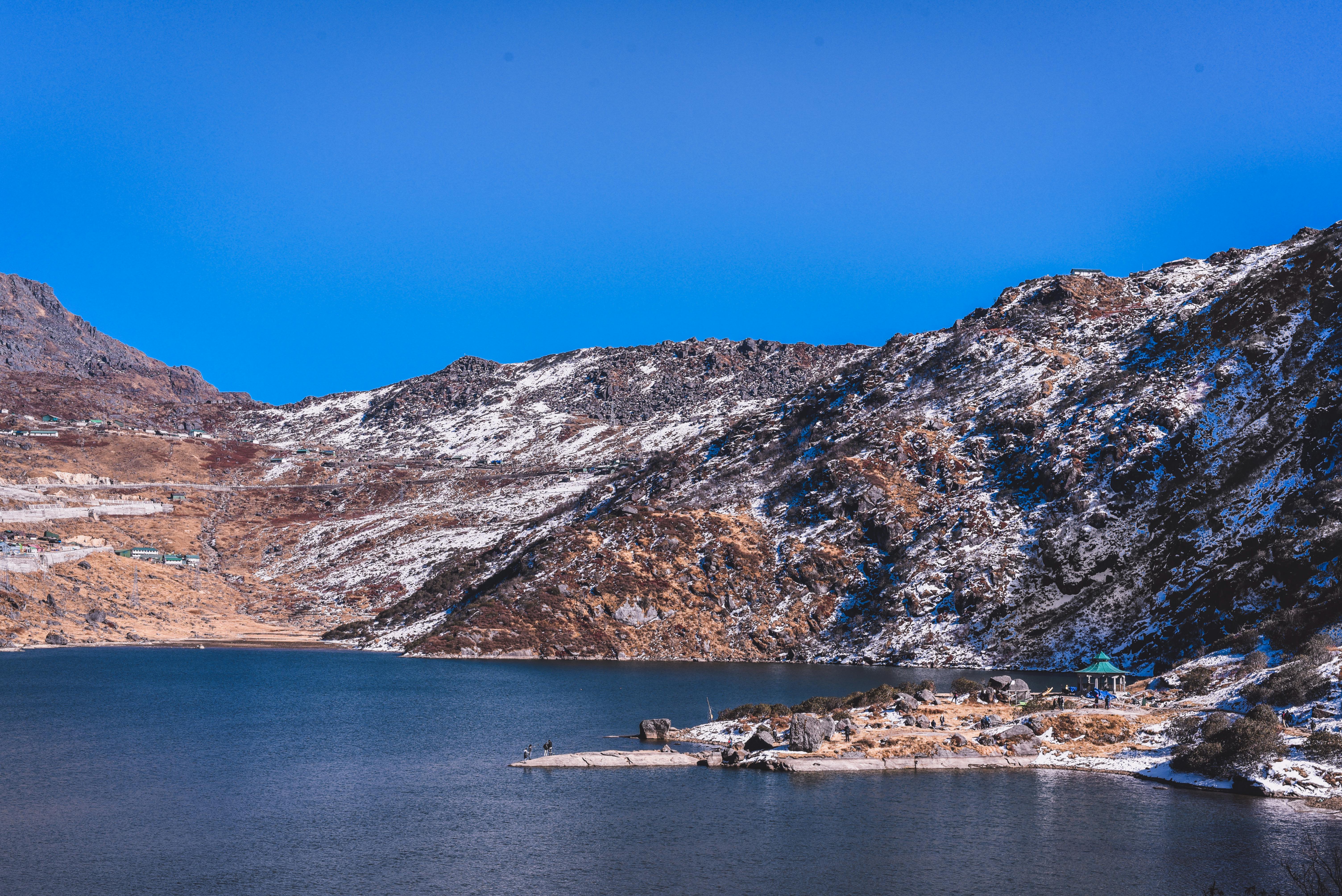
Also known as Changu Lake, this glacial lake at 12,310 feet is one of Sikkim’s most iconic destinations. Considered holy by Buddhists, the lake’s waters possess healing properties, and locals also observe colour changes to predict weather and festivals.
At the lake, you can take a Yak ride, a lake circuit walk and visit the Shiva Temple.
Baba Harbhajan Singh Mandir (16 km from Tsomgo Lake)
This is a memorial of an Indian Army soldier, Baba Harbhajan Singh, whose legend has become a blend of faith, folklore, and patriotism. The Mandir is located between Tsomgo Lake and Nathula Pass. Drive further to Nathula Pass, on the historic Silk Route, where you stand at the Indo-China border. (Closed on Mon/Tue, permits required.)
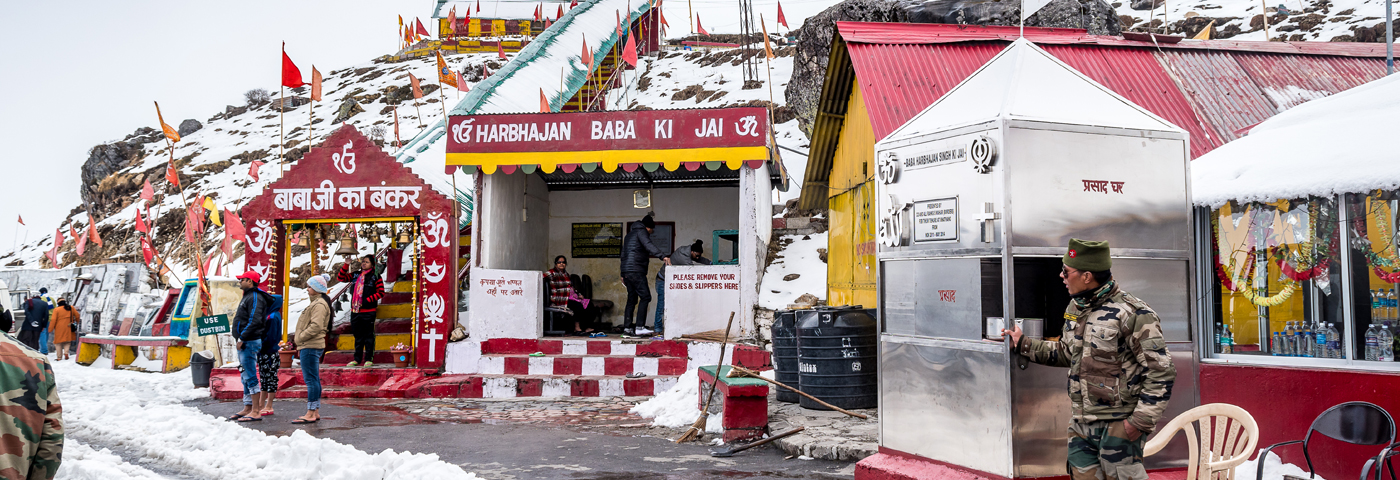
The Legend: Harbhajan Singh was a sepoy in the Indian Army who tragically died in 1968 while on duty near Nathula Pass. As legends go, his spirit never left the mountains, and soon fellow soldiers began reporting visions of him warning them about upcoming enemy movements, avalanches, or natural calamities. Over time, the belief grew that ‘Baba’ still protects the troops stationed along the rugged Indo-China border.
The Indian Army built a shrine in his honour where his bunkhouse once stood. His uniform is ceremonially polished and pressed every day, and his meals are served as if he were alive. Twice a year, a jeep carrying his belongings travels down to his hometown in Punjab, escorted with full military honours.
The site includes:
- Offerings from visitors: soldiers and civilians alike leave water bottles, scarves, and personal prayers, believing they will be blessed when they collect them later.
- A small temple room, where Baba’s photo is worshipped.
- A preserved bed with his belongings are neatly laid out as if awaiting his return.
Zuluk & Old Silk Route
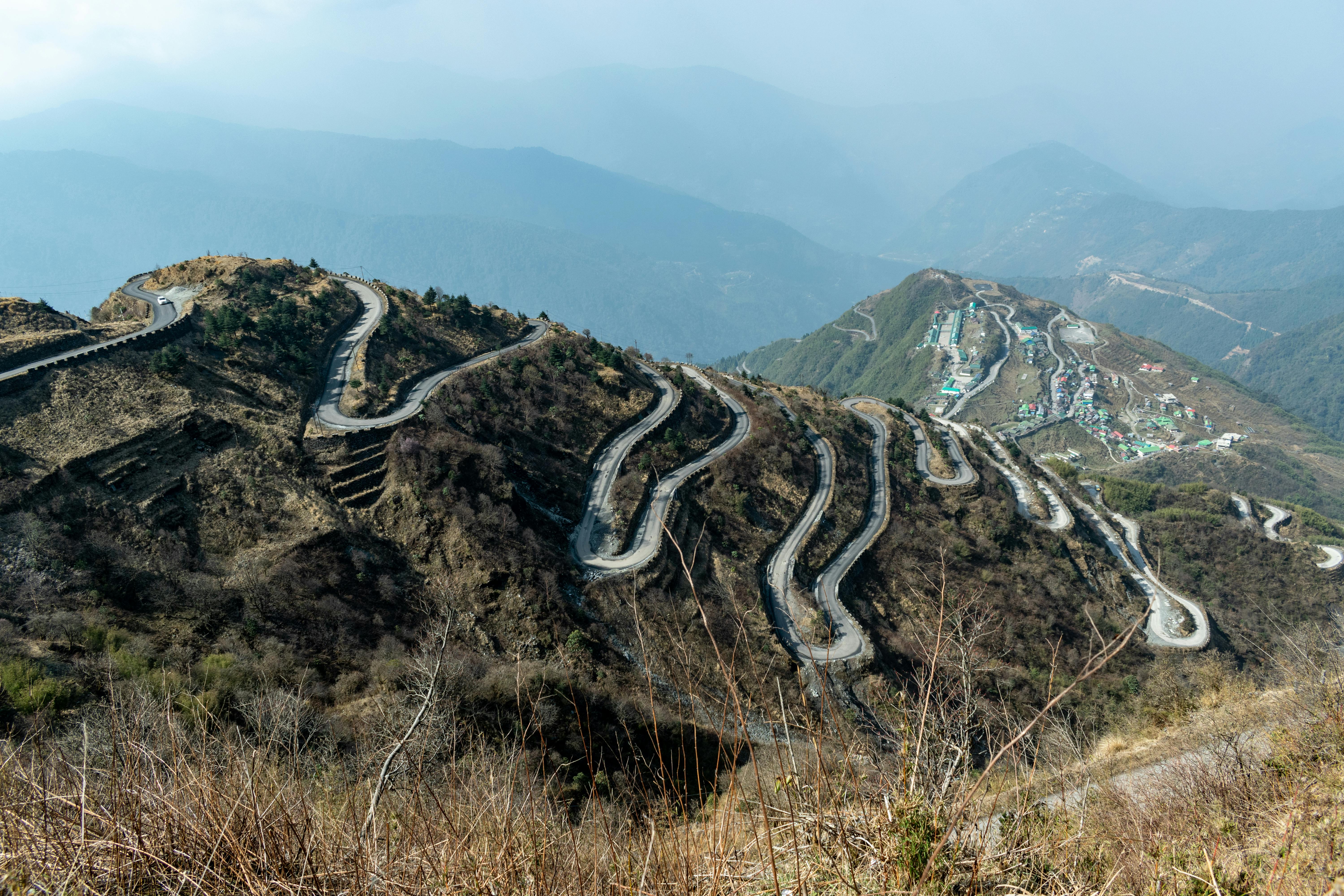
For the offbeat traveller, visit Zuluk, a tiny village on the historic Silk Route. The famous zig-zag roads here make for one of the most photogenic Himalayan drives.
Visit Chalamthang
Perched at approximately 5,500 feet, Chalamthang is a serene village perfect for those who like slow travel. My blog Chalamthang & Beyond: Discovering Sikkim’s Hidden Valley and Himalayan Wonders gives you more details on this quaint village.
Location & Distance Guide to Gangtok
Nearest Airport: Pakyong (35 km) – limited flights; Bagdogra (124 km) is the main hub.
Nearest Railhead: New Jalpaiguri (NJP), ~4–5 hrs drive.
By Road: Shared cabs and private taxis are available from Siliguri, NJP, and Bagdogra.
Best Time to Visit
- Spring (March–May): Blooming rhododendrons, pleasant weather.
- Autumn (Oct–Nov): Enjoy clear skies for the best views of the Kanchenjunga.
- Winter (Dec–Feb): Snow at Tsomgo, Nathula, and North Sikkim.
- Monsoon (June–Sep): Landslides are common; travel is not recommended
Essential Sikkim Travel Information
Permits Required for Indian Nationals:
- Inner Line Permit (ILP): Required for North Sikkim, certain restricted areas
- Obtainable: Sikkim Tourism offices in Gangtok, Siliguri, Bagdogra, or online
- Duration: Usually 7-30 days, depending on itinerary
- Documents needed: ID proof, passport-size photos
Permits Required for Foreign Nationals:
- Protected Area Permit (PAP): Essential for most tourist areas
- Restricted Area Permit (RAP): Additional permit for border areas
- Obtainable: Through registered tour operators only
- Group requirement: A Minimum of 2 persons is usually required
- Advance booking: Recommended 2-4 weeks ahead
*Feature and other images from Sikkim Tourism and Pexels.
Discover more from GoTravelTrek
Subscribe to get the latest posts sent to your email.
