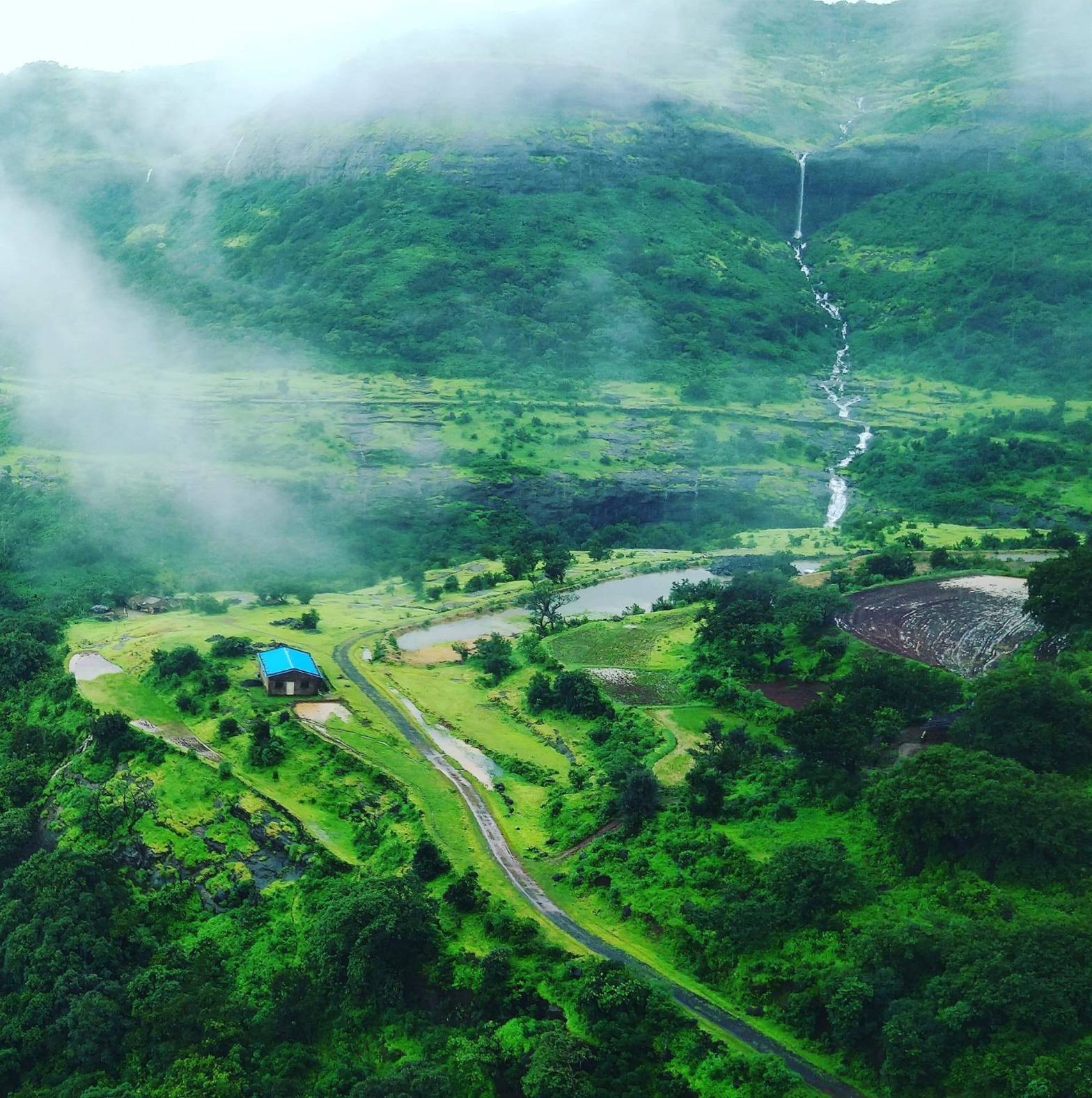
Fofsandi is a remote and picturesque village near the Kunjargad Fort in Maharashtra, India. The name “Kunj” originates from Sanskrit, meaning “Elephant,” possibly hinting at the fort’s grand presence or historical significance. While Kunjargad Fort is well-known among trekking enthusiasts, Fofsandi, also known as Phopsundi, remains a hidden gem that is often overlooked as visitors approach via Vihir village.
Why Visit Fofsandi, Maharastra
1. Trekking & Nature trails
2. Rustic Village Experience
3. Waterfalls & Ancient Caves
Located by the River Mandavi, the village is home to gorgeous, lesser-known waterfalls and ancient rock-cut caves amidst lush greenery. These caves, believed to have historical and possibly religious significance, offer a glimpse into the past and are worth exploring for those intrigued by archaeology and history.
The tranquillity of the village makes it ideal for picnics, leisurely walks, and quiet moments of reflection. As the day transitions into dusk, the sky is painted with hues of gold, orange, and pink, making Fofsandi’s sunsets nothing short of magical.

History of Fofsandi
Fofsandi is a village steeped in history, its name carrying echoes of the colonial past. During the British Raj, a British officer named Pop developed a deep fondness for this serene retreat. He frequently visited the village on Sundays, seeking respite from the bustling administrative life of the British Empire. The locals, noticing his routine visits, began referring to the place as “Pop’s Sunday.” Over time, this phrase gradually evolved into “Fofsandi” blending into the local dialect and becoming the official name of the village.
Even today, remnants of this colonial connection can be found in the old guest house where Officer Pop had stayed. Though weathered by time, the structure stands as a silent testament to an era gone by. Some villagers still share oral histories passed down through generations, recounting stories of the officer’s visits, his interactions with the locals, and how his presence inadvertently shaped the village’s identity.
*Travel Tip – Due to minimal bus services, it is advisable to travel by private vehicle or rental transport to ensure a seamless journey. The remoteness of the village adds to its charm, allowing visitors to truly disconnect from the hustle and bustle of urban life and immerse themselves in the serenity of nature.
Fofsandi, despite its natural beauty and historical significance, faces challenges due to limited connectivity and infrastructure. The absence of a mobile tower in the village poses a significant challenge, especially for students who struggle to access online education and digital resources, limiting their learning opportunities. A stable internet connection would bridge this gap, empowering children with knowledge and opening doors to better prospects.
Additionally, the village lacks a proper healthcare facility, making even basic medical assistance difficult to access. In emergencies, residents must travel long distances to reach the nearest hospital, often losing precious time. Establishing a community healthcare centre would provide timely medical aid, improving overall well-being and ensuring that the people of Fofsandi receive the care they deserve.
Some of the villagers, including children, have recently written to the Prime Minister of India, Mr Narendra Modi, seeking help to invest in these essential services. Once approved, these would not only enhance the quality of life for villagers but also encourage sustainable development, making Fofsandi a thriving and self-sufficient community.
Explore more nearby
If you have another day or two, you may wish to travel and explore Junnar, located on the Mandvi River. Discover what Junnar has to offer by visiting the blog ‘Junnar – a destination steeped in heritage‘.
Location & Distance Guide
Located approximately 110 km from Nasik, Fofsandi falls under the Akole taluka of Ahmednagar district.
Junnar: 1 hr 23 min (44.8 km)
Ahilyanagar (prev. known as Ahmednagar): 3 hr 7 min (130.2 km) via NH 61
Pune: 3 hr 41 min (131.8 km) via NH60
Mumbai: 5 hr 24 min (210.4 km) via Mumbai – Agra Rd/Mumbai – Nashik Expy/Padgha – Shirdi Rd
Discover more from GoTravelTrek
Subscribe to get the latest posts sent to your email.
