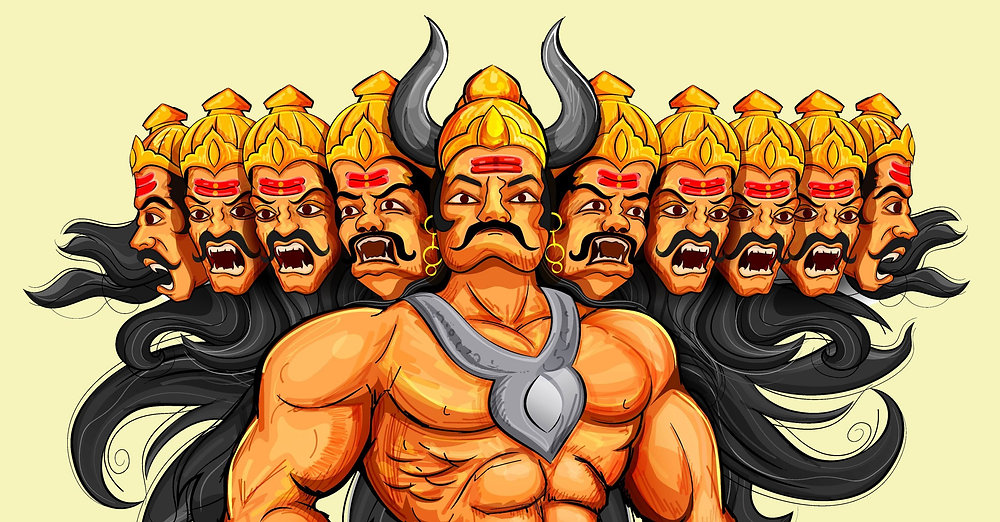
Bisrakh, or Bisrakh Jalapur, is located just 30 kilometres from Greater Noida. The area is steeped in mythology as it is believed to be the birthplace of Ravana.
Why visit Bisrakh?
– Birthplace of Raavan
– Ancient Shiva Temple
History of Bisrakh
Ravana, is one of the most complex figures from the ancient Indian epic Ramayana. He is often remembered as a powerful king rather than just a villain. He was a learned ruler of Lanka, a great scholar of the Vedas, a skilled musician, and a devoted worshipper of Lord Shiva. Ravana was also known for his intelligence, penance, and deep spiritual knowledge, making him a significant figure in Indian mythology and Hindu history.
Ravana’s father, Sage Vishrava, was a renowned rishi, and the village derives its name from him. Vishrava discovered a sacred Shiva Linga in the surrounding forest and established it in the village. This created a spiritual focal point for the community. Today, this legacy continues with a new Ravana temple under construction. The site is emerging as an important location for religious tourism. It is also a significant heritage travel destination in India. This is especially true for those interested in Ramayana-related places, ancient temples, and spiritual tourism.
Ancient Shiva Temple Bisrakh
Bisrakh’s ancient Shiva temple is one of its most remarkable features. This temple houses an octagonal Shiva Linga, which is quite unique in India. The Archaeological Survey of India (ASI) had conducted excavations on the premises some years ago. It unearthed a hidden cave and large bricks typical of ancient construction. The excavation also revealed metal coins and other historical relics. These findings suggest a rich archaeological heritage dating back centuries.

Intriguingly, the Shiva linga visible above ground stands approximately two and a half feet high. It is merely the tip of a much larger structure. This structure extends about eight feet below the surface. Next to the Shiva temple, there is an open temple dedicated to the Navagraha, or the nine planets. The Murti of the Sun here is quite unique. It shows the single-wheel chariot of the Sun. This chariot is driven by two horses and occupies the centre of the Navagraha mandala.
The current priest of this ancient Shiva temple is Ramdas. He has been its caretaker for three decades and always ready to share some fascinating insights into the local customs.
The carvings on the temple depict the story of Ravana’s grandfather, who was sage Pulastya Muni. He was one of the ten Prajapati, and one of the mind-born sons of Brahma. They then depict Ravana’s parents, Vishrava and Kaikashi, providing context for his dual heritage, which is both divine and demonic. The life of Ravana himself is extensively portrayed, starting from his birth, an event of great significance in Hindu mythology.
One of the most notable episodes carved on the walls is of Ravana’s legendary penance. He did this to obtain the boon of multiple heads from Lord Brahma. This act of extreme devotion and determination is central to Ravana’s character, illustrating both his spiritual power and his ambition. The multiple heads he received symbolise his vast knowledge and skills, encompassing the Vedas and various arts and sciences.
The narrative continues to shows Ravana’s rise to power and his conquest of Lanka. These events set the stage for his eventual conflict with Lord Rama. Interestingly, the carvings extend to show Ravana’s departure.
These inform a traveler about the complex background of Ravana’s character. They encourage contemplation on the nature of good and evil. The temple stands as a unique cultural landmark. It offers a perspective on the Ramayana that diverges from the more common narratives found elsewhere in India.
While most of India marks Dussehra or Vijayadashami by burning effigies of Ravana, Bisrakh follows a very different tradition. Here the residents perform a maha yagna; a grand sacred fire ceremony and offer prayers for the soul of Ravana. They honour him as a great scholar, a learned king, and a devoted worshipper of Lord Shiva.
Explore more nearby
Only a short distance from Bisrakh is Dankaur. Unlike Bisrakh’s connection to the Ramayana and Ravana, Dankaur is significant to the Mahabharata.
According to locals, this area was once the ashram of Guru Dronacharya, the revered teacher who trained the Kauravas and the Pandavas. Local belief holds that Eklavya, the gifted archer, also practiced archery here under Dronacharya’s guidance, and a temple dedicated to Guru Dronacharya and Eklavya exists in the town as a testament to this legendary past.
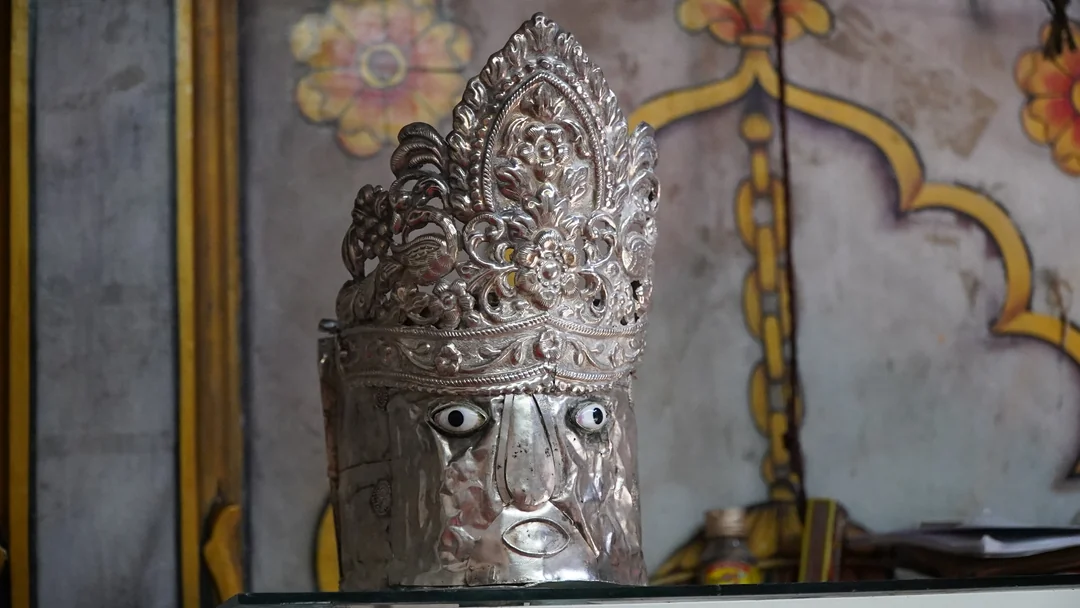
According to the temple priest, the idol is considered to be the head of the idol that Eklavya crafted of Guru Dronacharya. It is said to have been discovered about 100 years ago during an excavation, and though the ASI reportedly confirmed its antiquity, no supporting documents were shown to validate the claim.
For those interested, visit the Dhanauri Wetlands which is home to over 120 Sarus cranes and a noted birdwatching spot.
Bisrakh to Lanka – What’s the connection?
The connection between Bisrakh and Ravana’s later kingdom of Lanka is deeply rooted in local lore. It is believed that Ravana spent his early years in Bisrakh before journeying to Lanka. According to Hindu scriptures, Ravana and his brother Kumbhakarna performed intense penance to please Lord Brahma, earning extraordinary powers. With these, Ravana defeated Kubera (the God of Wealth and his step brother). Kubera had received Lanka as a gift from Lord Shiva, but Ravana wanted to claim the golden kingdom.
Other Places Where Ravana is Worshipped
Bisrakh is not the only place that honours Ravana. In Rajasthan’s Mandor village, locals believe Ravana’s wife Mandodari was the daughter of King Mandawar. Here too, Dussehra is not traditionally celebrated; instead, villagers pay respect at a temple where a statue of Ravana was installed in recent years.
Across India, several temples dedicated to Ravana reflect his complex place in Hindu mythology.
- Kanpur, Uttar Pradesh – Dashanan Temple
Dashanan Temple is traditionally opened only on Dussehra, when devotees chant and offer prayers to Ravana as a devotee of Shiva and a symbol of strength and wisdom. - Mandsaur, Madhya Pradesh
Mandsaur is traditionally connected to Mandodari (Ravana’s wife), who is believed to be native to this region. Here, Ravana is honoured as a respected son-in-law. A large idol of Ravana (with multiple heads) stands as a central shrine. - Ravangram, Vidisha, Madhya Pradesh
Ravana is worshipped affectionately as “Ravana Baba”, a 10-foot reclining statue in the local temple. It is visited by families, especially during weddings and festivals, and locals seek blessings in his name. - Kakinada, Andhra Pradesh
The Kakinada Ravana Temple honours Ravana’s deep devotion to Lord Shiva. The temple complex includes a large idol of Ravana and a Shivalinga mural, reinforcing his spiritual legacy. - Gadchiroli District, Maharashtra
Among Gond tribal communities, Ravana is admired for his knowledge and dedication to Shiva. This community too celebrates Dussehra offering prayers in his honour instead of burning his effigy. - Baijnath, Himachal Pradesh
The Baijnath Temple itself is an important pilgrimage site, with a Shiva lingam believed to have been established by Ravana during his journey. Locals here belief that burning Ravana’s effigy would anger Lord Shiva.
Location & Distance Guide to Bisrakh
Greater Noida: 17 km
Noida: 10 km
New Delhi: 33 km
Meerut: 63.8 km via NE 3
Gurgaon: 61.5 km via NH48
Discover more from GoTravelTrek
Subscribe to get the latest posts sent to your email.
