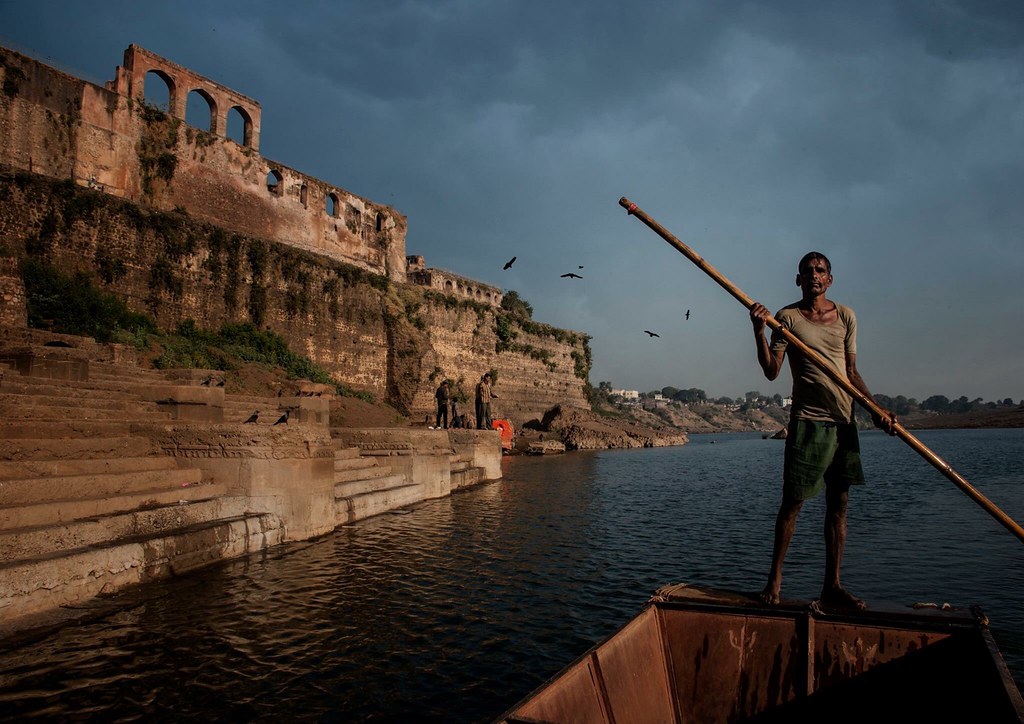
Burhanpur was founded in the 14th century (1399) by Malik Nasir Khan, a ruler of the Faruqi dynasty and was once an important centre of trade and commerce. The Faruqis ruled Burhanpur for the next two centuries. In 1600 AD, Mughal Emperor Akbar captured Burhanpur, and for the next century, until Aurangzeb died in 1707, it remained integral to Mughal ambitions in the Deccan. Located by the River Tapti in Madhya Pradesh, Burhanpur is a treasure trove of history, architecture, and culture.
Why Visit Burhanpur
– Explore the Original site meant for the construction of the Taj Mahal
– Heritage Buildings
– Religious places of importance for different cultures
Renowned for its rich textiles, the city was a significant Mughal outpost. Today, it’s steeped in stories and legends that span centuries.
Did you know?
- It was in Burhanpur that Shah Jahan, then known as Prince Khurram, had his blind brother Khusrau strangled to death.
- The Taj Mahal was originally meant to be built in Burhanpur. In fact, Mumtaz Mahal’s body was moved from Burhanpur to Agra.
- Inside Shahi Qila (Royal Fort) of Burhanpur is a faded but exquisite ceiling painting that some historians believe influenced the design of the Taj Mahal.
- Burhanpur was a hub of the Indigo and Rose Water trade.
Ahukhana
Constructed by Shah Jahan’s elder brother, Prince Pervez, Ahukhana was used for pleasure and deer hunting activities.
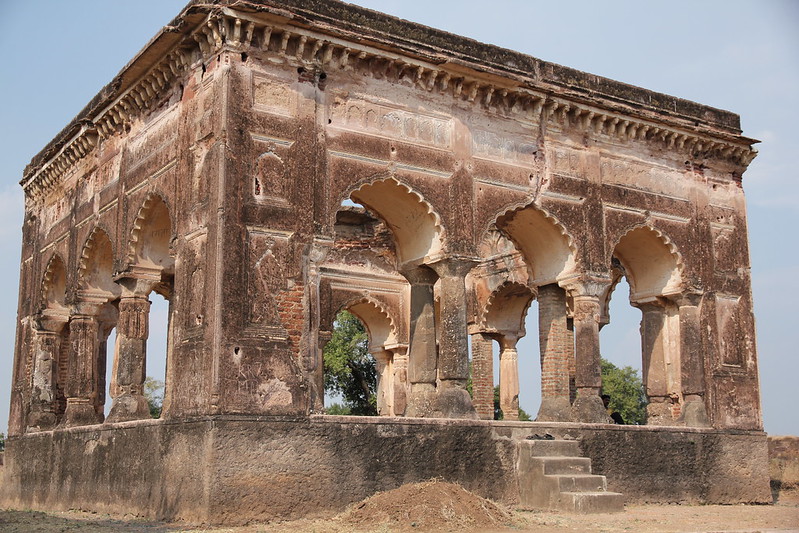

Mumtaj Mahal died while giving birth to her 14th son in Burhanpur, and it is here at Ahukhana, where Mumtaz Mahal (Arjumand Bano Begum) was initially laid to rest for about six months. Emperor Shah Jahan had initially planned to build the Taj Mahal on the banks of the Tapti River in Burhanpur. However, challenges like transporting marble from Makrana and the narrowness of the river led him to choose Agra instead.
Mumtaz’s body was disinterred and taken to Agra, which was then the imperial capital of the Mughal Empire that ruled India from the 15th to the 19th centuries.
Today, Ahukhana is in a dilapidated state and is visited by few. It saddens me to observe the neglect of our heritage and the lack of efforts to preserve it for future generations. Burhanpur’s historical buildings are deteriorating and seem forgotten by the government. I hope substantial plans get in place to protect this invaluable piece of history.
Shahi Qila (The Royal Palace)
The fort was built around 1500 A.D. by rulers of the Farooqi Dynasty. Overlooking the Tapti River, this seven-story palace is often called Badshahi Fort and Bhoolbhoolaiya (a labyrinth) due to its complex and confusing layout. The key highlights include the Diwan-e-Aam, Diwan-e-Khas and the Hammam Khana (royal bath).
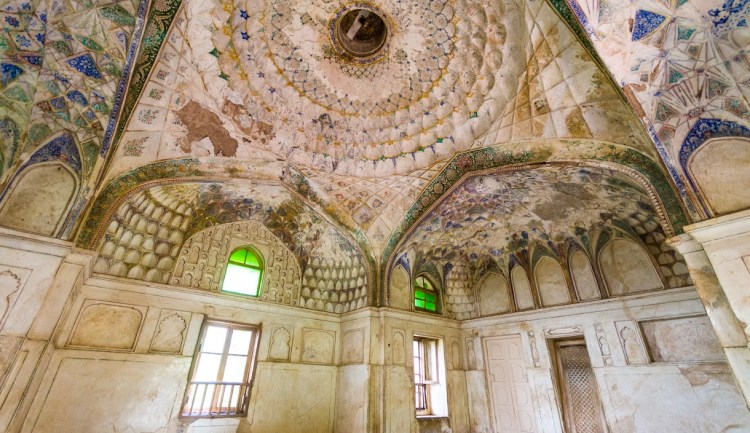
Specially built for Shah Jahan’s wife, Begum Mumtaz Mahal, this royal bath offered her the ultimate luxury, with waters perfumed by khus, saffron, and rose petals. The structure’s domed roofs and impeccably preserved frescoes showcase the pinnacle of Mughal craftsmanship. It even has an inscription of Khan Khana Mirza Abdul Rahim Khan, a poet who was one of the nine important ministers (dewan) in Akbar’s court, known as the Navaratnas (nine gems).
Jama Masjid
Built during the Mughal era, this grand mosque features stunning Islamic architecture with intricate carvings and a vast courtyard.
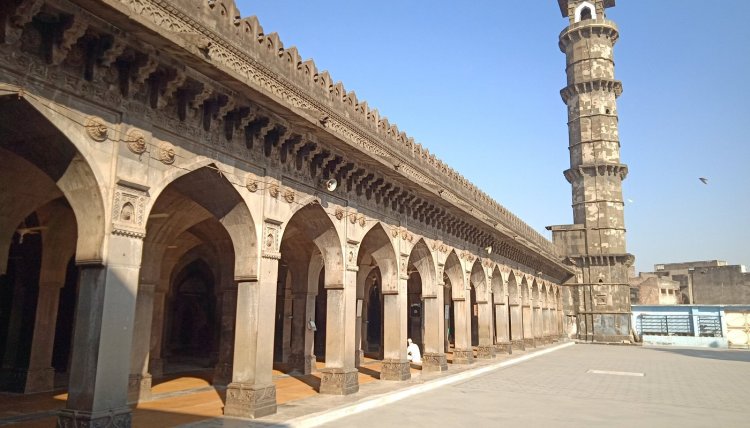
The Jama Masjid of Burhanpur is the only mosque in India with bilingual inscriptions in Sanskrit and Arabic! In the Devanagari script, the Sanskrit inscription provides the astronomical position, date, and year according to the Hindu Samvat calendar (1646). The English Calendar records this to be 5th January 1590.
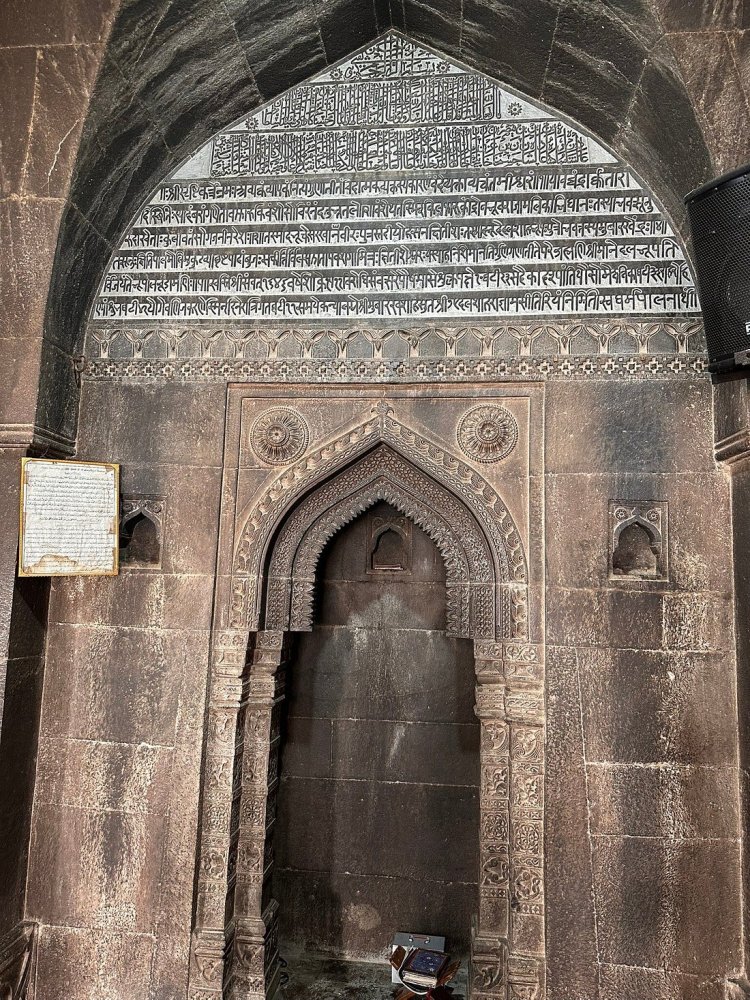
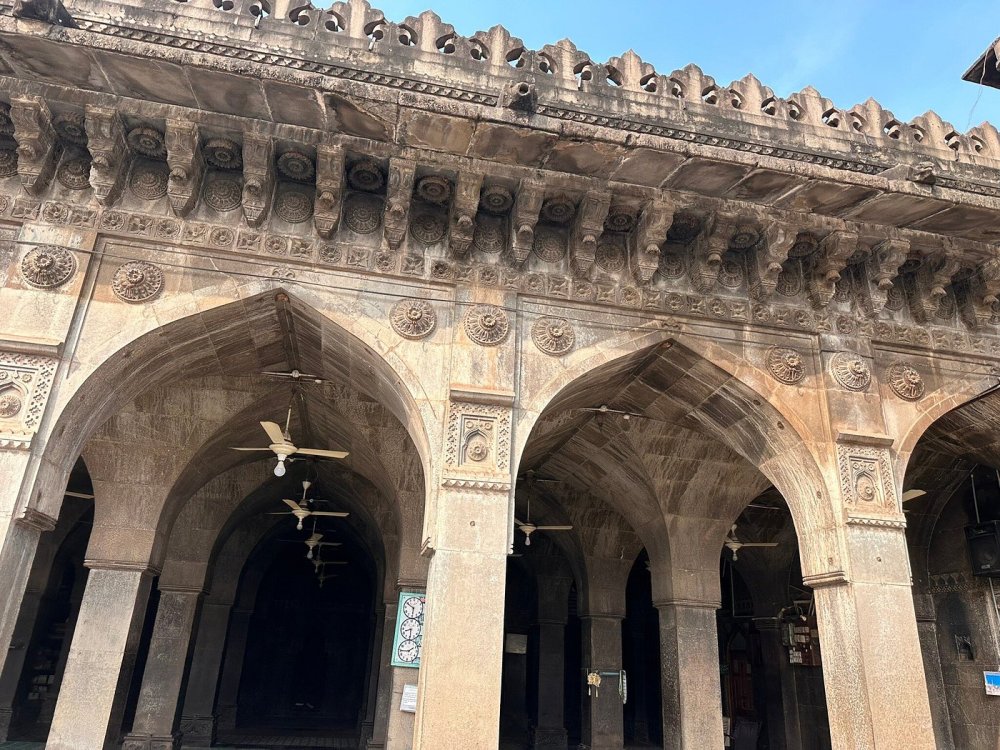
* Both Images CC – Yusuf – TripAdvisor
In 1601, Akbar added an inscription (in Persian) recording his arrival at Burhanpur via Allahabad and his return to Lahore. The inscription is said to have been made a month after the conquest of the hill fort Asirgadh (also called the Gateway to the Deccan), calligraphed by Muhammad Masoom.
Built in 1589 by the Faruqi ruler Raja Ali Khan (Adil Shah), this unique mosque stands out for its roofless design. Instead of a traditional ceiling, the structure employs a network of intersecting symmetrical arches. This creates a sense of openness, connecting worshippers directly with the sky above. The facade features 15 arches and is flanked by two plain 36-meter-tall minarets. Notably, the mosque is said to be constructed using ‘black stone’ sourced from Mandu, adding to its historical significance.
Inside the mosque, there are 17 mihrab niches. Mihrabs are an essential element in Islamic architecture, serving as indicators of the qibla – the direction of Mecca that Muslims face during prayer.
Dargah-e-Hakimi
The Dargah-e-Hakimi is a significant place of worship for Dawoodi Bohra Muslims, featuring beautiful marble architecture. It’s a shrine of Syedi Abdulqadir Hakimuddin Mola, a revered healer.
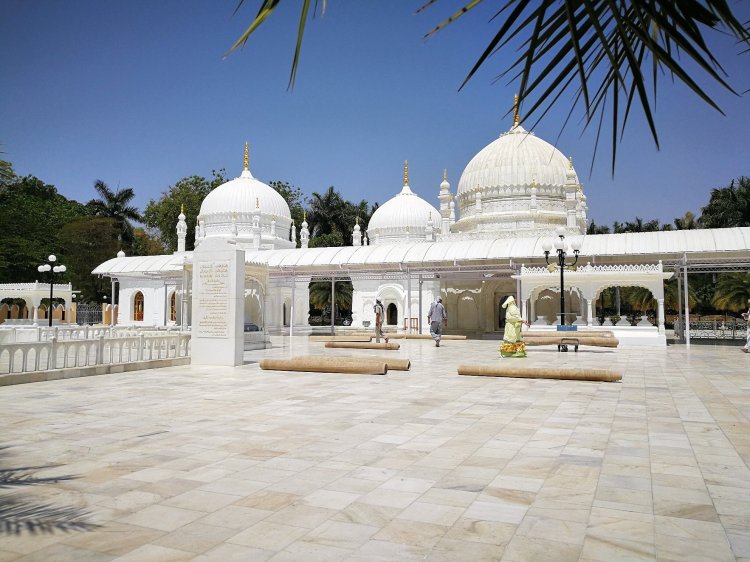
It attracts numerous pilgrims from across the world each year. The grounds feature white marble tombs, green lawns, hedges, guest rooms, and a helipad to accommodate visitors.
Raja Jai Singh’s Chhatri
Raja Jai Singh was a great Maratha warrior and the general under Aurangzeb. He died in 1666 on his way back from a campaign against the Marathas in the Deccan. This impressive open-columned pavilion was constructed as his mausoleum by Mughal Emperor Aurangzeb (1658 – 1707).
Tomb of Shahnawaz Khan
Also called ‘Kala Taj Mahal’ or ‘Black Taj Mahal’ by the locals, the tomb belongs to Shah Nawaz Khan (eldest son of Abdul Rahim Khankhana) and was built between 1622 and 1623 AD.
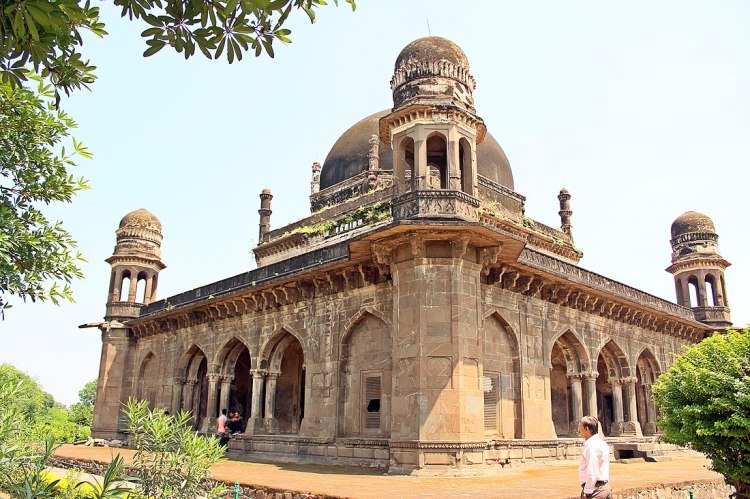
Shahnawaz was quite brave even as a boy and was appointed commander of the Mughal army. He died at the age of 44. The tomb also houses the memorial of Shahnawaz Khan’s wife.
Tomb of Bilqis Begum
Bilquis Jahan was the wife of Shah Shuja (Shah Jahan and Mumtaz Mahal’s second son). Shah Shuja was the governor of Bengal, Bihar, and Orissa and often visited Burhanpur with his beloved queen, Bilqis Begum. She later died here during childbirth in 1632 AD, and Shah Jahan personally supervised the construction of a beautiful Maqbara, unique for its construction style.
Situated on the banks of the Utavali River, the elevated tomb is 4 feet above the ground on a platform shaped like a rose petal. Built of stone and plastered with shell mortar, it features a melon-shaped dome, hence its name: Kharbuja Mahal/Kharboozi Gumbaz. The interior, too, features intricate carvings of plants and creepers, highlighting its architectural beauty.
Kondi Bhandara
Kondi Bhandara is an ingenious underground water supply system designed by the renowned Abdur Rahim Khan-e-Khana (better known for his poetic works “Rahim ke Dohe”) in 1615. He was a multifaceted personality who spent three decades in Burhanpur, excelling as an administrator, soldier, scholar, and poet. He created this ingenious network by tapping springs from the Satpura hills. The system consists of 3 km of clay pipes laid 80 feet underground, which still supply water to many parts of Burhanpur today. While the intricate network remains hidden, visitors can see deep holes emitting warm, humid air and the only visible signs of this remarkable, centuries-old engineering feat. The Kundi Bhandara showcases Khan-e-Khana’s diverse talents and the region’s advanced hydraulic knowledge.
Gurudwara Bari Sangat Sahib Patshahi 10
The Gurudwara commemorates the site where Guru Gobind Singh, the tenth Sikh Guru, stayed with Emperor Bahadur Shah (May-June 1708) while travelling south. This historical event adds significant religious importance to the location. Later, a notable figure named Hathi Singh made this place his home, further cementing its cultural significance.
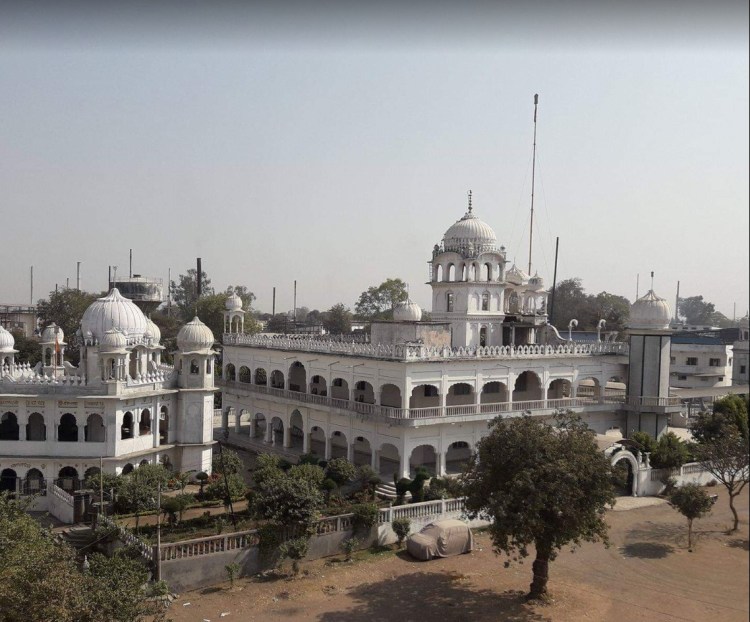
The 16-acre Gurudwara complex features a spacious central hall with a marble canopied seat for the Guru Granth Sahib. The hall’s design includes a mid-height gallery on three sides, accommodating larger congregations. A prized possession here is an old handwritten copy of the Guru Granth Sahib, which features beautifully decorated multicoloured borders.
Asirgarh Fort
Often referred to as the “key to the Deccan,” this fortress offers panoramic views and is steeped in historical significance. Asirgarh Fort, built by Asa Ahir of the Ahir dynasty in the early 15th century, has been a crucial military outpost for various dynasties, including the Mughals, Marathas, and the British.
Asirgarh Fort is divided into Asirgarh proper, Kamargarh, and Malaygarh. Each section has its own unique features and historical significance.
Asirgarh Proper: This is the main fort, and as you step through its gates, you’re immediately transported back in time. The fort’s architecture reflects a blend of Islamic, Hindu, and Persian styles, indicative of the various rulers who have left their mark on this site. The grand entrance, known as the “Delhi Darwaza,” is a testament to the fort’s formidable defences.
Kamargarh and Malaygarh: These smaller forts within the Asirgarh complex offer breathtaking views of the surrounding countryside. The vantage points from these forts highlight their strategic importance, providing a panoramic view of the Satpura Range and the valley below.
Explore more nearby
- Baradari: A beautiful pavilion within the fort, the Baradari offers a glimpse into the luxurious life of the rulers who once inhabited Asirgarh. The intricate carvings and architectural details are a feast for history and art enthusiasts.
- Jama Masjid: This mosque, built by Emperor Akbar, is an architectural marvel with its stunning domes and minarets. It stands as a symbol of the Mughal influence on the region.
- Gupteshwar Mahadev Mandir: Nestled within the fort is a temple dedicated to Lord Shiva. The presence of both Hindu and Islamic religious structures within the fort complex reflects India’s syncretic culture.
The Legend of Ashwatthama and Asirgarh Fort
One of the most intriguing legends associated with this fort is that of Ashwatthama, a revered and enigmatic figure from the Indian epic Mahabharata. Ashwatthama, the son of Guru Dronacharya, is one of the seven Chiranjivi (immortals) in Hindu mythology. He played a pivotal role in the Mahabharata, particularly during the Kurukshetra war. Known for his bravery, loyalty, and tragic fate, Ashwatthama was cursed by Lord Krishna to roam the earth for eternity, bearing the pain of his unhealing wounds.
According to a local legend, Ashwatthama, cursed to live forever, is said to still wander the earth and occasionally visit the fort. Residents of the nearby villages believe that he visits the ancient Shiva temple within the fort to offer prayers.
Over the years, several villagers and visitors have claimed to have seen a tall, imposing figure with an aura of ancient energy, believed to be Ashwatthama. These sightings often occur during twilight or in the early hours of the morning, adding to the mystical allure of the fort. Some even claim to have felt an otherworldly presence or heard whispers around the temple, attributed to Ashwatthama’s undying spirit.
Must Eat
Mawa Jalebi, Khandeshi Daraba and Mande (thin rumali roti).
Location & Distance Guide
Asirgarh Fort: 29 km
Indore – 180 km
Omkareshwar, Madhya Pradesh: 121 km
Khargone, Madhya Pradesh: 127 km
Amravati, Maharashtra: 256
Bhopal, Madhya Pradesh: 355 km
Nashik, Maharashtra: 342 km
Aurangabad, Maharashtra: 221 km
*Feature image is by Sibtain Shahidi
Discover more from GoTravelTrek
Subscribe to get the latest posts sent to your email.
