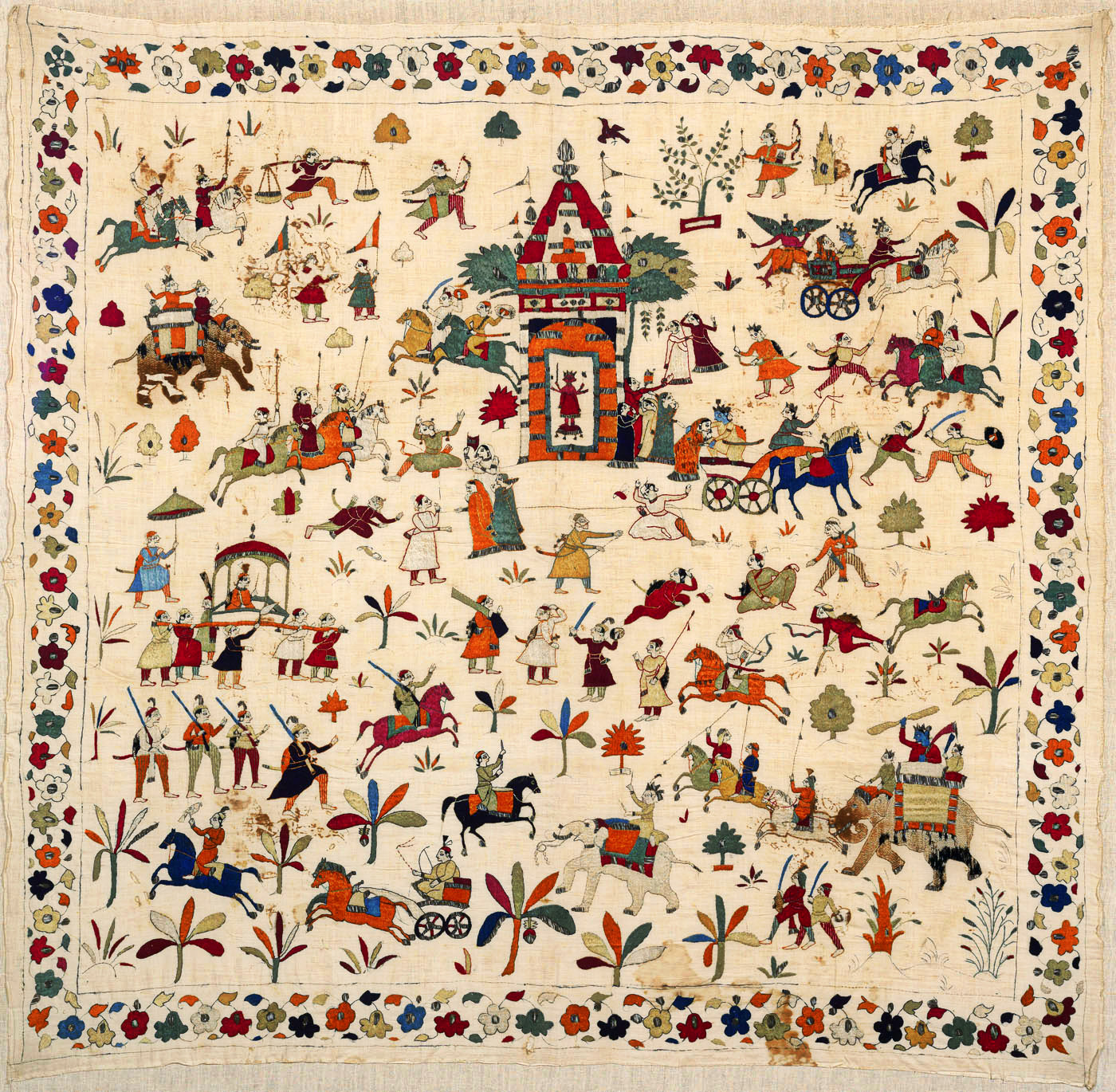
In the Himalayan town of Chamba, Himachal Pradesh, a centuries-old art form continues to whisper stories through silk threads. Known as the Chamba Rumal, this unique embroidery is not just a textile craft but a canvas where mythology, miniature painting, and needlework meet.
Often called the “paintings in thread,” Chamba Rumal is India’s most refined traditional embroideries which is celebrated for its reversible stitching, narrative scenes, and deep cultural symbolism. Today, it stands as a proud symbol of Himachal’s artistic heritage and India’s rich craft legacy.
In this post, I will try to cover its history, artistic significance, unique features, and its journey from past to present.
What is Chamba Rumal?
The word ‘rumal‘ means handkerchief, but Chamba Rumals are far more elaborate than everyday cloths. Traditionally, they were square or rectangular embroidered textiles used as ceremonial covers, wedding gifts, or temple offerings.
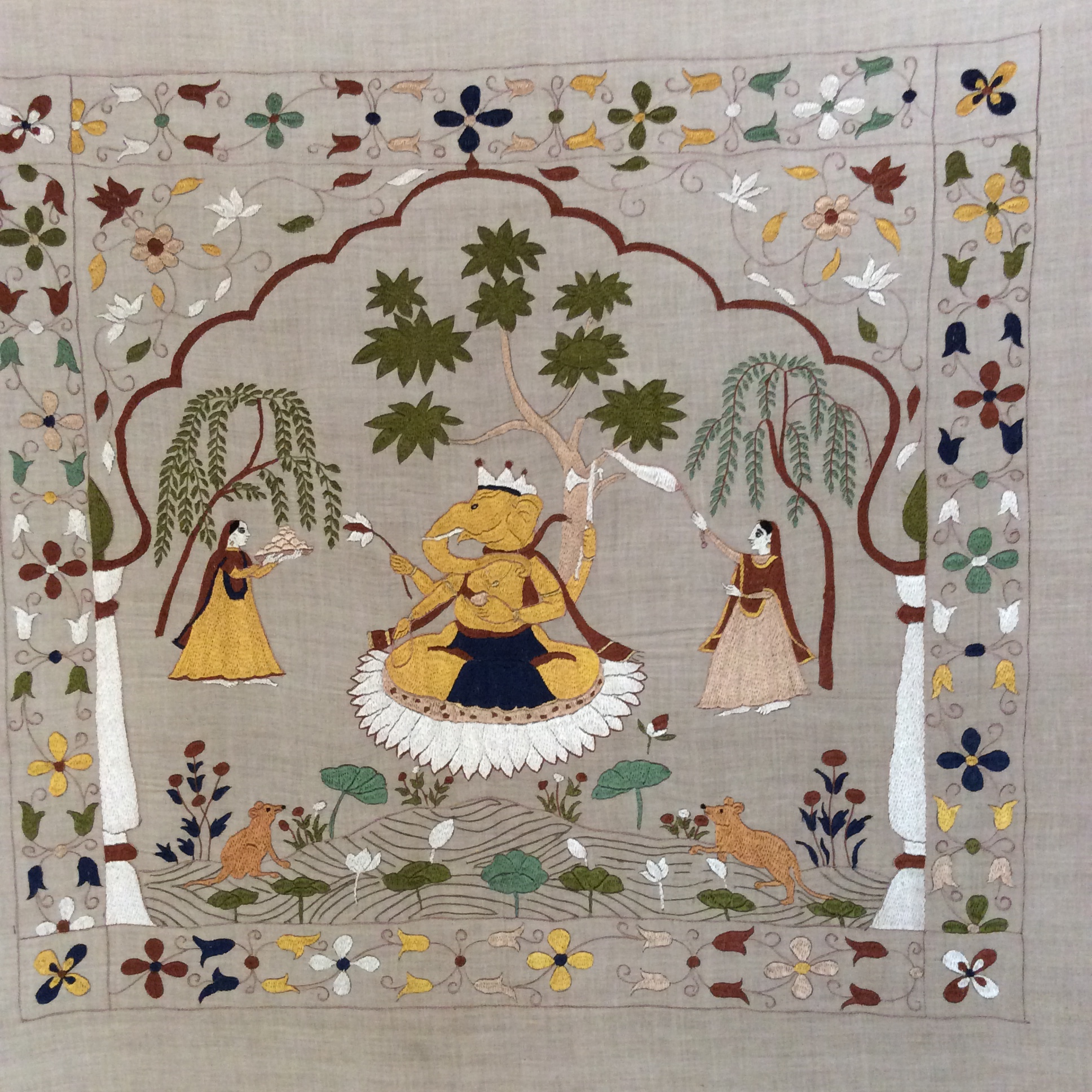
Each rumal is hand-embroidered with fine silk threads on soft fabric, depicting scenes from Indian epics, folklore, and nature. What sets them apart is their double-sided embroidery technique, where both sides look equally neat and identical. This feature makes Chamba Rumal one of the most technically advanced forms of Indian embroidery.
Origins and Historical Roots of Chamba Rumal
The origins of Chamba Rumal trace back to the 16th and 17th centuries. This was the time when the princely state of Chamba flourished as a cultural center. The region was known for its Pahari miniature paintings, and this painting tradition must have influenced the its design.
Court painters would first draw detailed outlines inspired by mythology and royal life. Skilled women, often from noble households, then embroidered over these sketches using silk threads.
In many ways, Chamba Rumal was a collaboration between painter and embroiderer — a rare blend of two art forms. These rumals were exchanged during marriages, given as royal gifts, and offered in temples, making them both personal and sacred objects.
Distinctive Features of Chamba Rumal
1. Do-Rukha Stitch (Double Satin Stitch)
The defining feature of Chamba Rumal is its do-rukha technique. The embroidery appears identical on both sides, with no visible knots or loose threads. This requires exceptional precision and patience.
2. Narrative Designs
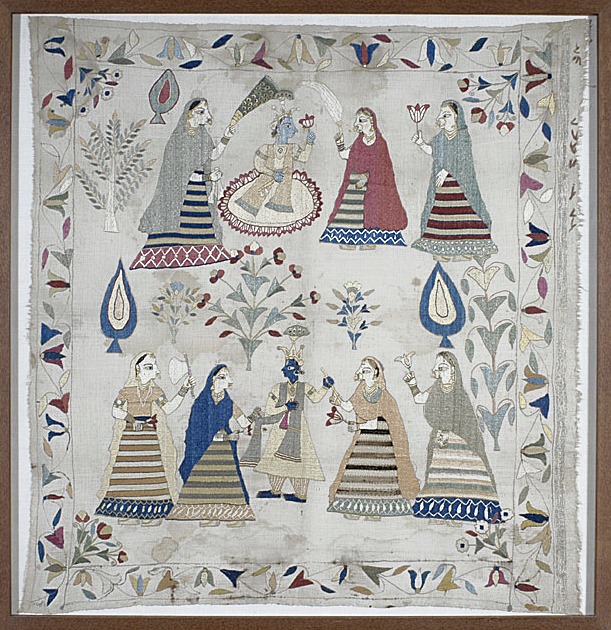
Every Chamba rumal is a visual storybook., where most rumals tell stories. Popular themes include:
- Krishna’s Raas Leela
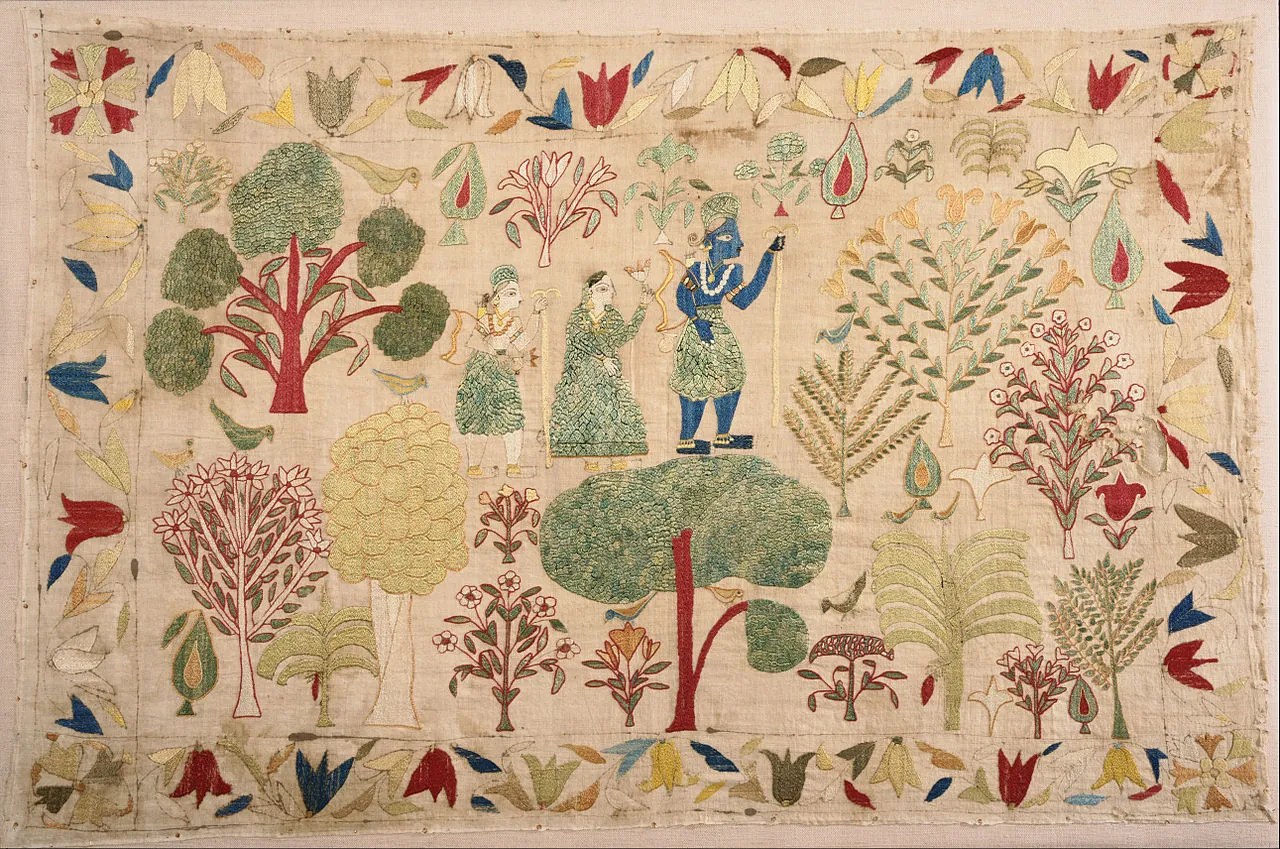
- Scenes from the Ramayana and Mahabharata
- Rasamandala: typically depicts 4-armed Vishnu and Lakshmi, seated on a double-petalled lotus
- Royal processions and wedding rituals
- Floral and animal motifs inspired by Himalayan nature
3. Fine Materials
Traditionally, artisans used hand-spun muslin or khaddar cloth and untwisted silk threads that gave a soft sheen to the embroidery.
Cultural and Artistic Significance
Chamba Rumal holds a special place in Indian textile art because it transforms the style of miniature painting into embroidery. Few textile traditions in the world achieve this painterly effect with thread.
It also reflects the social life and beliefs of the time. From divine love stories to everyday celebrations, these textiles documented cultural narratives long before photography existed.
For women artisans, embroidery was both creative expression and cultural participation. It allowed them to contribute to ceremonial life and preserve stories through stitches.
Many Chamba Rumal motifs carry symbolic meaning:
- Lotus → purity and divinity
- Peacock → beauty, grace, and love
- Cypress tree → eternity
- Krishna themes → devotion and divine love
Decline of the Craft
With the decline of royal patronage during colonial times and changing lifestyles in the 19th and 20th centuries, Chamba Rumal was slowly losing prominence. Machine-made textiles replaced hand embroidery, and fewer artisans continued the practice.
Many original rumals found their way into museums and private collections, and the living tradition weakened.
Revival and GI Recognition for Chamba Rumal
The revival of Chamba Rumal began when craft scholars and cultural organizations recognized its heritage value. Chamba Rumal received a Geographical Indication (GI) tag in 2007, recognizing it as a unique craft belonging to Himachal Pradesh. This has helped protect its authenticity and support artisan livelihoods.
Today, government bodies, NGOs, and independent designers are working to keep the craft alive. Today, modern Chamba Rumals are no longer limited to ceremonial cloths. Few local training programs have started to teach younger artisans the traditional techniques.
They now appear as:
- Framed textile art
- Wall hangings
- Heritage gifts
- Museum exhibits
- Collectible craft pieces
While some adaptations use new color palettes or themes, the finest works still follow the traditional do-rukha technique. Tourists and art collectors increasingly seek authentic Chamba Rumal as meaningful, handmade alternatives to mass-produced décor.
Why Chamba Rumal Still Matters Today
In a world of fast fashion and digital prints, Chamba Rumal reminds us of slow craftsmanship and storytelling. Each piece takes weeks or even months to complete, carrying the artisan’s focus and devotion.
Supporting this craft means supporting:
- Cultural preservation
- Women artisans’ livelihoods
- Sustainable handmade traditions
- India’s intangible heritage
Owning a Chamba Rumal is like owning a story stitched across time. Its not only in its delicate embroidery but in the stories it carries. Stories of devotion, celebration, and artistic collaboration. From royal courts to modern homes, it continues to evolve while staying rooted in tradition.
Authentic Chamba Rumals are slow art:
- A single piece can take weeks or months and hence these are high on prices
- Requires mastery of do-rukha stitching
- Demands high color sense and spatial accuracy
As more people rediscover handmade heritage, Chamba Rumal stands as a shining example of how traditional art can remain relevant in the present day.
How to Identify an Authentic Chamba Rumal
With growing popularity, many machine-made or imitation pieces are sold as Chamba Rumal. Knowing what to look for can help you appreciate and purchase the real craft.
✔ Reversible identical embroidery – The most important marker of authenticity is the do-rukha technique. An original Chamba Rumal looks almost identical on both sides, with no loose threads or visible knots. If the back looks messy or different, it’s likely not authentic.
✔ Fine silk threadwork – Genuine Chamba Rumals are usually embroidered on handspun cotton, muslin or khaddar (although a bit thicker). The fabric feels soft yet sturdy, not synthetic or stiff. Original pieces use untwisted silk threads that give a subtle sheen. The stitching is smooth, dense, and even and never bulky.
✔ Balanced composition – Traditional rumals feature detailed scenes inspired by mythology, epics, or royal life. Authentic pieces often feel like a painting translated into thread, not just random decoration.
✔ Mythological or traditional themes
Where to See & Buy Authentic Chamba Rumal Pieces
While many Chamba Rumals are available on online platforms, for genuine craftsmanship and authenticity, it’s best to purchase them from the following trusted sources:
- Government emporiums in Himachal
- GI-certified sources/sellers
- Craft fairs and exhibitions
- Direct artisan clusters in Chamba
Regional Variations: The Hathapura Rumals of Mandi, Suket, and Bilaspur
While Chamba became the most celebrated center for embroidered rumals, neighboring regions like Mandi, Suket, and Bilaspur developed their own distinctive embroidery traditions. These areas nurtured a style that differed in theme, mood, and cultural use.
Read More
In these former hill states, embroidered textiles known as Hathapura rumals were especially popular. Unlike the narrative and mythological scenes often seen in Chamba Rumals, Hathapura embroidery focused more on floral patterns, birds, and nature-inspired motifs. The designs were usually decorative rather than storytelling in nature, reflecting the region’s aesthetic preferences.
Hathapura rumals also held strong social significance. They were commonly exchanged as marriage gifts, symbolizing goodwill, blessings, and familial ties. Presenting a beautifully embroidered rumal was considered a thoughtful and auspicious gesture during wedding ceremonies.
These regional variations highlight how embroidery in Himachal Pradesh was not a single tradition but a collection of local expressions shaped by culture, geography, and community customs. Together, they form a broader picture of the hill states’ rich textile heritage.
Discover more from GoTravelTrek
Subscribe to get the latest posts sent to your email.

One thought on “Chamba Rumal: Art of Indian Storytelling in Embroidery”