In the verdant landscape of Maharashtra, scattered across gentle hills, beside sacred rivers, and within ancient caves, lie eight extraordinary temples that together form one of India’s most cherished pilgrimage circuits – the Ashtavinayak Yatra.
This is a journey to temples through the many manifestations of Lord Ganesha, the beloved elephant-headed deity who removes obstacles, bestows wisdom, and grants prosperity to millions of devotees.
Ashtavinayak (अष्टविनायक) translates from Sanskrit as “Eight Ganeshas”—Ashta meaning “eight” and Vinayak being another name for Ganesha. Each of these eight temples have a distinct, self-manifested (Swayambhu) idol of Ganesha, believed to have appeared on its own without human intervention. Each temple represents a different form of Ganesha, each associated with its own legend, each offering unique blessings, and each possessing its own character.
Base Location to Explore all 8 Temples:
The eight temples are located across three districts of Maharashtra – Pune, Raigad, and Ahmednagar. They form a circuit of approximately 650-700 kilometers so an ideal base to explore all the temple would be Pune.
Why the Ashtavinayak Pilgrimage Matters
For devotees of Ganesha, completing the Ashtavinayak Yatra is considered auspicious. These deities are believed to be “jagrut,” meaning they actively respond to the prayers and wishes of their devotees. The pilgrimage is said to:
- Remove all obstacles from one’s life path
- Grant success in new ventures and undertakings
- Bestow wisdom, prosperity, and spiritual growth
- Fulfill sincere wishes made with devotion
- Bring peace and harmony to families
- Provide protection from negative energies
Temple-by-Temple Guide
1. Mayureshwar Temple (Moreshwar) – MORGAON
The Beginning & End of the Sacred Journey
Location: Morgaon village, Pune District (67 km from Pune)
Form of Ganesha: Mayureshwar (Lord seated on a peacock)
Trunk Direction: Right (unique among Ashtavinayak)
Temple Timings: 6:00 AM – 9:00 PM daily
The Tradition
According to religious scriptures, the pilgrimage must begin at the Mayureshwar Temple in Morgaon and return to the same temple after visiting all eight shrines, completing the sacred circle. Until you return to Morgaon, the Yatra remains incomplete. This symbolizes that all journeys must return to their source, all seeking must circle back to the divine origin.
The temple faces north, and Morgaon is unique as the only Ashtavinayak temple where Ganesha’s trunk curves to the right, considered especially powerful and auspicious.
Morgaon’s Mayureshwar is one of only two idols in the entire Ashtavinayak circuit (the other being Siddhatek) where Ganesha’s trunk curves to the right.
In Ganesha iconography, this is highly significant:
Right Trunk (Dakshina Murti):
- Represents Surya (Sun) energy—active, masculine, powerful
- Associated with rigorous discipline and strict worship requirements
- Considered more difficult to please but grants exceptional powers when satisfied
- Symbolizes the path of direct spiritual ascent
- Embodies fierce grace—tough love that removes obstacles ruthlessly
Left Trunk (Vama Murti – more common):
- Represents Chandra (Moon) energy—receptive, nurturing, gentle
- Associated with maternal compassion and easy accessibility
- Grants wishes more readily, forgiving of minor ritual lapses
- Symbolizes the gradual, gentle spiritual path
- Embodies soft grace—loving acceptance that guides devotees patiently
The fact that the earthly supreme seat of Ganesha features the right-trunk form suggests:
1. The Power of the Primordial: The original, most powerful form of Ganesha is the demanding right-trunk manifestation. Later temples predominantly feature left-trunk forms as more accessible to ordinary devotees.
2. The Sun Connection: Morgaon’s right-trunk Ganesha connects to solar worship traditions. The peacock (mayura) itself is associated with sun worship in Vedic tradition—its magnificent feathers representing sun rays.
3. The Requirement of Sincerity: Establishing the supreme seat with the difficult-to-please form ensures that only the most sincere, devoted pilgrims undertake the journey. Morgaon does not promise easy blessings—it promises true transformation for those willing to meet its spiritual demands.
4. The Beginning Requires Strength: Starting the Ashtavinayak circuit at Morgaon (with its right-trunk Ganesha) sets the tone: this is not a casual temple tour but a rigorous spiritual undertaking requiring discipline, devotion, and determination.
Why You Must Return to Morgaon: Closing the Sacred Circle
The Ashtavinayak tradition’s insistence on returning to Morgaon after visiting all eight temples now carries deeper meaning in light of its cosmic significance:
1. Returning to the Source: All journeys must return to their origin. Since Morgaon is THE primordial seat—the beginning without beginning—returning here symbolizes coming full circle, returning to the cosmic source.
2. Completing the Eternal Pattern: The pilgrimage mirrors the cosmic cycle: beginning at Morgaon (creation), journeying through the other temples (existence), and returning to Morgaon (dissolution). By returning, you enact in microcosm what Ganesha will do at Pralaya—return to this spot.
3. Presenting Your Journey: You don’t just complete the Yatra—you bring it back to Morgaon for divine acknowledgment. The seven other temples’ blessings are, in essence, offered up to the supreme seat for final sanctification.
4. Receiving Final Liberation: Many believe that the blessings accumulated at the other seven temples are “activated” or “completed” only when you take darshan at Morgaon the second time. Until then, the spiritual circuit remains energetically incomplete.
A profound tradition surrounding Morgaon states that the temple is “Anadi-Ananta” (अनादि-अनन्त)—without beginning and without end.
This declaration places Morgaon outside the bounds of linear time:
- No Beginning (Anadi): The temple/deity did not “come into being” at any point in time. It has always existed, even before creation itself. Unlike temples built by kings or saints at specific historical dates, Morgaon’s sanctity is considered eternal and uncreated.
- No End (Ananta): The temple/deity will continue to exist beyond the dissolution of the physical universe. Even when all human-made structures crumble and civilizations vanish, the spiritual reality of Morgaon persists.
This timeless quality suggests that Morgaon is not a human creation but a naturally occurring sacred geography. It isa place where the veil between the material and spiritual worlds has always been thin, where Ganesha’s energy has been present since before time began.
In practical terms, this belief means:
- The Swayambhu (self-manifested) idol at Morgaon is considered the original, archetypal form
- All other Ganesha manifestations are, in a sense, reflections or emanations from this source
- Visiting Morgaon is not visiting “a” temple but visiting “THE” temple—the primordial seat
Perhaps the most mystically profound tradition about Morgaon concerns its role at Pralaya—the cosmic dissolution that occurs at the end of each cosmic cycle when the universe is destroyed before being recreated.
According to sacred texts, at the moment when the universe begins its dissolution:
Lord Ganesha will return to Morgaon and enter into Yoganidra (योगनिद्रा).
Yoganidra is a profound spiritual state—not ordinary sleep, but the cosmic yogic sleep in which consciousness remains fully aware while all external activity ceases. It is:
- The sleep of preservation during destruction
- A state of suspended animation that transcends time
- The meditative absorption that holds the seed of future creation
- The bridge between one cosmic cycle and the next
The Theological Significance
This tradition makes several profound statements:
1. Morgaon as the Refuge of Last Resort: When everything dissolves—when all temples crumble, when all sacred texts are lost, when all knowledge fades—Ganesha returns to Morgaon. This establishes it as the primordial seat, the first and final sanctuary.
2. The Continuity of Consciousness: While the physical universe dissolves, Ganesha in Yoganidra at Morgaon preserves the memory, the dharma, the cosmic order. He is the thread connecting one universe to the next.
3. The Promise of Renewal: Yoganidra is not extinction but preservation. Just as Vishnu sleeps on the cosmic ocean between creations, Ganesha sleeps at Morgaon, holding within his consciousness the blueprint for the next creation. When the new universe emerges, Ganesha awakens here, making Morgaon both the end and the beginning.
4. The Eternal Presence: This prophecy means that even now, as devotees visit Morgaon, they stand at the spot that will witness the end of time itself. The ground beneath their feet will be the last refuge of the divine when all else fails.
Practical Implication for Devotees
For pilgrims, this knowledge transforms the Morgaon visit from routine temple darshan to an encounter with cosmic significance. You are not merely visiting a historical site or a beautiful temple—you are standing at:
- The axis mundi (cosmic axis) of Ganesha worship
- The eternal point that transcends creation and destruction
- The singular earthly location that connects all three realms (heaven, earth, underworld)
- The spot where time itself begins and ends
Historical Context
This comparison is not merely poetic—it has practical implications:
- Many saints and yogis who achieved enlightenment made pilgrimages to both Kashi and Morgaon, treating them as complementary sacred poles
- Traditional Brahmin families in Maharashtra would ensure that members visited Morgaon with the same devotion and regularity as visiting Kashi
- Death anniversaries and important samskaras (life-cycle rituals) would include offerings at Morgaon parallel to those made at Kashi
In Hindu tradition, few comparisons carry more weight than being likened to Kashi (Varanasi), the eternal city of Lord Shiva, considered the most sacred of all Hindu pilgrimage sites.
The Ganesha Purana and associated texts explicitly compare Morgaon’s holiness with Kashi, stating that for devotees of Ganesha, Morgaon holds the same supreme status that Kashi holds for devotees of Shiva.
What the Kashi Comparison Means
Kashi’s Unique Status:
- The city that is never destroyed, even during Pralaya
- The place where Shiva himself grants moksha (liberation) to dying souls
- The intersection of the earthly and transcendent
- The city of light that illuminates the path to salvation
Morgaon’s Equivalent Status: By comparing Morgaon to Kashi, the texts declare that:
- Liberation through Ganesha: Just as dying in Kashi grants moksha through Shiva’s grace, sincere worship at Morgaon grants liberation through Ganesha’s blessings
- Indestructible Sanctity: Just as Kashi survives Pralaya (held aloft by Shiva’s trident), Morgaon’s spiritual reality persists through cosmic dissolution (as Ganesha’s Yoganidra location)
- Supreme Pilgrimage: For Ganesha devotees (Ganapatyas), completing pilgrimage to Morgaon is as spiritually essential as visiting Kashi is for Shaivas
- The Light in Darkness: Just as Kashi is the city of light (Kashi derives from “Kash” – to shine), Morgaon is the illuminating presence of the obstacle-remover, the deity who brings clarity in confusion
The Legend
The name Mayureshwar comes from “Mayura” (peacock in Sanskrit). The legend tells of a demon named Sindhurasura who terrorized the gods and mortals alike. The demon’s mother, Vinita, created a divine peacock named Mayuresa from her cosmic energy. When Lord Ganesha appeared to vanquish Sindhurasura, a fierce battle ensued between the peacock and Ganesha.
Vinita, distraught at seeing her two creations fight, intervened and pleaded for peace. Moved by a mother’s love, Ganesha agreed to spare the peacock on one condition: the peacock would serve as his vahana (vehicle), and Ganesha would be known by the peacock’s name in this form. Thus was born Mayureshwar; Ganesha riding majestically on a peacock.
The village of Morgaon itself is named after the large population of peacocks (mor in Marathi) that once inhabited the area, and locals claim the village is laid out in the shape of a peacock.
Temple Architecture & Unique Features
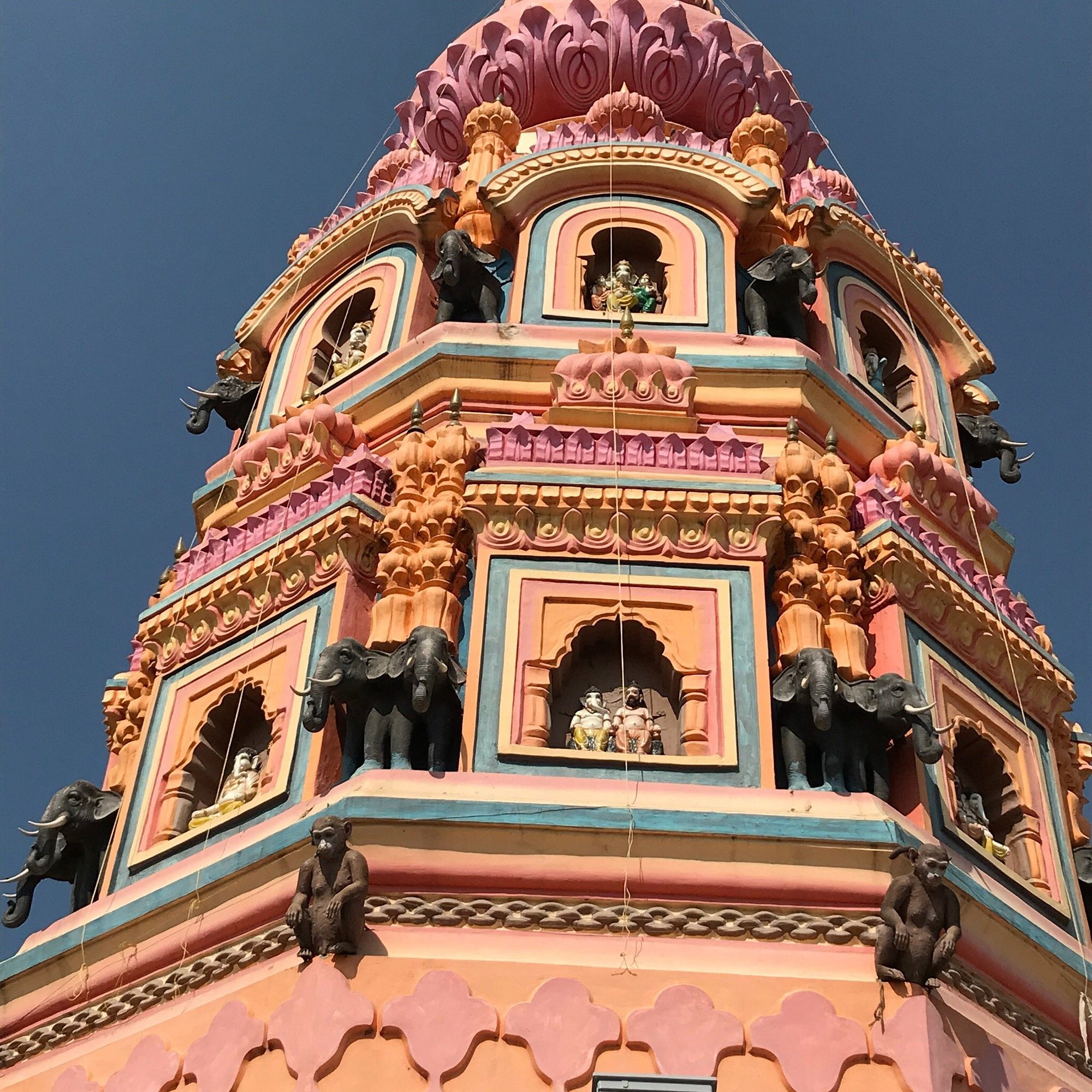
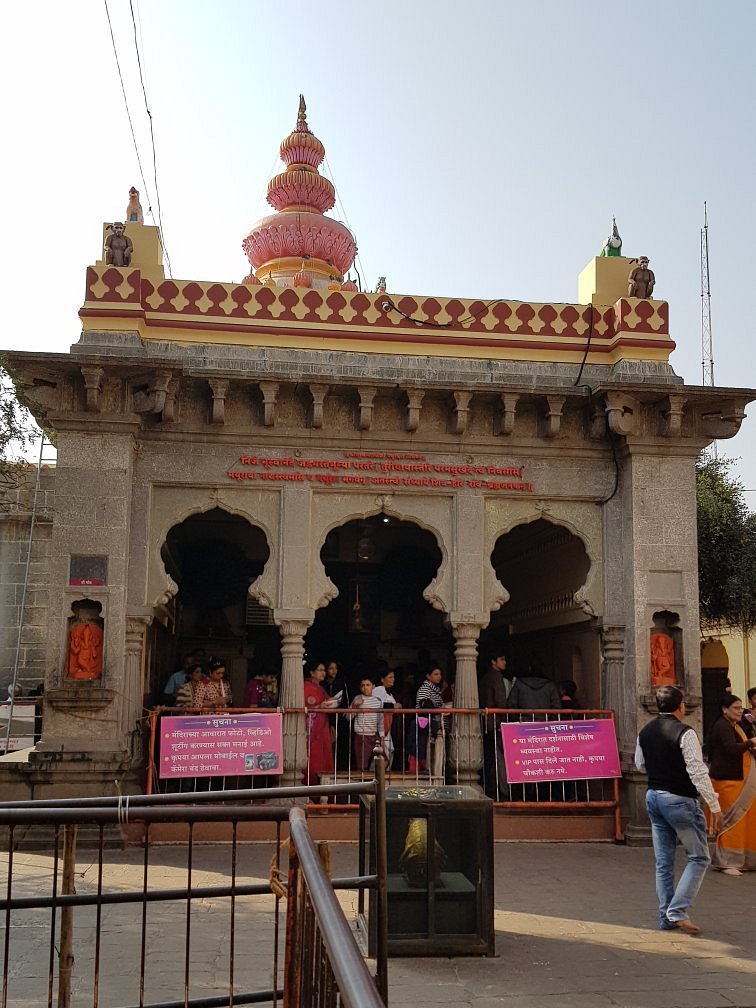
The temple features minarets around its boundary walls, built during the Mughal invasions to make it resemble a mosque from a distance, thereby protecting it from destruction. This architectural deception saved the sacred shrine during turbulent times.
The inner sanctum, 15 feet high and 10 feet wide, was built by Punyashloka Ahilyabai Holkar, the revered queen of Indore known for renovating numerous Hindu temples across India.
Unique Element
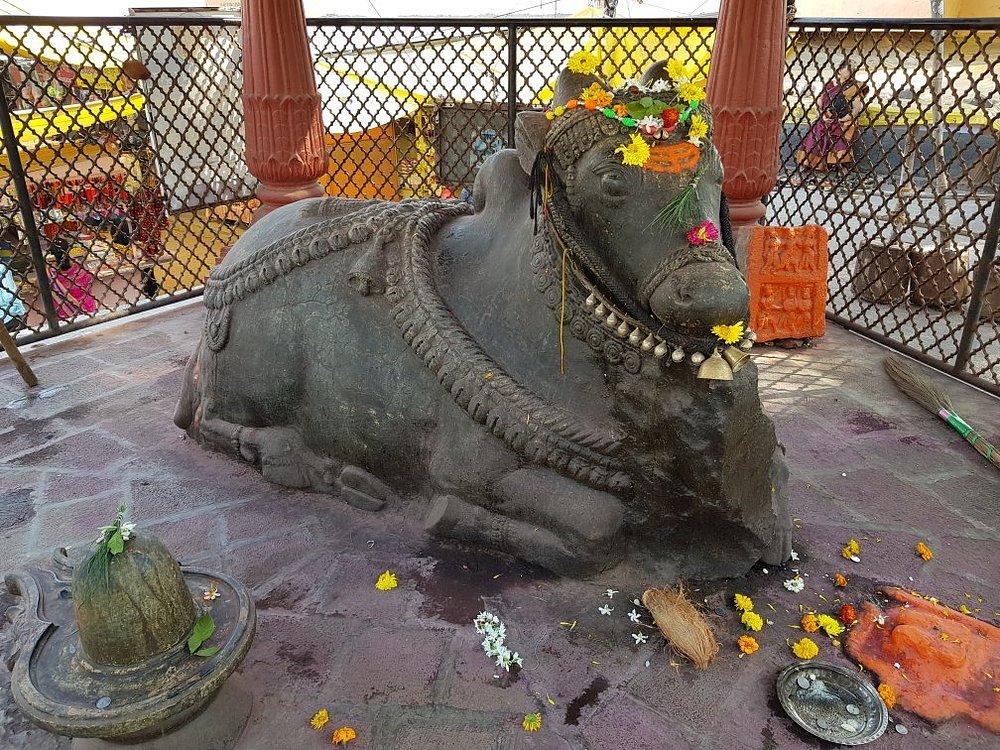
A large Nandi (sacred bull) statue sits near the entrance which is unusual for a Ganesha temple, as Nandi is typically associated with Shiva temples. Local legend attributes this to the deep connection between Shiva and his son Ganesha.
Sacred Belief
It is no accident that two of Maharashtra’s greatest Ganesha saints—Morya Gosavi (13th century) and Narayan Maharaj of Kedgaon (19th-20th century), both attained spiritual realization at Morgaon.
Morya Gosavi
- Made Morgaon his meditation center
- His intense devotion to Mayureshwar is legendary
- Established Morgaon as the spiritual capital of Ganesha worship in Maharashtra
- His lineage continues through the famous Dagdusheth Ganpati temple in Pune
- Proved that Morgaon is not just historically important but actively grants enlightenment
Narayan Maharaj
- Spent years in meditation at Morgaon
- Experienced direct communion with Ganesha here
- Taught that Morgaon is the “magnetic center” of Ganesha energy in the material world
- Encouraged devotees to undertake Ashtavinayak beginning and ending at Morgaon
These saints’ choice of Morgaon validates the Puranic claims—enlightened beings naturally gravitate to the most powerful spiritual centers.
What to Experience
- The peaceful village atmosphere, largely unchanged for centuries
- The architectural blend of Hindu and Islamic design elements
- Morning aarti when the temple comes alive with devotional fervor
- The sacred Karha River flowing nearby
- Visit Jejuri – Famous for the Khandoba Temple
2. Siddhivinayak Temple – Siddhatek (The Granter of Success)
Location: Siddhatek village, Ahmednagar District (100 km from Pune)
Form of Ganesha: Siddhivinayak (Lord who grants Siddhi/success)
Trunk Direction: Right (only other right-trunk idol in Ashtavinayak)
Temple Timings: 4:15 AM – 9:00 PM daily
The Legend
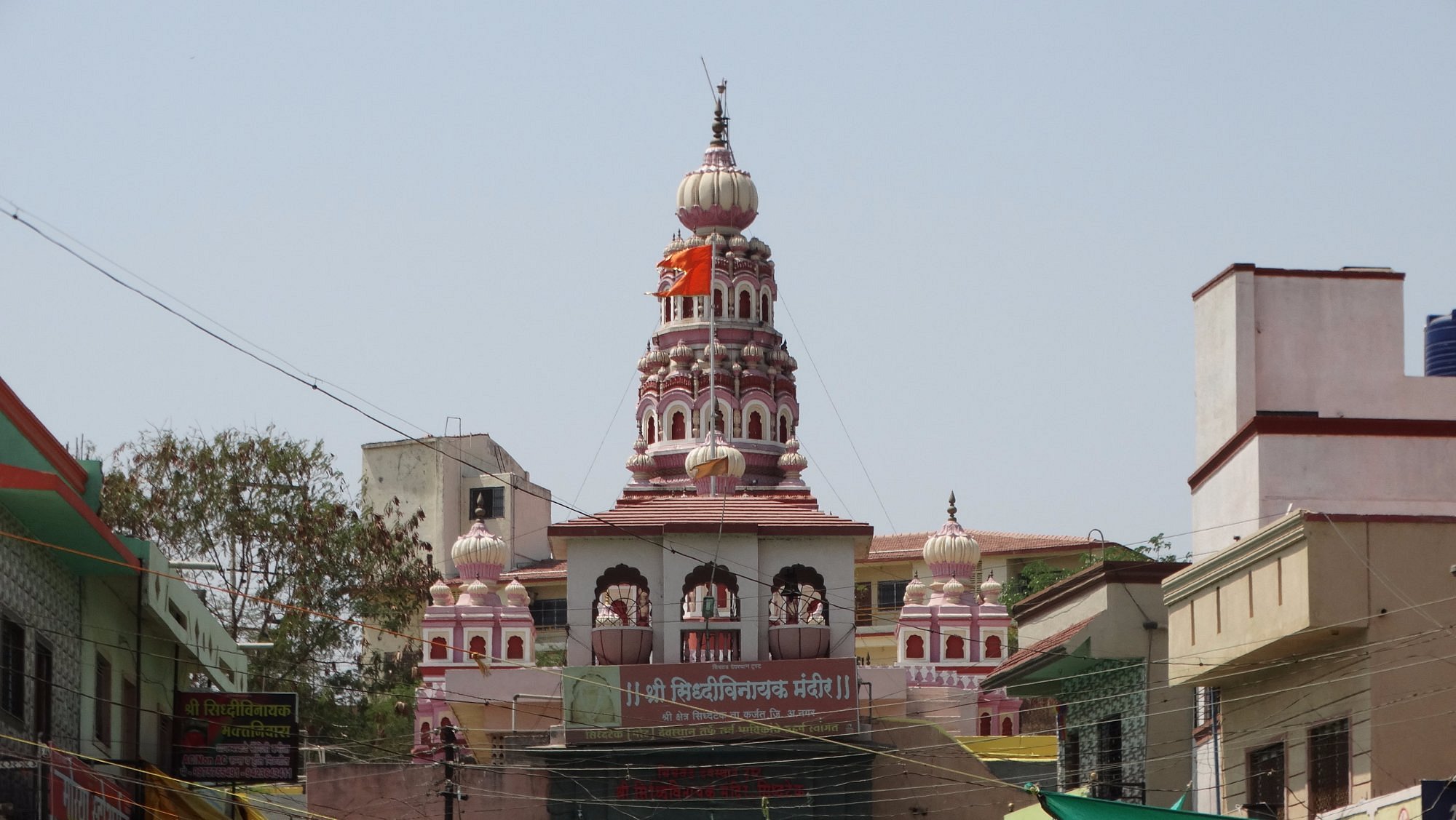
Lord Vishnu, surrounded by fierce calamities in his battle against the demons Madhu and Kaitabha, performed intense penance on the mountain of Siddhatek which sits on the banks of the Bhima River. Upon receiving blessings from Lord Ganesha, Vishnu successfully defeated the two demons.
This makes Siddhatek especially significant as here even Vishnu, the preserver of the universe, sought Ganesha’s blessings before battle and established this temple as a seat of ultimate power and success.
Temple Architecture & Sacred Setting
The temple is perched on a picturesque hillock beside the mighty Bhima River’s northern bank. The idol faces north with its trunk curved to the right—a rare and powerful configuration. Right-trunked Ganesha idols are believed to be difficult to please but grant exceptional siddhis (spiritual and worldly powers) when satisfied.
It is believed that this Lord is difficult to please but grants Siddhi (success) to devoted worshippers. The temple atmosphere reflects this—serious, intense, and spiritually charged.
Sage Vyas, author of the Mahabharata, is believed to have also performed penance at this very location.
What to Experience
- The stunning riverside setting with mountain backdrop
- The powerful energy of the right-trunked Ganesha
- Sunrise views over the Bhima River
- The climb up the hillock offers panoramic vistas
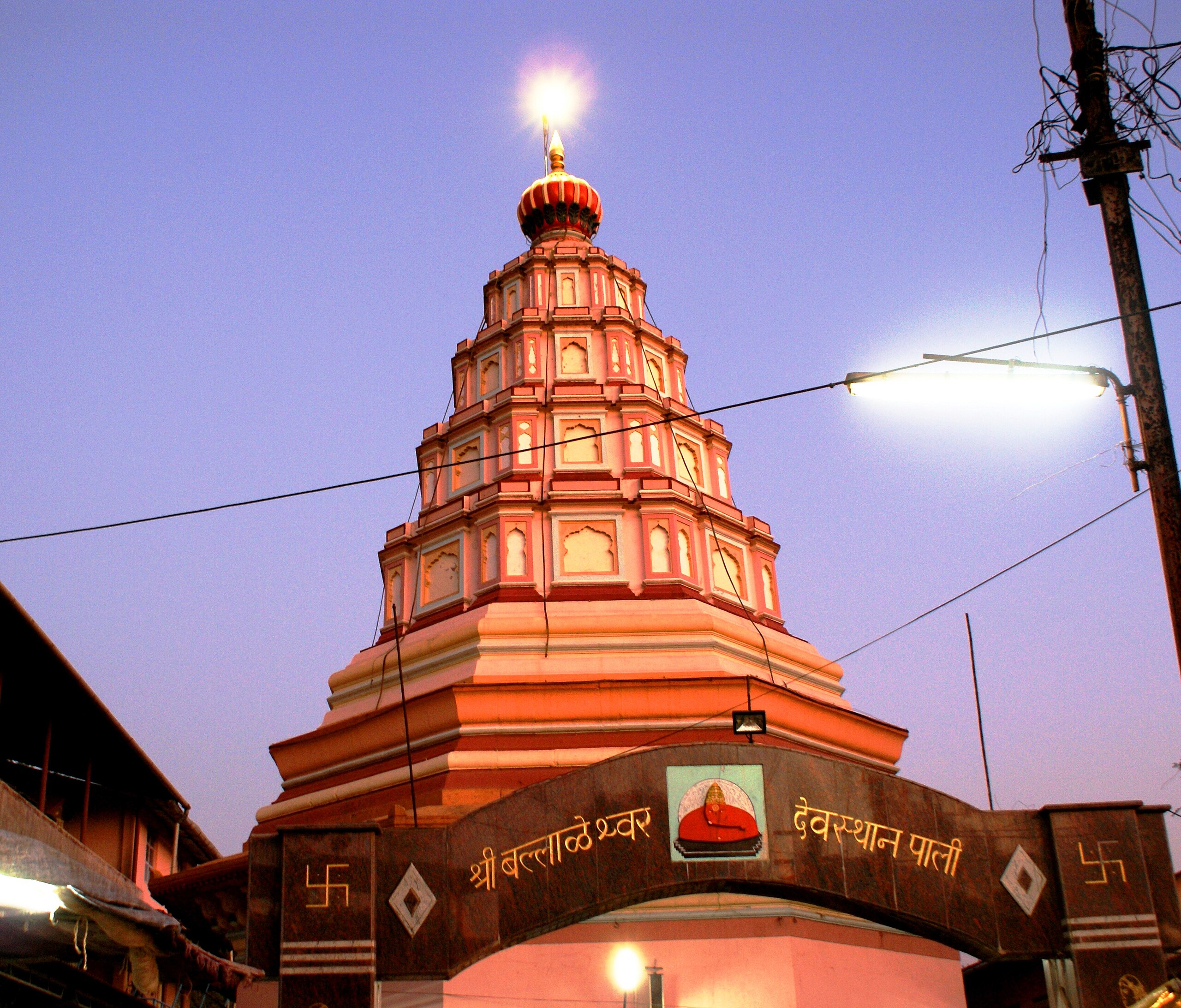
3. Ballaleshwar Temple – PALI
The only temple that has been named after a devotee
Location: Pali village, Raigad District (110 km from Pune)
Form of Ganesha: Ballaleshwar (named after devotee Ballal)
Trunk Direction: Left
Temple Timings: 6:00 AM – 9:00 PM daily
The Legend
In the Treta Yuga, a boy named Ballal was born to a wealthy businessman Kalyan and his wife Indumati. Ballal was an ardent devotee of Lord Ganesha and would worship stones as manifestations of the Lord along with his friends.
One day, while wandering in the forest, Ballal found a particularly large, beautiful stone. He decorated it with flowers and offered prayers, becoming so absorbed in devotion that he and his friends forgot to return home. Their worried parents came searching and were furious to find the children “wasting time” in worship. Ballal’s father, in anger, struck the stone with his staff.
To everyone’s astonishment, the stone bled.
At that moment, Lord Ganesha manifested before them. The deity blessed Ballal for his pure, unwavering devotion and promised to remain in that place forever, taking the name Ballaleshwar. This is the only instance in the Ashtavinayak circuit where Ganesha is known by a devotee’s name rather than a divine title.
This legend teaches that God values sincere devotion over worldly duties, and that even a child’s pure heart can invoke the divine presence.
Temple Architecture & Features
The temple was renovated and extended by Peshwa nobles Baburao Phadnavis and his son Morobo Dada Phadnavis in 1770. The Peshwas built the shrine in the shape of the sacred syllable “Shri”—visible from above, this architectural marvel reflects the spiritual significance of the divine word.
The idol has diamond-studded eyes that sparkle in the temple lighting. During the winter solstice, sunrays fall directly on the deity during morning worship—an astronomical alignment built into the temple’s design.
The temple faces east, symbolizing auspiciousness and new beginnings. Two serene lakes flank the temple on either side, creating a mirror-like reflection of the sacred structure.
What to Experience
- The architectural wonder of the “Shri”-shaped temple
- The diamond eyes of the Ganesha idol sparkling in lamplight
- The peaceful lakes offering photo opportunities
- The profound message of childlike devotion rewarded
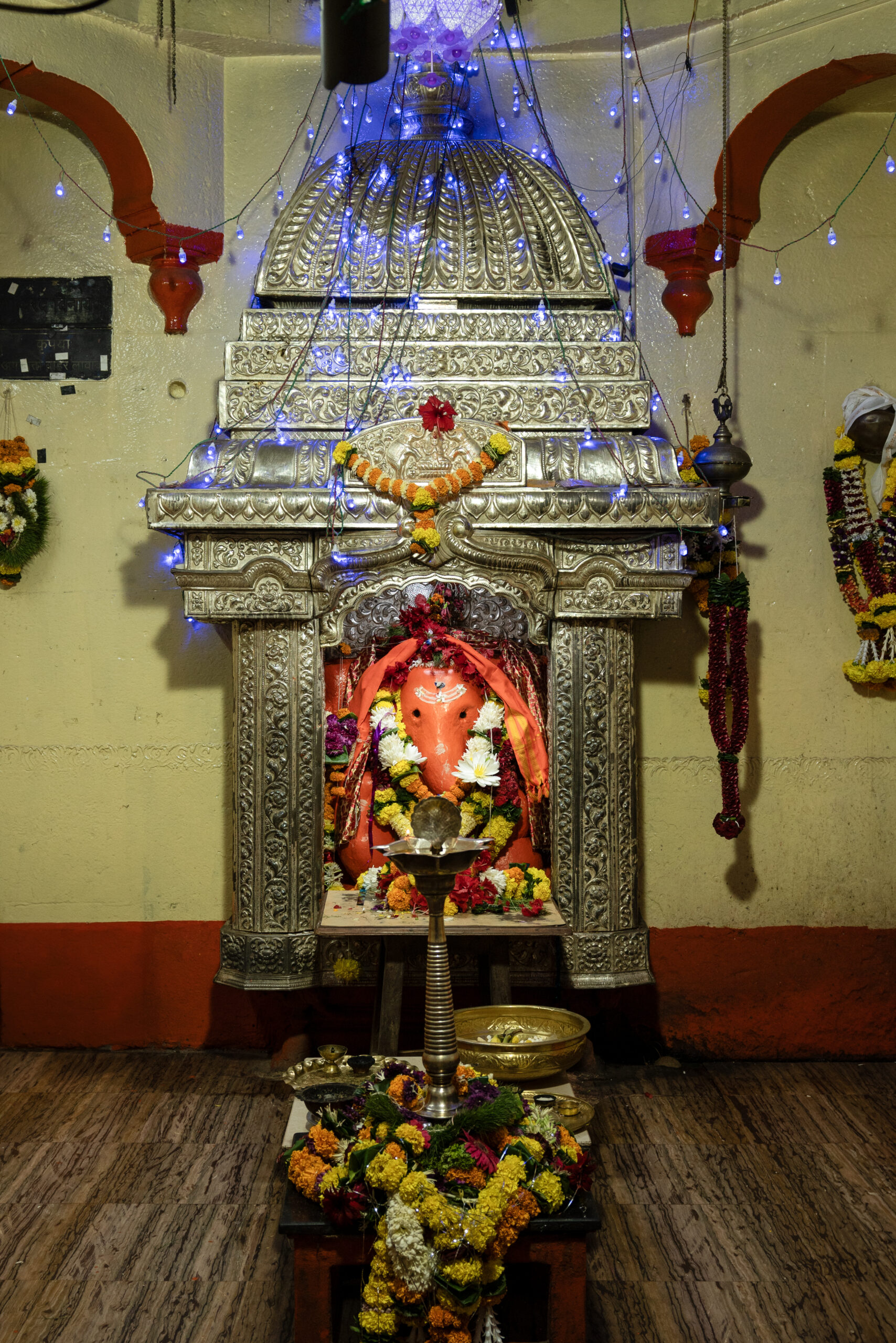
4. Varadvinayak Temple – Mahad
The Boon-Giver
Location: Mahad town, Raigad District (85 km from Pune)
Form of Ganesha: Varadvinayak (Giver of boons/blessings)
Trunk Direction: Left
Temple Timings: 6:00 AM – 9:00 PM daily
The Legend
The name “Varadvinayak” literally means “the one who grants boons” (Varada = giver of boons). The temple legend centers on Prince Rukmangada of Treta Yuga, son of King Ratnakar and Queen Mokshi.
As a young prince, Rukmangada was cursed to suffer leprosy due to his past karmas. Desperate and in agony, he performed intense penance to Lord Ganesha at this location. Pleased with his devotion and determination, Ganesha appeared before him, cured his affliction, and blessed him with prosperity, wisdom, and a long life.
The prince, overwhelmed with gratitude, established a temple at the spot where Ganesha had appeared, and the deity chose to remain there permanently as Varadvinayak, ready to grant boons to all sincere devotees.
Temple Architecture & Atmosphere
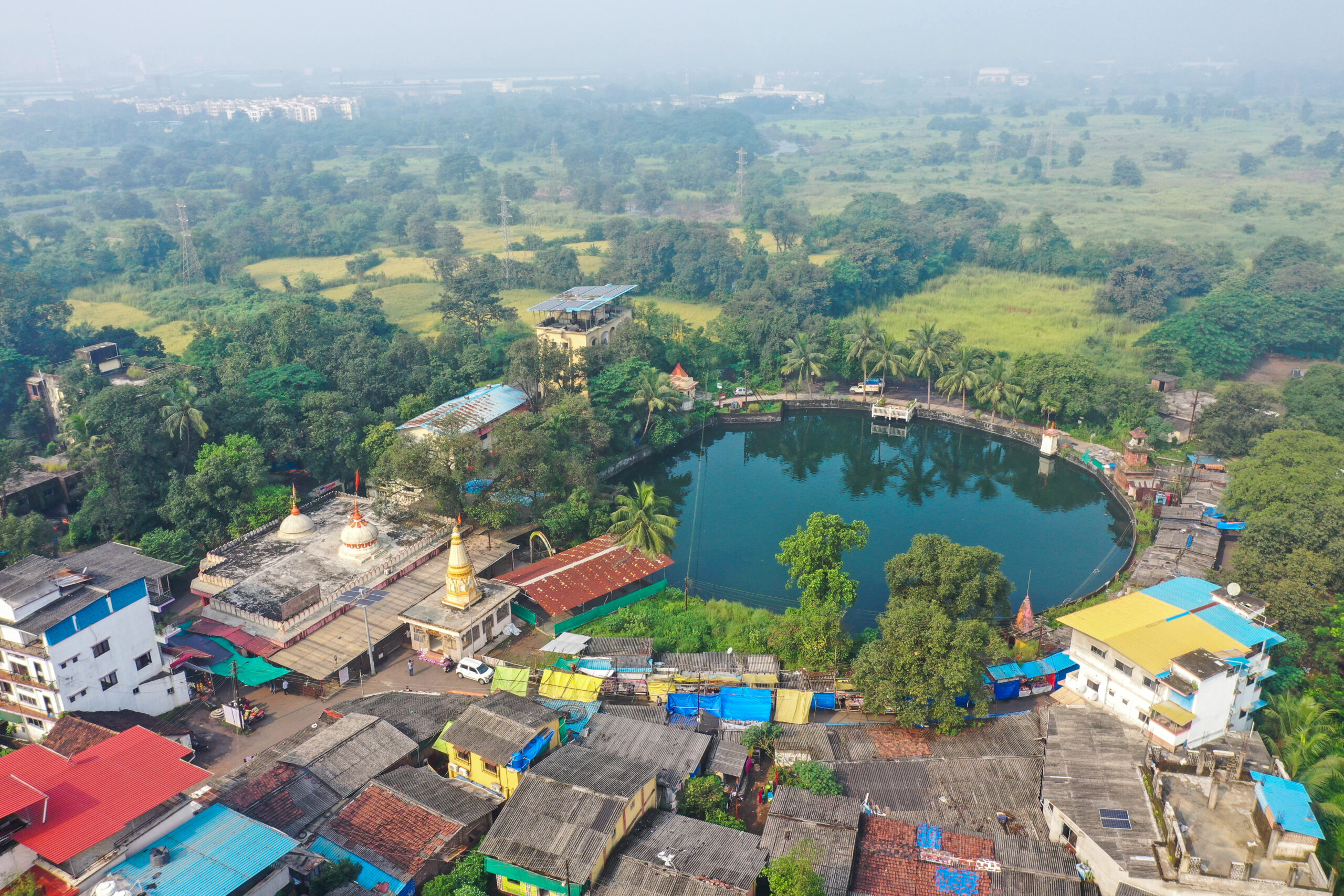
The temple sits beside a scenic pond that reflects the structure like a mirror. The architecture is relatively simple compared to some other Ashtavinayak temples, but this simplicity enhances the devotional atmosphere.
The temple has a simple and peaceful atmosphere that encourages quiet contemplation. Many devotees report feeling an immediate sense of calm upon entering.
Special Feature
The temple was originally wooden, rebuilt in stone in 1780. A huge bell hangs in the temple, gifted by Chimaji Appa, brother of the legendary Peshwa Bajirao I, after his victory over the Portuguese. The bell’s deep resonance during aarti creates a spiritually charged atmosphere.
The temple is east-facing, and every morning, sun rays fall directly on the Ganesha idol during daily worship—another example of astronomical precision in temple construction.
What to Experience
- The serene pond and its reflections
- The historic victory bell from Chimaji Appa
- Morning aarti when sunlight illuminates the deity
- The palpable sense of peace and blessing
Nearby Attractions:
- Raigad Fort (34 km): Chhatrapati Shivaji Maharaj’s capital
- Chavdar Lake (100 km): scenic beauty
- Gandhar Pale Buddhist Caves (102.5 km from lake)
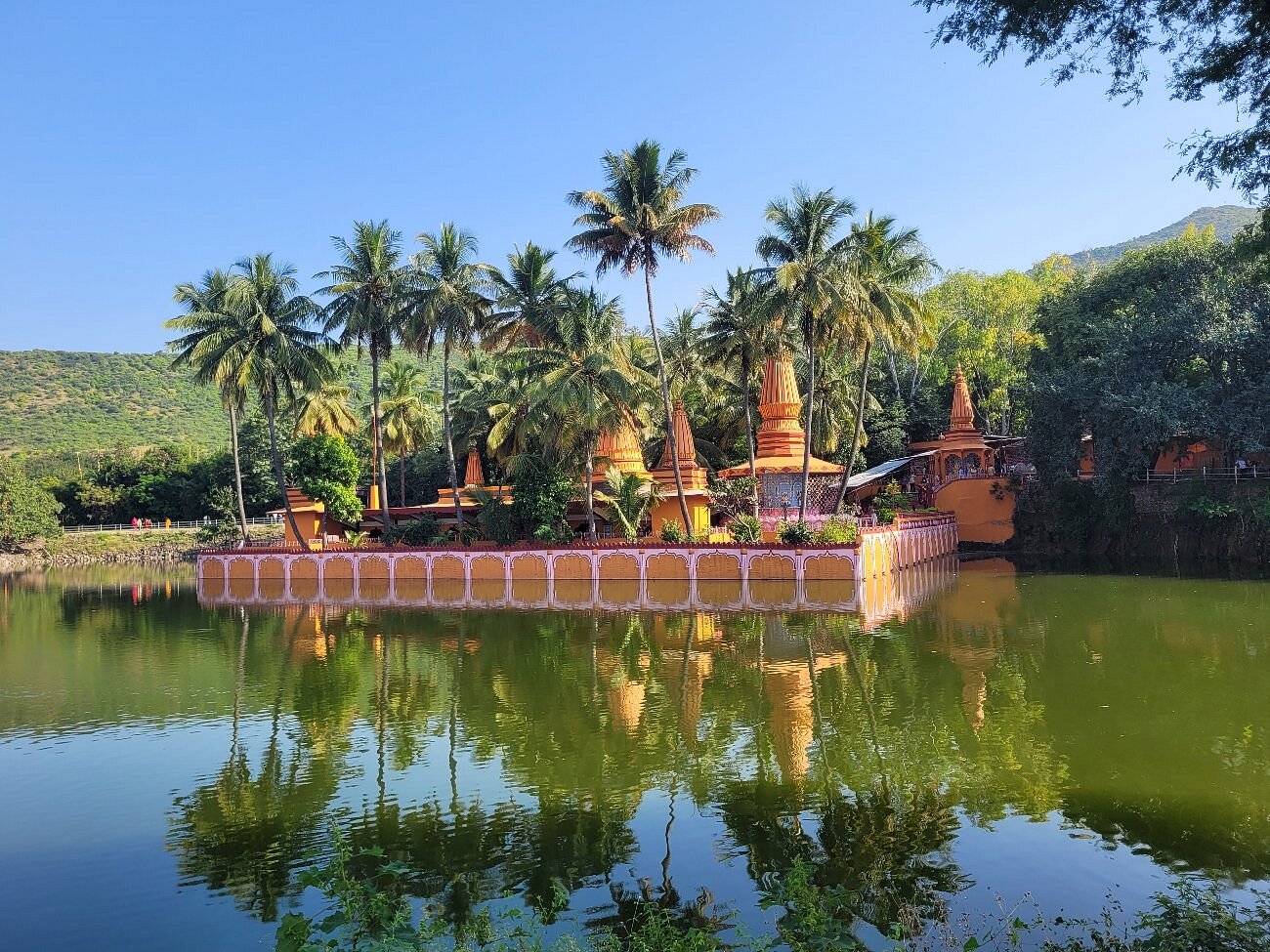
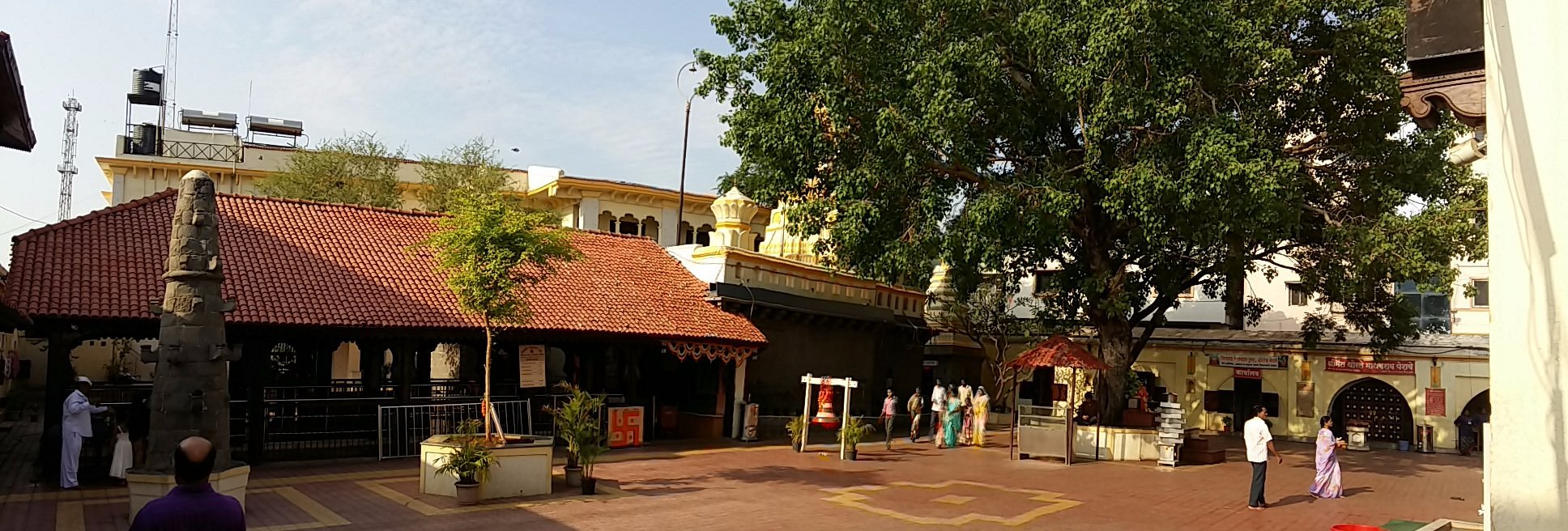
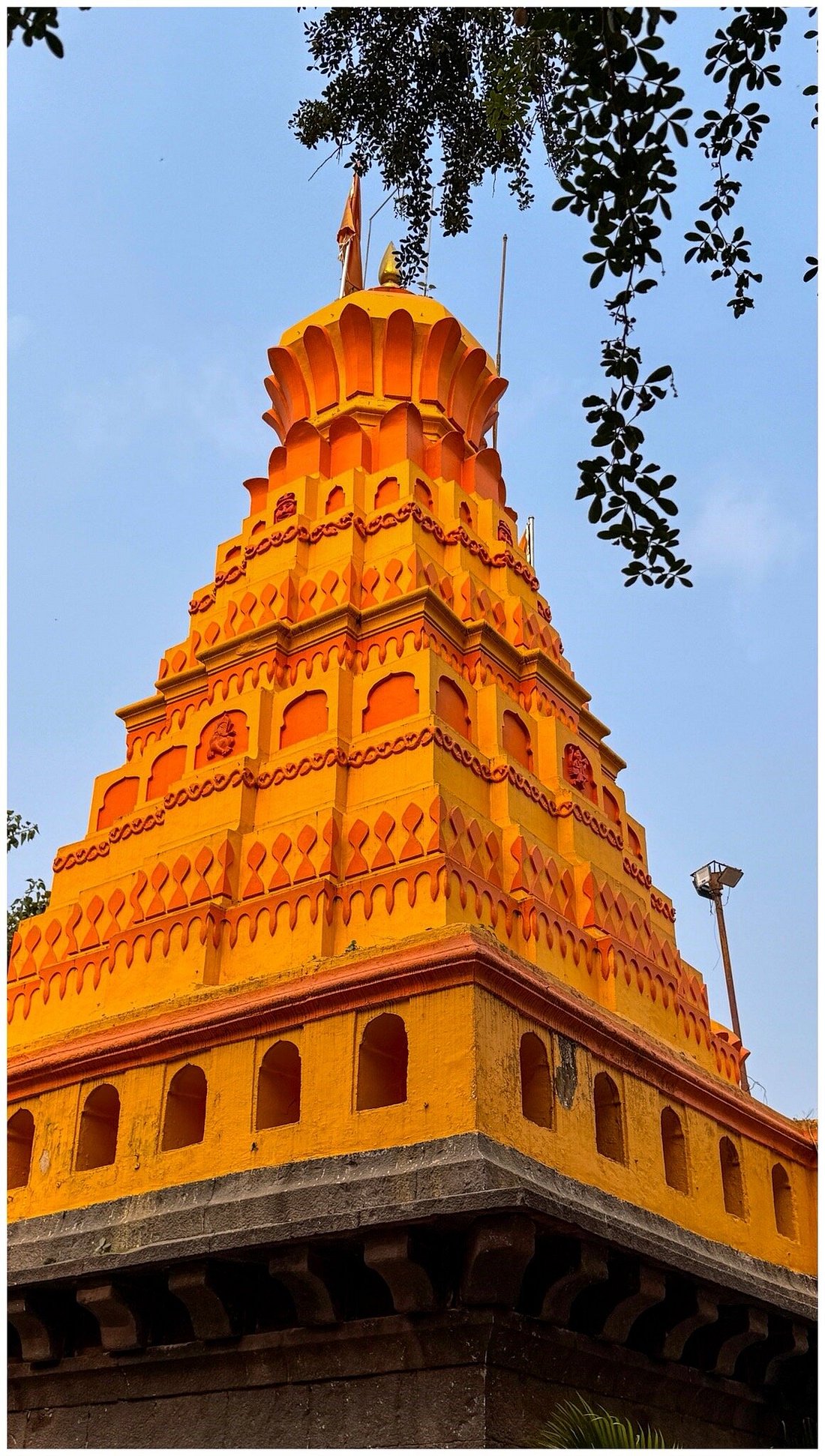
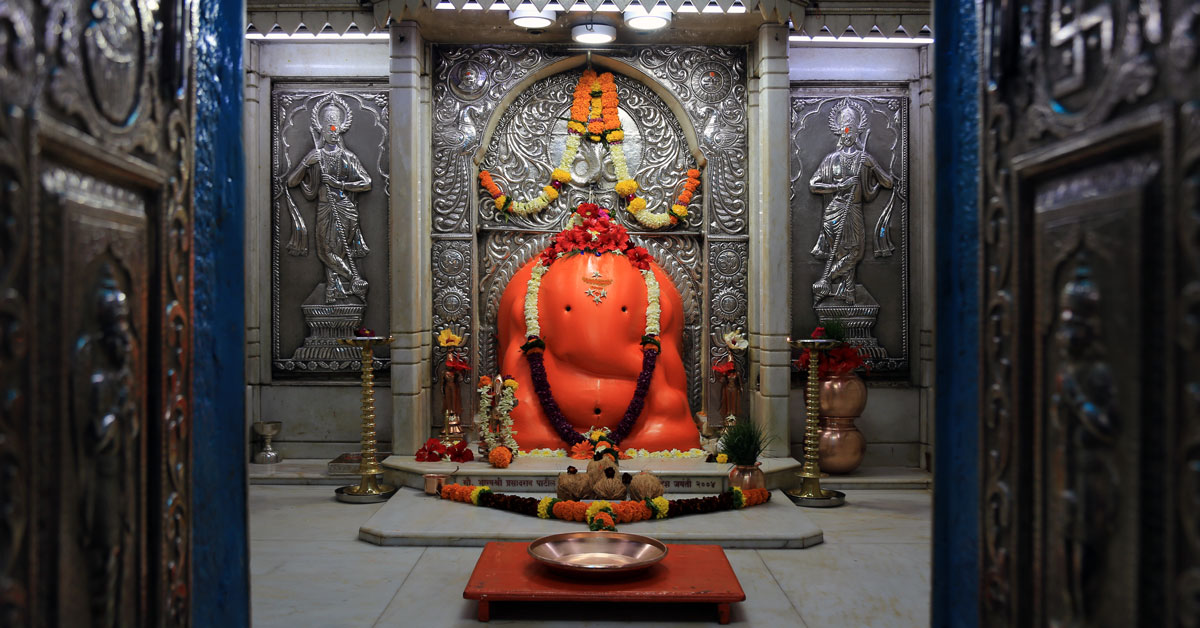
5. Chintamani Temple – Theur
The Remover of Worries
Location: Theur town, Pune District (25 km from Pune)
Form of Ganesha: Chintamani (The wish-fulfilling gem)
Trunk Direction: Left
Temple Timings: 6:00 AM – 9:00 PM daily
The Legend
The name Chintamani comes from two Sanskrit words: Chinta (worry/anxiety) and Mani (jewel/gem). According to legend, Sage Kapila possessed the divine Chintamani jewel—a wish-fulfilling gem of immense power. The demon king Gana, driven by greed, stole this precious jewel.
The gods approached Lord Ganesha for help. In response, Ganesha not only recovered the stolen jewel but also vanquished the demon. The sage, grateful beyond measure, offered the Chintamani jewel to Ganesha himself. The Lord accepted it and chose to reside at Theur, taking the name Chintamani Vinayak—the deity who removes all worries and anxieties from devotees’ hearts.
Another legend states that Dronasura, son of sage Bharadwaja, built three fortresses (Tripura) and created havoc. When even the gods couldn’t defeat him, they sought Ganesha’s help. Ganesha destroyed the demon and stayed at Theur as Chintamani.
Temple Architecture & Features
Chintamani Temple is considered a “Jagrut Devsthan,” meaning the deity is believed to be present actively and responsive to worshippers. This designation indicates an especially powerful spiritual energy at the site.
The temple underwent major renovation in 1840 by the renowned Peshwa Sardar Haripant Phadke. The architecture reflects classic Maratha temple design—simple yet elegant, functional yet beautiful.
What Makes it Special
Being just 25 km from Pune, Theur is the most accessible Ashtavinayak temple, making it popular for quick visits. Yet despite its accessibility, it retains a deeply devotional atmosphere.
The temple is especially revered by those seeking relief from mental stress and anxiety, peace of mind in troubled times, wisdom to make difficult decisions and fulfillment of heartfelt wishes.
What to Experience
- The proximity to Pune makes morning or evening visits feasible
- The temple’s reputation for quickly answering prayers
- The beautiful Maratha-era architecture
- Local prasad (especially pedhas) sold around the temple
- Visit Alandi – Sant Dnyaneshwar Samadhi
6. Girijatmaj Temple – Lenyadri
The Cave Temple of the Mountain Goddess’s Son
Location: Lenyadri Hills, Pune District (94 km from Pune)
Form of Ganesha: Girijatmaj (Son of Girija/Parvati – infant form)
Trunk Direction: Left
Temple Timings: Sunrise to Sunset (controlled by ASI)
The Legend
Girijatmaj means “Girija’s Atmaj (son)” where Girija is another name for Goddess Parvati, Shiva’s consort. It is believed that Parvati performed intense penance (tapasya) for 12 years at this mountain location, seeking to beget a child. Her devotion and austerities pleased Lord Shiva, and at this very spot, Ganesha was born.
The temple represents Ganesha in his infant form—the only Ashtavinayak where the deity appears as a child. This gives the temple a unique, tender energy quite different from the powerful adult forms found elsewhere.
Temple Architecture & Unique Setting
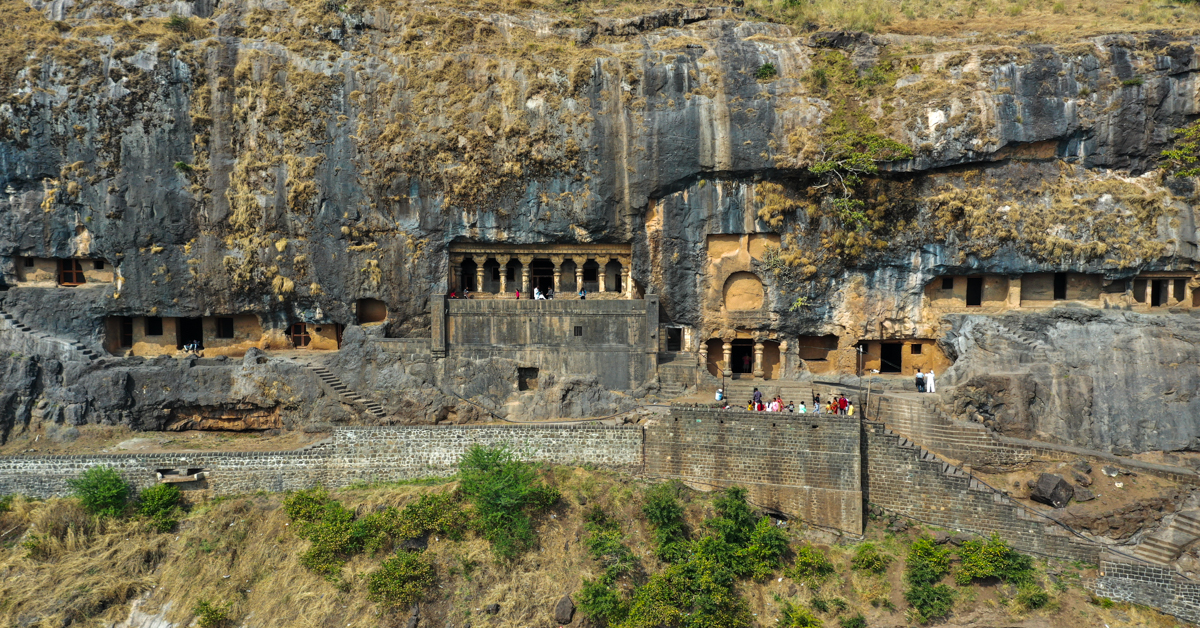
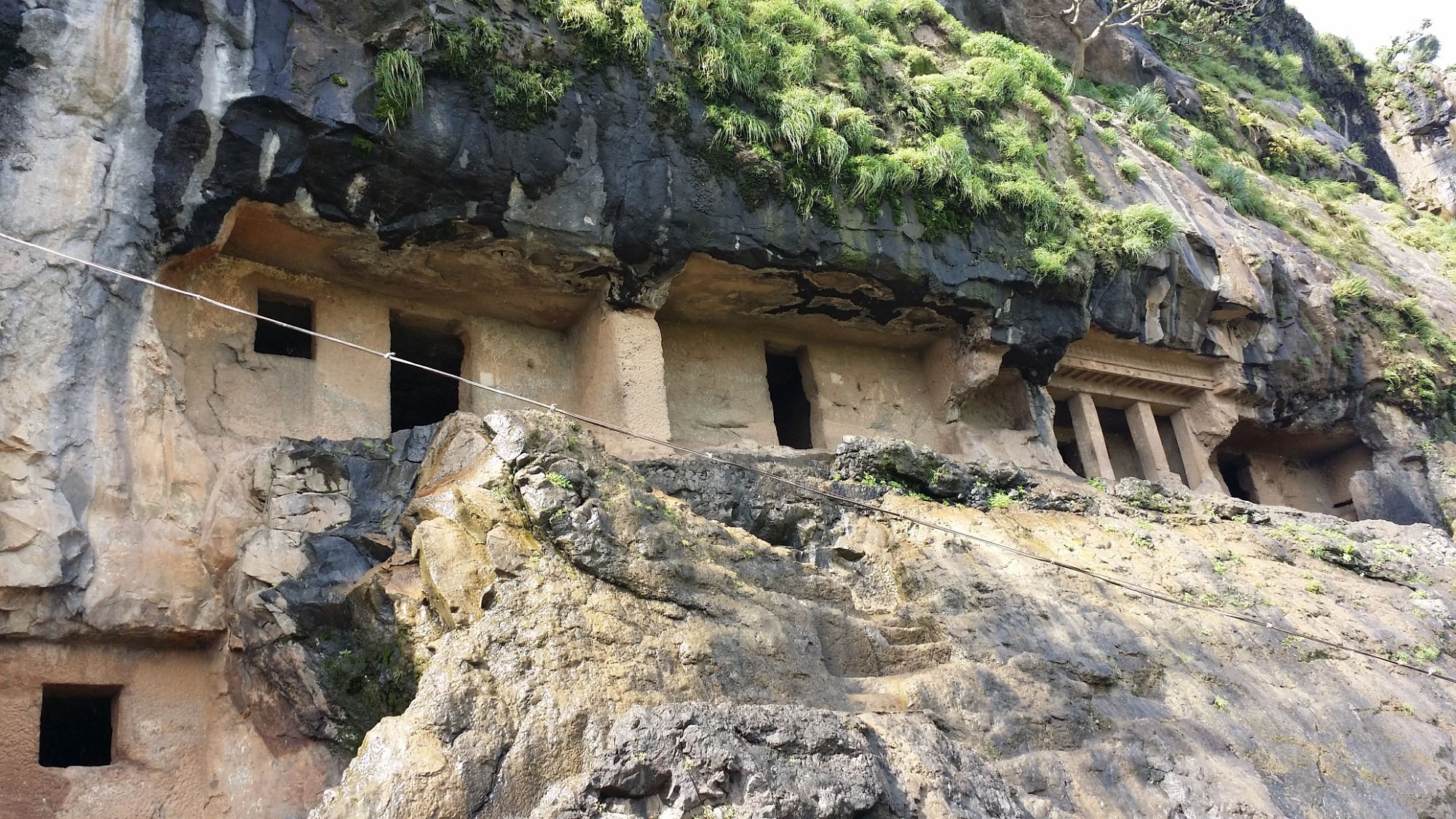
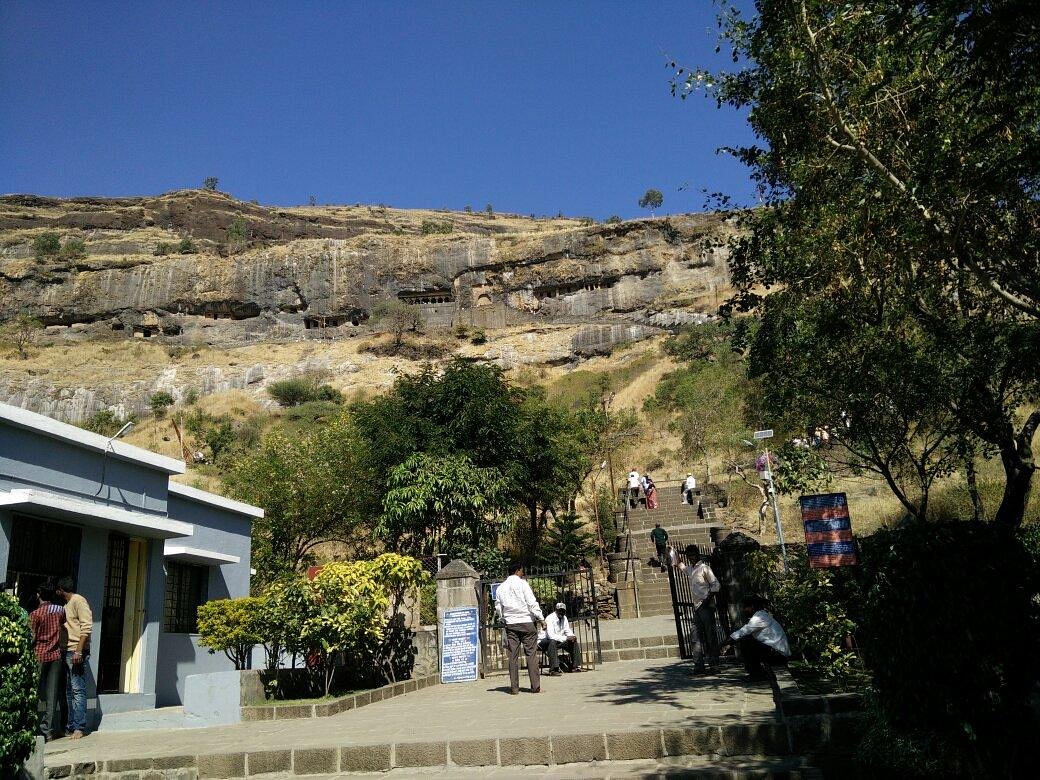
This temple stands within a complex of 18 caves of Buddhist origin dating back centuries. The Ganesha temple occupies Cave No. 7, also called Ganesha-Leni. This makes Girijatmaj the only Ashtavinayak temple located within a cave and on a mountain.
The temple is carved out of a single stone hill and features 307 steps leading up to it. The temple hall is 53 feet long, 51 feet wide, and 7 feet high, with no supporting pillars which is an architectural marvel carved from living rock.
Architectural Wonder
The temple is constructed in such a way that despite being a closed cave complex, it remains naturally lit throughout the day by sunshine—no electric lights are needed. The play of light and shadow through the day creates a mystical atmosphere.
The temple faces south, which is rare and considered highly significant in tantric traditions. The idol must be worshipped from the rear of the temple due to the cave layout.
As the site is protected by the Archaeological Survey of India (ASI), devotees can visit only from sunrise to sunset—adding to the temple’s mystique.
What to Experience
- The climb of 307 steps is a pilgrimage within a pilgrimage
- Ancient Buddhist caves sharing space with Hindu worship
- The infant Ganesha carved simply yet powerfully into rock
- Natural illumination creating ethereal atmosphere
- Stunning mountain views from the hilltop
- The unique experience of worshiping from behind the deity
Nearby Places to Explore:
- Shivneri Fort (8-10 km) is the birthplace of Chhatrapati Shivaji Maharaj and can be combined with the temple visit. Read more about this fort on my log: Junnar, a destination steeped in heritage
Important Note: This is the most physically demanding of the eight temples due to the steep climb. Those with mobility issues should plan accordingly.
Recommended Blog:
Junnar, a destination steeped in heritage shares a bit more in details about the Ancient Caves & Bahmani legacy and Lenyadri Caves
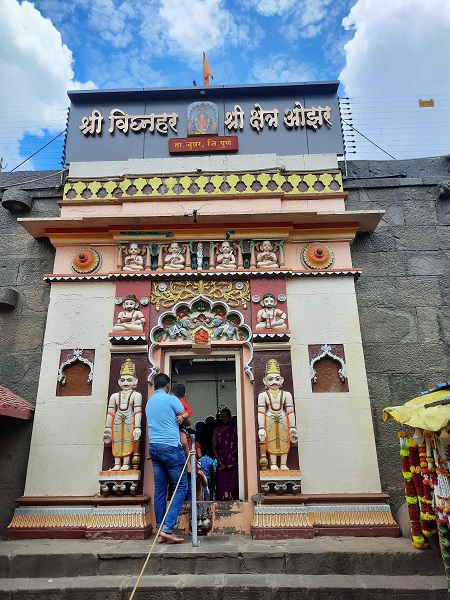
7. Vighnahar Temple (Vigneshwar) – Ozar
The Destroyer of Obstacles
Location: Ozar village, Pune District (85 km from Pune on Pune-Nashik highway)
Form of Ganesha: Vighnahar/Vigneshwar (Remover of Obstacles)
Trunk Direction: Left
Temple Timings: 6:00 AM – 9:00 PM daily
The Legend
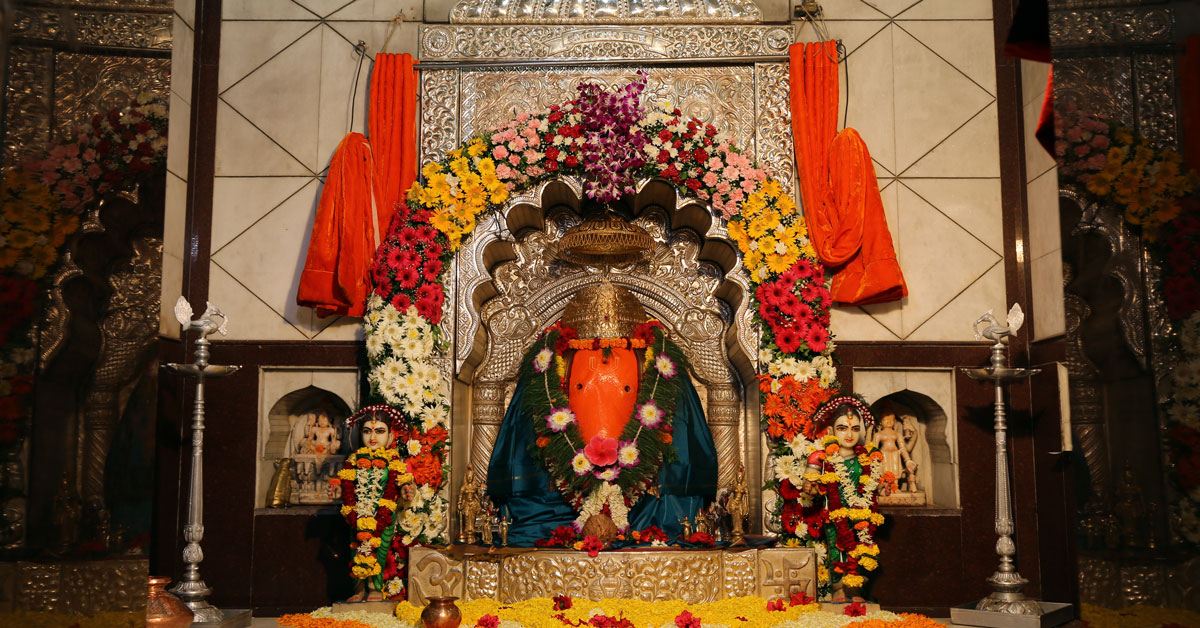
The legend states that Vighnasura, a powerful demon, was created by Indra (King of Gods) to destroy a grand prayer ceremony (yajna) organized by King Abhinandan. The demon lived up to his name—Vighna means “obstacle”—and created chaos wherever he went.
King Abhinandan, realizing no earthly or divine power could stop Vighnasura, prayed intensely to Lord Ganesha. The Lord appeared and engaged the demon in battle. After a fierce confrontation, Ganesha defeated Vighnasura.
In a remarkable twist, the dying demon requested that his name be immortalized—asking that people remember him whenever they think of obstacles. Touched by this unusual final wish, Ganesha granted it. From that day forward, Ganesha himself took the name Vighnahar (destroyer of Vighna/obstacles) at this location.
The philosophical message: even obstacles, when surrendered to the divine, become part of the spiritual path. The demon who created obstacles became the very reason we worship the obstacle-remover.
Temple Architecture & Features
The temple is situated 12 km from Narayangaon, about 94 km from Pune on the Pune-Nashik highway. The nearest railway station is Talegaon.
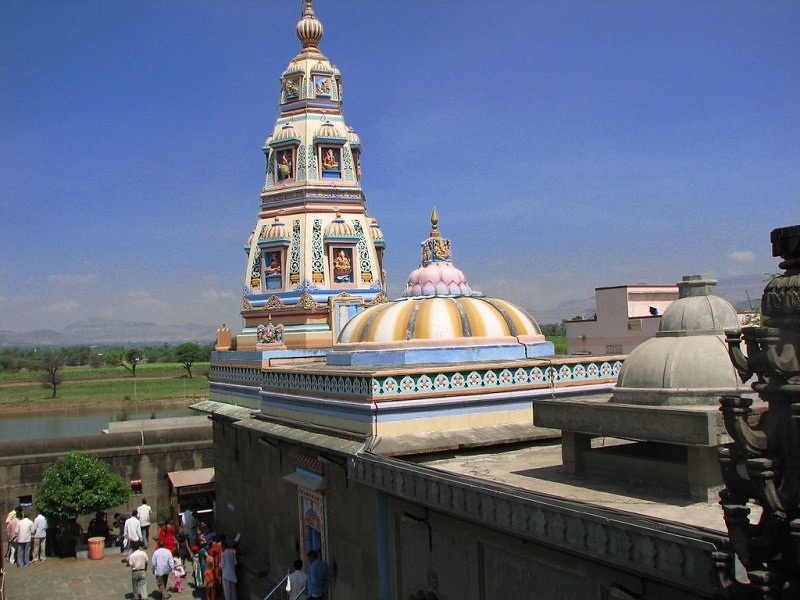
The temple’s idol shows Ganesha in a powerful, determined posture—befitting the destroyer of obstacles. The trunk turns left, and the deity faces east.
The temple underwent significant renovation during the Peshwa period but maintains its ancient sanctity. The architecture is sturdy and imposing, reflecting the powerful form of Ganesha worshipped here.
What to Experience
- The powerful energy associated with obstacle removal
- The convenient location on a major highway
- Local belief in the temple’s effectiveness for new ventures
- Peaceful village atmosphere despite highway proximity
Nearby Places to Explore
- Malshej Ghat (38 km) – stunning mountain pass, especially beautiful in monsoon
- Bhimashankar Jyotirlinga (78 km) – one of the 12 Jyotirlingas of Shiva
- Lenyadri Ganapati (15 km) – can visit both temples in one trip
Pilgrim Tip: Many devotees visit Ozar when starting new businesses, jobs, or important life ventures, seeking Vighnahar’s blessings to remove obstacles from their path.
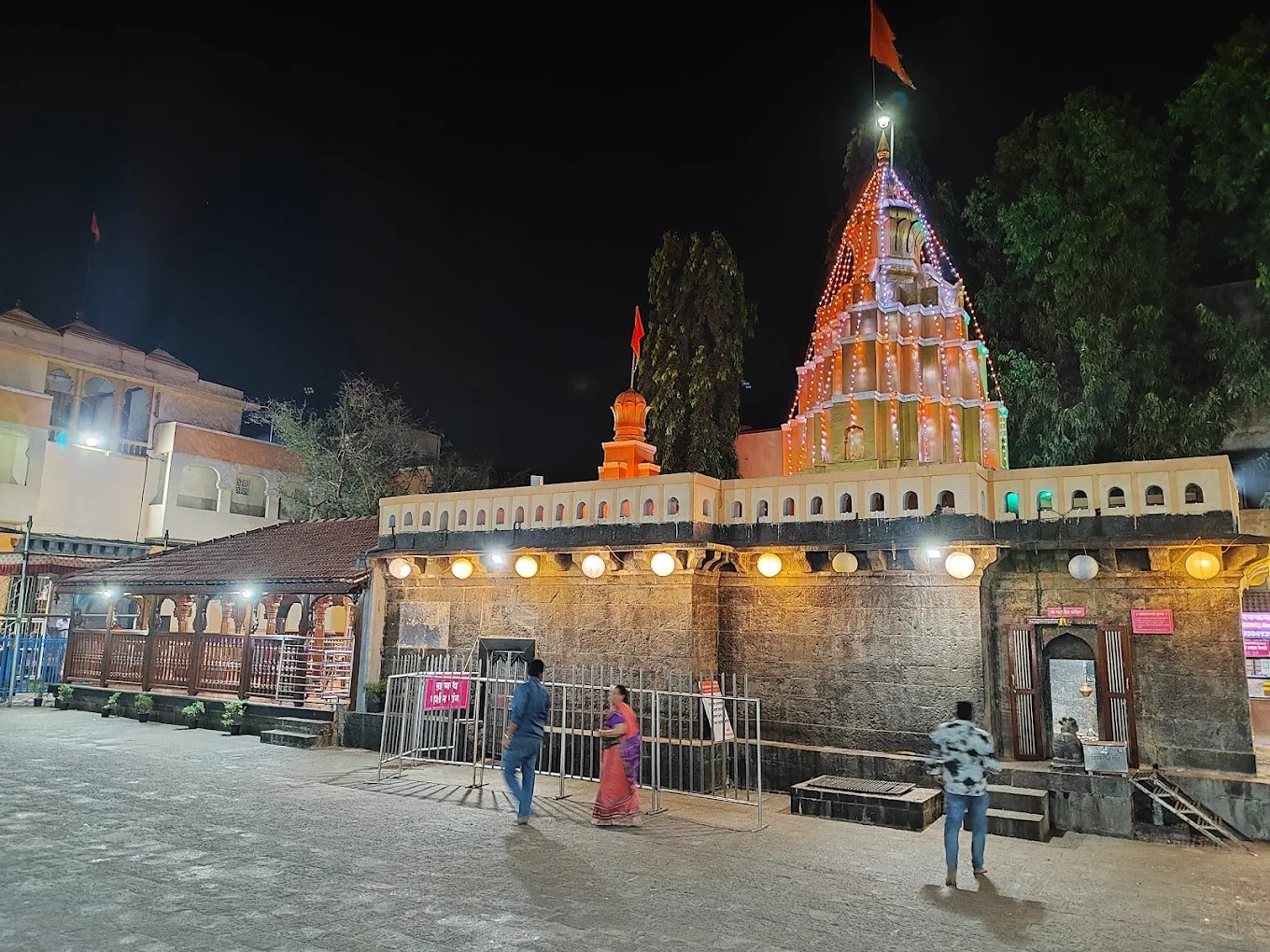
8. Mahaganapati Temple – Ranhangaon
The Supreme Ganesha – The Mighty Form
Location: Ranjangaon village, Pune District (50 km from Pune)
Form of Ganesha: Mahaganapati (The Great/Supreme Ganesha)
Trunk Direction: Left
Temple Timings: 6:00 AM – 9:00 PM daily
The Legend
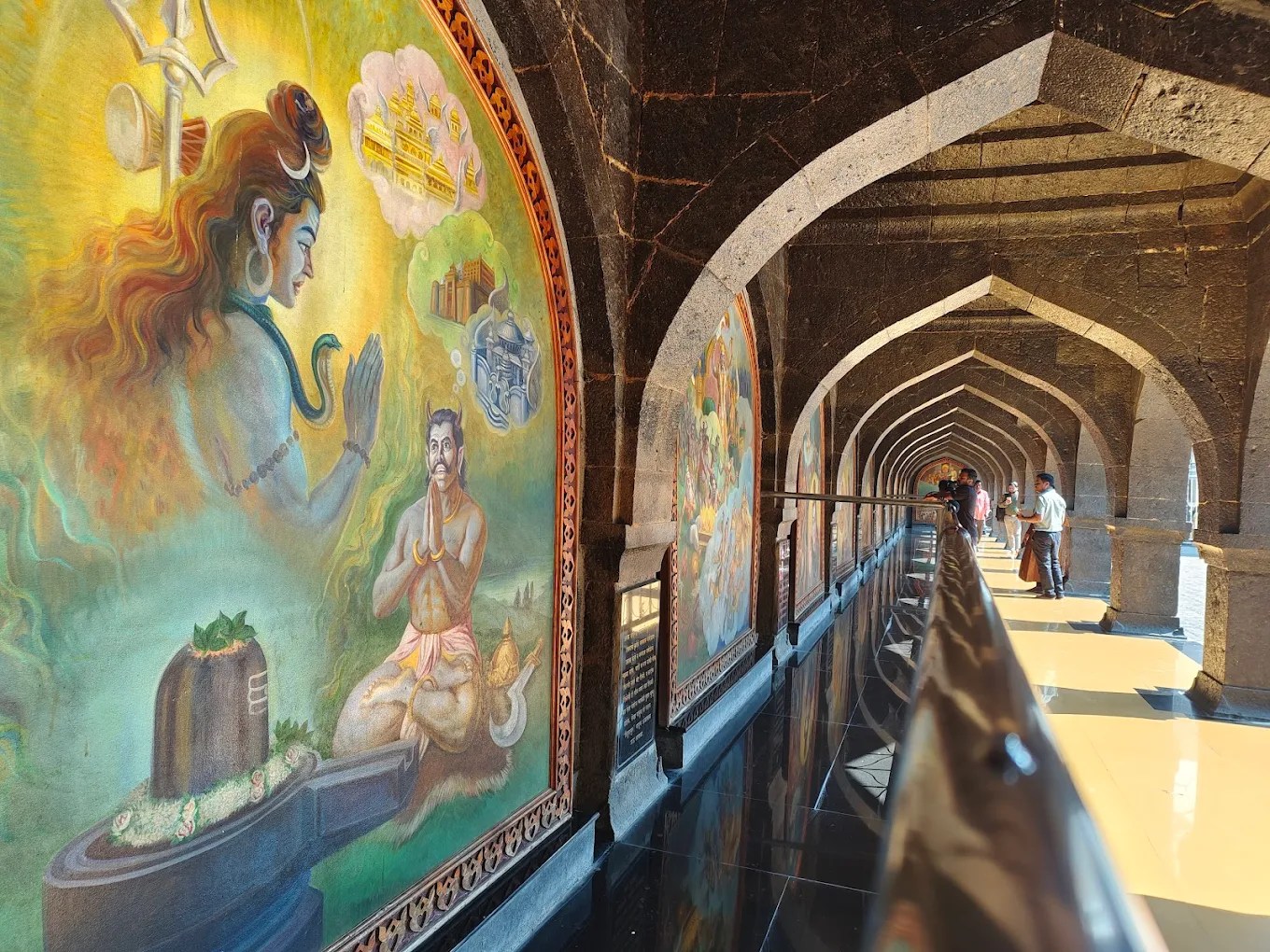
Lord Shiva was engaged in battle with the demon Tripurasura and found himself unable to vanquish this powerful enemy. Shiva realized his error—he had begun the battle without first paying respects to Lord Ganesha, the remover of obstacles.
Shiva then recited the sacred Shadakshar Mantra to invoke Ganesha, who manifested in his most powerful form and guided Shiva in the battle. With Ganesha’s blessings and strategic guidance, Shiva successfully destroyed Tripurasura and his three cities (Tripura).
Grateful, Shiva established a temple at the very spot where he had invoked Ganesha, naming the town Manipur (now known as Ranjangaon).
Mahaganapati represents Ganesha in his most fierce, powerful, and grand form—the cosmic Ganesha who embodies ultimate divine energy.
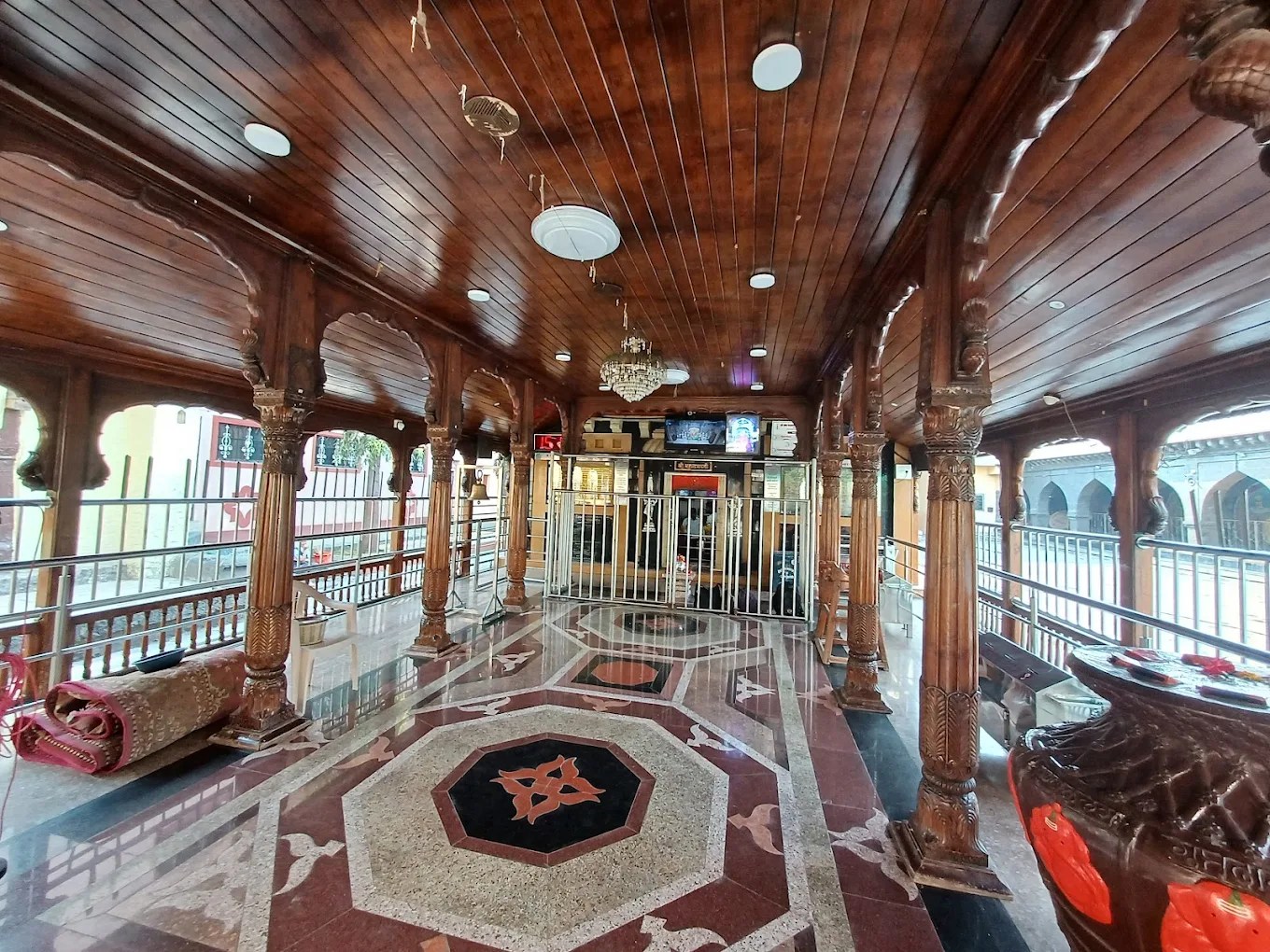
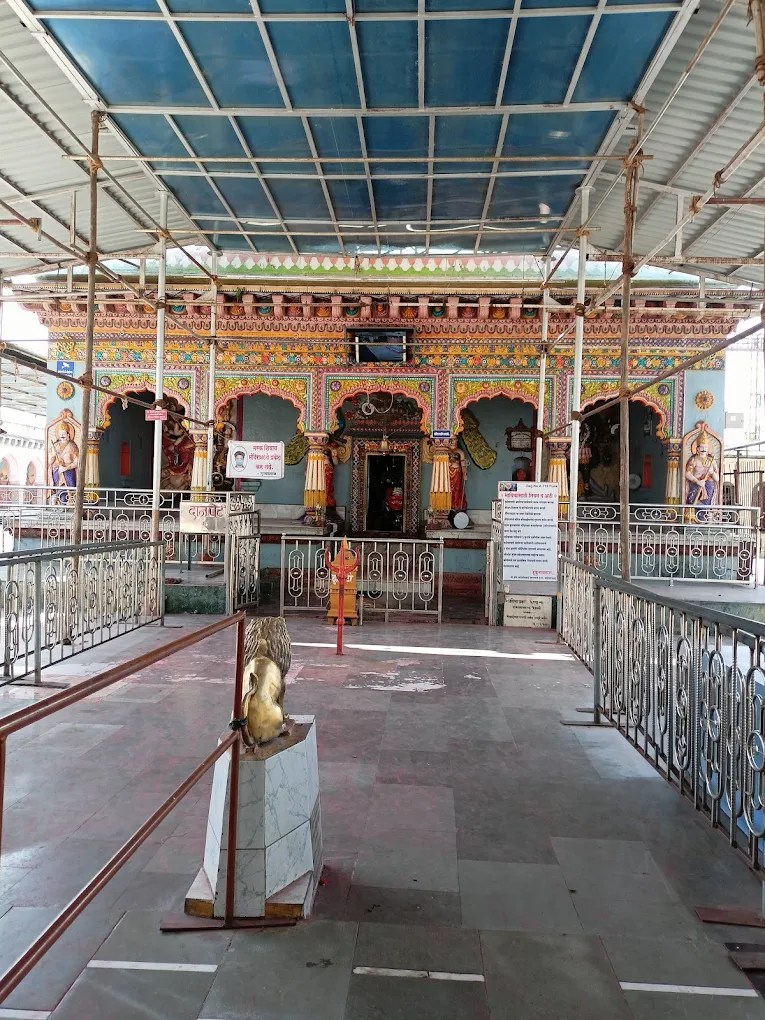
Temple Architecture & Mystical Features
The temple was built during the 9th-10th centuries, making it one of the oldest structures in the Ashtavinayak circuit. The current idol was inaugurated and donated by the Khollam family, a goldsmith family from Ranjangaon.
The idol faces east in a cross-legged position with a broad forehead and trunk pointing left. The deity is flanked by Riddhi and Siddhi (representing prosperity and spiritual power) on both sides.
The Hidden Mystery
There is a persistent legend that the original idol hidden in the basement has 10 trunks and 20 arms—a divine form called Mahotkat that represents cosmic Ganesha in his most expansive manifestation. However, temple authorities deny the existence of any such hidden idol. This mystery adds to the temple’s mystique.
The temple is designed so that during Dakshinayan (the sun’s apparent southward movement from winter solstice to summer solstice), sunrays fall directly on the deity—yet another example of astronomical precision in ancient temple architecture.
The temple faces east with an imposing main gate guarded by two statues of Jay and Vijay (the gatekeepers of Vishnu’s abode in mythology—their presence here symbolizes divine protection).
Behind the temple
An ancient Shivalinga sits in a small chamber at the back right corner, and another sacred Shivalinga resides inside an ancient stepwell behind the main temple—reminding visitors of the deep connection between Shiva and Ganesha.
Special Significance
Devotees believe that visiting Ranjangaon’s Mahaganapati Temple alone is equivalent to visiting all eight Ashtavinayak temples. For those unable to complete the entire circuit due to life’s limitations, a visit to Mahaganapati is considered sufficient—a compassionate allowance by the tradition for those who are sincere but constrained.
However, completing the full Ashtavinayak Yatra remains the ideal, with Ranjangaon serving as the final temple before returning to Morgaon.
What to Experience
- The grandest, most powerful form of Ganesha in the circuit
- The mystery of the legendary 10-trunk, 20-arm hidden idol
- Ancient stepwell and Shivalingas
- The Jay-Vijay statues guarding the entrance
- The temple’s claim as the “complete” Ashtavinayak in itself
Ganesh Chaturthi: As with all Ashtavinayak temples, Ganesh Chaturthi is celebrated with great splendor here, drawing thousands of devotees.
The Sacred Sequence: How to Perform the Ashtavinayak Yatra
Why the Sequence Matters
While some pilgrims deviate from this order for logistical convenience, traditional practitioners believe the prescribed sequence creates a specific spiritual progression:
- Morgaon (Mayureshwar): Beginning with the right-trunked Ganesha sets an auspicious start
- Siddhatek: Gaining success and siddhis early in the journey
- Pali: Learning the value of childlike devotion
- Mahad: Receiving boons and blessings for the journey ahead
- Theur: Removing worries and anxieties
- Lenyadri: Connecting with the infant, pure form of Ganesha
- Ozar: Destroying all remaining obstacles
- Ranjangaon: Receiving the supreme blessings of Mahaganapati
- Return to Morgaon: Completing the sacred circle, closing what was opened
The Coconut Tradition
A beautiful tradition involves offering a dry coconut to Lord Ganesha at each of the eight temples. Instead of carrying eight separate coconuts, devotees purchase one dry coconut at Morgaon (the starting point) and carry it throughout the entire two-to-three-day journey, offering it symbolically at each temple, and finally eating it as prasad upon returning home.
This single coconut becomes a companion on the spiritual journey, absorbing the blessings of all eight forms of Ganesha.
Duration of the Yatra
The complete Ashtavinayak Darshan typically takes 2-3 days if traveling efficiently with early starts and minimal breaks.
2-Day Itinerary (Fast-paced): Possible but demanding and requires starting very early each day, spending minimal time at each temple, and strategic route planning.
3-Day Itinerary (Recommended): Comfortable pace allowing proper darshan, time for morning/evening aartis, meals, and rest.
4-7 Days (Leisurely): If you can spare a week for the tour, you can leisurely visit 1-2 temples per day and enjoy the natural beauty of the region. This allows including nearby attractions like Shirdi, Bhimashankar Jyotirlinga, Shivneri Fort, etc.
Route Planning
The total distance of the Ashtavinayak circuit is approximately 650-700 km depending on the route chosen.
From Pune (Recommended – Shorter Circuit):
Day 1: Pune → Morgaon (67 km) → Siddhatek (100 km total) → Pali (another 100 km) → Stay overnight near Pali or return to Pune
Day 2: Pali → Mahad (within Raigad) → Theur (near Pune, 25 km) → Return to Pune
Day 3: Pune → Lenyadri (94 km) → Ozar (nearby, 15 km) → Ranjangaon (50 km from Pune) → Return to Morgaon to complete yatra → Back to Pune
From Mumbai (Longer but equally rewarding):
Route: Mumbai → Pali → Mahad → Theur → Siddhatek → Morgaon → Ranjangaon → Ozar → Lenyadri → Return to Morgaon → Mumbai
Total distance from Mumbai: approximately 800-900 km over 2-3 days.
Transportation Options
1. Self-Drive Car:
- Offers maximum flexibility for families and small groups
- Allows you to stop at scenic spots
- Control over timing and pace
- GPS navigation apps make route-finding easy
- Parking available at all temples
2. Hired Car with Driver:
- Most popular option
- Driver knows the routes and can suggest good restaurants
- You can rest between temples
- Cost: ₹8,000-15,000 for 2-3 days depending on vehicle type
3. Organised Tour packages
- Ideal for first-timers, with planned itineraries and guidance
- Packages include accommodation, meals (breakfast, lunch, dinner), AC transport
- Cost: ₹3,000-5,000 per person for organized tours from Pune
- Tours depart regularly from Mumbai and Pune
- Everything is arranged, you simply just show up
4. Public Transport (Budget Option):
- State transport buses connect major towns on the circuit
- Time-consuming, requires multiple bus changes
- Challenging with luggage
- Only for very budget-conscious or adventurous travelers
Accommodation Options
Most temples have hotels, lodges, and Bhakta Niwas (pilgrim rest houses) facilities nearby. They are moderately priced with reasonably comfortable stays.
Photography Rules:
- Photography is NOT allowed inside temple premises at most Ashtavinayak temples
- Exterior and surroundings generally okay
- Always ask permission if unsure
- Respect sanctity of worship spaces
Timing Tips:
- Best time to visit is during weekdays for peaceful, rush-free darshan. Weekends, public holidays, and festival days may be full of rush
- Early morning (6-8 AM): Least crowded, morning aarti time
- Late evening (after 7 PM): Crowds reduce, evening aarti beautiful
- Afternoon (12-3 PM): Most crowded, especially on weekends
Budget Breakdown (2-3 days, per person):
- Transportation:
- Self-drive car (fuel): ₹4,000-6,000
- Hired car with driver: ₹2,500-5,000 per person (if 3-4 sharing)
- Organized tour: ₹3,000-5,000 (includes transport, meals, accommodation)
- Accommodation:
- Dharamshala: ₹300-500/night
- Budget hotel: ₹800-1,500/night
- Mid-range hotel: ₹2,000-3,500/night
- Food:
- ₹500-1,000/day per person
- Temple Offerings:
- ₹100-500/temple (voluntary)
- Miscellaneous:
- Parking: ₹20-50/temple
- Prasad purchase: ₹200-500
- Incidentals: ₹500-1,000
Total Per Person:
- Ultra Budget: ₹3,000-4,000 (public transport, dharamshalas, basic food)
- Mid-range: ₹6,000-10,000 (hired car shared, decent hotels, comfortable)
- Comfortable: ₹12,000-18,000 (private car, good hotels, dining flexibility)
- Organized Package: ₹3,000-5,000 all-inclusive
There are no entry tickets for the Ashtavinayak temples as all are free to enter. Offerings are voluntary.
The Modern Relevance of Ancient Pilgrimage
In an age of instant gratification, the Ashtavinayak Yatra offers something countercultural: a journey that requires time, patience, physical presence, and repetitive devotion. You cannot complete it online, virtually, or by proxy. You must physically traverse the distance, climb the steps, stand in the queue, receive the prasad.
This physicality itself becomes the teaching. In a world of shortcuts, the pilgrimage says: some things require the full investment of your being.
For urbanites stressed by deadlines and digital overload, the rhythm of the Yatra —wake, drive, pray, eat, rest, repeat, creates a meditative simplicity. The same prayer at eight different temples becomes a mantra. The same offering repeated becomes meditation.
The eight Ganeshas, in their different forms and settings, remind pilgrims that the divine is both one and many, unchanging and infinitely varied. The cosmic paradoxes that confound the intellect are resolved in the experience of darshan.
गणपति बाप्पा मोरया!
Ganapati Bappa Morya!
(Hail Lord Ganesha!)
References & Further Reading:
- Peshwa Samhita Stotra
- Ganesh Purana
- Mudgala Purana
- Traditional commentaries on Ashtavinayak significance
- Teachings of Morya Gosavi and Narayan Maharaj lineages
- Sanskrit texts on sacred geography (Kshetra Mahima)
- Archaeological Survey of India documentation
- Temple trust publications
Suggested Resources:
- Maharashtra Tourism Official Website
- Pune Tourism Development Corporation
- Individual temple websites (where available)
- Traditional pilgrimage guide books in Marathi
Best Time to Visit
The ideal period for the Ashtavinayak Yatra is October to March, when the weather is pleasant and comfortable for road travel and temple visits. Monsoons are great but most places become wet and slippery making it hard to travel.
About this guide:
This comprehensive article is designed for both first-time pilgrims and seasoned devotees. It combines practical travel information with spiritual insights and historical context. Whether you undertake the Ashtavinayak Yatra as a religious duty, cultural exploration, or personal journey, may these eight sacred temples open their doors and their blessings to you.
If you have something that I may have missed, please share and I’ll be happy to add it here.
Last Updated: February 2026 All information verified through multiple sources and recent pilgrim experiences
Discover more from GoTravelTrek
Subscribe to get the latest posts sent to your email.
