Western India’s railways weren’t ornamental. They were economic arteries.
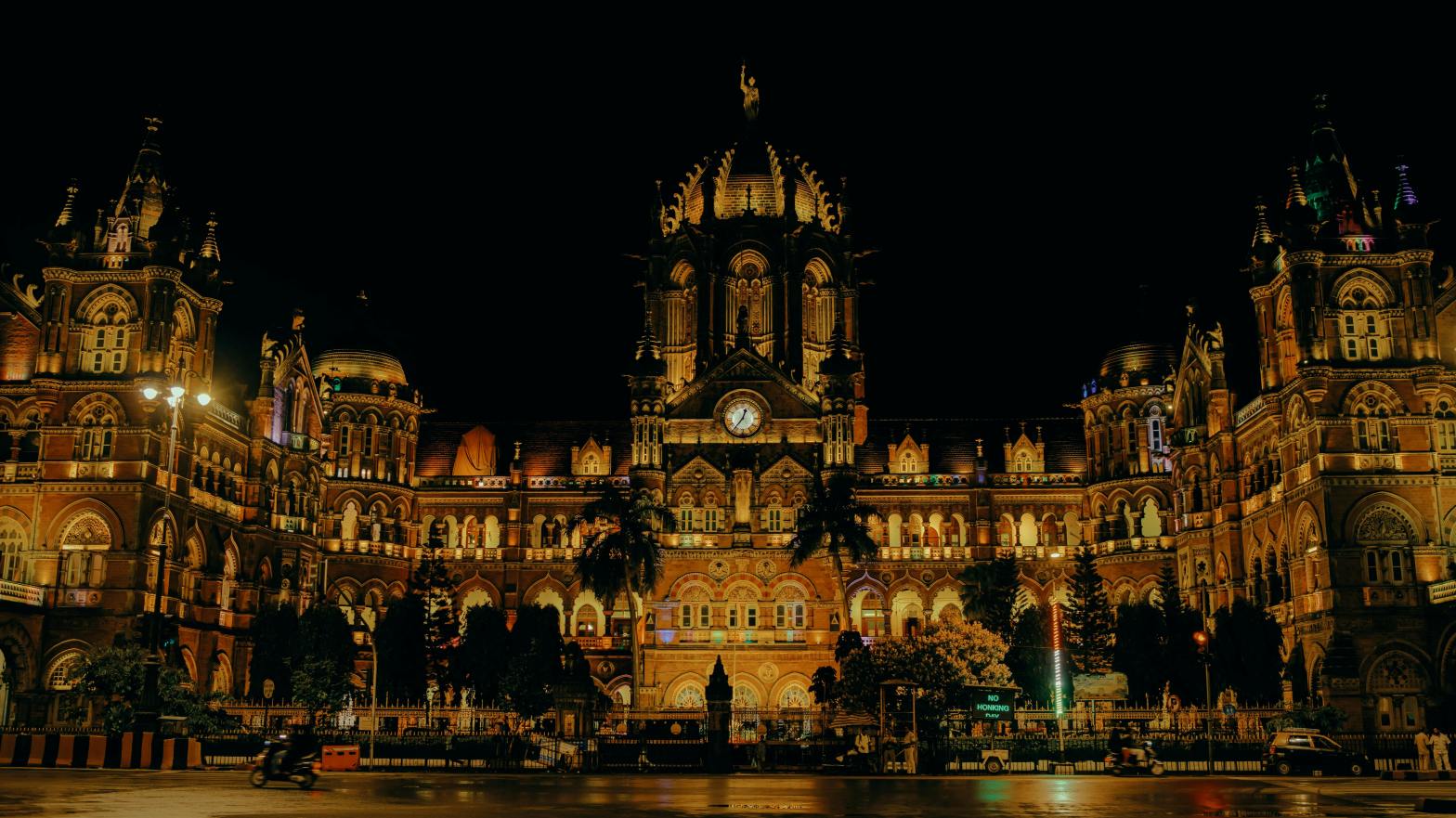
Chhatrapati Shivaji Maharaj Terminus
(Formerly Victoria Terminus)
Opened in 1887 to commemorate Queen Victoria’s Golden Jubilee, this perhaps is one of the most beautifully designed railway station in the world.
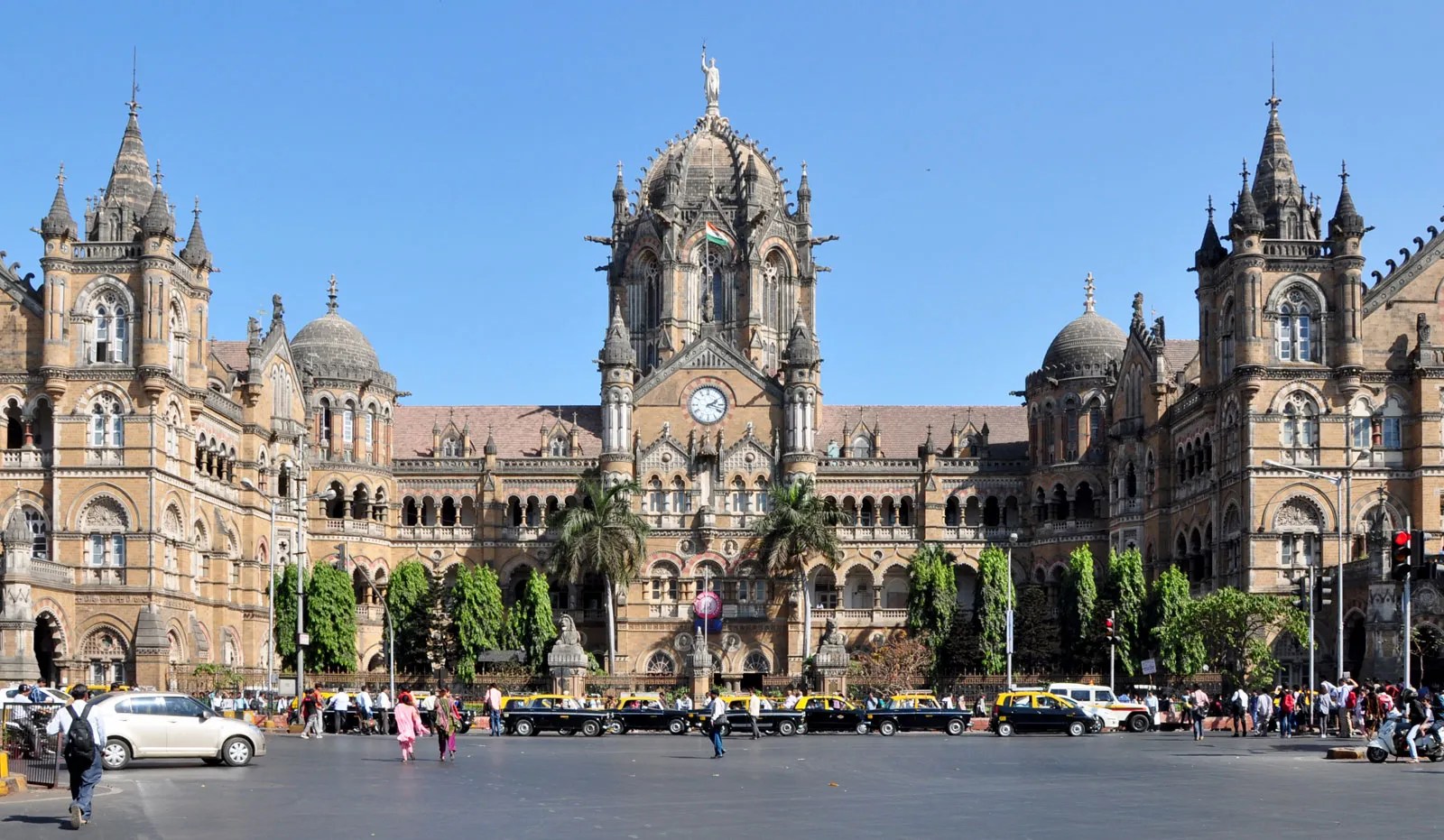
Designed by Frederick William Stevens, this is not just a railway station but an imperial theatre in stone. He took inspiration from diffrent cities in Europe for design and that’s why the architectural grandeur look a bit similar. It includes high victorian gothic revival, italianate influences, stained glass art, stone gargoyles, central dome crowned with a statue representing progress and intricate wood carvings and ironwork.
Bombay’s cotton exports surged during the American Civil War (1861–65).
Railways connected inland cotton belts to the port. Victoria Terminus became the headquarters of the Great Indian Peninsula Railway and symbolised commercial dominance.
Explore Around
- Fort district heritage walk
- Bombay High Court
- Flora Fountain
- Kala Ghoda art district
- Ballard Estate (Edwardian commercial district)
Did you know
The first railway station wasn’t CSMT, it was Bori Bunder (1853). The original station in Bombay handled the very first passenger train and later became the site of Victoria Terminus (now Chhatrapati Shivaji Maharaj Terminus). It was demolished in 1882 to make way for the grand terminus.
Bandra Railway Station
Opened in 1864 by the Bombay, Baroda and Central India Railway, the Bandra railway station blends portuguese architecture with colonial rail. It has sloping tiled roofs, pointed arches, colonial masonry and lots of coastal influences.
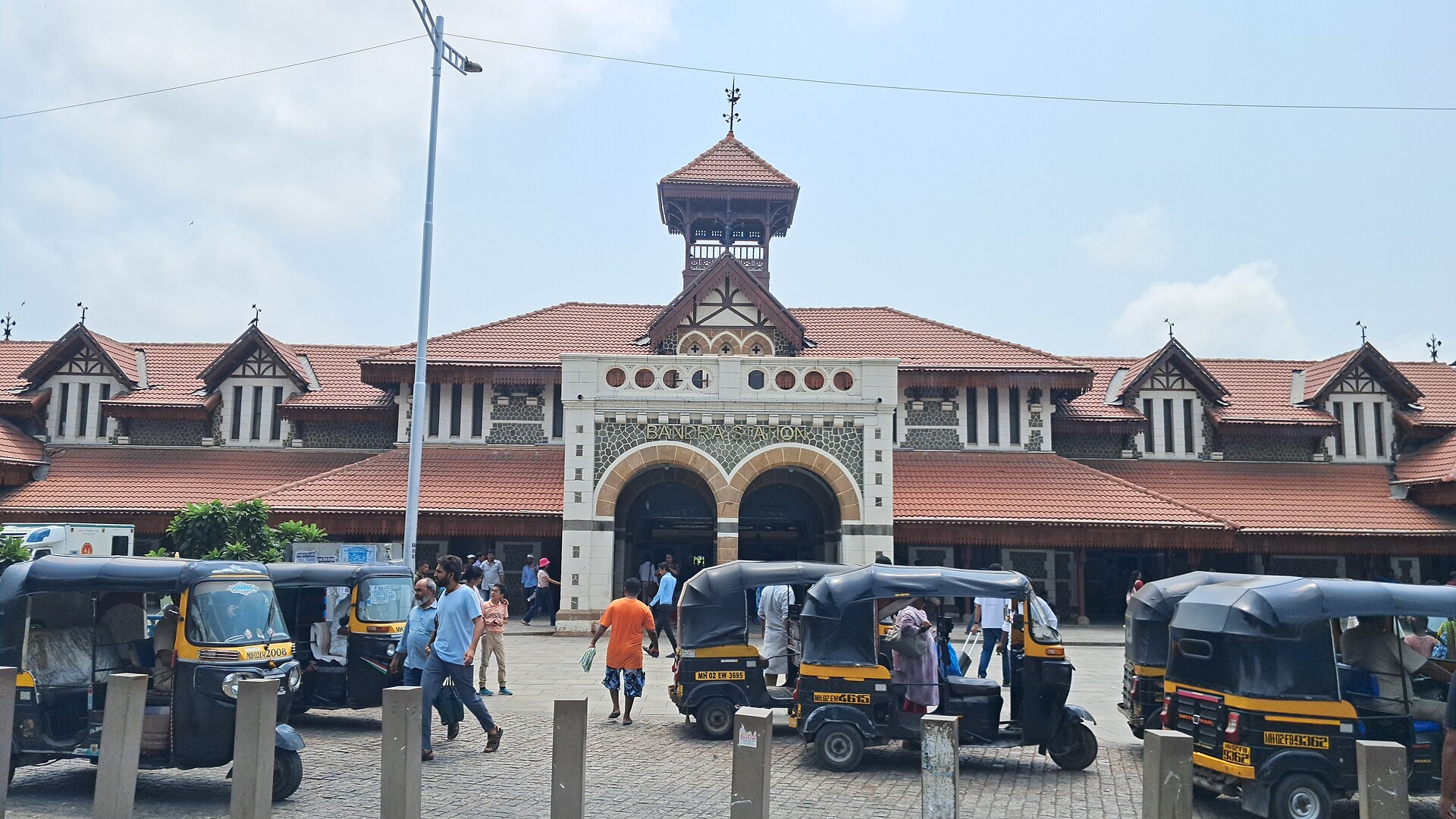
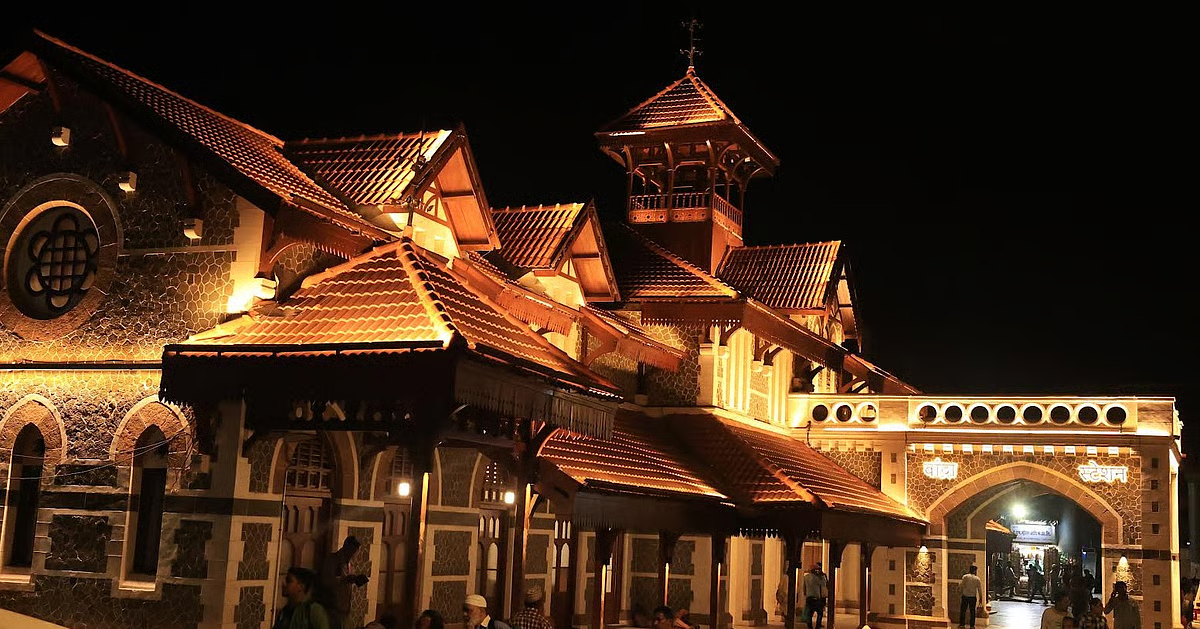
Bandra was once a fishing village under Portuguese influence before British consolidation. Railways turned it into a suburban residential zone.
Explore Around
- Bandra Fort (Castella de Aguada)
- Mount Mary Basilica
- Chapel Road street art
- Heritage bungalows
The station’s old structure still retains original ticket windows and wooden beams if you look closely.
Ahmedabad Railway Station
Western India’s railways expanded deep into Gujarat to support textile trade.
Ahmedabad, known as the “Manchester of India,” depended heavily on rail connectivity so a railway station here opened in 1863. Railways linked cotton fields and mills directly to Bombay port.
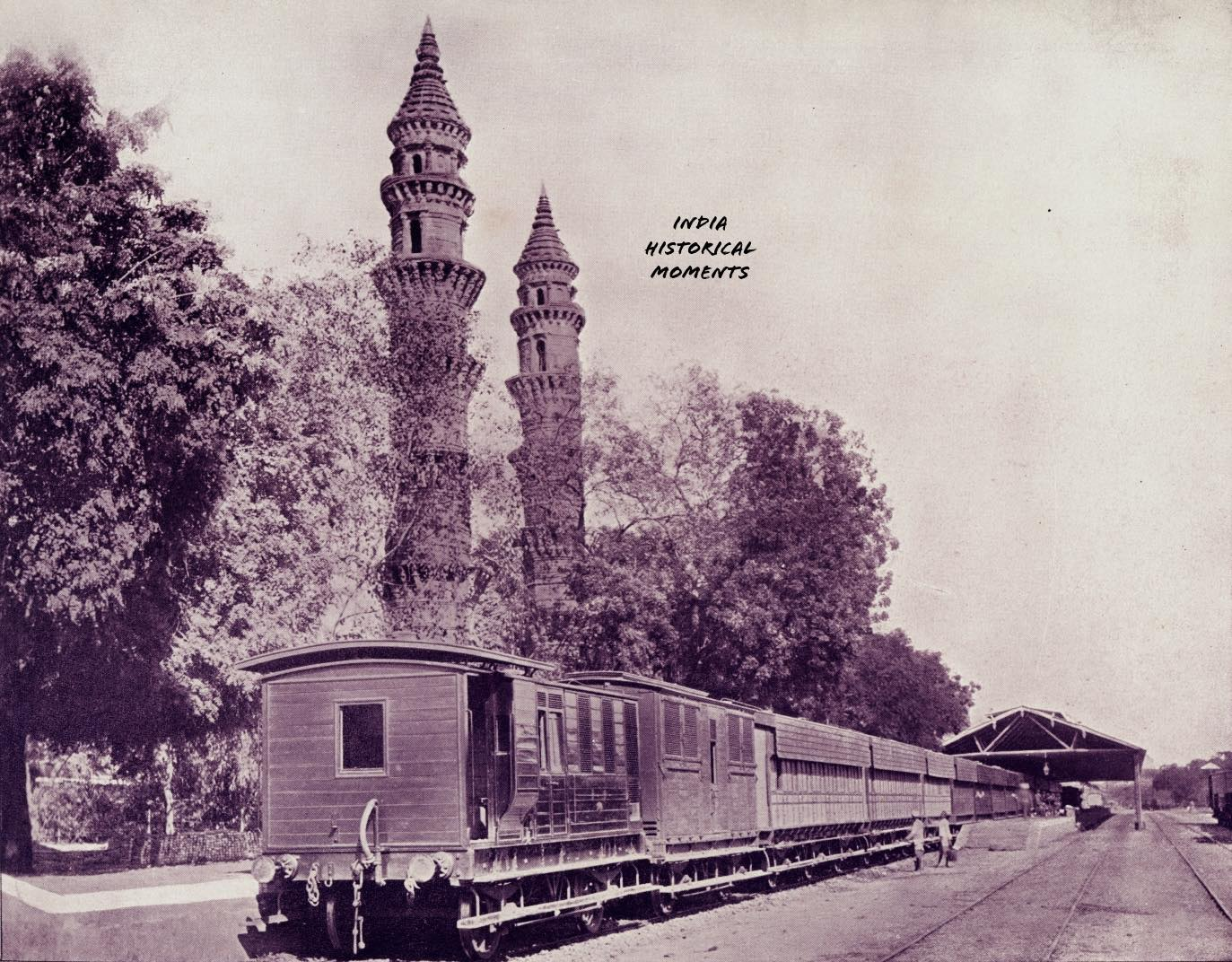
The station architecture was functional rather than ornamental and reflected commercial priorities.
Explore Around
- Sabarmati Ashram
- Old Pol houses
- Sidi Saiyyed Mosque
- Calico Museum
Valsad Railway Station
Valsad lies on the historic Bombay–Surat–Baroda corridor. Built under the BB&CI (1860s) Railway expansion, it linked Gujarat’s agrarian and trading towns directly to Bombay port.
This railway architecture was built for durability, not spectacle. It features low-rise colonial structure, arched verandahs, sloping tiled roofing and functional stone masonry.
Explore nearby:
- Tithal Beach
- Parsi heritage homes
- Udvada (important Zoroastrian pilgrimage site)
Vadodara Junction Railway Station
Earlier Baroda had its own princely state railway system. The Gaekwad rulers were progressive administrators. They invested heavily in infrastructure.
The Baroda State Railway was later merged in 1861 and came to be known as Vadodara Junction. This station reflects royal patronage, Indo-Saracenic touches and regional adaptations.
Explore Around
- Laxmi Vilas Palace
- Sayaji Baug
- Baroda Museum
- Old city markets
Pune Railway Station
Pune (then Poona) was both a military cantonment and a summer administrative base. The station opened in 1858 and connected Bombay to the Deccan Plateau via the dramatic Bhor Ghat section. But building this one was an engineering marvel.
The climb through Bhor Ghat required tunnels blasted through rock, stone viaducts and steep gradients. This stretch was among the most challenging railway engineering feats of its time in Asia.
Explore Around
- Aga Khan Palace
- Shaniwar Wada
- Sinhagad Fort
- Parvati Hill
Railways strengthened Pune’s status as an educational and military hub.
Discover more from GoTravelTrek
Subscribe to get the latest posts sent to your email.
