
Nahan was once the capital of the princely state of Sirmour, Himachal Pradesh. It is a picturesque town surrounded by thick forests, with green valleys, small river streams, and a pleasant climate. Situated on the foothills of the Shivalik Ranges, Nahan is great for a quick weekend trip and is less crowded even during peak tourist season.
Places to Explore in & around Nahan
Jamta
Jamta is located 13 km from Nahan and offers a spectacular view of Nahan Town. Explore Jaitak Fort situated right up on the hills on the Nahan-Dadhau Road. You could choose to take a picnic lunch or eat at nearby Sirmaur Retreat or Hotel Grand View.
The historic Jaitak Fort was built by the Sirmour kings and reconstructed by Gurkha leader Ranzor Thapa, who fought a crucial battle with the British here in 1810. There’s a war memorial in Nahan at Pucca Tank. It is dedicated to the European soldiers who had died fighting this war.
Walk towards Hospital Road to look at the ruins of old buildings and a few colonial structures that still stand. The old Ranzor Palace is now a cinema hall. Another Religious place is Lakhdata Peer.
Chaugan is the main road of Nahan, bustling with activity. Take a walk towards the Villa Round, which is surrounded by Pine trees and home to birds and monkeys!
Renuka Lake
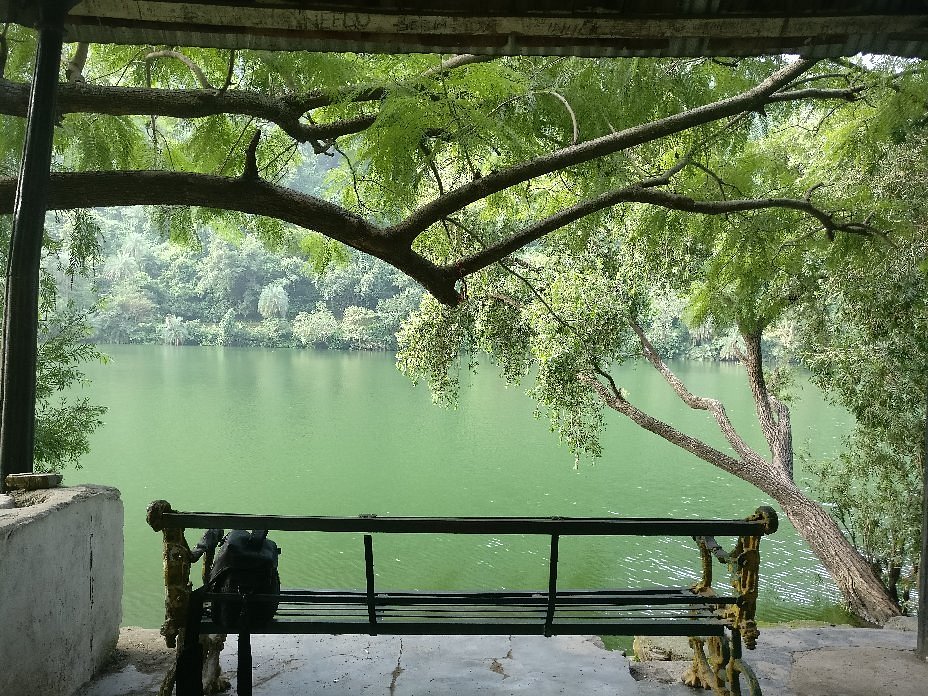
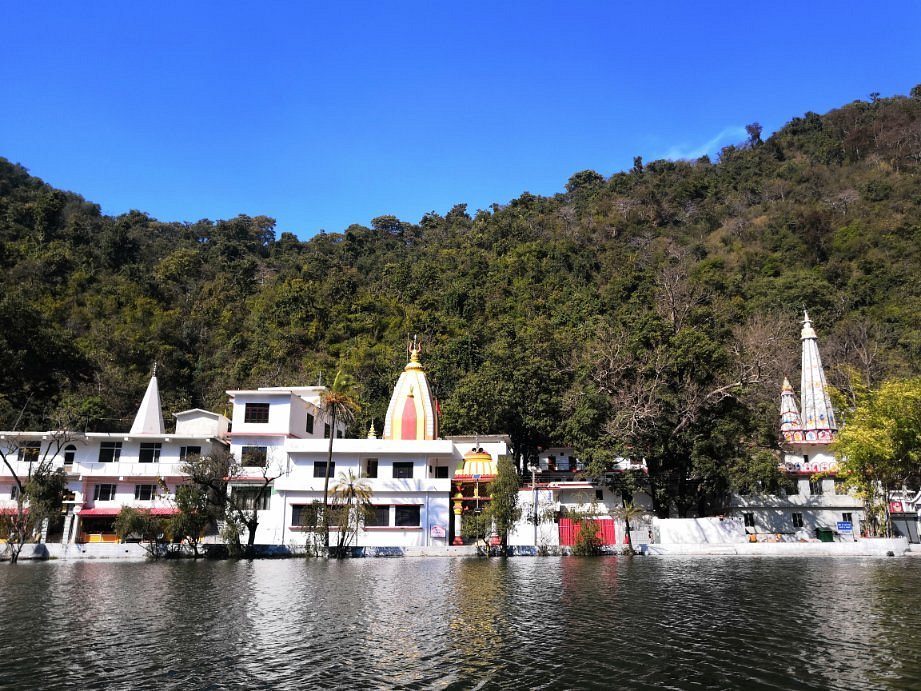
The beautiful Renuka Lake is located 35 km from Nahan and is spread across 3 km, and is Himachal’s largest natural lake. Shaped like a reclining woman, locals believe it’s goddess Renuka in eternal rest.
The lake is fed by River Giri, underground springs and rainwater and is home to a variety of marine life. There is a provision for paddle boating in the lake, and you can even walk along the well-paved walking zone. Surrounded by a canopy of lush green hills and a reasonably dense forest, this place is definitely a great weekend getaway from New Delhi, Chandigarh, Dehradun and Ambala.
You can even take a trek of 8 Kms up ‘Jamu Peak’ that has a small temple and offers a beautiful view of the lake and surrounding hills.
Other places that can be added to your visit could include Shanti Sangam and Tallon, which offer beautiful natural surroundings, a historical Miyan ka Mandir and a Gunnu Ghat. Not many know, but the ISFTS (Indian Special Forces Training School) is also located at Nahan.
The History Connection
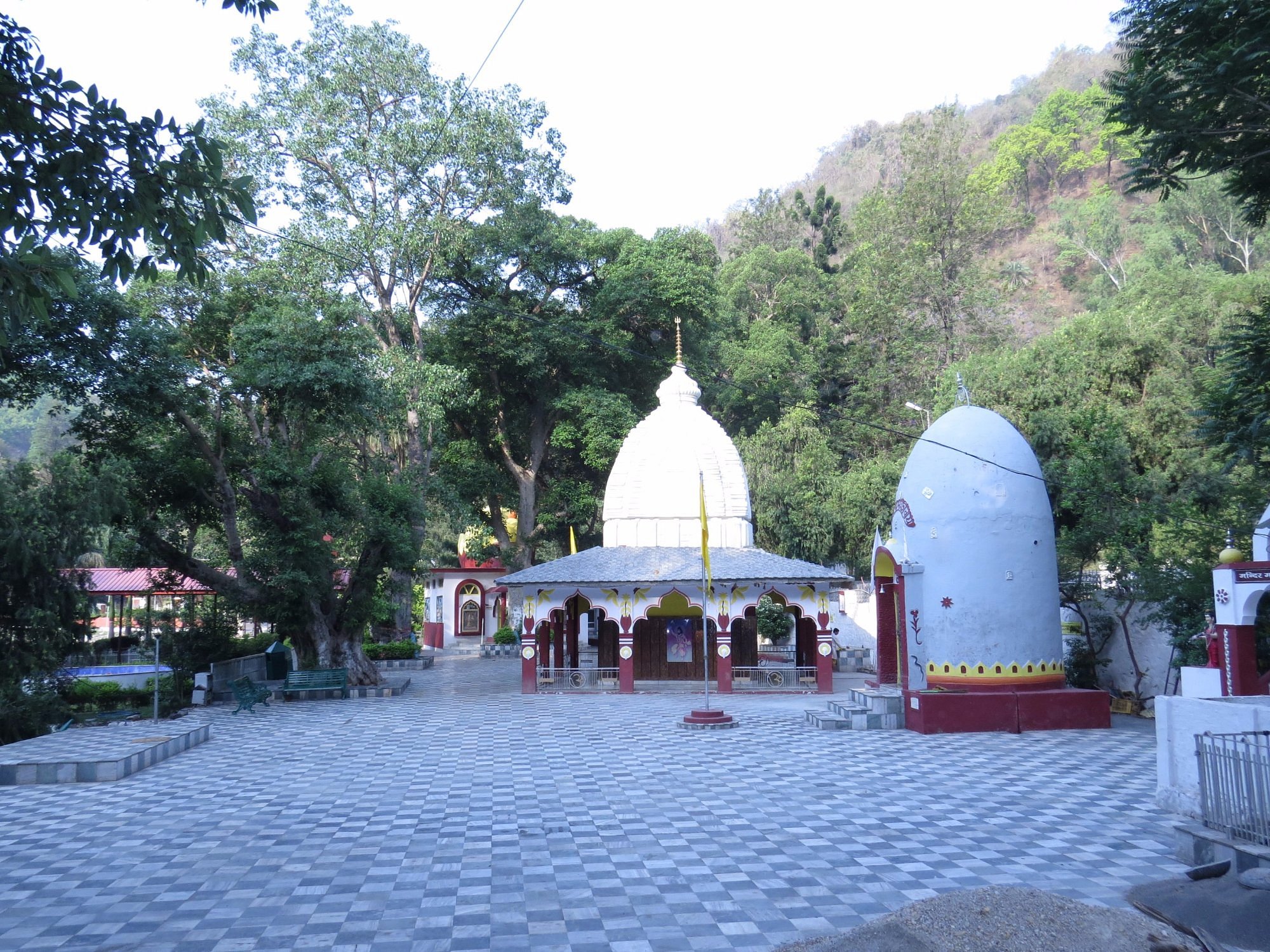
According to the sacred Puranas, Parshuram (the 6th Incarnation of Lord Vishnu) was born to Maharishi Jamdagni and Bhagwati Renuka. They meditated near a hillock called ‘Tape Ka Tiba’ (Jamu Peak) near the lake (then called Ram Sarovar.) With the blessings of Lord Shiva, Lord Vishnu fulfilled their desire for a son and took birth as ‘Parshuram’.
Legend has it that when the evil Sahasarjuna killed Sage Jamadagini and tried to abduct his wife Renuka, she flung herself into the water and died. The gods restored her to life, but she stayed alive in the water and promised Parshuram that she would come out on the occasion of Devprabodhini Ekadashi every year to meet him and bless those who visit this sacred place and shower her divine blessings on them. One day in advance, on Dashmi, the palanquin of Lord Parshuram is brought to Renuka Ji from the ancient temple in Jamu Koti village in a traditional procession known as a ‘Shobha Yatra’, attended by lakhs of devotees. The place has been sacred for decades and has a temple dedicated to Renuka Ji.
It’s a delight to watch the number of fish (Mostly Mahseer) in the Renuka Lake. Please know that they are fed at appropriate times, so please do not feed them yourself. There are also giant turtles that can be spotted around the Lake.
Renuka Wildlife Sanctuary
Also known as ‘Abhayaranya’, the Renuka Wildlife Sanctuary is small in size but even has a zoo. It is located just across the lake (2 km drive).
Located in the deciduous forest zone, the Renuka Wildlife Sanctuary also has a Zoo that has Asiatic Lions, Spotted Deer, Lion-tailed Macaques, Nilgai Methuen, Barking Deer, Himalayan Black Bears and more than 300 types of Migratory Birds.
Adjoining the zoo, an armoured van enters the large enclosure, allowing you a closer glimpse of the lions within. The Lion Safari attracts many, and you are sure to spot a few on the trip!
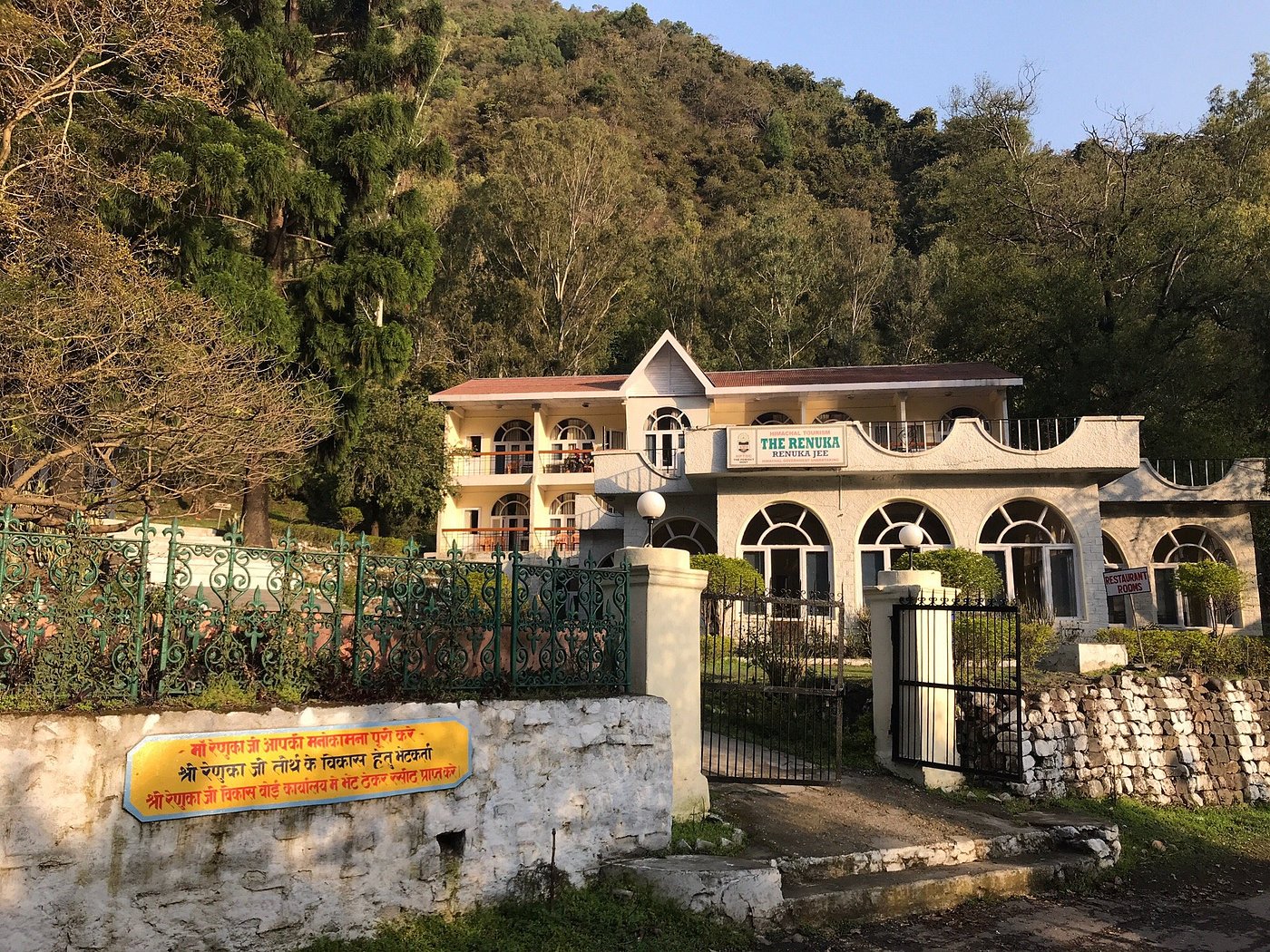
My recommendation for a stay would be the HPTDC The RENUKA Hotel, located right on the Lakeside and offers a panoramic view of the surrounding hills.
Trilokpur
The name Trilok Pur implies there is a triangle of three Shakti Temples in the area, each depicting different faces of Goddess Durga.
The main temple situated at Trilok Pur is the Temple of Bhagwati Bala Sundri (an infant manifestation of Goddess Vaishno Devi), which depicts a beautiful childhood image of Goddess Durga. The climb involves 800 steps.
Another ‘Shakti Temple’ dedicated to Bhagwati Lalita Devi, depicting an image of Goddess Durga, is situated on a hillock located at a distance of 3 km in front of the main temple of Bhagwati Bala Sundri.
The third famous ‘Shakti temple’ of ‘Tripur Bhairavi’ is situated at a distance of 13 km north west of Bala Sundri temple.
Daula Kuan (20 km)
This place is on the way towards Paonta Sahib and about 20 km from Nahan. This region is popular for citrus fruit farms and fruit canning factories. You can experience the making of organic Jams, Pickles and canned fruits that are exported internally and globally.
A little away from Dhaula Kuan is ‘Kastasan Devi temple’, where Raja Jagat Singh defeated the advancing army of Rustam Qadir Rohilla in a great battle.
Suketi Fossil Park (21 kms)
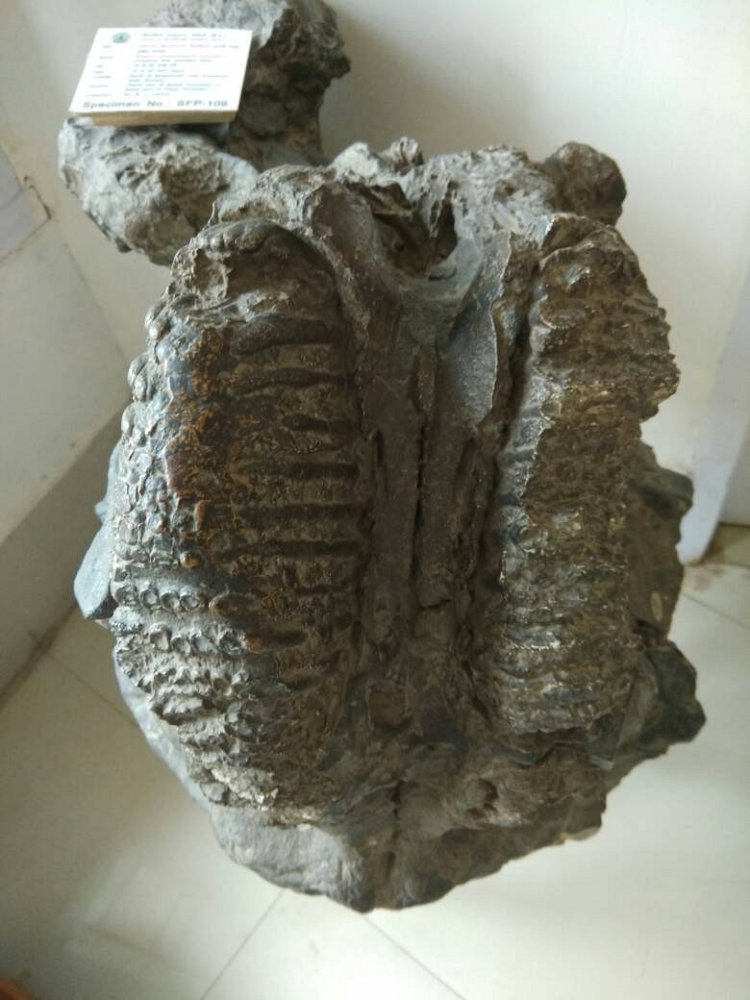
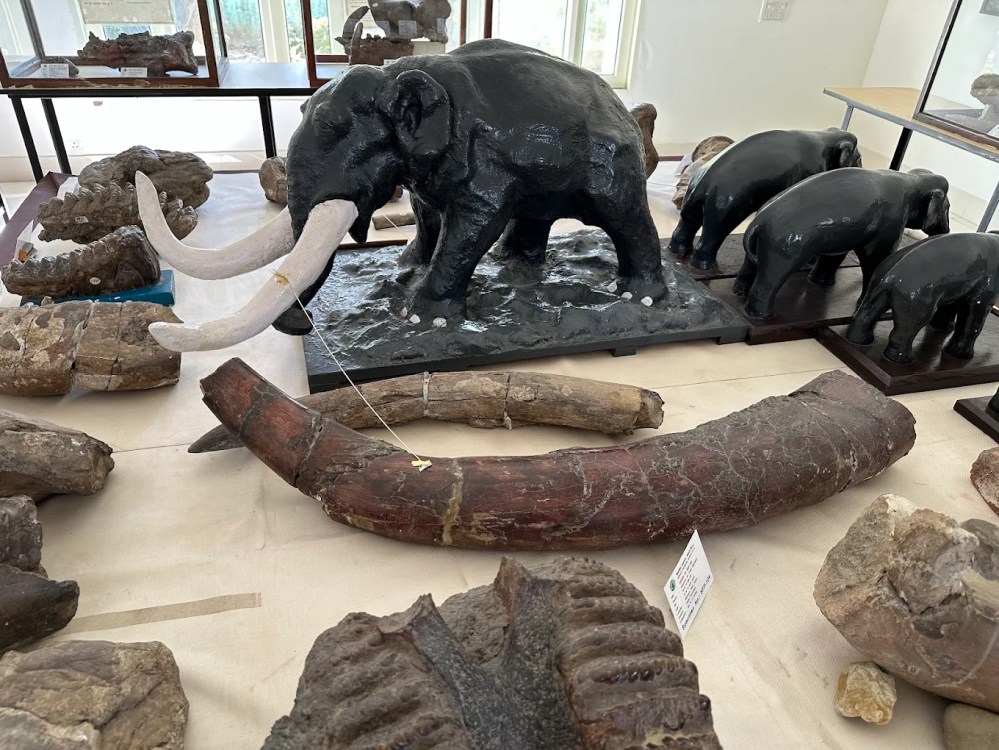

Situated along the Markanda River, the park is also known as the Shivalik Fossil Park and takes you back 21 million years into prehistory. Unlike most fossil museums, Suketi is located at the actual fossil site, where prehistoric vertebrate remains were unearthed from the upper and middle Siwalik formations of sandstone and clay. And the discoveries here haven’t stopped. Back in 2010, a lecturer from the Geological Survey uncovered a two-and-a-half-foot-long ivory tusk buried in the soil. Carbon dating placed it at 150,000 years old, proof that Suketi still holds secrets waiting to be unearthed.
To truly experience the park, try and hire local guide Ramesh-ji (ask around). His passion for paleontology transforms dusty fossils into vivid tales of ancient elephants and rhinos that once roamed these hills.
The park also features an open-air exhibition where six life-size fibreglass models of extinct mammals stand against the dramatic backdrop of the hills, giving you a sense of their true scale. Within the precincts lies a dedicated museum, which not only preserves and displays these fossil treasures but also serves as a hub for researchers from around the world.
I have vivid memories visiting this place from Ambala in the early 90s and remember the awe of seeing those fossils.
It is 70 km from Chandigarh, 48 km from Yamunanagar, 48 km from Ambala and 250 km from Delhi.
Paonta Sahib (45 km)
This historic gurudwara marks where Guru Gobind Singh spent four transformative years. The spiritual energy here is palpable, and the community kitchen serves some of the most soul-satisfying langar you’ll ever taste.
Visit the museum to see original manuscripts and weapons from the Guru’s time. The stories of valor and wisdom shared by the resident historians bring history alive.
Location & Distance Guide to Nahan
Best Route: Delhi – Karnal (immediately after the Haveli restaurant, take right) – Shahbad – Saha – Shezadpur – Kala Amb – Nahan
- Ambala – 68 Km
- Chandigarh – 120 Km (3-4 hours). The shorter Chandigarh route via Panchkula and Nalagarh offers stunning views of the Ghaggar River valley. This scenic drive takes you through sal forests and terraced fields.
Insider Tip: Stop at Kala Amb for their legendary rajma-chawal at the local gurudwara – it’s a spiritual and culinary experience rolled into one. - Dehradun – 91 Km
- Shimla – 136 Km
- Ludhiana – 172 Km
- New Delhi – 350 km (7-8 hours). Take the NH44 via Ambala, then switch to NH907 through Yamuna Nagar and Paonta Sahib.
Nahan’s food scene is a blend of Himachali, Punjabi, and Tibetan influences. Try local delicacies, including: Siddu: Steamed wheat bread stuffed with poppy seeds or walnuts. Aktori: Himachali version of pancakes made with buckwheat. Dhaam: Traditional feast served on banana leaves during festivals. Babru: Black gram-stuffed fried bread that’s crispy outside, soft inside.
Shopping secrets: You can buy pure wool shawls directly from weavers in nearby villages. Local honey varieties here have distinct flavors depending on the wildflowers and season. Some shops also make handmade bamboo products.
If you are interested in camping or looking for a corporate offsite trip, do check out Kangojodi – a delightful camping experience in the Shivalik Hills.
Have you visited Nahan? Share your own hidden discoveries and magical moments in the comments below.
*All images are Copyright Tripadvisor.
Time isn’t about schedules but about seasons and sunsets. Happiness comes not from acquiring things but from appreciating moments.
Discover more from GoTravelTrek
Subscribe to get the latest posts sent to your email.

Hello Ashima, I have nominated you for the Liebster award coz I love your blog. Here’s a link to the post – https://chasingmile.wordpress.com/2016/03/09/liebster-on-my-plate/
LikeLike
Thanks Anupriya and I am glad to be part of such amazing travel enthusiasts and bloggers :)
LikeLike
That is a really well written travelogue. :)
LikeLike
Thanks Samreent, I am glad you liked it.
LikeLike