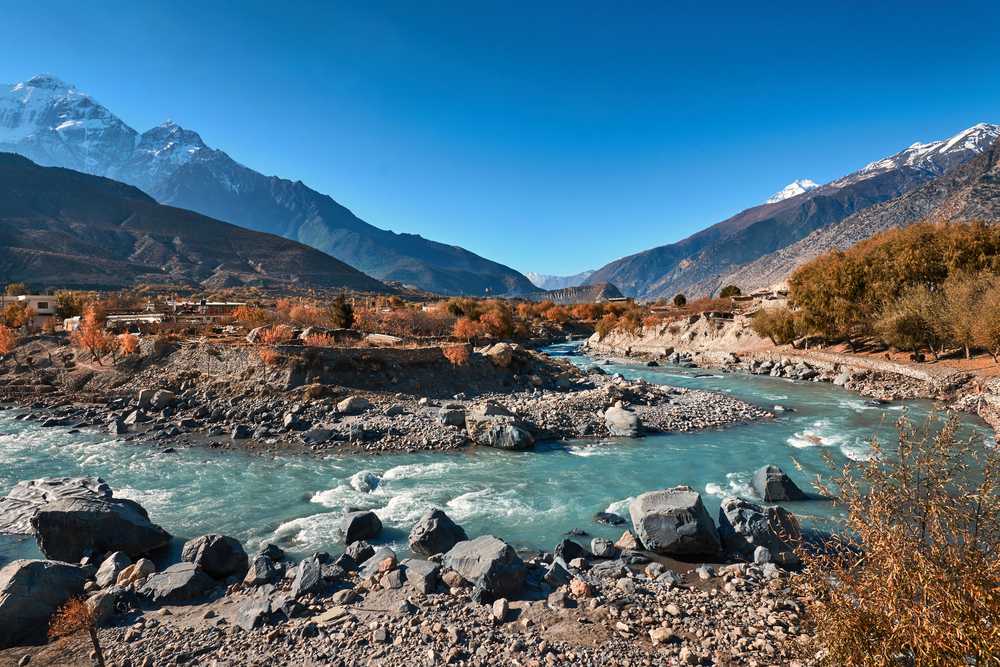
Askote or Askot is a small Himalayan town in the Pithoragarh district of Uttarakhand in India. It is part of the Kanalichhina development Block and Didihat Tehsil. Askote lies midway between the Pithoragarh (54 km) to Dharchula road and is located on a ridge. The name of the town, Askot, originates from ‘Assi Kot’, which means eighty forts that once stood in the region. Most of the forts are now in the Dharchula district of Nepal.
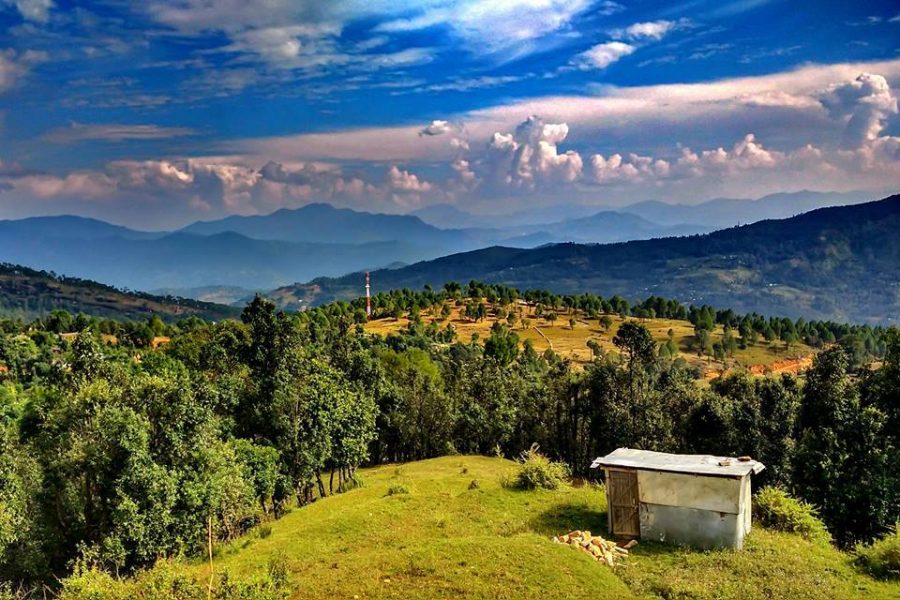
This charming hill station sits strategically on the ancient trade route connecting India to Nepal and Tibet, making it a significant cultural and geographical landmark in the region. This easternmost region of Uttarakhand is also called the ‘Kali Kumaon’ and offers some of the best mountain sights and natural beauty of the region, some of which remain unexplored. With the backdrop of Chhiplakot and the Panchchuli range, with the Nepal Mountains, Askote is truly an offbeat travel destination.
Historical Importance
Askote region was part of the Manaskhand region and later came under Katyuri kings after the fall of Katyuri Rajwars dynasty, a branch of Katyuri kings that continued to rule the region, ruled by Pal Rajput/Thakuri (Suryavanshi Rajputs, a clan of Katyuri kings), Chand, Gorkha, Raikas and British rulers, though Rajwars continue to be its ceremonial Head. Van Rawats – an endangered tribe of Uttaranchal, inhabit this area.
Places to See in & around Askote
Askot Wildlife Sanctuary
The Askot Musk Deer Sanctuary stands at a height of 5,412 feet, and hosts a wide variety of animals and birds, including snow leopards, Himalayan black bears, musk deers, snow cocks, tahra, bharals, chirs, koklas, pheasants and chukors.
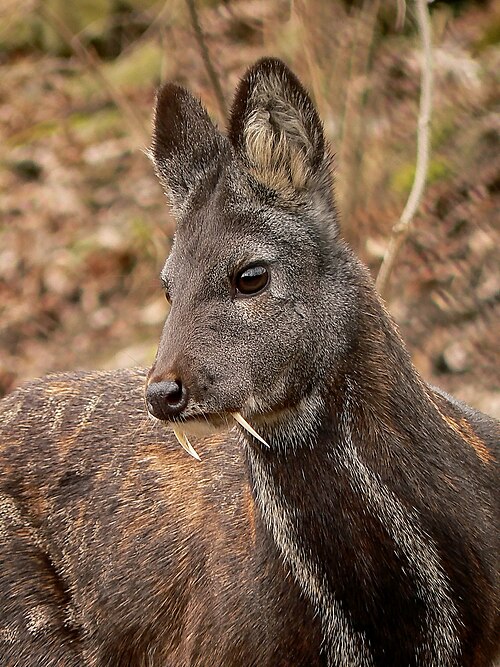
Spread over an area of 600 square kilometres, the sanctuary has been successfully conserving the rare species of the Musk Deer. Musk Deer has been hunted and killed for its extraordinary perfumed secretion, part of a male musk deer called ‘Musk’. This is one of the most valuable natural products used for its fragrance and medicinal properties. There are regular Jungle Safaris that travel through the Sanctuary, giving you a chance to view the amazing wildlife of the region. Every minute here is worth your travel time!
The Lipu Lekh Pass, Lumpiya Lekh Pass and the Mankshang Lekh Pass are also located in the sanctuary’s zone. While the Gori Ganga River passes through it, the sanctuary is also the origin of the River Dhauli and Ilki River.
Temple Circuit
Dhwaj Temple: 51.8 km from Askote via NH 9
Dhwaj Temple is renowned for its spiritual significance and traditional Kumaoni architecture. It takes 4-5 Km of uphill walk to reach the temple and usually consists of steep climb.
Kapileshwar Mahadev Temple: (55.4 km from Askote via NH 9)
This ancient temple dedicated to Lord Shiva draws devotees from across the region. The temple’s serene location amidst pine forests creates a perfect atmosphere for meditation and spiritual contemplation. Legend says it was once a meditation spot for Sage Kapila, an incarnation of Lord Vishnu.
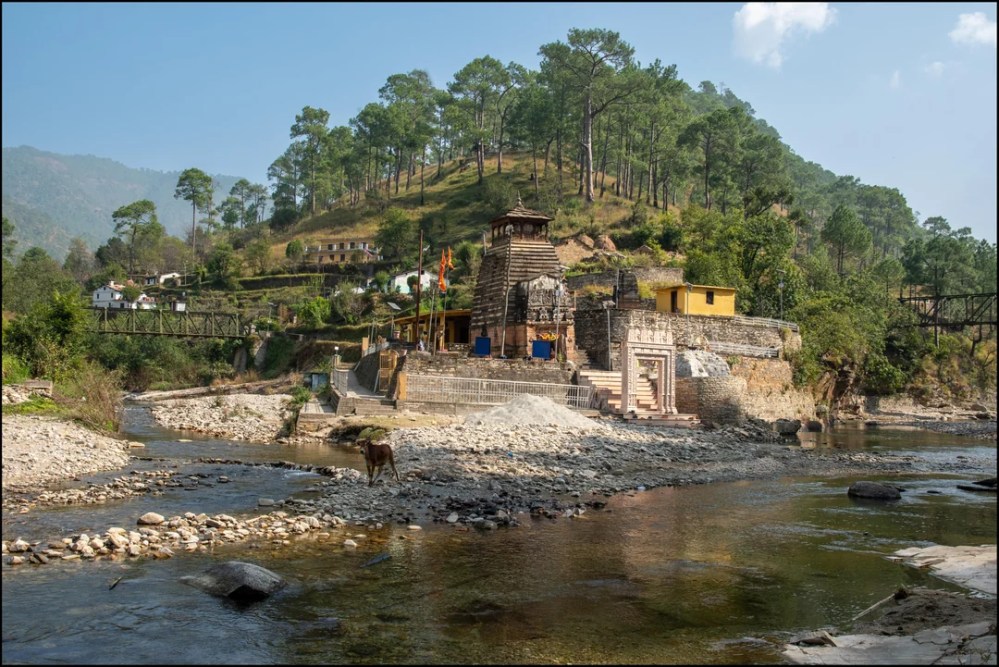
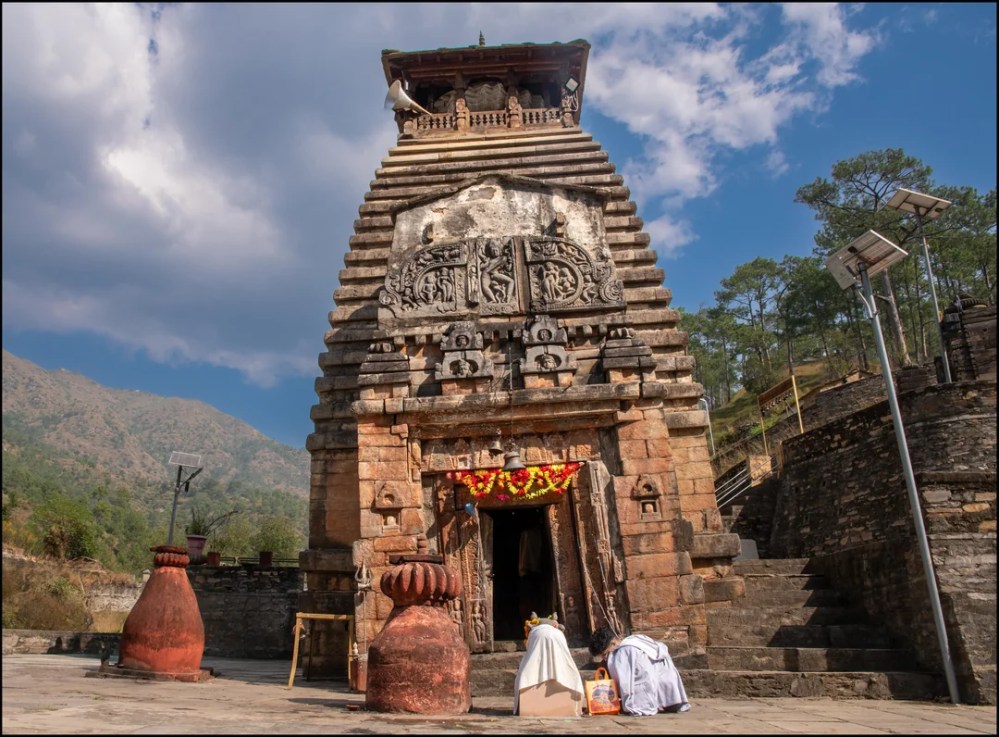
Kapileshwar Mahadev Temple, Image CC @Reddit
Nestled in the Soar Valley of the Himalayas, it offers breathtaking views of the surrounding landscape. Visitors have to climb over a total of 200 stairs to reach the main temple.
Lakhanpurkot Village:
Lakhanpurkot village is located across the River Kali. The place offers a picturesque landscape and various vantage points from where you can enjoy a bird’s-eye view of the valley below. The Kali River, which forms the border between India and Nepal, offers scenic spots for relaxation and photography.
Dharchula: (40 km from Askot)
Dharchula is a picturesque town in the Pithoragarh (92 km) district of Uttarakhand, India. Encircled by the huge towering mountains, nestled in a verdant valley on the banks of the Kali River, Dharchula offers a mesmerising and beautiful panoramic view of the mighty Panchachuli peaks to its west. From here, travelling to visit Jauljibi and Narayan Ashram is easier.
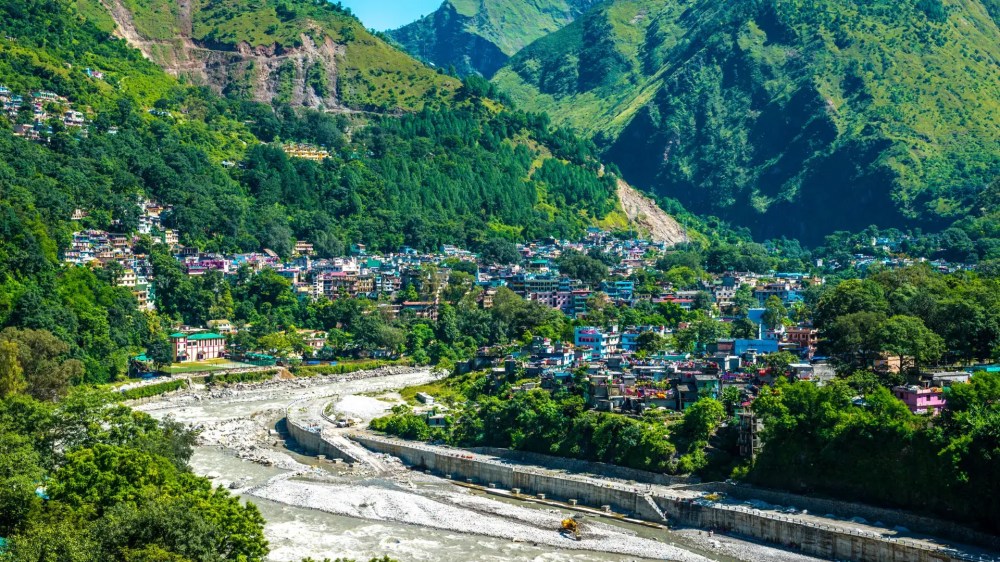
Across the river Mahakali, neighboring country Nepal also has a district with a similar name, Darchula, which acts as the natural border between India and Nepal over a long stretch. People of the two towns share similar traditions, culture, and lifestyle.
Dharchula is also an important camping site for Kailash Mansarovar, Chota Kailash, Om Parvat, Adi-Kailash and Narayan Ashram route.
Learn more about these places
Narayan Ashram: Established in 1936 by Narayan Swami, the ashram was on the old route for the Kailash-Mansarovar yatra, and the many pilgrims and sages who would have passed through must have enhanced its sacredness. Today, the ashram has evolved into a revered centre for meditation and spiritual retreat, attracting pilgrims and seekers alike from various corners of India and beyond.
Chaukori: 61.4 km from Askot and 173 km from Nainital
Chaukori offers majestic views of Panchachuli and Nanda Devi peaks, and the place is dotted with fruit orchards and tea gardens. Other attractions are Dharamghar, Berinag, Patal Bhuvaneshwar, Kausani, Gangolihat and Baijnath Temple.
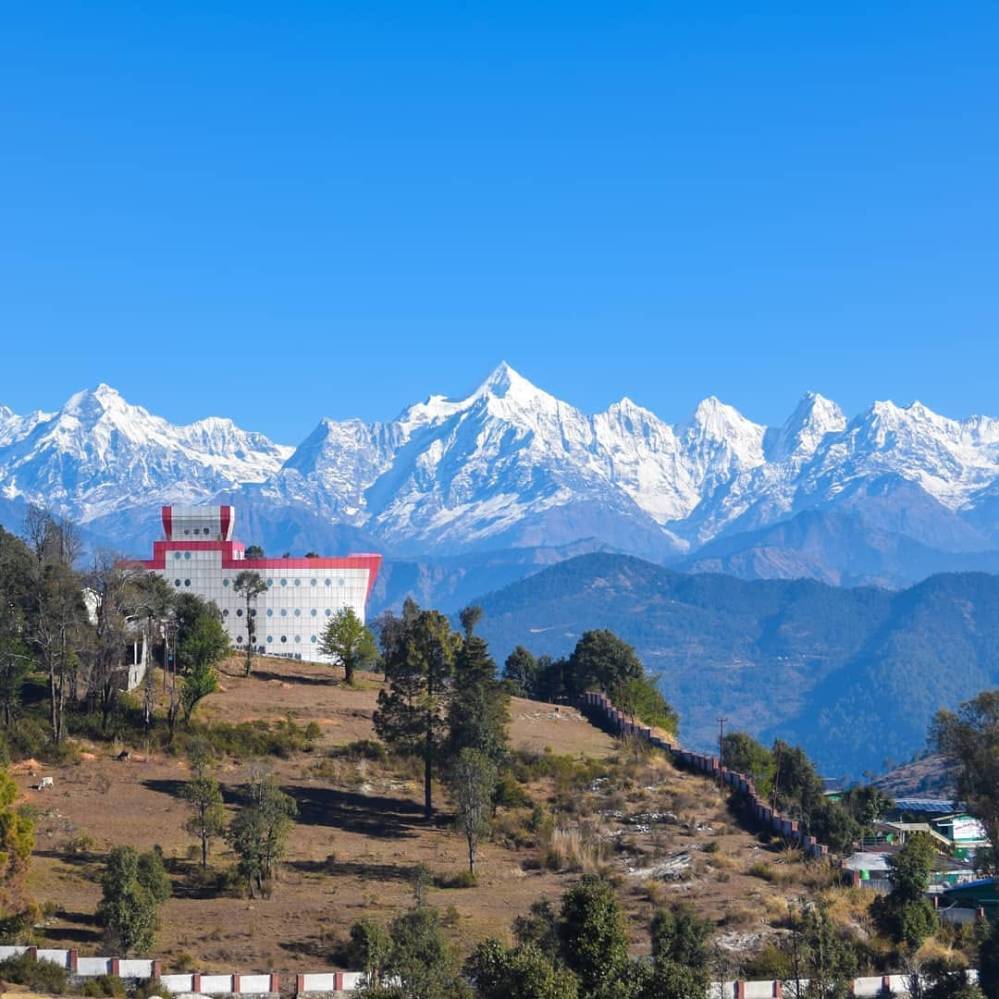
Askot is a Trekker’s Paradise
From Askot, trekking paths leading to Ralam and Milam glaciers are worth exploring for those interested in adventure. Kailash-Mansarovar Pilgrimage route from Delhi – Kathgodam – Didihat – Dharchula, passes through Askot.
What to Expect en route
First stop after Kathgodham would be Bhimtal, one of the largest lakes in the region. You then cross Bhowali (pick up seasonal fruits from here) and then move along the Kosi River towards Almora via Khairna/Garampani (famous for Spicy Alu Parathas, Alu Sabzi and the quintessential Kheera ka Raita, the Pahadi region loves). You may also visit the Kakrighat Temple, located right on the Kosi River Bank.
The snow-clad peaks welcome you just before reaching Almora, which can also be a stopover for a night or two. Don’t forget to buy the famous Baal Mitthai from Almora.
Once you head off and leave Almora, you can visit the Golu Devta Temple at Chitai. It is 4 km from the main gate of Binsar Wildlife Sanctuary and 10 km from Almora town.
A little detour will take you to the sacred Shiva temple complex of Jageshwar (36 km from Almora). It is also one of the 12 Jyotirlingas of Shiva. Just 3 km uphill from the main temple complex of Jageshwar is Vriddha or Vridh Jageshwar. This is said to be the original abode of Lord Shiva before he came down to Jageshwar.
The route after Almora is mesmerising as the snow peaks offer you wonderful views, especially from a place called Dhaulichhina (near Binsar). And all along the road, there are thick forests of Pine and Deodar trees, making the drive more beautiful.
As you head further up, you cross the Kalamuni Pass, Munsiyari, Gori Ganga Valley, Madkot and then finally Jauljibi.
Jauljibi is a town located on the India-Nepal border, and you can view the Nepal side of the village here. Taking Photographs is strictly prohibited, so be aware.
Jauljibi is also the very spot where the Gori Ganga meets the mighty River Kali, which later reaches Nepal to become the Mahakali River. From here on, the drive is steep towards Askot, and you need to be careful with numerous bends that take you along the lush green dense forests, which are the Askot Musk Deer Sanctuary.
If you liked Askot, I am sure you would love these:
Bageshwar: Sacred Temples & the Beautiful River Saryu
Camp Shaama, Gyandhurra – Bageshwar
River Saryu: Extraordinary River Rafting and Angling Experience
Location & Distance Guide to Askot
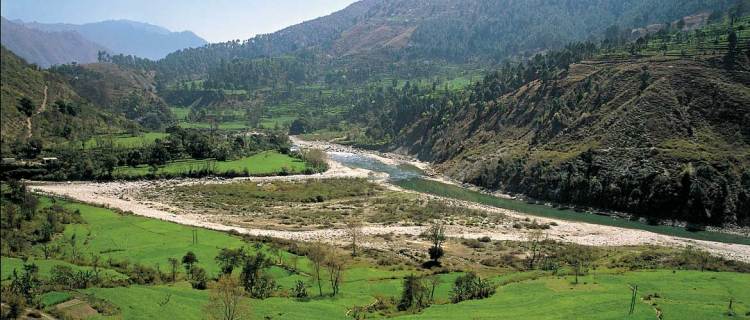
Suggested Route Guide after Kathgodham: Bhimtal-Bhowali-Ratighat-Khairna/Garampani- travel along the Kosi River until you reach Almora-Visit the Golu Devta Temple at Chitai-Stop over at Jageshwar (Ancient Shiva Temple Complex)-Dhaulichhina-Cross Seraghat and go along the Saryu River-Berinag-cross over the Ramganga River at Thal-Birthi-Kalamuni Pass-Munsiyari-Madkote-Jauljibi (India-Nepal Border)-go along the Kali River and finally you reach – Askot
Best Season to Visit: April-September
Travel Days: We suggest planning 6-7 days off to enjoy the drive and visit numerous places located along this route.
- Didihat: 14.5 km via Ogla Rd and Askote Didihat Link Road
Didihat, situated at 1,725 meters above sea level, is known for its breathtaking vistas of snow-capped mountains like Panchachuli and Trishul. Visitors can enjoy nature walks, bird watching, and exploring ancient temples like the revered Malaynath Temple in Didihat. - Askot to Dharchula: 40.6 km via Delhi – Dharchula Hwy
- Pithoragarh to Askot: 52 Km via NH 9
Pithoragarh also has the Naini Saini Airport, also known as Pithoragarh Airstrip, so people not into driving the hills may take this faster mode to reach Askot! - Munsiyari to Askot: 77 km via NH 109K\
- Nainital to Askot: 181 km
- Almora to Munsiyari: 197.8 km via Almora – Berinag Rd
- Almora to Askot: 167.0 km via NH 309B and NH 9
- Kathgodham to Askot: 238 km via SH10 and NH 9
- New Delhi to Askot: 527 Kms via NH 9
Feature Image: Kali Ganga Near Askot Image CC @https://www.holidify.com
Discover more from GoTravelTrek
Subscribe to get the latest posts sent to your email.

mind blowing pics. and in your post i discovered a new exciting place Askot!
LikeLiked by 1 person
Thanks! and Yes discovering new places or learning new things about a common old place is exactly what I aim… keep travelling and keep sharing ur views.
LikeLike
This is a lovely post ashima!
LikeLike
This post has some really wonderful insights and interpretations in it. How long have you been blogging for?
LikeLike
Thank you for the appreciation. I have always been inquisitive and loved to read and be informed about all things travel and heritage related but it’s only recently for the past few years that I started blogging ..
LikeLike
Hi Thank you for the great info, I really need to know good place to stay in Askot and also how to book safari for Askot musk deer sanctuary . Is it jeeps there and how much is entrance etc.
Kindly let me know.
Thanking you,
Nitin
LikeLike
Hi Nitin, apologies for the delay in writing back. If you are travelling to Askot, I would recommend staying in Pithoragarh as there are plenty of stay options available depending on your budget. There are also a few good and reasonable options in Thal and Berinag that will let you explore more of this amazing region.
LikeLike
Thank you very much for your reply and suggestion.
LikeLike
While searching for Askot, i found this piece and site. Very informative and lively.Excellent for people who love lesser known destinations. The sest part of this piece is how to plan the trip and where to stay and what to expect.40 years ago , ie 1980 i was there as a masters student of Geology studying the base metal mineralization around Askote ( Abandoned mines below the town).
LikeLiked by 1 person
While searching for Askot, i found this piece and site. Very informative and lively.Excellent for people who love lesser known destinations. The best part of this piece is how to plan the trip and where to stay and what to expect.40 years ago , ie 1980 i was there as a masters student of Geology studying the base metal mineralization around Askote ( Abandoned mines below the town).
LikeLiked by 1 person
Hi Sandip, Apologies for the late reply I an in the process of updating the site, hence the delay. Happy New Year! Its fascinating to know that you have traveled to Askot that many years back. I hope you can make another trip up North soon.
LikeLike