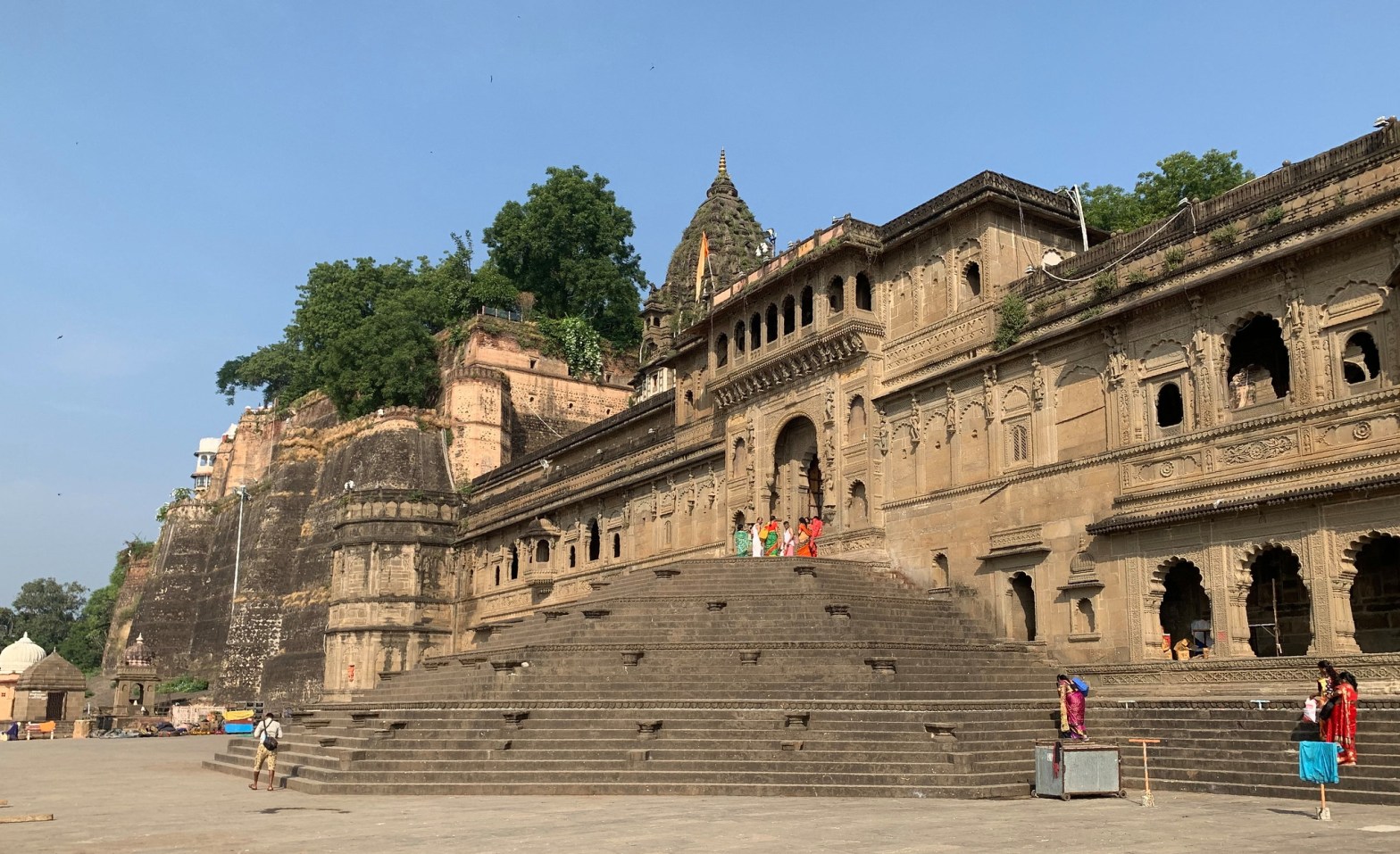
Welcome to the enchanting realm of Maheshwar, nestled along the serene banks of the Narmada River. Named after the abode of Lord Mahesh, another moniker for the mighty Shiva, Maheshwar is more than just a pilgrimage site -it’s a captivating destination brimming with irresistible charm.
Legend of Narmada
Legend has it that among India’s sacred rivers—Ganga, Yamuna, Narmada, Godavari, and Kaveri – it is the Narmada that reigns supreme in holiness. Intrigued? Well, as the tale goes, even the sacred Ganga herself seeks purification by transforming into a black cow and immersing in the Narmada’s pristine waters during the night. One can also attend the spectacular Narmada Aarti at 8 PM every day.
Known affectionately as ‘Shankari,’ the daughter of Lord Shiva, the Narmada River is adorned with ‘Banalingas’ – also known as the Swayambu Lingam, meaning formed by itself. These cylindrical pebbles resembling the sacred Shiva Linga – scattered abundantly along its shores. Maheshwar’s rich history dates back to the times of the Ramayana and Mahabharata, where it was known as ‘Mahishmati,’ serving as the capital of King Sahasrarjun, who legend has it, created a grand playground for his 500 wives by harnessing the mighty Narmada’s flow.
The majestic Maheshwar Fort, originally commissioned by the Mughal Emperor Akbar in 1601, was later reclaimed and reconstructed into a bastion of power by Rani Ahilyabai Holkar (1767 to 1795). Her visionary leadership transformed Maheshwar into a flourishing centre of art, culture, and commerce.
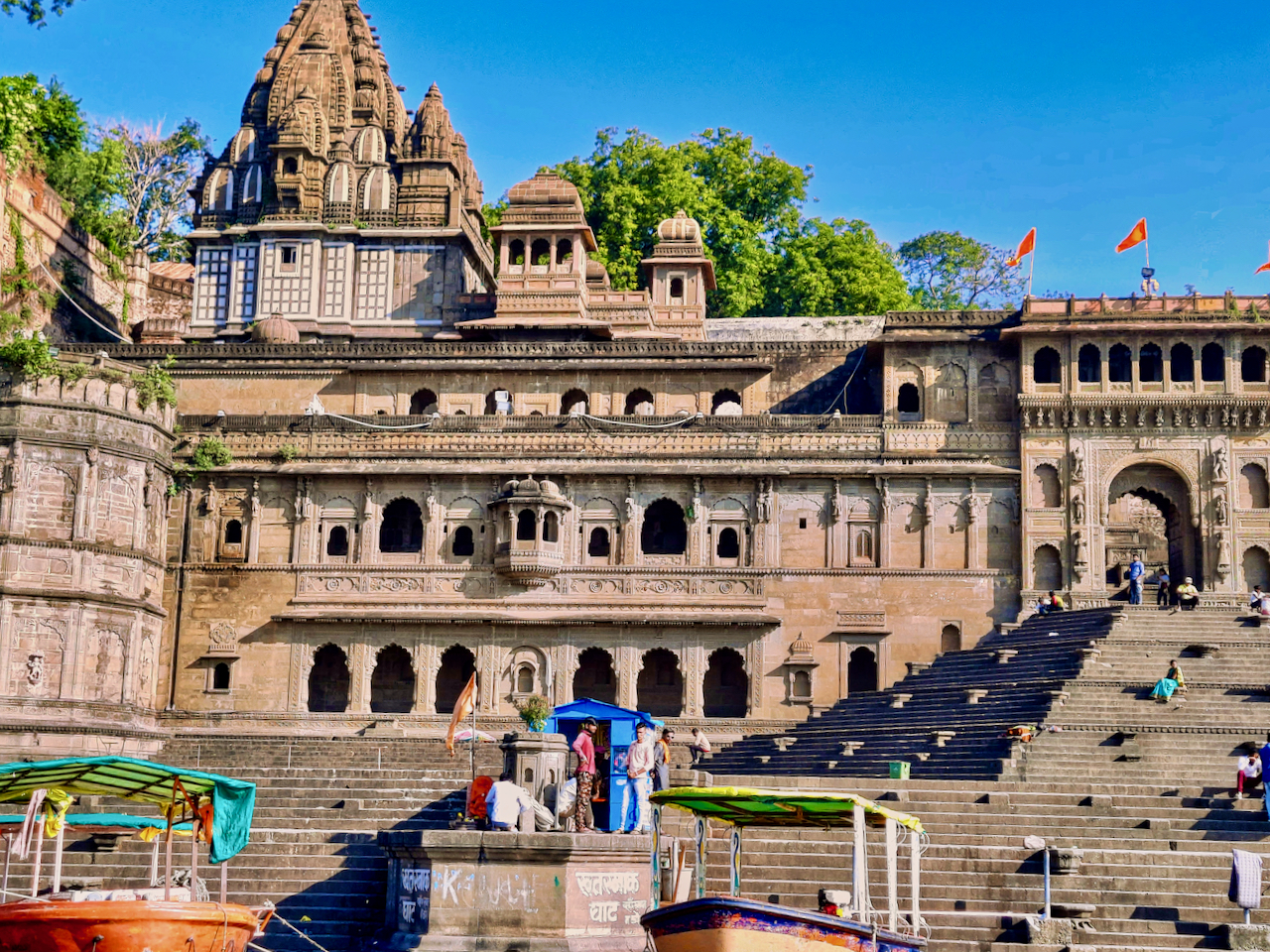
Ahilya Fort & Temple Complex
The spirit of Rani Ahilyabai resonates through its ancient walls, echoing tales of valor and grace. Prepare to be enchanted by the exquisite intricacies adorning the Ahilyeshwar Temple (34 years of meticulous construction work) and Pandharinath Temple. Here, amidst the timeless splendor, a tradition dating back centuries persists; the crafting and offering of thousands of Shiva Lingams to the sacred waters of the Narmada River.
Venture further to the Kashi Viswanath temple, a monumental heritage site perched majestically on a terrace overlooking the Narmada. Here, the air is thick with reverence, as 11 nandadeeps – sacred lamps – cast a timeless glow, a testament to centuries of devotion and spiritual significance. Delve deeper into the river’s mysteries as you explore the cenotaphs emerging from its depths, paying homage to Maharani Ahilyabai and her esteemed royal lineage.

Continue your journey of discovery to the Dwarkadhish Temple, where the divine presence of Vishnu is palpable amidst the intricate wooden façade. At the Peshwa Ghat, the Khandoba and Parshuram temples stand as stoic sentinels, their basalt structures bearing witness to centuries of architectural brilliance.
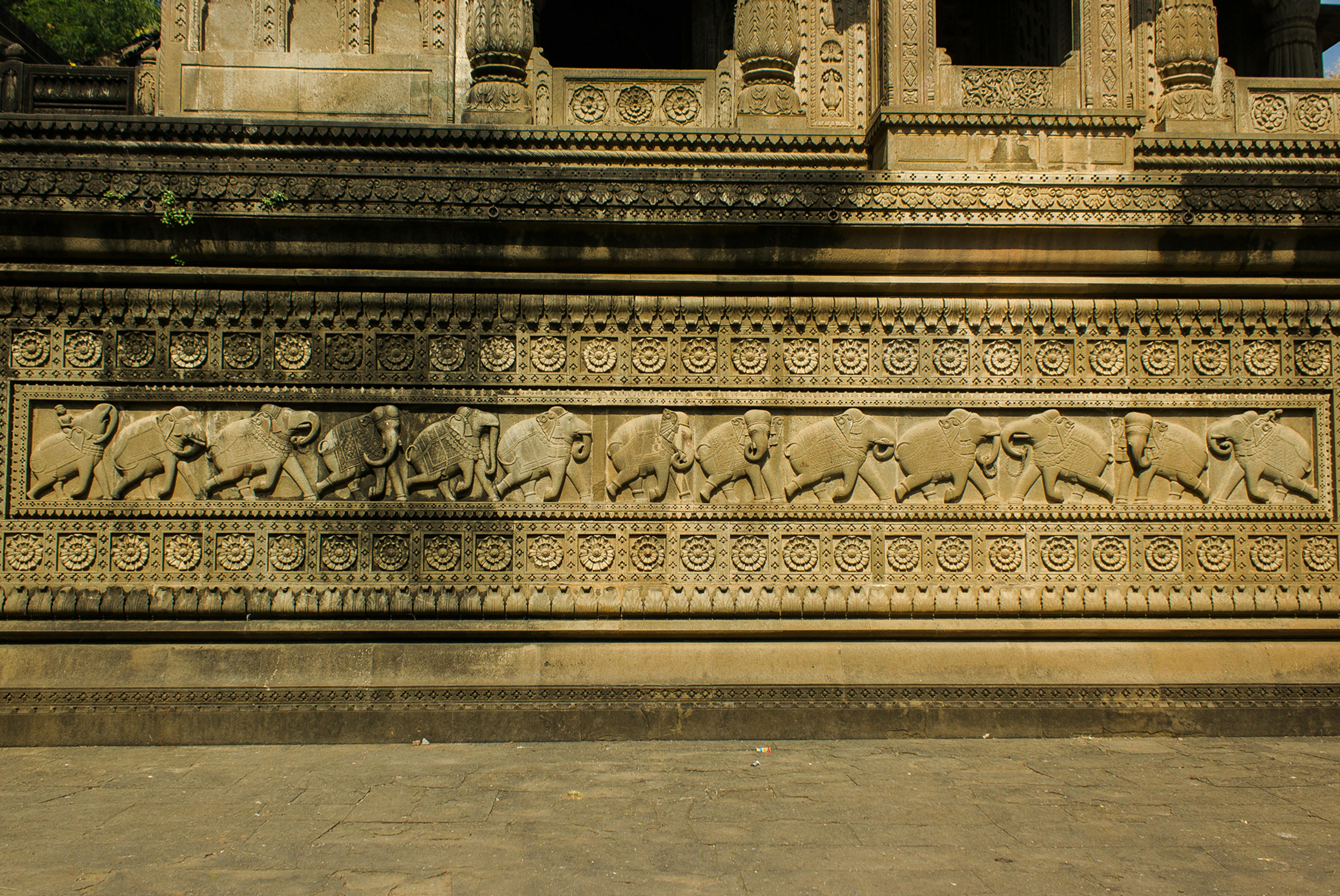
The temples of Maheshwar are distinguished by their unique architectural features that set them apart from other temple complexes in India. The many-tiered temples are characterized by their carved overhanging balconies and intricately worked doorways, creating a distinctive visual identity that has captivated visitors for centuries.
Yet, as you marvel at these timeless wonders, be mindful of the challenges they face. The relentless tide of tourism, the ever-shifting patterns of the Narmada, and climate change threaten to erode their legacy. It is a call to action, a reminder of the importance of preservation and stewardship in safeguarding our cultural heritage for generations to come.
Wander through the city’s labyrinthine lanes, where each twist and turn reveals hidden gems like Laxmi Bai ki Chhatri and the myriad Ghats that line the riverbank. Here, amidst the whispers of history and the gentle lapping of the Narmada, you’ll discover a tapestry woven with tales of bygone eras and divine blessings, beckoning you to unravel its secrets and embrace its timeless allure.
Ek Mukhi Datta Temple
At a distance of 6 km from Maheshwar Bus Station, Ek Mukhi Datta Temple is a newly constructed Hindu temple located in Sahastradhara, Jalkoti, Maheshwar. it is built over 30 acres with approximately 10,000 sq. feet of temple area along the banks of River Narmada.
Legacy of Maheshwari Saree
Maheshwar is known for being the hub of handloom weaving since the 5th century, but it gained fame during the rule of Maharani Ahilyabai when she introduced the Maheswari Saree. Renowned for its unique weave, the Maheshwari Saree has since captivated hearts across the nation. Witness the age-old art of weaving at the Rehwa Society (Founded in 1979), where the legacy of Maheshwari textiles continues to thrive.
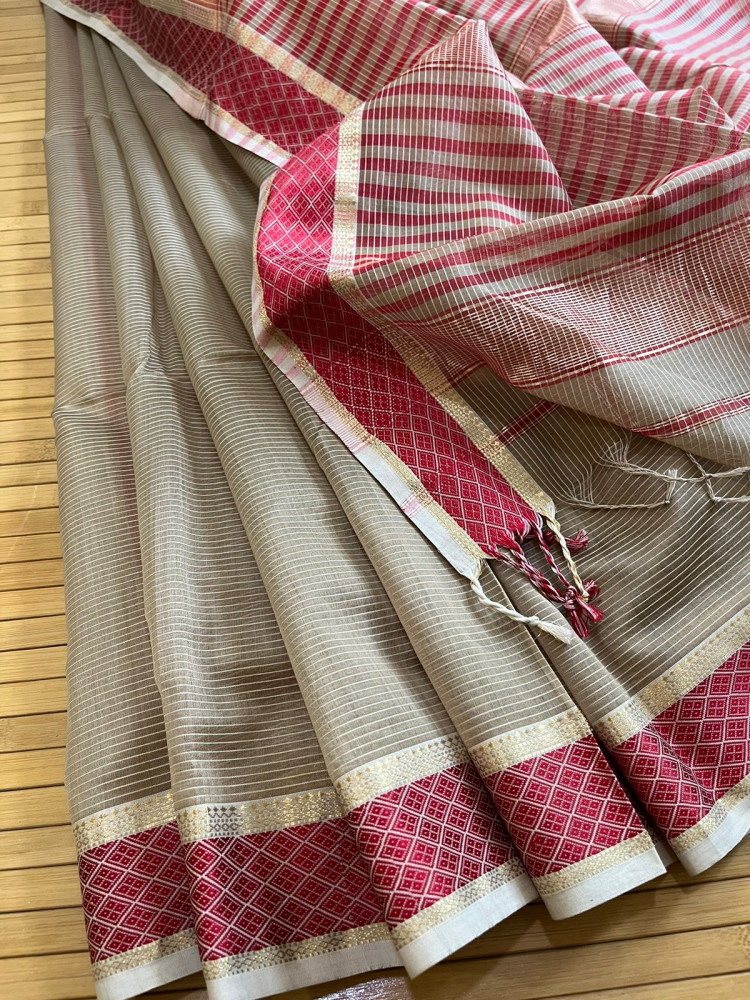
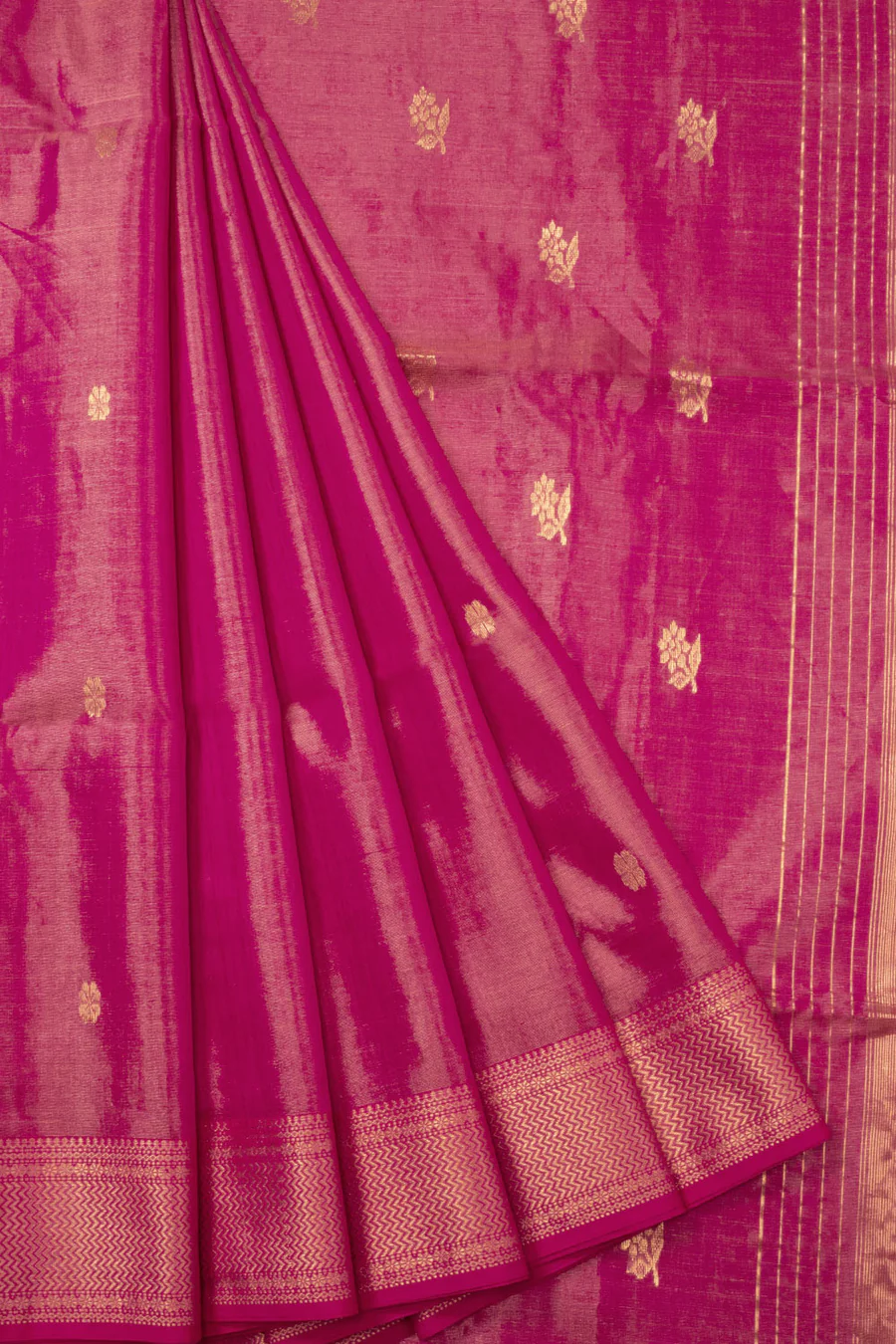
Some Maheshwari sarees boast a distinctive feature with a reversible border known as ‘bugdi,’ allowing versatility in styling as it can be worn on either side. For those eager to acquire these exquisite sarees, several authentic stores in Maheshwar await exploration. Seek out treasures at Maheshwari Handloom Works on M.G. Road, browse the offerings at Rehwa Society nestled within Ahilya Fort, or peruse the selection available at stores along Laxmi Bai Marg, Teacher’s Colony, and Sahastraarjun Marg.
Exploring Maheshwar’s ancient heritage across the Narmada
Another interesting place to visit especially for a history enthusiast like me is Navdatoli. Navdatoli stands as a testament to ancient civilizations, nestled on the opposite bank of the Narmada River. This prehistoric site holds a unique distinction, having been inhabited by diverse cultures spanning from the Paleolithic Period to the late 18th century. Unearthed during a monumental excavation in 1950, the ruins of Navdatoli yielded a treasure trove of artifacts from a forgotten era.
The remnants of Navdatoli reveal dwellings, both circular and rectangular, with a circumference of approximately 3 meters. Constructed with bamboo walls and roofs fashioned from mud, these ancient abodes offer a glimpse into the architectural ingenuity of bygone civilizations.
As you traverse through Maheshwar’s timeless landscapes and immerse yourself in its spiritual aura, you’ll find yourself enchanted by the city’s architectural grandeur, natural splendor, and the palpable sense of spiritual serenity that permeates every corner.
So, whether you seek solace in its sacred temples, marvel at its architectural marvels, or simply bask in the tranquil beauty of the Narmada River, Maheshwar promises an unforgettable journey into the heart of India’s cultural heritage.
Explore In & Around Maheshwar
Omkareshwar: The Sacred Jyotirlinga
Take a private sightseeing tour of the holy destination of Omkareshwar which is the home to one of the 12 revered Jyotirlingas in India. This important pilgrimage site is easily accessible from Maheshwar and makes for an excellent day trip.
Location & Distance Guide to Maheshwar
Indore: 91 km (approximately 2 hours)
Ujjain: 130 km
Bhopal: 190 km
Best Time to Visit
October to March is the ideal time as the weather is pleasant and perfect for sightseeing and boat rides. The winter months are also great for exploring the outdoor attractions and temples.
Monsoon season (July-September) brings lush greenery to the Narmada valley, though river activities might be limited.
Discover more from GoTravelTrek
Subscribe to get the latest posts sent to your email.

Very nice page.
LikeLike
Very Informative coverage. Thanks a lot
LikeLike
The most comprehensive,well researched & lucid guide to the place. Well done!
LikeLike