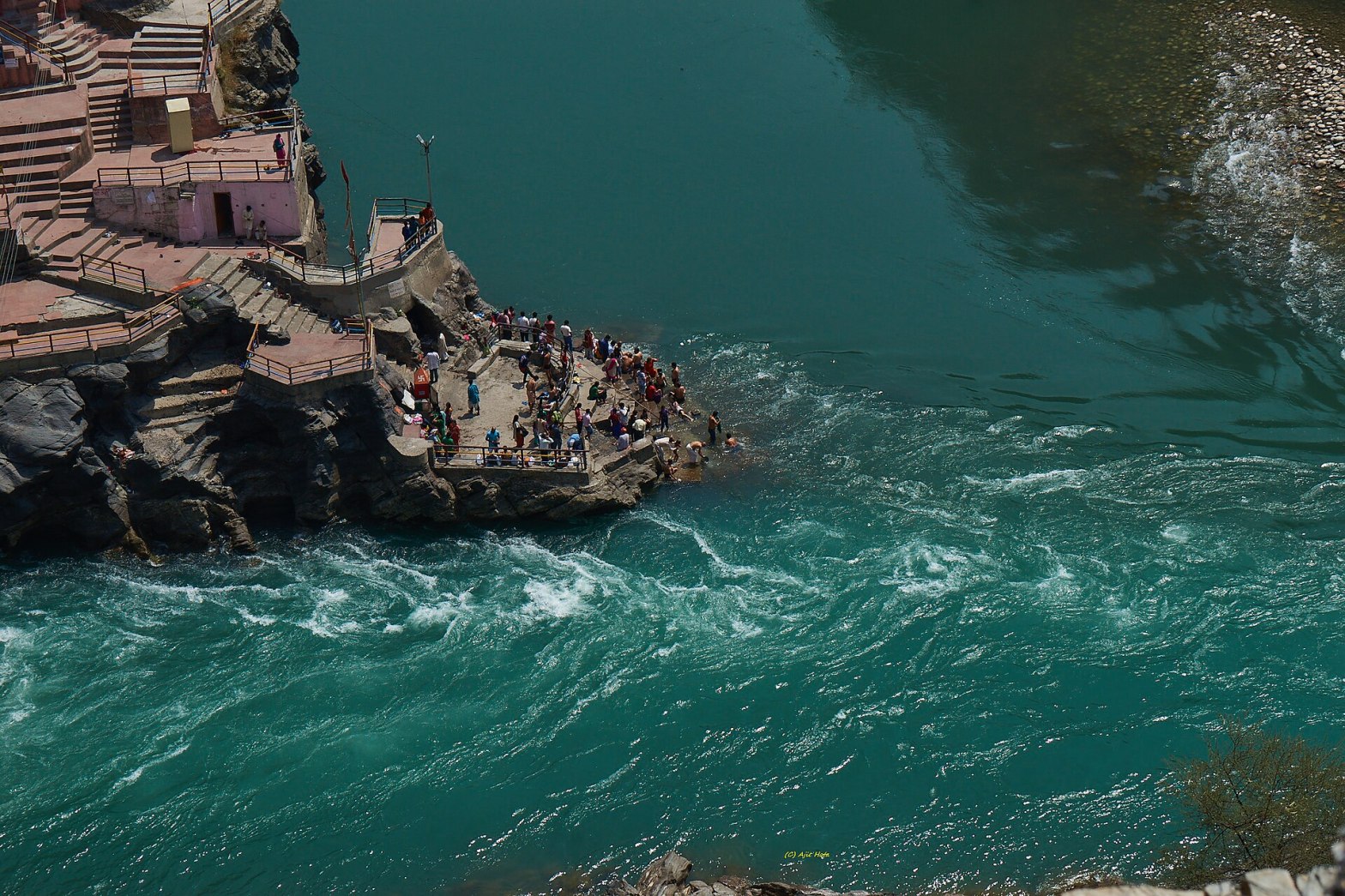
Panch Prayag is a spiritual place where holy rivers converge, creating a mystical and awe-inspiring ambience. For devout Hindus, Panch Prayag is profoundly significant, as they consider these confluences as sacred meeting points of divine rivers. Embarking on a pilgrimage here purifies the soul and brings blessings for spiritual growth.
Join me on a spiritual journey to unravel the significance of these sacred confluences.
1. Vishnuprayag
Vishnuprayag stands as the first and most dramatic of the Panch Prayag – the five sacred confluences that ultimately give birth to the holy Ganga. Vishnuprayag is the divine convergence of the Alaknanda River and Dhauliganga River. This holy site derives its name from Lord Vishnu, “The Preserver” and holds a special place in Hindu mythology.
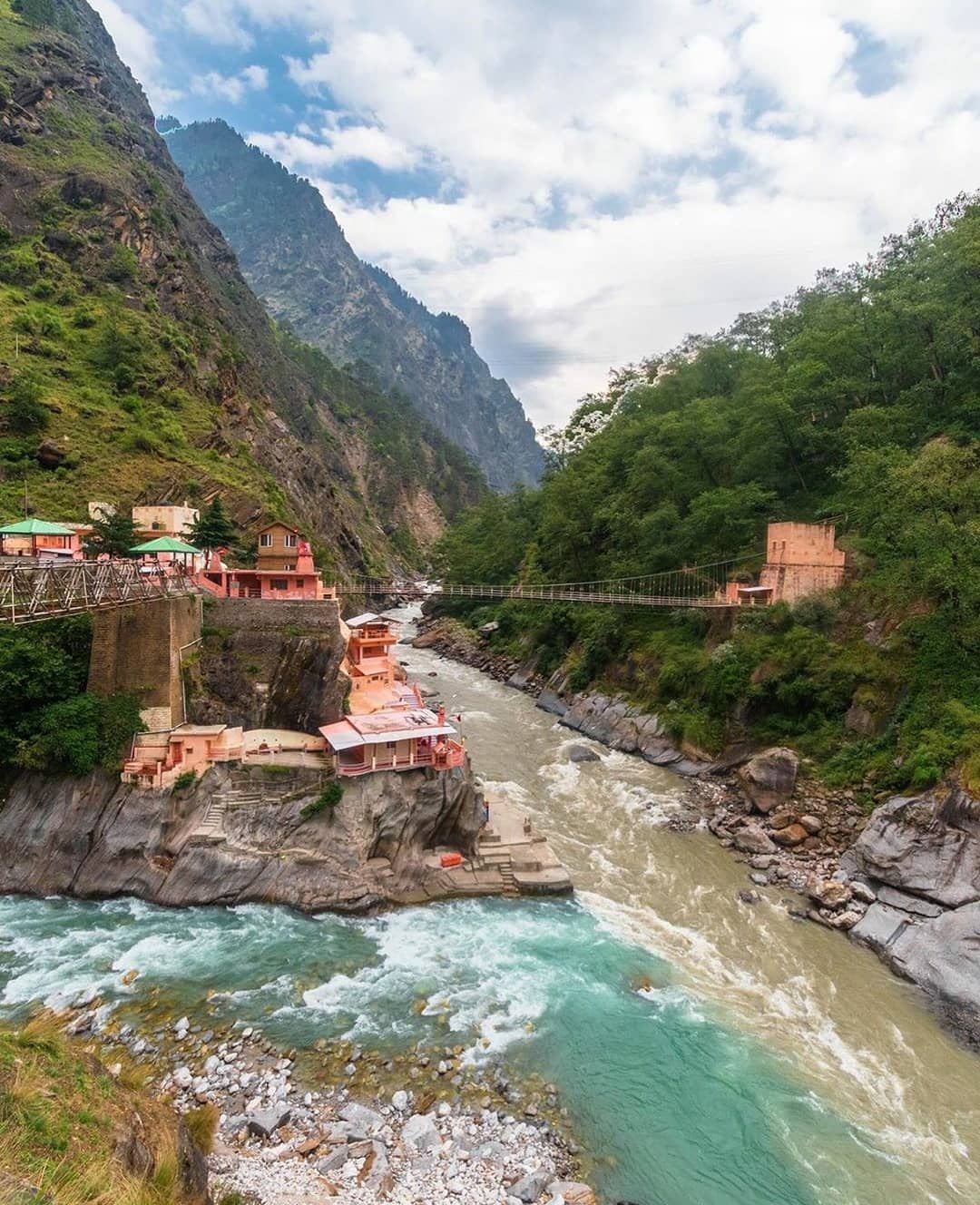
The Dhauliganga, also known as the Dhauli River, derives its name from its characteristic white, milky appearance caused by glacial sediments. Originating from the Niti Pass in Chamoli district near the Indo-Tibetan border, this river brings the pristine energy of some of the highest glacial regions in the Himalayas.
The ancient Vishnu Temple, located amid scenic surroundings, attracts devotees who seek the divine blessings of Lord Vishnu. The spiritual aura of Vishnuprayag, combined with its natural beauty, makes it a cherished destination for pilgrimage and spiritual rejuvenation. The sight of the flowing rivers converging against the backdrop of majestic mountains creates a truly awe-inspiring experience for all who visit.
Vishnuprayag from Joshimath: 11 km
Vishnuprayag to Badrinath Temple: 32 km
Vishnuprayag to Nandprayag: 67 km
Vishnuprayag is 258 kms from Rishikesh
2. Nandaprayag
Enveloped in natural beauty, Nandaprayag marks the merging of the Alaknanda River with the Nandakini River. Named after Lord Krishna’s foster father, Nanda Maharaj, this confluence captivates with its breathtaking vistas and deep spiritual significance. Devotees often visit the Gopalji Temple to pay homage to Lord Krishna.

Nandprayag is located on the way to the popular pilgrimage site in Uttarakhand, Badrinath, and thus devotees performing the Badrinath Yatra can also stop by for sightseeing.
For those who love a quiet life, explore the nearby hamlet of Bangali, where you can immerse yourself in the rustic charm of rural life and delve into its rich customs and beliefs. As you step into the heart of Bangali, you’ll be warmly welcomed by the locals, who are eager to share their traditional way of life with open arms. Spend your days strolling through quaint village lanes, where the pace of life slows down, and the simple joys of community living come to life.
Nandprayag to Karanprayag: 21 km
Nandprayag is 190 kms from Rishikesh
Explore more near Nandprayag
From Karnaprayag, you may also visit Adi Badri (18 kms towards Ranikhet Road near GMVN Tourist Lodge).
Adi Badri
Adi Badri is one of the Panch Badri and holds immense spiritual significance. The five temples that constitute Panch Badri are Badrinath, Adi Badri, Vridha Badri, Bhavishya Badri and Yogadhyan Badri. Read More about these in my blog: Panch Badri.
Each temple showcases distinctive architectural styles, taking you on a historical journey back in time. From intricately carved pillars to exquisite sculptures, witness the artistic brilliance that went into constructing these sacred structures.
- Narayan Temple: Begin your spiritual quest at the main Narayan Temple, the most prominent shrine in Adi Badri. Its grand entrance and towering spire will leave you awe-struck. Seek blessings and meditate in the peaceful ambiance of this ancient temple.
- Chaturbhuja Temple: Marvel at the Chaturbhuja Temple, dedicated to Lord Vishnu, showcasing a four-armed deity. Admire the intricate detailing on the temple walls, narrating tales from Hindu mythology.
- Bhavishya Badri Temple: Visit the Bhavishya Badri Temple, which translates to the “Future Badri.” Legends say that in the future, when the current Badrinath temple becomes inaccessible due to extreme weather conditions, this temple will serve as the replacement abode of Lord Vishnu.
3. Karnaprayag
Situated at the confluence of the Alaknanda and Pindar Rivers, Karnaprayag is renowned for its captivating landscapes and historical significance.
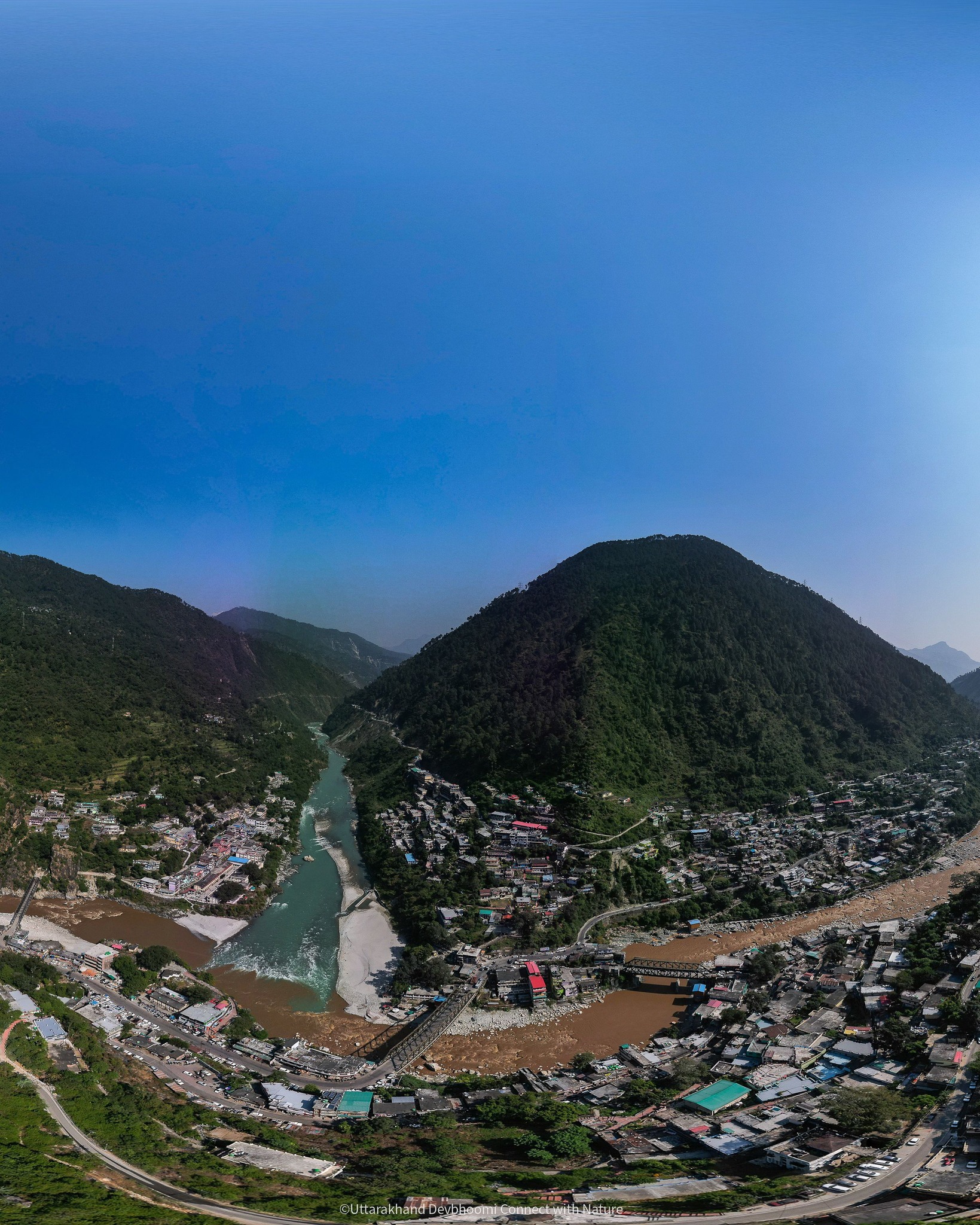
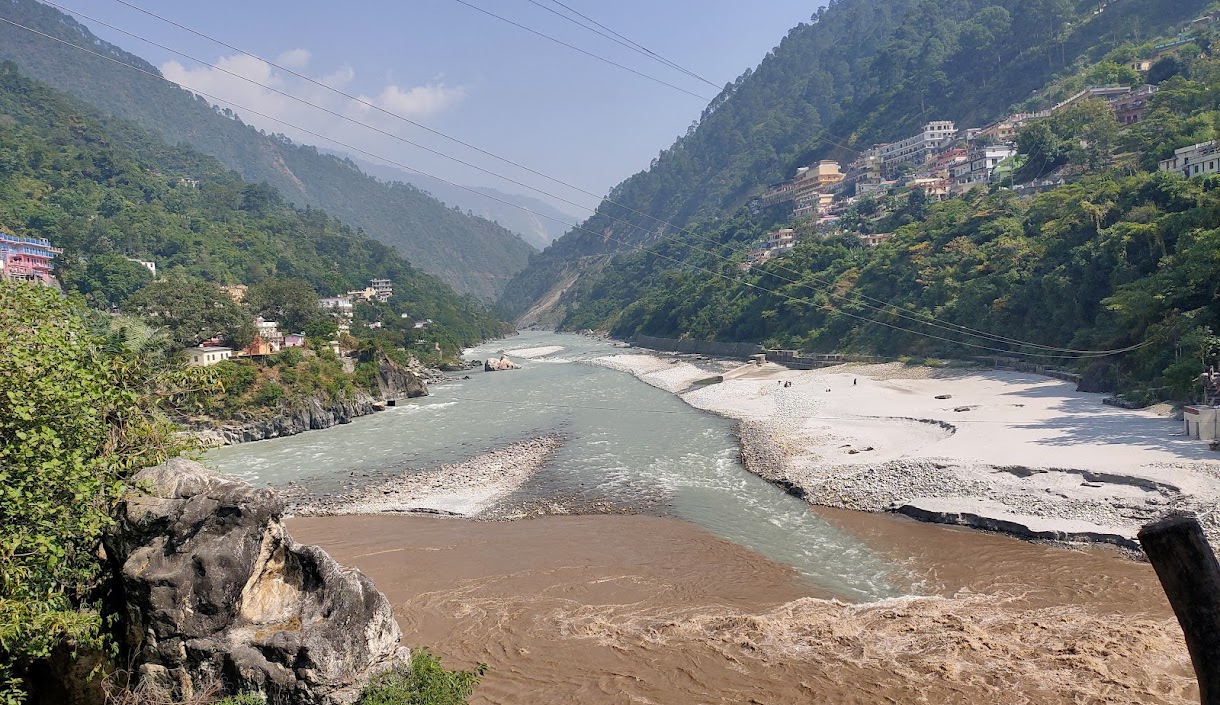
Karnaprayag, Image CC @Devbhoomi Uttarakhand Connect with Nature
According to legend, Karna meditated at this site for years, performing intense penance to gain divine powers and the Kavach. This magical shield made him invincible in the battle of the Mahabharata. The connection between Karna and Karnaprayag doesn’t end with his penance. It is believed that Lord Krishna performed Karna’s cremation at this very spot after he died in the Kurukshetra war. Krishna honoured this request and personally cremated Karna at the holy land of Karnaprayag, making it a sacred site in Hindu mythology. The Karna Temple here is dedicated to Karna.
The Uma Devi Temple, dedicated to the goddess Parvati, adds to the spiritual charm of Karnaprayag. Pilgrims visit this sacred site to offer their prayers and soak in the divine aura of the confluence. Surrounded by snow-clad peaks and verdant valleys, Karnaprayag provides a perfect blend of spirituality and natural beauty.
Rudraprayag to Karanprayag is 32 kms
Karanprayag is 170 kms from Rishikesh
4. Rudraprayag
Rudraprayag marks the confluence of two mighty Himalayan rivers – the Alaknanda and the Mandakini. Named after Lord Shiva, the divine Rudra, this confluence is steeped in religious significance.
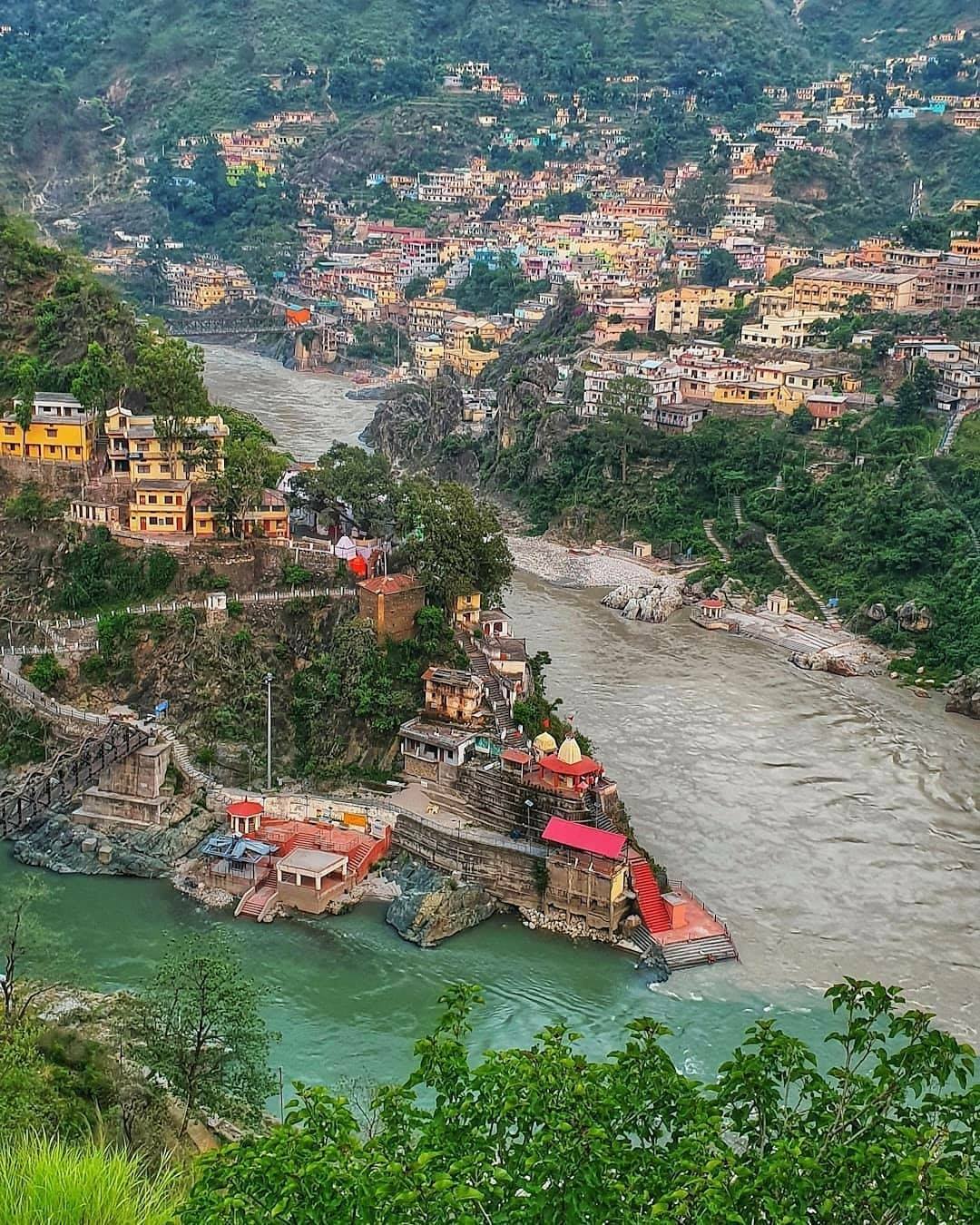
It is believed that it was here at Rudraprayag that Narada Muni, a revered sage, meditated to attain spiritual enlightenment and learnt music.
The Koteshwar Mahadev Temple, dedicated to Lord Shiva, stands as a prominent attraction, where devotees gather to seek blessings and immerse themselves in the spiritual energy of the confluence.
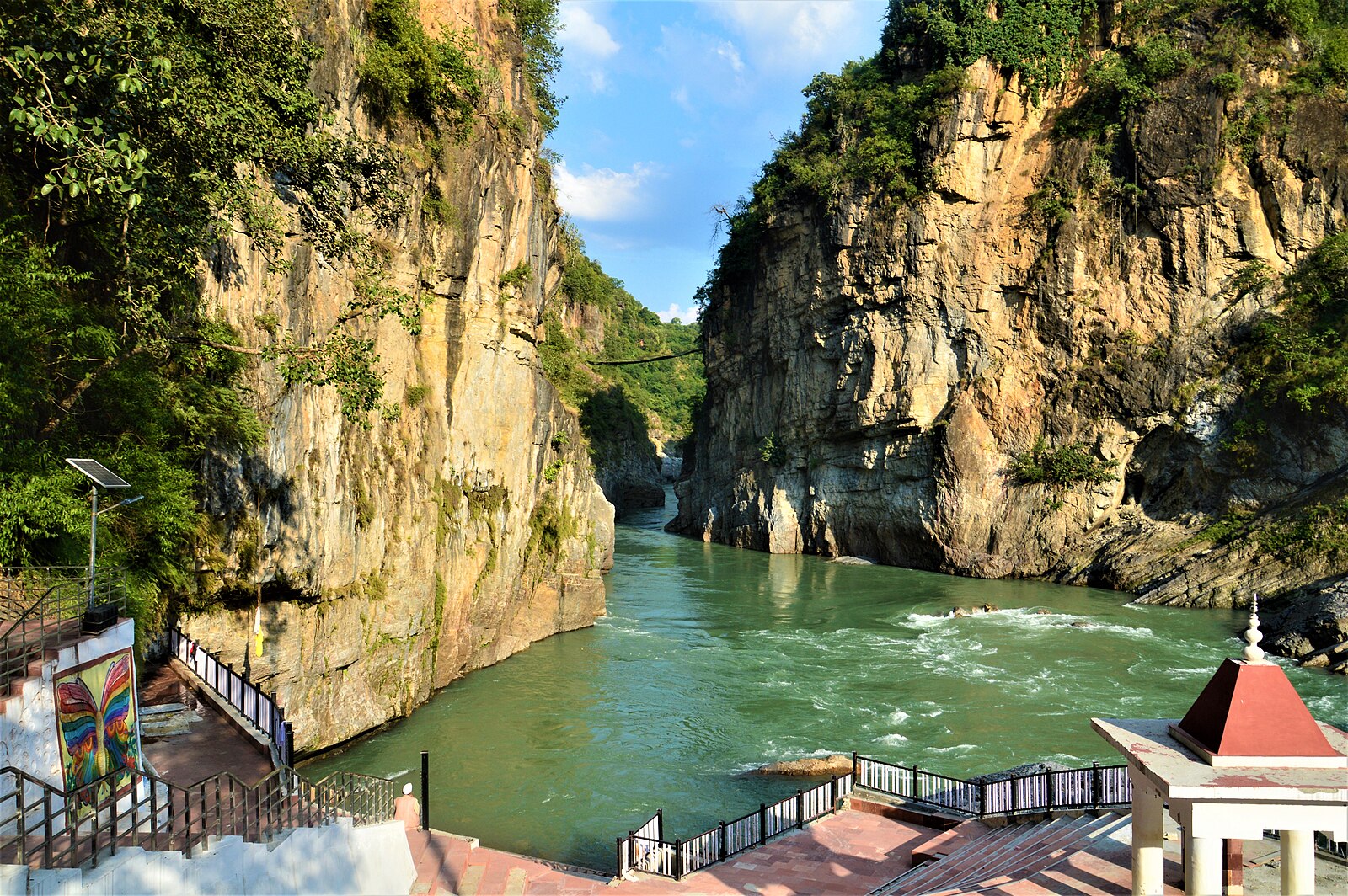
Located just 4 km from Rudraprayag, the Koteshwar Mahadev Temple is a natural cave temple with the Alaknanda flowing just a few meters away.. Apart from the main shrine, there is also a Shani Dev temple and a temple dedicated to Lord Hanuman.
Chamunda Devi temple is also situated at the confluence where Chamunda, as wife of Lord Rudra is worshipped.
Kartikeya Swami Temple, dedicated to Kartikeya, son of Shiva, can be reached by a 3 km trek from Kanak Chauri village. Located on the Rudraprayag-Pokhri route, 38 km from Rudraprayag, visitors can see the snow-clad Himalayan range from the Kartik Swami temple, offering one of the most spectacular panoramic views in the region.

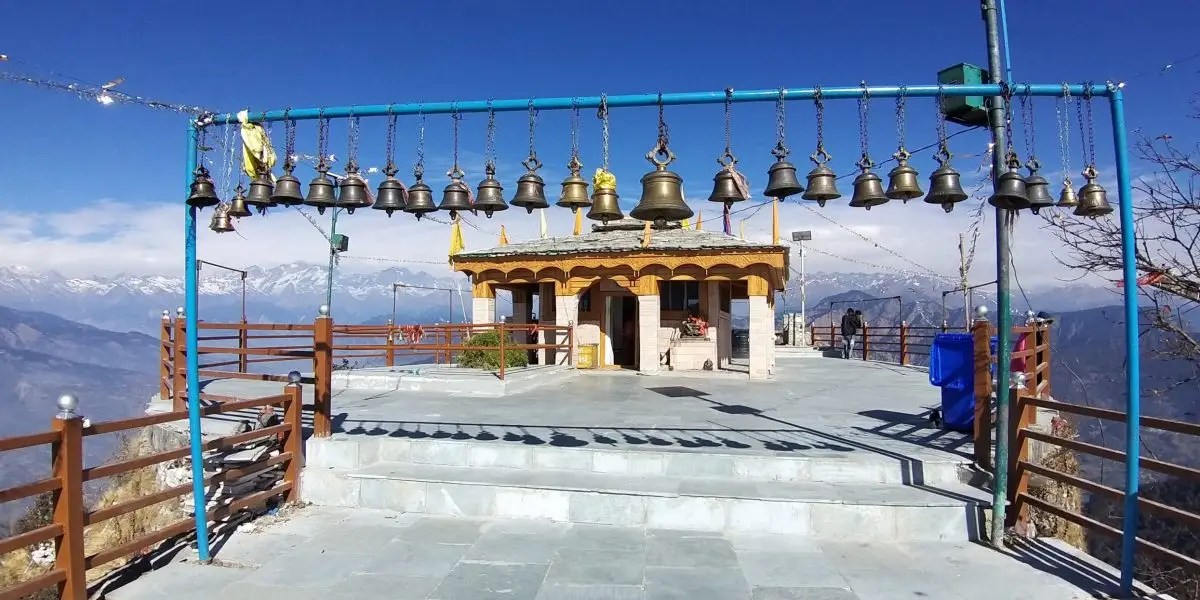
*Kartik Swami Temple near Rudraprayag, Image CC Wow Club India
Rudraprayag is also close to the Chandrashila summit trek, the starting point for Tungnath Temple.
Just 39 km from Rudraprayag lies the quaint village of Byunkhi, a less traveled place in Uttarakhand. As an offbeat destination, Byunkhi is sure to impress you if you are looking for something different. Visit blog on Byunkhi: Explore Rural Village Life of Uttarakhand
Devprayag to Rudraprayag is 65 kms
Rudraprayag is 142 kms from Rishikesh
5. Devprayag
Devprayag is the culmination of all five sacred confluences, earning it the title of the most important prayag.
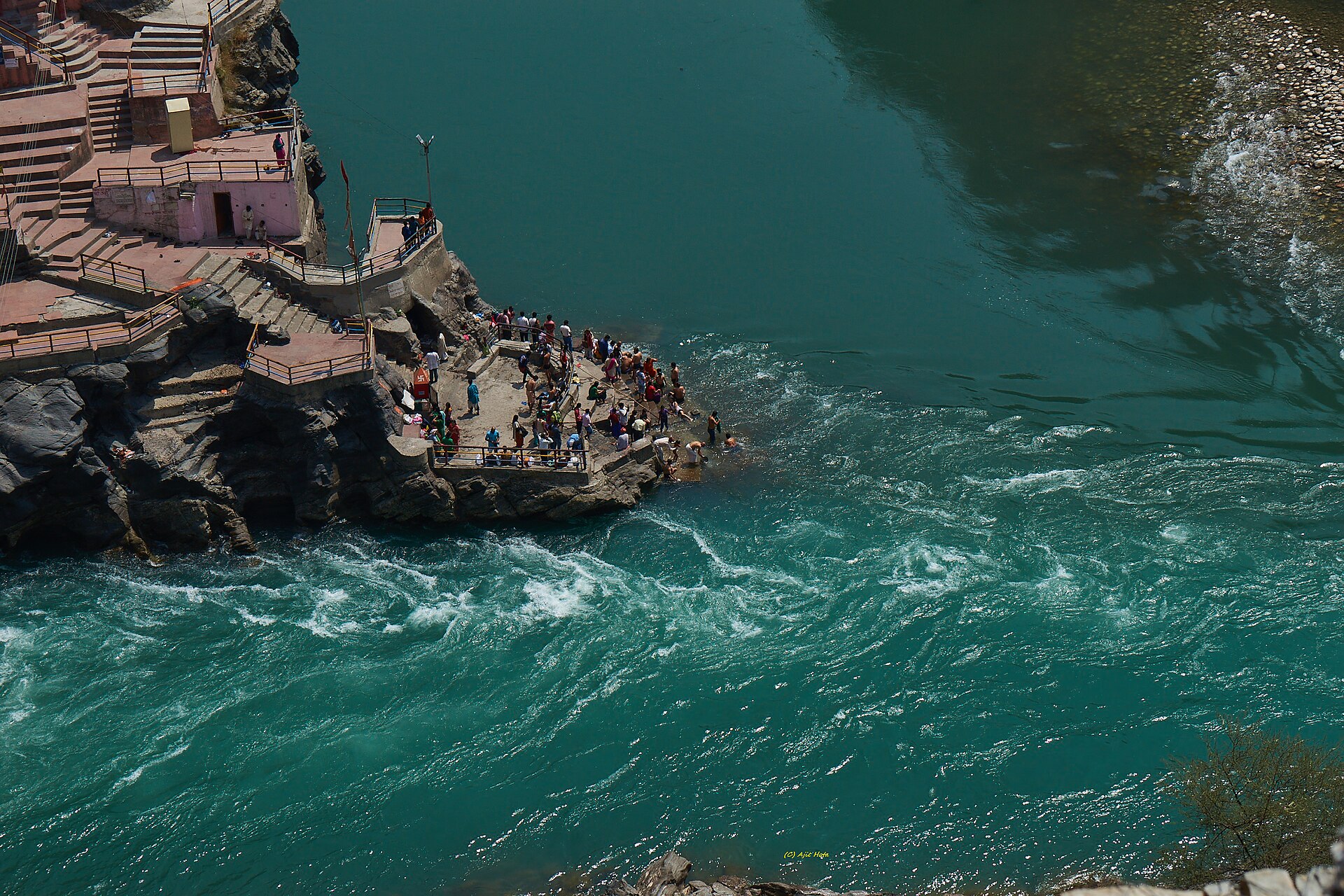
Birthplace of River Ganga: Devprayag is the sacred confluence where the Alaknanda River and the Bhagirathi River unite, giving birth to the revered Ganges River.
From this point onwards, the river is called Ganga (India’s most sacred river).
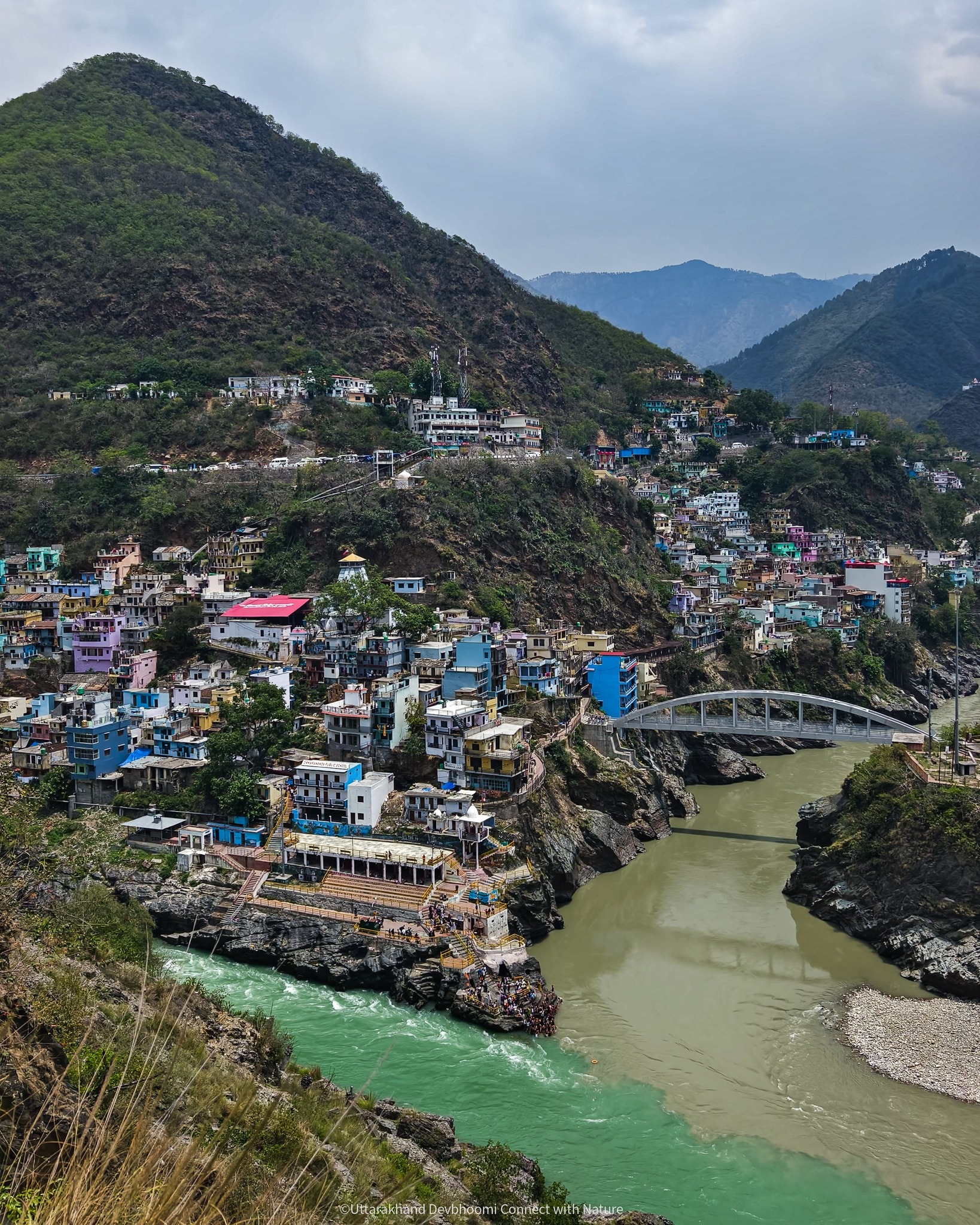
The Two Rivers
Bhagirathi: Bhagirathi originates from Gangotri, and Alaknanda comes from Satopanth and Bhagirath Kharak glaciers. The Bhagirathi River originates from the Gomukh glacier, which is 18 km from the Gangotri temple. This river carries the name of King Bhagiratha, who, according to Hindu mythology, brought Ganga from heaven to earth through his intense penance.
Alaknanda: Here, the Bhagirathi from Gaumukh & the Alaknanda from Satopanth meet after the Alaknanda has already absorbed four other tributaries at the previous four prayags – Vishnuprayag, Nandprayag, Karnaprayag, and Rudraprayag.
The town of Devprayag is believed to be the place where Lord Rama performed penance to atone for killing the demon king Ravana. Devprayag is home to ancient temples, including the Raghunathji Temple, which attracts devotees seeking blessings and spiritual solace. The temple was originally believed to have been established by Adi Shankara during the 8th century, with later expansions by the Garhwal Kingdom. This ancient temple is constructed in the Deula style. it holds significance in Hindu mythology and is part of the revered 108 Divyadesams dedicated to Vishnu. It is one of the 108 Divyadesam dedicated to Vishnu, who is worshipped as Raghunathji (Rama) and his consort Lakshmi as Sita.
The Pandas of Badrinath
Devprayag is the home of the priests of Badrinath. They are known as “Pandas.” This town is home to Pandits who belong to Badrinath Dham. This unique connection makes Devprayag the hereditary home of Badrinath’s chief priests, adding another layer of spiritual significance to this sacred town.
The Sacred Mountains
Devprayag is surrounded by 3 heavenly peaks, named Giddhanchal Parvat, Dashrathanchal Parvat, and Narsinghancal Parvat, creating a natural amphitheatre around the confluence.
The tranquil surroundings, adorned with lush greenery and snow-capped peaks, make Devprayag an enchanting destination for both pilgrims and nature enthusiasts.
Something offbeat
Located above Devprayag on Dashrathanchal mountain is the Nakshatra Veda Shala. Set up by the late Acharya Pt. Chakradha Joshi established it in 1946; this observatory is a symbol of India’s progress in astronomy.
Explore more at Devprayag
Tondeshwar Mahadev, Dhaneshwar Mahadev Temple, Mata Bhuvneshwari Temple in Pundal Village, Danda Nagaraja Temple (lord of snakes) and Chandrabadni Temple (dedicated to Goddess Sati).
Best Time to Visit: Year-round, but October to March offers pleasant weather. Accommodation: Basic guesthouses and dharamshalas are available.
Devprayag to Rishikesh: 72.5 km
Devprayag to Haridwar: 92 km
New Delhi to Devprayag: 298 kms
The nearest Railway Station for Devparayag is Rishikesh Railway Station
Discover more from GoTravelTrek
Subscribe to get the latest posts sent to your email.

One thought on “Panch Prayag: Sacred Confluences and Their Significance”